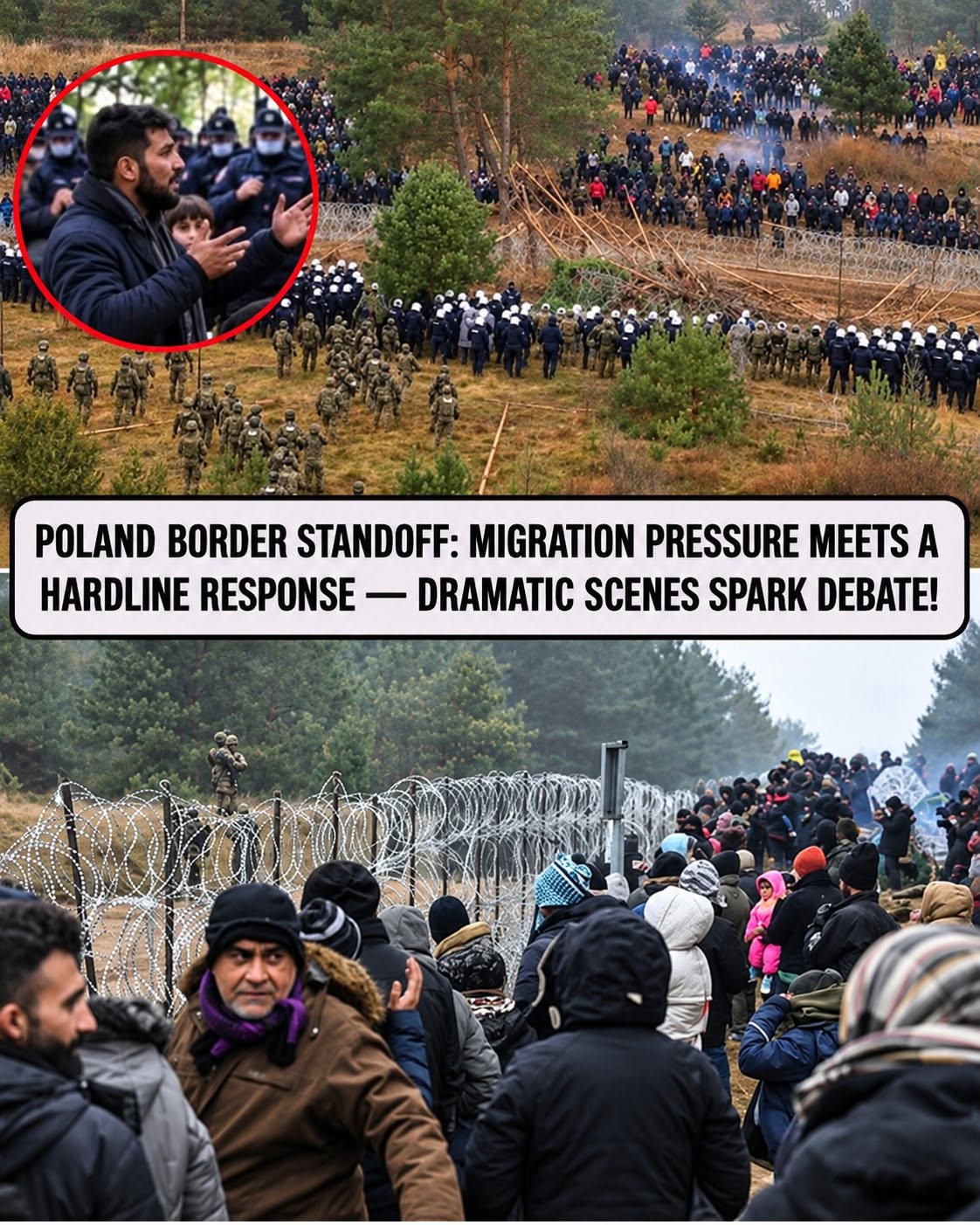
Poland’s Border Becomes the Center of a Heated Migration Dispute
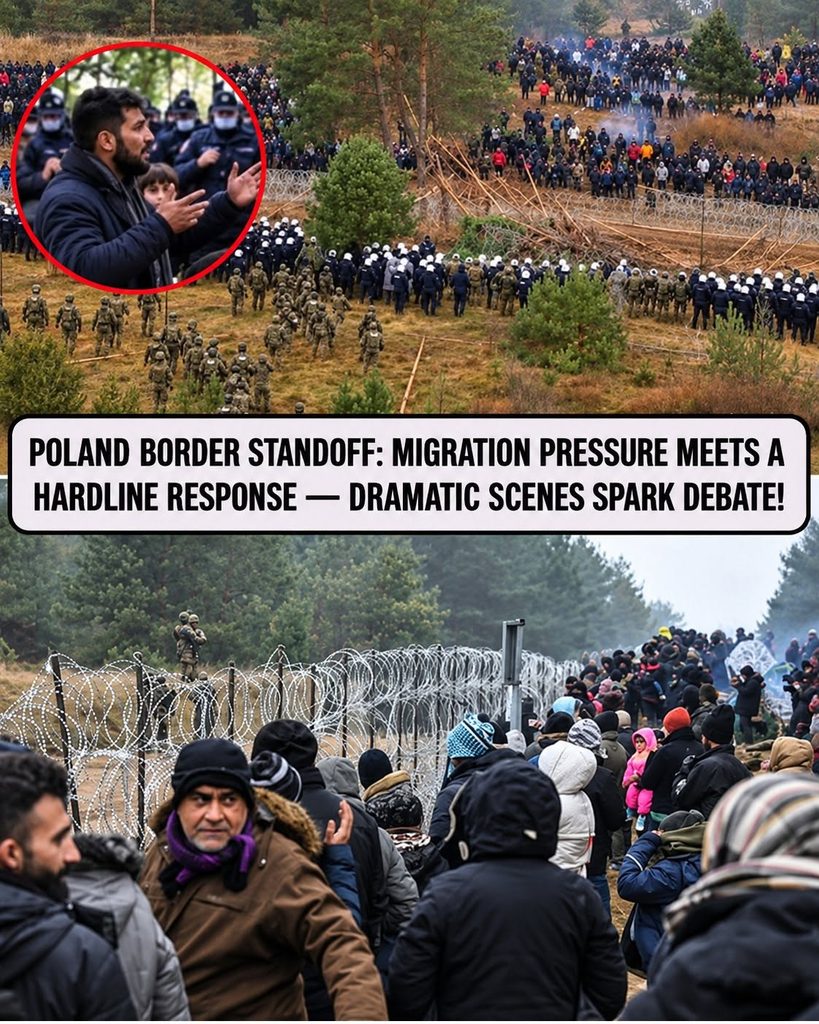
Poland’s border has once again become the focus of an intense debate over migration, border security, and the responsibilities of European countries, after reports and social-media posts claimed that a large group of migrants attempted to enter Poland but were turned away by border authorities. The incident quickly attracted attention online, with dramatic descriptions portraying the situation as a mass attempt to cross the frontier. However, the circumstances surrounding such incidents are often more complicated than viral headlines suggest. Poland has maintained a firm approach to controlling unauthorized crossings along its eastern borders, while migration pressure across Europe has continued to generate political arguments over who should be allowed to enter, how asylum procedures should work, and how governments should respond when large groups arrive at the same time. The latest controversy has therefore become more than a story about one border encounter. It has become part of a much wider European argument about sovereignty, humanitarian obligations, security, and the limits of migration policy.
What Happened at the Border?
According to the information circulating online, a group of migrants attempted to make its way toward Polish territory but encountered resistance from border authorities and was ultimately prevented from entering through the reported crossing point. Videos and posts describing the episode have spread rapidly because images of crowded border areas can create an immediate impression of confrontation and urgency. Yet the phrase “mass migrant” can obscure important distinctions between different situations. People arriving at a border may have very different legal statuses and motivations, including people seeking asylum, people attempting unauthorized entry, individuals who may already have protection elsewhere, or people whose circumstances have not yet been established by authorities. For that reason, the simple claim that an entire group was “rejected” does not necessarily explain what happened to every individual involved. Border officials may prevent unauthorized crossings, conduct identity checks, redirect people toward designated procedures, or make decisions under specific national and European rules. The details matter, particularly when dramatic social-media footage is presented without the full context of when and where it was recorded.
Why Poland Has Taken Such a Firm Position
Poland’s approach to its eastern frontier has been shaped by years of heightened concern over irregular migration and border security. The country shares borders with Belarus and Ukraine, making developments along its eastern frontier particularly significant for both national authorities and the European Union. Polish officials have repeatedly emphasized the need to control unauthorized crossings and protect the integrity of the country’s external border. Supporters of strict enforcement argue that a state must be able to determine who enters its territory and through which legal channels. At the same time, migration organizations and human-rights advocates have raised concerns about how people seeking international protection are treated at borders and whether vulnerable individuals have meaningful access to asylum procedures. These competing concerns explain why seemingly straightforward border incidents can quickly become politically charged. For Polish authorities, the issue is closely connected to security and sovereignty; for humanitarian organizations, the focus can be on legal protections and the treatment of people who may be fleeing war, persecution, or instability.
The Belarus Border Has Made the Situation Even More Sensitive
The Polish-Belarusian border has been particularly sensitive because migration there has previously been linked to broader geopolitical tensions. European authorities have accused the Belarusian government of facilitating or encouraging the movement of migrants toward the EU’s external borders, allegations Belarus has disputed. Poland has responded by strengthening border infrastructure and increasing security measures in the area. This history means that when a large group appears near the Polish frontier, officials do not necessarily view the event only through the lens of ordinary migration. They may also consider whether organized movement, smuggling networks, or deliberate pressure on the border could be involved. At the same time, the presence of geopolitical concerns does not automatically establish the circumstances of every individual migrant. Each incident requires evidence and context. This distinction is particularly important online, where a single video can be reposted thousands of times alongside increasingly dramatic descriptions that may go beyond what the original footage actually demonstrates.
The Bigger European Migration Debate
The confrontation at the Polish border also reflects a much larger problem facing Europe: how to balance controlled immigration with the legal and humanitarian obligations that countries have toward people seeking protection. European governments have spent years debating asylum rules, border screening, deportation procedures, burden-sharing, and cooperation with countries outside the EU. Some governments have pushed for stronger external border controls and faster processing, while others have emphasized humanitarian responsibilities and the need to protect people fleeing dangerous circumstances. Poland has generally been among the countries emphasizing stronger border protection, particularly along its eastern frontier. The disagreement is not simply between governments and migrants. It also exists among EU member states themselves, with countries differing over how responsibility should be distributed and what should happen when people arrive at one member state’s border. As a result, every major border confrontation can become a symbol in a much broader argument about Europe’s future migration system.
Why the Viral Claims Need to Be Examined Carefully
One of the most important aspects of this story is the difference between what a viral headline claims and what can actually be established from available evidence. A headline describing migrants as having attempted to “mass enter” a country can generate a strong emotional reaction, but it does not by itself establish the size of the group, the exact location, the legal status of those involved, or what authorities did afterward. Likewise, a video showing people being stopped at a border may not reveal what happened before or after the footage was recorded. Social-media users often add captions, interpretations, or political commentary that become detached from the original circumstances. That is why details such as the date, location, official statements, and independent reporting are crucial when assessing an incident. The border may indeed have been closed to the group shown in the footage, but understanding why they were stopped and what legal procedures followed requires considerably more information than a short viral clip can provide.
A Border Decision With Consequences Far Beyond Poland
For the people attempting to cross, being stopped at a border can have immediate and serious consequences. For Polish authorities, meanwhile, managing large groups at a sensitive frontier involves questions of security, logistics, law enforcement, and international obligations. Every decision can therefore attract scrutiny from different sides. European policymakers are also watching these developments because national border measures can influence broader EU migration policy. If countries strengthen their borders individually, questions arise about how those measures interact with common European rules. If governments adopt more flexible approaches, critics may argue that such policies could encourage additional irregular migration. These competing arguments have helped make migration one of Europe’s most difficult political issues. The Polish border is consequently not merely a line on a map; it has become one of the places where questions about national sovereignty, European cooperation, humanitarian protection, and migration control collide in real time.
What Comes Next Could Be Just as Important
The immediate confrontation may eventually disappear from the news cycle, but the underlying dispute is unlikely to disappear. Poland continues to face pressure to secure its borders while also operating within European and international legal frameworks. Meanwhile, people seeking entry into Europe continue to confront a complicated system in which access, asylum, security checks, and border enforcement can vary according to circumstances. The incident being discussed online therefore raises a much larger question: how should Europe respond when migration pressure reaches its borders while governments insist that unauthorized entry cannot simply become an alternative to established legal procedures? Whatever position people take on that question, the details of each individual incident matter. The strongest understanding comes not from the most dramatic caption, but from separating verified events from assumptions, identifying what authorities actually reported, and examining what happened to the people involved after the border confrontation ended.