Should Sadiq Khan Resign Over the Grooming Gangs Controversy?
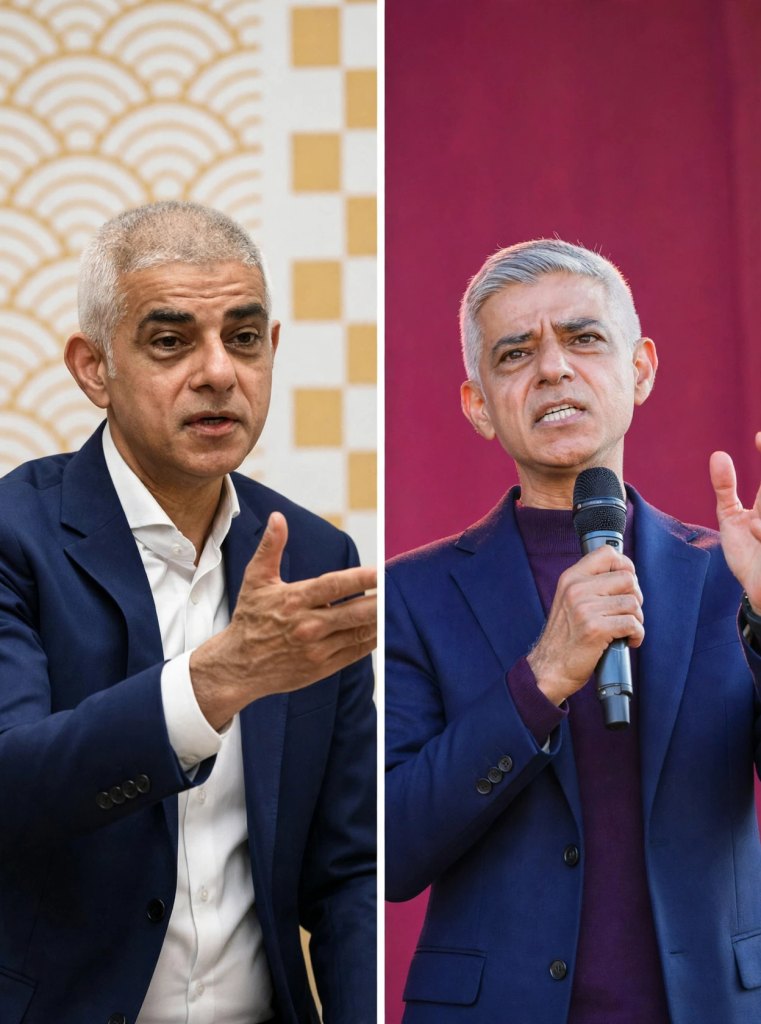
Should Sadiq Khan Resign Over the Grooming Gangs Controversy?
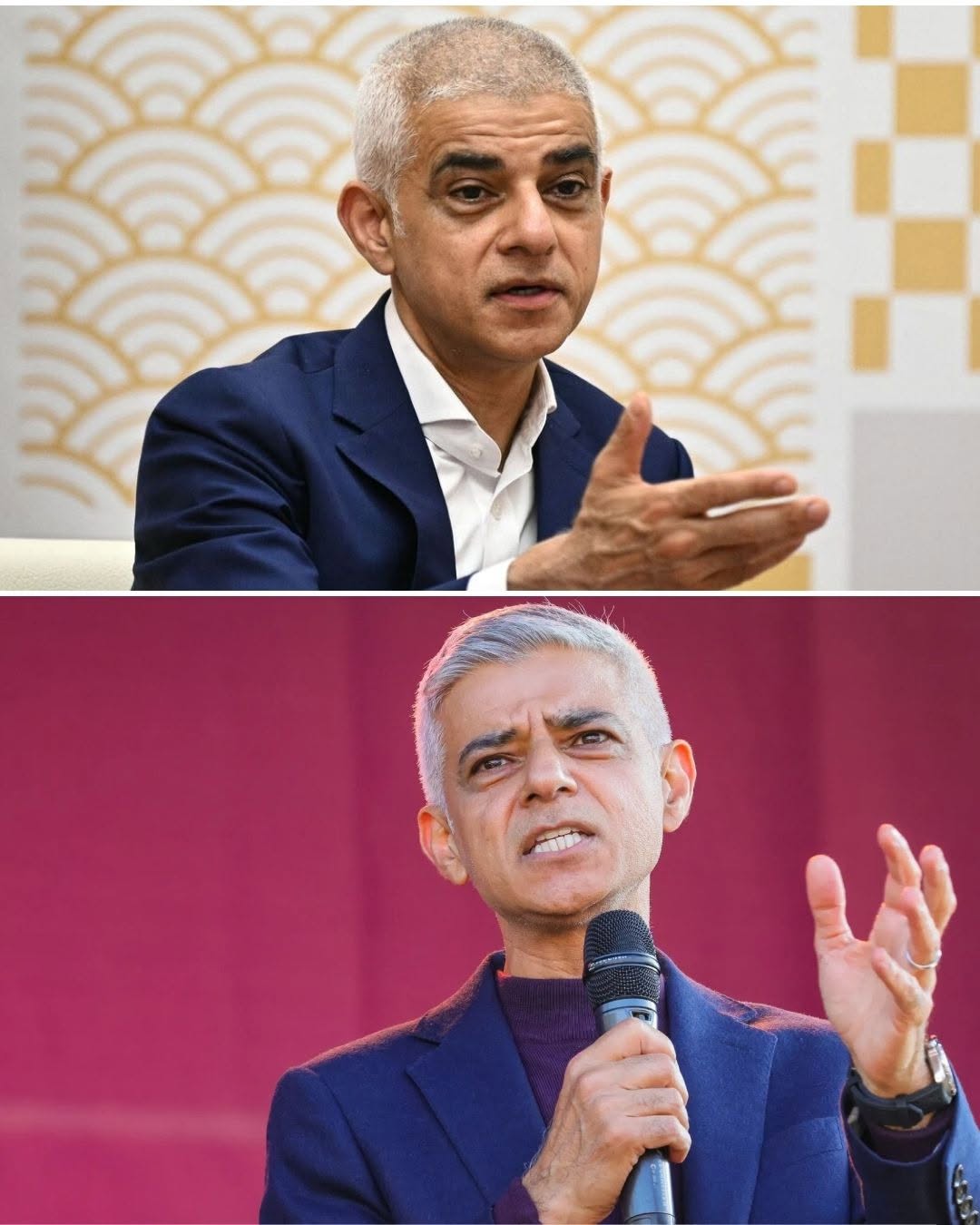
A viral poll, a statutory inquiry, a review of thousands of historic cases — and a question of political accountability that the evidence has not yet answered
Editorial note on method: This article examines a circulating social-media post headed “POLL: Should Sadiq Khan Resign Over the Grooming Gang Controversy?” The post presents itself as a poll. It is not one in any recognised sense: it names no polling organisation, publishes no sample, no fieldwork dates, no margin of error and no results that can be checked. It is an engagement prompt attached to a news narrative. This article treats it as a prompt for a debate that is genuinely under way, and tests the claims in that debate against the public record — the Baroness Casey national audit of June 2025, Metropolitan Police statements to the London Assembly, the statutory Independent Inquiry into Grooming Gangs, London Assembly voting records, and reporting by established outlets. Where a claim is an allegation rather than a finding, it is labelled as such. No official body has found that Sir Sadiq Khan personally concealed child sexual exploitation, directed police not to investigate it, or committed misconduct requiring his resignation, and no recognised opinion poll has found that the public wants him to resign over this issue. Both statements are true as of 21 October 2026 — and neither ends the argument, because the inquiry examining London has not yet reported and the Met’s review of historic cases is not complete.
1. A poll that is not a poll
The post is short, and its brevity is part of how it works.
“POLL: Should Sadiq Khan Resign Over the Grooming Gang Controversy? Fresh political debate has erupted after renewed scrutiny surrounding the grooming gang issue, with some critics calling for Sadiq Khan to step down while others reject those demands. What do you think? See full in the comments.”
Almost every element of that text is doing a job other than informing. The word “POLL” borrows the authority of survey research without supplying any of it. “Fresh political debate has erupted” presents the debate as new, when the argument about London, grooming gangs and the Mayor has run in its current form since January 2025, and in its wider national form for more than a decade. “Some critics” and “others” are unattributed: no critic is named in the post itself, no demand is quoted, and no specific new finding is identified that would explain why resignation should be asked this week rather than last month or next.
None of that means the underlying subject is invented. It is not. Underneath the engagement prompt sits a real and serious set of facts. London is one of the first places named for targeted investigation by a statutory national inquiry into grooming gangs. The Metropolitan Police is reassessing thousands of historic child sexual exploitation investigations in the capital. A petition calling for the Mayor’s resignation was reported to have gathered more than 40,000 signatures. Senior opposition politicians have accused Khan, in terms, of facilitating a cover-up — an accusation his office rejects and which no official investigation has upheld. And the Mayor’s own words in the London Assembly in early 2025, when he repeatedly asked what was meant by “grooming gangs” and said there was “no indication” of the Rotherham-style phenomenon in London, are on the record and are now being re-read, by his critics, in the light of everything announced since.
The distinction that runs through this controversy — between sentiment and evidence — begins here. A tally beneath the post counts only the people who saw it, on the platforms that carried it, in the networks that amplified it. It measures the mood of a self-selected audience. It says nothing reliable about Londoners, about voters, or about whether the evidence supports the most serious political sanction that can be demanded of an elected mayor.
2. Why the question is being asked now
Three developments have converged to push London, and its mayor, to the centre of a scandal long discussed mainly as a story about other places.
The first is national. In June 2025, Baroness Louise Casey published her National Audit on Group-based Child Sexual Exploitation and Abuse. The government accepted all twelve of its recommendations, including a statutory national inquiry and a national police operation to revisit closed cases. That ended a long argument about whether a new national inquiry was needed, and it changed the status of every local debate running in parallel: what had been political argument became, in part, a matter for a process with legal powers to compel witnesses and demand documents.
The second development is the Metropolitan Police review. On 24 October 2025, Commissioner Sir Mark Rowley wrote to the Mayor confirming that the Met would reassess approximately 9,000 investigations from the previous fifteen years — roughly 600 a year — to identify missed lines of enquiry, continuing risks and safeguarding needs. A number that large, attached to a city whose mayor had months earlier said there was no indication of grooming gangs operating in the way seen elsewhere, was always going to be politically explosive, whatever the fine print. The fine print matters enormously, and a later section of this article is devoted to it. But the headline came first, and in politics headlines usually win.
The third development is the inquiry’s choice of London. When the Independent Inquiry into Grooming Gangs, chaired by former Children’s Commissioner Baroness Anne Longfield, announced its first targeted local investigations in June 2026, it named Oldham, Bradford and Keighley — and London. It explained that London required early investigation because it records the highest rate of referrals for child sexual exploitation in the country and because its transport links connect it to offending networks across England and Wales. It spoke of “serious questions about how and why institutions tasked with protecting children frequently failed to do so”. For the Mayor’s critics, London’s inclusion was vindication: the capital could no longer be treated as an exception. For the Mayor, who publicly welcomed the inquiry’s focus on London, it was — at least in his own framing — an opportunity to show that institutions “marking their own homework” was not good enough.
3. The established national record
The phrase “grooming gangs” is a media and political shorthand, not a legal category. In official language the phenomenon is “group-based child sexual exploitation and abuse”: two or more offenders acting together, or as a network, to sexually exploit children — typically, in the cases that defined the scandal, by identifying vulnerable children, often girls in or around the care system, winning their trust or dependence with attention, gifts, alcohol and drugs, and then subjecting them to repeated rape and sexual violence, often passing them between men, sometimes trafficking them between towns, and using threats to enforce silence.
What happened in a series of English towns is not allegation. It is established by criminal convictions, by independent inquiries, and by the apologies of the institutions involved. In Rotherham, Professor Alexis Jay’s 2014 independent inquiry estimated that at least 1,400 children had been exploited between 1997 and 2013, and documented how council officers and police failed to act on what they knew — in some cases for fear of damaging community relations, in others through disbelief of victims, contempt for their backgrounds, or institutional inertia. Rochdale, Telford, Oxford, Newcastle and other towns produced their own prosecutions and reviews; Telford’s inquiry estimated more than a thousand children had been exploited over decades. The national Independent Inquiry into Child Sexual Abuse, reporting in 2022, examined exploitation by organised networks as one of its strands — including, a point sometimes mis-stated in the London debate, a case-study area in London itself: the borough of Tower Hamlets.
One feature of that record matters above all for what follows.
The failures were institutional before they were individual. Again and again the pattern was systems that recorded concerns and did not join them up; police who treated exploited children as offenders or unreliable witnesses; social workers who reframed abuse as “lifestyle choices”; prosecutors who judged, sometimes wrongly, that cases could not be won; and data so poorly collected that the true scale was obscured for years. A resignation may be a legitimate political response to institutional failure. It is not, by itself, a description of what went wrong.
4. The Casey audit and the statutory inquiry
At the start of 2025, following renewed attention driven in part by interventions from Elon Musk on X, pressure grew on the Labour government to order a new national inquiry. The government initially resisted, arguing the priority was implementing the 2022 child sexual abuse inquiry’s recommendations. In January 2025 the then Home Secretary, Yvette Cooper, commissioned Baroness Casey to conduct a rapid national audit of group-based exploitation: its scale and nature, the characteristics of offending, the role of ethnicity and culture, and the quality of the response.
The audit was published on 16 June 2025. Cooper described its findings to Parliament as “damning”: at their heart, “a deep-rooted failure to treat children as children”. She summarised Casey’s conclusions as too much fragmentation, too little information-sharing, too much reliance on flawed data, too much denial, too little justice, too many offenders escaping punishment and too many victims let down. The audit documented victims as young as ten, often children in care or with disabilities, and institutional failures stretching back decades. Casey criticised the downgrading or dropping of rape cases in which girls aged thirteen to fifteen had been treated as though they were “in love with” or had “consented to” sex with adults, and recommended mandatory rape charges in such circumstances, a unique reference number for children, an end to “out of area” taxi practices, systematic collection of ethnicity and nationality data — and a statutory national inquiry with targeted local investigations, alongside a national police operation to revisit closed cases.
The government accepted all twelve recommendations. The police operation became Operation Beaconport, led by the National Crime Agency. The inquiry became the Independent Inquiry into Grooming Gangs: a three-year, £65 million statutory inquiry under the Inquiries Act 2005, chaired by Baroness Anne Longfield, with power to compel witnesses and require organisations to hand over documents. Its final terms of reference were published in March 2026. Longfield has said it will “follow the evidence wherever it leads”.
5. The exchange that started the London row
At a meeting of the Assembly’s Police and Crime Committee, Susan Hall, the Conservative group leader and Khan’s opponent in the 2024 mayoral election, pressed him repeatedly on whether grooming gangs — rape gangs, in her phrasing — were operating, or had operated, in London. Khan repeatedly asked her to clarify what she meant by the term. Pressed further, with the question spelled out by reference to Rotherham-style networks abusing vulnerable girls, he indicated he remained unclear — “none the wiser”, in the phrase his critics quote most often. In a later session he gave the answer that has become the centre of the controversy: “My understanding from speaking to the police, and I choose my words carefully for the reasons she will understand, is there are no reported cases and also no indication of the grooming gangs that she is concerned about in London.”
How that exchange should be read is, at bottom, what the resignation debate is about. The Mayor’s office says he was seeking a genuine definition — “grooming gangs” is not a police category — and repeating the assessment the Met gave him, which described a London picture more varied than Rotherham’s and heavily bound up with county-lines, intra-familial, peer-on-peer and online exploitation; it adds that he has since said on the record that there are grooming gangs in London. His critics say a mayor in office for more than eight years cannot plausibly have needed the concept explained to him, that asking repeatedly what the question meant was a way of not answering, and that “no indication” minimised a problem inspectorate reports had already documented in part. Susan Hall’s verdict at the time was that the response was “utterly disgraceful”, and that getting answers had been “like getting blood out of a stone”.
Between those readings sits a factual question the inquiry is best placed to test: what, in early 2025, was the Met actually telling the Mayor, and what else was available to him? If the force’s own position then was that it had not identified Rotherham-style networks in the capital, a mayor repeating that position was repeating his police force’s assessment — which may have been wrong, but raises a different accountability question from personal denial. If material available to City Hall already contradicted that assessment, why the more reassuring version was given in public becomes a sharper question. The public record does not yet contain a tested, document-by-document account of who knew what, and when. Producing one is precisely what a statutory inquiry is for.
6. The £4.5 million vote
The second fixed point in the critics’ case came a month later. In February 2025, Conservatives on the London Assembly proposed an amendment to the Mayor’s budget providing £4.49 million — £4.5 million in most reporting — for an “independent inquiry into the exploitation of children in London”. Their case was that “the potential scale of child sexual abuse across London remains a significant unknown”, that more than fifty areas across the country had been identified as places where grooming-gang offending had taken place, and that there was therefore “a strong possibility that this criminality also occurred in London”.
The amendment was defeated on 25 February 2025 by sixteen votes to nine. Budget amendments require a two-thirds majority in the Assembly, so the proposal needed broader support than it ever had: it was backed by the Conservatives and Reform UK’s Assembly member, and opposed by Labour, Green, Liberal Democrat and independent members. Khan did not cast the deciding vote — the Assembly did — but the Mayor’s party and his allies formed the majority that rejected it, and he did not support the proposal. In the shorthand of the subsequent debate, “Khan voted down a London inquiry”. The accurate version is less punchy and more useful: the Mayor’s budget proceeded without a London-specific inquiry, the Assembly majority declined to add one, and the argument made at the time by those who opposed it was that a national process — the Casey audit was then under way — would address the issue without duplicating it.
7. The newspaper investigation and the “cover-up” allegation
In October 2025 the London argument changed character. Until then, the case against the Mayor was that he had been evasive, complacent or ill-briefed. On 19 and 20 October 2025, the Daily Express and MyLondon published a joint investigation making a stronger claim: that the Mayor had personally responded to reports by His Majesty’s Inspectorate of Constabulary and Fire & Rescue Services — HMICFRS, the police inspectorate — between 2016 and 2025 which contained case studies of girls in London being abused by groups of men, and that he had nevertheless publicly said there was no indication of grooming gangs in the capital.
The investigation pointed to at least six cases bearing what the outlets described as the hallmarks of grooming-gang offending, drawn from four inspectorate reports. They included a fifteen-year-old taken to a hotel, given alcohol and raped by multiple men, and a seventeen-year-old similarly plied with alcohol and assaulted. The youngest victim referenced was thirteen. Separately from the use made of them in this controversy, the inspectorate reports had repeatedly criticised the Met’s handling of child sexual exploitation over the period; the force’s child-protection arrangements had been the subject of sustained official criticism and reform demands since 2016.
The Mayor’s office rejected the allegation. It denied a cover-up, pointed to funding for victim support — including a £15.6 million Violence and Exploitation Support Service — and to cooperation with the Met on safeguarding, and maintained that operational assessments of offending patterns come from the police. That remains its position.
Because “cover-up” is now used in this debate as though it were a finding, its status needs to be exact. A cover-up means deliberate concealment: knowledge of wrongdoing, an intention that it not become known, and steps taken to that end. The investigation published case studies and argued the Mayor had access to inspectorate material describing them; it did not publish the underlying documents in full, and at least one borough named in the coverage, Hounslow Council, publicly disputed the reporting’s characterisation of its role. No inspectorate, court, committee or inquiry has found that Khan concealed any case. The statutory inquiry can obtain the documents and decide what the Mayor’s office knew and whether its public statements were consistent with that knowledge. Until it does, “cover-up” is an allegation made by newspapers and opposition politicians and denied by the Mayor’s office — an allegation it is legitimate to ask, and irresponsible to repeat as fact.
8. Nine thousand, twelve hundred, four thousand: what the Met review numbers actually mean
The starting point is Commissioner Rowley’s letter of 24 October 2025. The Met, he wrote, would “re-assess approximately 9,000 investigations” from the past fifteen years, “approximately 600 per year, to identify whether there are any potential missed or new investigative lines of enquiry or extant risks, including any safeguarding requirements or opportunities to bring offenders to justice.” The cases, from January 2010 to March 2025, were ones whose outcome had been no further action by police or the Crown Prosecution Service. Initial assessments were to be completed by April 2026. A spokesperson for the Mayor said the review was made public at the Mayor’s insistence, for transparency. Rowley told the Assembly the Met had a “steady flow” of live multi-offender investigations, and that the review would cost “many millions of pounds” over several years.
The critical detail is the breadth of the net. The 9,000 figure was generated by applying a broad national definition of group-based offending — broadly, cases involving two or more suspects and at least one victim — to fifteen years of records. That definition includes, but is not limited to, the stranger-network pattern the public understands by “grooming gangs”. It also includes intra-familial abuse involving more than one suspect, peer-on-peer exploitation, abuse in institutional settings and online-facilitated offending. The Casey audit had found a mismatch in how the Met and London boroughs recorded child abuse, one reason the trawl had to be wide: records kept inconsistently cannot be filtered reliably at the first pass.
Filtering then began — and produced the second figure. By November 2025, according to City Hall material, the Met had reviewed some 2,200 cases in detail and found approximately 1,200 in scope for the national operation. Rowley told the Assembly the force’s current caseload included “tens” of complex group-based cases closest to what the public understands by grooming gangs, and the Met has stated that London’s group-based exploitation picture is “more varied than in other parts of the country and does not neatly align with patterns of methodology, ethnicity or nationality seen elsewhere”, with suspect profiles reflecting the capital’s diversity. On the Met’s own evidence, the in-scope number was expected to fall further — the opposite direction from the online presentation of 9,000 as a floor rather than the top of a funnel.
The third figure arrived in June 2026, when GB News and associated outlets reported, citing the Met’s work and the Telegraph, that more than 4,000 potential cases might need to be reopened, drawn from roughly 12,000 reports dating back to 2010, with about one in three previously closed cases flagged at initial assessment. Susan Hall described the figure as “4,000 young girls raped and sexually abused”. That captures the story’s emotional force, but goes beyond what the figure is. A case flagged at triage is one where an assessor identified a possible missed line of enquiry or safeguarding need. It is not a proven offence, not a proven victim count, and not a finding that the original decision was wrong. The gap between “4,000 cases flagged” and “4,000 proven crimes” is exactly the gap the reinvestigations exist to close, case by case.
9. The petition and the politics of resignation
Against that procedural background, the demand that gives the viral post its headline — that Khan should resign — has been advanced through a petition, an unofficial inquiry, and sustained opposition pressure.
The petition was organised by CitizenGo, an international conservative advocacy organisation, and was reported by GB News and associated outlets in early 2026 to have gathered more than 40,000 signatures calling for the Mayor to resign over what its organisers described as his denial of grooming gangs in London. It was to be delivered to City Hall via Keith Prince, a Reform UK London Assembly member. CitizenGo campaigner Zuzana Revayova accused the Mayor of presiding over a “catastrophic failure”, adding: “While the Mayor focuses on divisive ideological agendas, the safety of London’s most vulnerable children is being compromised.” Former Met officer and whistleblower Jon Wedger, who says he was told to drop investigations into child abuse cases, described Khan as “beyond redemption” over the issue.
A petition of 40,000 signatures is a real political fact. It is also a fact that needs its context. Forty thousand is a small fraction of London’s electorate of about six million. Petitions organised by advocacy groups measure the mobilisation capacity of the organising network at least as much as the distribution of opinion, and in this case the signature count, the validation method and the petition’s precise wording have been reported principally by outlets sympathetic to its aim, without independent verification available. None of that makes the signatories insincere or their concern illegitimate. It means the petition is evidence of organised anger, not a measurement of London opinion — the same distinction the viral “poll” blurs.
The unofficial inquiry is the June 2026 report of the “Rape Gang Inquiry” associated with independent MP Rupert Lowe: a crowd-funded, campaigner-led exercise that published a lengthy report naming institutions and individuals it held responsible. Its London chapter calls the capital “the epicentre of institutional denial” and states that Khan “denied the existence of grooming gangs in the British capital, despite having evidence proving otherwise”. Its wider claims — including a headline estimate of a quarter of a million victims — have been examined by fact-checkers, who found that figure to be an extrapolation rather than a measured count. The report was not conducted under the Inquiries Act and could not compel evidence from those it criticises; its conclusions carry the weight of a campaign publication, not a statutory finding. That does not make everything in it wrong. It makes it a source to be tested in a forum with powers its authors did not have.
It is worth pausing on what “resign” would mean in this office. The Mayor of London is directly elected for a four-year term. There is no recall mechanism, and the London Assembly — which scrutinises the Mayor and can amend his budget by a two-thirds majority — has no power to remove him. Khan is in his third term, first elected in 2016 and re-elected in 2021 and 2024; the next scheduled election is in 2028. The demand is therefore for a voluntary act of political accountability. British practice does not require proof of personal criminality for such an act: office-holders have resigned for failures in systems they led that they did not personally commit. They have also often declined, arguing their duty was to stay and fix the failure — and voters have sometimes endorsed that and sometimes punished it. The convention supplies a vocabulary — responsibility, accountability, confidence — but not a verdict.
10. What the Mayor actually controls
Underlying the doctrinal argument is an institutional one, and it is here that the debate most often misleads — in both directions.
The Mayor of London exercises the functions of a Police and Crime Commissioner for the capital through the Mayor’s Office for Policing and Crime, known as MOPAC. He sets the strategic priorities for the Metropolitan Police. He holds the Commissioner to account and — jointly with the Home Secretary, who formally appoints — is central to the Commissioner’s appointment and, as London saw in 2022, to a Commissioner’s departure. He sets the Met’s budget within his overall budget. He commissions victims’ services. He can require reports, ask questions in public, and use the platform of the mayoralty to direct attention and resources.
What he does not do is direct criminal investigations. Operational decisions — whether to open an investigation, whom to arrest, what evidence to seek, whether to refer a file to the Crown Prosecution Service — are the legal responsibility of police officers, protected by the doctrine of operational independence precisely so that politicians cannot start, stop or steer cases. Charging decisions belong to the CPS. Safeguarding decisions about individual children belong to borough children’s services, health bodies and schools within a multi-agency framework the Mayor does not run. If a grooming network operated in a London borough in 2019 and was not disrupted, the immediate decisions that failed were taken, or not taken, by detectives, social workers, managers and prosecutors — not at City Hall.
But the limit is not a wall. Strategic oversight is a real function. A mayor told by his inspectorate, year after year, that his force’s child-protection work is inadequate is not a bystander: what he demanded, funded and challenged, whether he sought data the force was not collecting, and whether his public statements created pressure to improve or comfort that things were in hand, are the core of the oversight job. They fall squarely within the remit of the Assembly’s Police and Crime Committee, which is scrutinising the Met’s handling of grooming gangs, and of the statutory inquiry. The honest formulation is this: Khan can fairly be held to account for the quality of his oversight and the accuracy of his public statements. He cannot, on present evidence, be treated as though he personally ran the investigations that failed.
11. The Mayor’s record, as his office presents it
In November 2025 the Mayor announced a £2.4 million package for victims and survivors of child exploitation and sexual abuse in London, funding additional Independent Sexual Violence Advocates and therapeutic care. London’s Victims’ Commissioner, Claire Waxman, welcomed it as putting “victims and survivors first”. The Met’s public-protection lead, Commander Clair Kelland, set out changes since 2022: a threefold increase in solved cases over the previous year with 134 additional suspects charged, expanded specialist teams, training for more than 11,000 officers on recognising exploitation and 23,000 on trauma-informed communication, and a 6.2 per cent rise in positive outcomes for victims. City Hall has also cited the £15.6 million Violence and Exploitation Support Service, the Mayor’s 2023 request that the inspectorate examine child protection in the Met, and the force’s removal from enhanced monitoring — “special measures” — in January 2025 after inspectors judged safeguarding had improved.
12. The case for resignation, stated at its strongest
Neutrality does not mean splitting every difference down the middle. It means stating each side’s case in the strongest form its evidence allows, and then being clear which parts are established, which are arguable and which are unsupported. Stated at its strongest, the case for Khan’s resignation runs as follows.
He has led London for a decade — ten of the fifteen years covered by the Met’s historic review. During that decade the force he oversees was repeatedly criticised by its inspectorate over child sexual exploitation. When the national scandal reignited and he was asked, in the chamber to which he is accountable, whether the same phenomenon existed in his city, he asked what the question meant — repeatedly — and then said there were no reported cases and no indication of the gangs in question. That answer has not survived contact with his own force’s subsequent position: a steady flow of live multi-offender investigations, tens of current complex group-based cases, and a fifteen-year trawl of thousands of closed cases because the original decisions cannot be trusted. A mayor need not have committed an offence to have misled, even inadvertently, the public about children’s safety, and political accountability exists precisely for the space between criminal conduct and acceptable performance. His party’s Assembly majority then declined to fund a London inquiry. A newspaper investigation alleged that material describing group abuse in London had crossed his desk throughout the period. On this account, resignation is not punishment for crimes he did not commit; it is recognition that the person who told London there was no indication of the problem cannot credibly lead London through discovering how large the problem was.
13. The case against, stated at its strongest
The case against resignation, stated at its strongest, runs as follows.
No court, inspectorate, committee or inquiry has found that Khan concealed abuse, blocked an investigation, or knew of specific offending and failed to act. The “cover-up” charge rests on a newspaper investigation that did not publish its full documentary basis, parts of which have been disputed. His central statement was expressly framed as his understanding from the police, whose senior leadership was then describing a London picture that did not match the Rotherham pattern; a mayor is not ordinarily expected to invent a contrary assessment, and had he announced in January 2025 that grooming gangs operated across London with no police assessment to that effect, many of the same voices would have accused him of reckless alarm. The campaign’s numeric centrepiece, the 9,000-case review, is a triage exercise under a broad definition; the roughly 1,200 in-scope cases, and the “tens” of live complex cases closest to the public meaning, are the more honest numbers. The Assembly’s rejection of a separate inquiry was a collective decision taken while a national audit was running, and London now has a statutory investigation with powers no City Hall inquiry could match. The mayoralty’s record includes commissioning inspection, funding victims’ services, the force’s exit from special measures, rising solved-case numbers, and publicly welcoming external investigation of his own city. Establish the facts first: if they show this mayor knew, minimised and obstructed, his position will be untenable without any petition. If they do not, a resignation extracted by campaign pressure teaches every future office-holder that the rational response to a safeguarding crisis is noise management, not candour.
14. Ethnicity, data and the risk of a second injustice
Casey found that official reluctance to record and confront the ethnicity and nationality of suspects had damaged both investigation and public trust, and that in some datasets men of Asian and Pakistani heritage were over-represented among offenders in group-based exploitation. Those findings are part of the record and this article does not soften them. In London, however, the Met has specifically stated that its group-based exploitation picture is more varied than elsewhere and does not neatly align with the patterns of methodology, ethnicity or nationality reported in other areas, and that suspect profiles in its cases reflect the capital’s diversity. Both can be, and on current evidence appear to be, true: a national pattern documented in particular datasets and towns, and a London picture measurably different in composition.
The inference that does not follow — from either finding — is suspicion of a community. The Mayor’s own background is frequently introduced in the online debate as though it were evidence. It is not. Khan is a British Muslim of Pakistani heritage; that fact explains nothing about any decision he took or failed to take, and treating it as explanatory repeats the original failure in reverse — substituting identity for data. The defensible approach is the inquiry’s and the Met’s: record everything, follow the evidence in each case, prosecute individuals for what they did, and examine institutions for what they failed to do, without fear or favour.
15. Survivors, and what happens next
The London material published so far contains testimony that should discipline everyone who uses this subject politically. A girl who told the Express she had been repeatedly transported by her abusers from Oxford and locked in rooms across the country — a reminder that London is also a node in the transport networks along which children were moved between towns — said: “I don’t think it’s possible for us to say that in the country’s largest city, there wouldn’t be a problem with grooming. If it can happen in a posh, wealthy city like Oxford, it’s definitely happening in London. And probably has been since the 90s.” Survivors quoted in the October 2025 coverage accused the authorities of gaslighting them. Campaigners such as Maggie Oliver, and care professional Chris Wild, who works with vulnerable young people in London, argue that abuse is happening across the capital at a scale exceeding other areas — a claim which, like the Met’s more varied picture, awaits tested evidence from the inquiry and the completed review.
It is worth specifying what findings would materially change the assessment in this article. Documentary evidence that the Mayor or his office received specific warnings identifying group-based exploitation in London and chose not to act on them, or acted to suppress them, would transform minimisation into something far more serious. An inquiry finding that his public statements were knowingly inconsistent with his briefings would do the same. Evidence that MOPAC’s oversight was perfunctory over years would support a strong political judgement against him. Conversely, evidence that the Met’s assessments genuinely supported the “no indication” formulation when it was given, and that the Mayor pressed the force and the inspectorate harder than the public record shows, would substantially weaken the case against him. All of these are discoverable facts. None has yet been discovered in public.
16. Timeline: the London grooming gangs debate
May 2016 — Sadiq Khan is elected Mayor of London, taking on Police and Crime Commissioner functions through MOPAC.
2016–2025 — HMICFRS repeatedly criticises the Metropolitan Police’s handling of child sexual exploitation and child protection. The Express and MyLondon will later allege that case studies of group abuse in London appeared in four inspectorate reports across this period which the Mayor personally responded to.
January 2025 — Baroness Casey is commissioned to conduct a national audit. In the Assembly’s Police and Crime Committee, Susan Hall presses Khan repeatedly on grooming gangs in London; he repeatedly asks what she means, and in a later session says there are “no reported cases and also no indication of the grooming gangs that she is concerned about in London”.
25 February 2025 — The London Assembly defeats, by 16 votes to 9, a Conservative budget amendment providing £4.49 million for an independent inquiry into the exploitation of children in London.
16 June 2025 — The Casey audit is published. The government accepts all twelve recommendations, including a statutory national inquiry and a national police operation.
19–20 October 2025 — The Daily Express and MyLondon publish their investigation alleging a mayoral “cover-up”. Chris Philp accuses Khan of “facilitating a cover-up”; Lee Anderson says he has serious questions to answer; the Mayor’s office rejects the allegation.
24 October 2025 — Commissioner Sir Mark Rowley writes to the Mayor confirming the Met will reassess approximately 9,000 investigations from the previous fifteen years, and tells the Assembly the force has a “steady flow” of live multi-offender exploitation investigations.
November 2025 — City Hall material records that around 1,200 cases have been found in scope after detailed review of the first 2,200; Rowley describes “tens” of current complex group-based cases closest to the public understanding of grooming gangs. The Mayor announces a £2.4 million package for victims and survivors. Nationally, 1,273 cases from 23 forces have been referred into Operation Beaconport, 236 of them rape allegations prioritised.
Early 2026 — A CitizenGo petition calling for the Mayor’s resignation, reported to have more than 40,000 signatures, is promoted for delivery to City Hall via Reform UK Assembly Member Keith Prince.
March 2026 — The statutory Independent Inquiry into Grooming Gangs, chaired by Baroness Anne Longfield, publishes its final terms of reference.
June 2026 — The inquiry names London, Oldham, and Bradford and Keighley as its first targeted local investigations; the Mayor welcomes the London investigation, saying “no stone” should be left unturned and that “marking your own homework is not good enough”. The NCA returns the first eight Beaconport cases to forces for reinvestigation. Reporting of more than 4,000 potential London cases drawn from some 12,000 reports renews pressure on the Mayor. The unofficial Rape Gang Inquiry report associated with Rupert Lowe MP names Khan in its London chapter.
30 September 2026 — The inquiry expands to Birmingham and Wales. Its first public accountability hearings are planned by the end of the year.
October 2026 — The “POLL: Should Sadiq Khan Resign?” post circulates widely. It is an engagement prompt, not a survey, and it identifies no new official finding.
17. Summary: verified, contested, not supported
Verified. Sadiq Khan has been Mayor of London since 2016 and exercises strategic oversight of the Metropolitan Police through MOPAC; he does not direct individual investigations. In early 2025 he repeatedly asked for clarification of the term “grooming gangs” in the London Assembly and said there was no indication of the Rotherham-style phenomenon in London, citing his understanding from the police. The London Assembly rejected a £4.49 million London-specific inquiry amendment by 16 votes to 9 in February 2025. The Casey audit of June 2025 found deep-rooted institutional failure nationally, and the government accepted all twelve of its recommendations. The Met committed in October 2025 to reassess around 9,000 historic investigations; detailed review subsequently placed around 1,200 cases in scope, with the number expected to fall further. The statutory inquiry chaired by Baroness Longfield includes London among its first targeted investigations and expanded to Birmingham and Wales on 30 September 2026. A petition calling for the Mayor’s resignation was reported to have gathered more than 40,000 signatures.
Contested. Whether the Mayor’s 2025 statements reflected the best police assessments available to him or downplayed a documented problem. Whether the Express and MyLondon “cover-up” allegation correctly characterises his handling of inspectorate material; the allegation is denied, its full documentary basis has not been published, and no official body has upheld it. What the Met review figures ultimately show about the scale and character of group-based exploitation in London, given the breadth of the initial definition. Whether a London-specific inquiry in 2025 would have added value beyond the statutory process London is now receiving. The conclusions of the unofficial inquiry report that names the Mayor.
Not supported. That the circulating “poll” is a survey of public opinion, or that any recognised poll has found that Londoners or the wider public want Khan to resign over this issue. That Khan personally participated in, directed, obstructed or concealed child sexual exploitation. That any official investigation has recommended or required his resignation. That the figure of 9,000 — or 4,000 — is a count of proven grooming-gang crimes in London. And that the Mayor’s background is evidence of anything at all in this matter.
Conclusion: a serious question, asked in an unserious format
The honest answer, on the evidence available on 21 October 2026, is that the question cannot yet be answered from findings, because the findings do not yet exist. What exists is a record with genuinely damaging elements for the Mayor — answers in January 2025 that have not stood up well, an oversight tenure coinciding with years of inspectorate criticism of his force, a rejected London inquiry his allies voted down — set against genuine limits on his responsibility, a police assessment at the time that pointed the other way, a documented record of investment, inspection and recent improvement, and a statutory process he has publicly welcomed. Weighing that record is politics, and reasonable people will weigh it differently. Pretending the weighing has already been done — by a headline figure stripped of its definition, by a petition presented as a plebiscite, or by a “poll” with no pollster behind it — substitutes momentum for evidence, on the one subject in British public life where that substitution has already cost children their safety and survivors their justice.
Sources consulted include the National Audit on Group-based Child Sexual Exploitation and Abuse (Baroness Casey, June 2025) and the government’s response; statements of the Metropolitan Police and Commissioner Sir Mark Rowley to the London Assembly (October–November 2025); London Assembly and City Hall published material, including the February 2025 budget amendment vote; the Independent Inquiry into Grooming Gangs’ announcements of June and September 2026; National Crime Agency statements on Operation Beaconport (November 2025 and June 2026); and reporting by the Daily Express, MyLondon, the Evening Standard, GB News, PA Media and other established outlets. Allegations attributed to those outlets and to named politicians are reported as allegations. Figures for the CitizenGo petition are as reported by its promoters and sympathetic outlets and have not been independently verified.