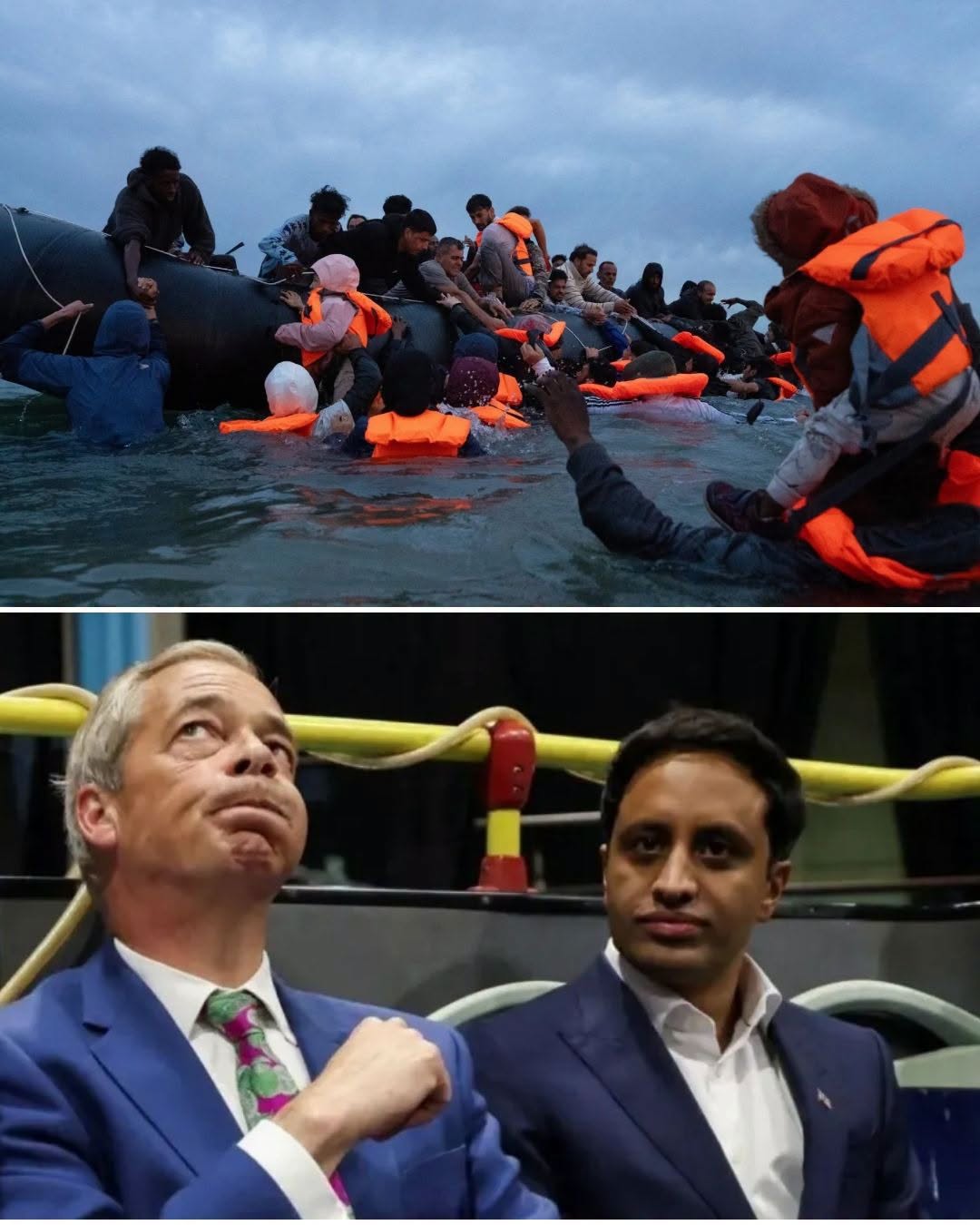
“400,000 COULD BE SENT BACK” — FARAGE’S ASYLUM CRACKDOWN SPARKS MAJOR CONTROVERSY! Nigel Farage’s Reform UK has put forward a hardline asylum proposal that could trigger a major legal and political battle in Britain. The plan reportedly includes reviewing the status of refugees who have already been granted protection, raising crucial questions about who could be affected and what legal challenges might follow. Supporters of tougher immigration controls are demanding answers, while the proposal is likely to intensify debate over refugee protections, border enforcement and the government’s responsibilities. Could this proposal reshape Britain’s asylum system — and what would it mean for those already granted refugee status? Read the full story and join the debate in the comments!”
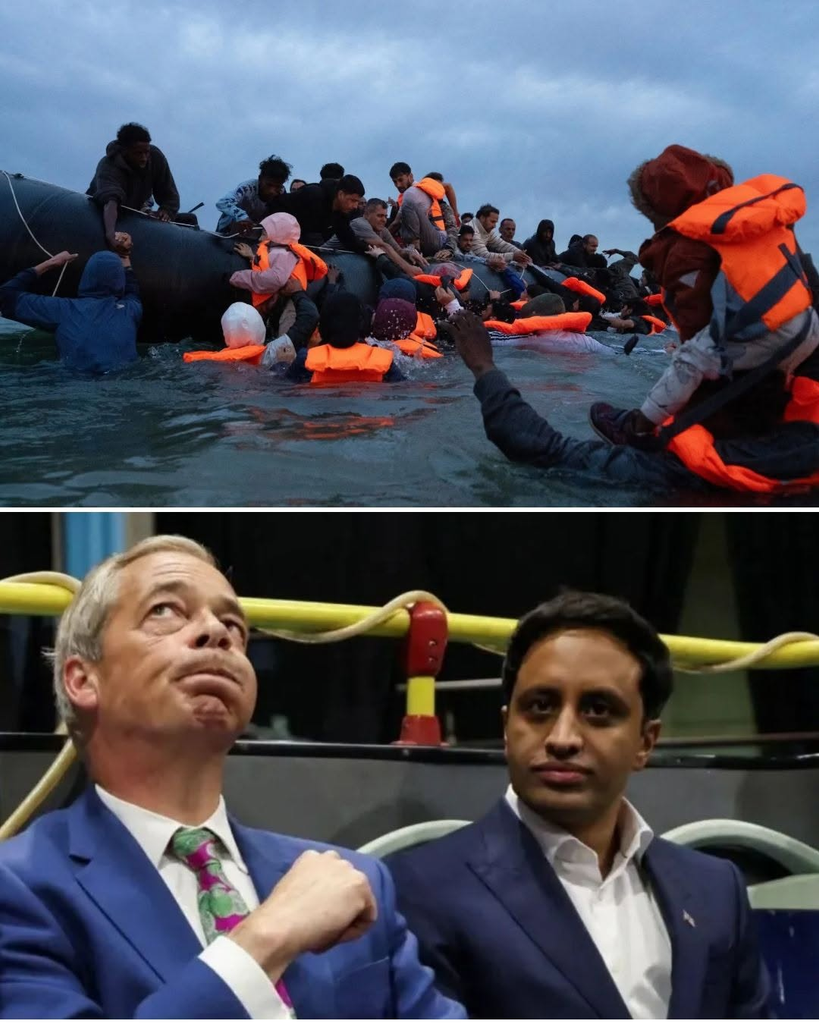
Proposals associated with Nigel Farage’s Reform UK have reignited debate over Britain’s immigration system, with claims that hundreds of thousands of people could face a review of their right to remain.
But the legal implications, practical feasibility and actual number of people affected require careful examination.
The United Kingdom is facing renewed political debate over immigration and asylum following proposals associated with Nigel Farage’s Reform UK party that could significantly change how the country handles refugee protection, residence rights and deportation.
At the centre of the controversy is a striking claim: as many as 400,000 people could potentially be sent back under a tougher asylum framework.
The figure has attracted considerable attention, but it is important to distinguish between a political estimate, the number of people who might undergo a status review, and the number who could lawfully be removed from the country.
These are not necessarily the same.
The proposals have raised fundamental questions about Britain’s legal obligations, the future of people already granted protection, and whether a government could implement sweeping changes without encountering substantial legal and administrative obstacles.
For supporters, stronger immigration enforcement represents an opportunity to restore confidence in the asylum system.
For critics, the proposals raise concerns about legal safeguards, human rights and the potential consequences for people who have already established lives in Britain.
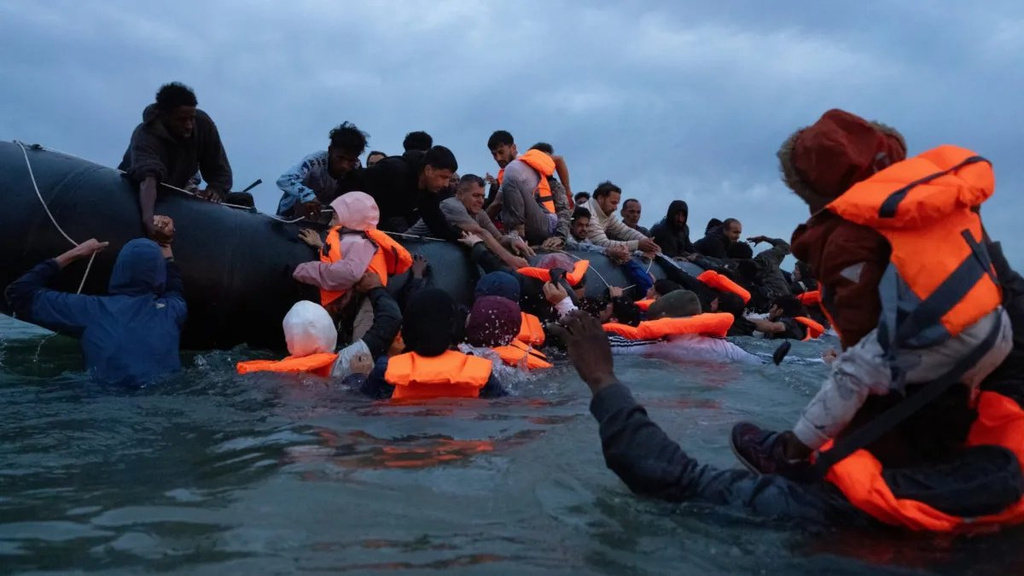
What Is Reform UK Proposing?
Reform UK, led by Nigel Farage, has positioned immigration control as one of its defining political priorities.
The party has advocated a more restrictive approach to irregular migration, asylum applications and the removal of people without a legal right to remain in the United Kingdom.
The latest controversy centres on proposals reportedly involving a reassessment of protection previously granted to refugees.
Under such an approach, authorities could examine whether individuals continue to meet the conditions required for refugee status or other forms of protection.
However, a review of someone’s status would not automatically mean that the person could be deported.
The outcome would depend on the applicable immigration rules, the individual’s circumstances, the evidence concerning conditions in their country of origin and any relevant legal protections.
The widely circulated figure of 400,000 should therefore not be interpreted as a confirmed deportation target or an established number of people who would ultimately be removed.
It is also essential to recognise that a party proposal is not the same as legislation currently in force.
Any substantial change would require the appropriate legal and governmental processes before it could be implemented.
Why Existing Refugee Status Matters
One of the most contentious aspects of the reported proposals is the possibility of reviewing people who have already received refugee protection.
Under international refugee law, individuals may qualify for protection when they have a well-founded fear of persecution for reasons including race, religion, nationality, political opinion or membership of a particular social group.
The United Kingdom is a party to the 1951 Refugee Convention and its 1967 Protocol, which establish important protections for refugees.
A central principle is non-refoulement, which generally prohibits returning a refugee to a place where their life or freedom would be threatened on protected grounds.
Refugee status is not necessarily permanent in every circumstance.
International law recognises situations in which protection may cease to be required, including where fundamental and durable changes have occurred in a person’s country of origin.
Nevertheless, determining whether protection can lawfully end is a complex process.
Authorities must consider individual circumstances and applicable safeguards rather than assume that changes in a country’s general political situation automatically make return safe for everyone.
This is why any proposal involving large-scale reassessment of refugee status would likely attract intense legal scrutiny.
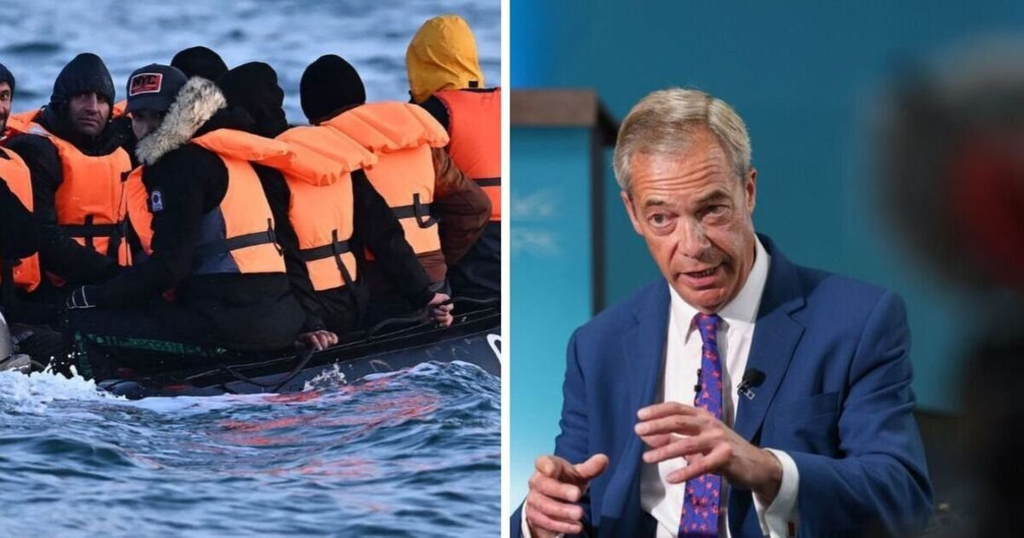
The Legal Challenges Facing a Major Overhaul
A government seeking to implement sweeping asylum reforms would need to navigate domestic legislation, international obligations and established principles of administrative law.
The Refugee Convention is one important consideration, but it is not the only relevant legal framework.
The European Convention on Human Rights also provides protections that can affect removal decisions, particularly where individuals face a real risk of torture or inhuman or degrading treatment.
Family and private life considerations may also be relevant in certain cases, depending on the circumstances and applicable law.
Even if Parliament introduced new immigration legislation, individual decisions could still generate legal disputes.
Courts might be asked to consider whether a proposed removal complied with statutory requirements, whether relevant evidence had been properly assessed and whether individuals had access to appropriate procedural protections.
The administrative demands could be substantial.
Reviewing large numbers of existing protection decisions would require trained caseworkers, updated country information, legal resources and systems capable of handling appeals or other challenges.
The practical ability to arrange returns would also depend on factors such as identity documentation, diplomatic cooperation and the willingness of destination countries to receive individuals.
As a result, the political announcement of an ambitious removal policy would not necessarily translate into removals on the same scale.
Why Supporters Want Tougher Controls
Supporters of stricter asylum and immigration policies argue that the government has a responsibility to maintain control over national borders and ensure that immigration rules are consistently enforced.
Some believe that a system allowing people to remain indefinitely without further examination of their protection needs could undermine public confidence.
They also argue that effective removal procedures are important when asylum applications are rejected or when individuals no longer qualify for protection under the law.
For these supporters, regular status reviews may appear to offer a way of ensuring that protection is provided to those who continue to need it.
Concerns about accommodation costs, public expenditure and pressure on administrative services have also featured prominently in Britain’s wider immigration debate.
However, the strength of these arguments depends partly on evidence about how many people could lawfully be affected and whether proposed reforms would produce the intended results.
Any credible assessment would need to consider financial costs, implementation capacity and potential legal consequences alongside the stated policy objectives.
Why Critics Are Raising Concerns
Opponents of a more restrictive approach warn that large-scale reviews could create prolonged uncertainty for refugees who have already been granted permission to live in Britain.
Some individuals may have spent years working, studying, raising children and building relationships within their communities.
A reassessment process could have consequences for housing, employment, education and family stability, particularly if decisions were delayed or challenged.
Refugee advocacy organisations and legal specialists have also raised broader concerns about policies that risk treating protection as a temporary privilege without sufficient attention to individual circumstances.
They argue that refugee status exists because a person has demonstrated a need for protection, not simply because a government has chosen to permit migration.
Another concern is that highly ambitious removal targets could place pressure on administrative decision-making.
A system focused primarily on numerical outcomes might face questions about whether each case receives adequate consideration.
These concerns do not mean that refugee status can never be reviewed.
Rather, they underline the importance of ensuring that any review process remains lawful, evidence-based and procedurally fair.
Could 400,000 People Really Be Sent Back?
The headline figure is perhaps the most politically powerful element of the controversy, but also one of the most important to scrutinise.
Several different categories of people can be involved in immigration statistics, including asylum applicants awaiting decisions, recognised refugees, individuals with humanitarian protection and people holding various forms of temporary or permanent permission to remain.
These categories have different legal rights and cannot automatically be combined into a single group eligible for removal.
Even among people whose protection status is reviewed, the number who might ultimately lose that status would depend on individual assessments.
Some could continue to qualify for refugee protection. Others might hold different lawful grounds for remaining in the country.
Still others could face practical or legal barriers to removal.
Without a clearly defined methodology and supporting official data, the 400,000 figure cannot reliably establish how many people would actually be deported.
A responsible evaluation must distinguish political ambition from legal possibility and operational reality.
What Happens Next?
The wider significance of Reform UK’s proposals will depend on how they are developed, whether they gain sufficient political support and what specific legal mechanisms are proposed.
Detailed policy documents, parliamentary scrutiny, independent legal analysis and official immigration statistics would all help establish the likely effects.
The debate also reflects a broader challenge facing the United Kingdom: how to balance immigration enforcement with humanitarian protection and the rule of law.
Different political parties may place different emphasis on border control, public expenditure, international commitments and the rights of individuals seeking safety.
Those disagreements are legitimate subjects for democratic debate, but meaningful discussion requires accurate information about what is being proposed and what existing law permits.
For people already living in Britain under refugee protection, political rhetoric alone does not automatically change their legal status.
Any future changes would depend on legislation, applicable procedures and individual decisions.
A Defining Debate Over Britain’s Immigration Future
Reform UK’s reported asylum proposals have brought difficult questions about immigration, national sovereignty and refugee rights back into the political spotlight.
The possibility of reviewing previously granted protection raises genuine legal and humanitarian issues, while the suggestion that hundreds of thousands of people could be removed has intensified public attention.
Yet the distinction between a proposal and an enforceable policy remains crucial.
There is no basis for treating the headline claim that 400,000 people will be sent back as an established outcome.
The number of individuals who might be reviewed, lose protection or ultimately face removal would depend on legal rules, evidence and practical implementation.
For Britain, the debate is likely to extend beyond immigration statistics.
It concerns the country’s approach to international obligations, the limits of government power and the treatment of people who have sought protection within its borders.
Whatever direction future policy takes, its consequences should be judged through verifiable evidence, legal scrutiny and transparent public discussion rather than dramatic predictions alone.