MP INTRODUCES LAW FORCING LABOUR TO RESTRICT MUSLIM ‘HALAL SLAUGHTER’ — Explosive Bill Sparks Outrage! It started as a quiet parliamentary move — then an MP dropped a bombshell bill that would force the Labour government to impose strict new restrictions on Muslim ‘halal slaughter’. The proposal demands tighter rules on religious slaughter practices, citing animal welfare concerns and calling for an end to what the MP describes as outdated and cruel methods. But this dramatic push reportedly hides even deeper cultural and political battles still to come… See the moment the controversial law was introduced — watch now!
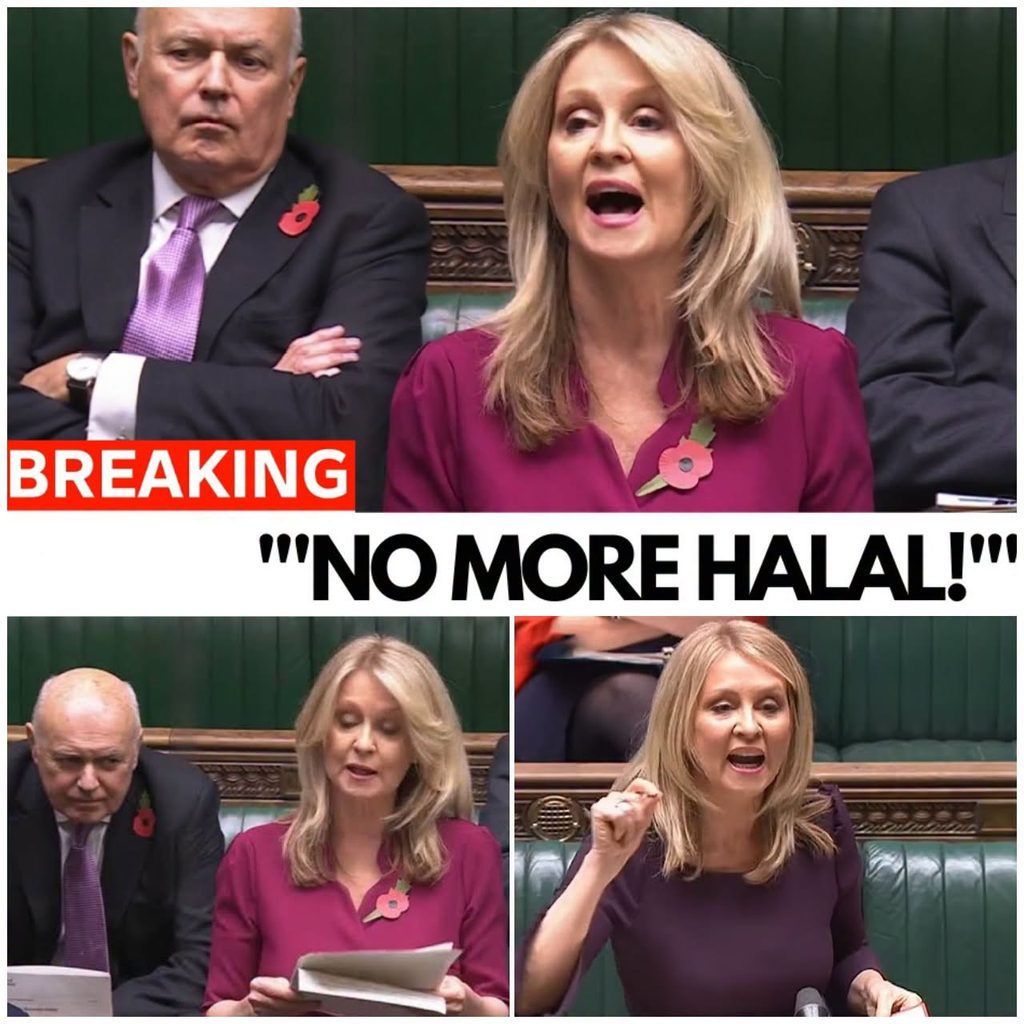
WESTMINSTER — A controversial proposal to force clearer labelling of halal and kosher meat has cleared its first parliamentary hurdle, reopening one of Britain’s most sensitive debates over animal welfare, religious freedom and the public’s right to know how its food was produced.
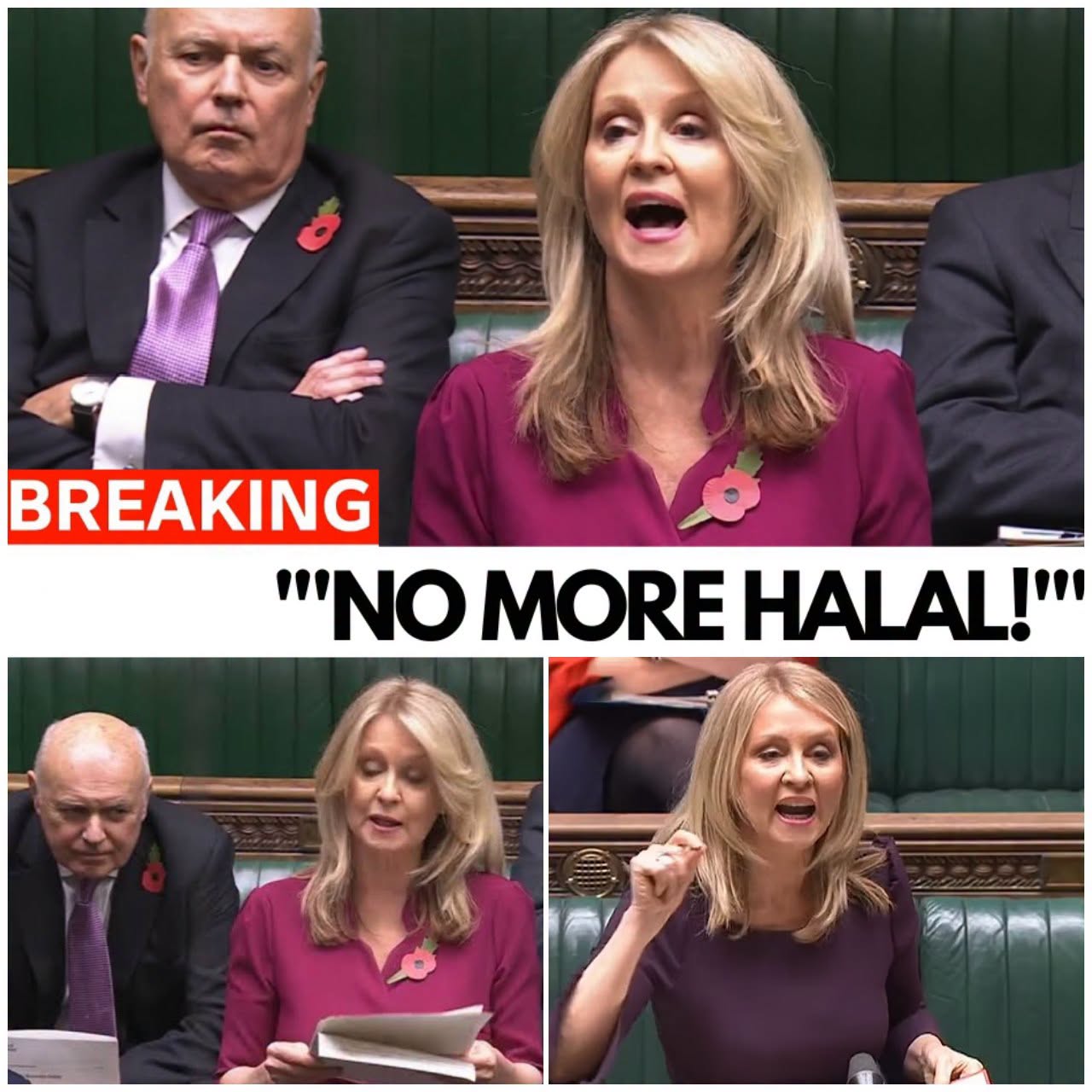
Conservative MP Esther McVey introduced the Food Labelling (Halal and Kosher Meat) Bill in the House of Commons on November 3, arguing that consumers should be told clearly when meat has been prepared according to halal or kosher requirements.
But despite viral headlines suggesting MPs are moving to “restrict Muslim halal slaughter”, the proposal does something considerably narrower.
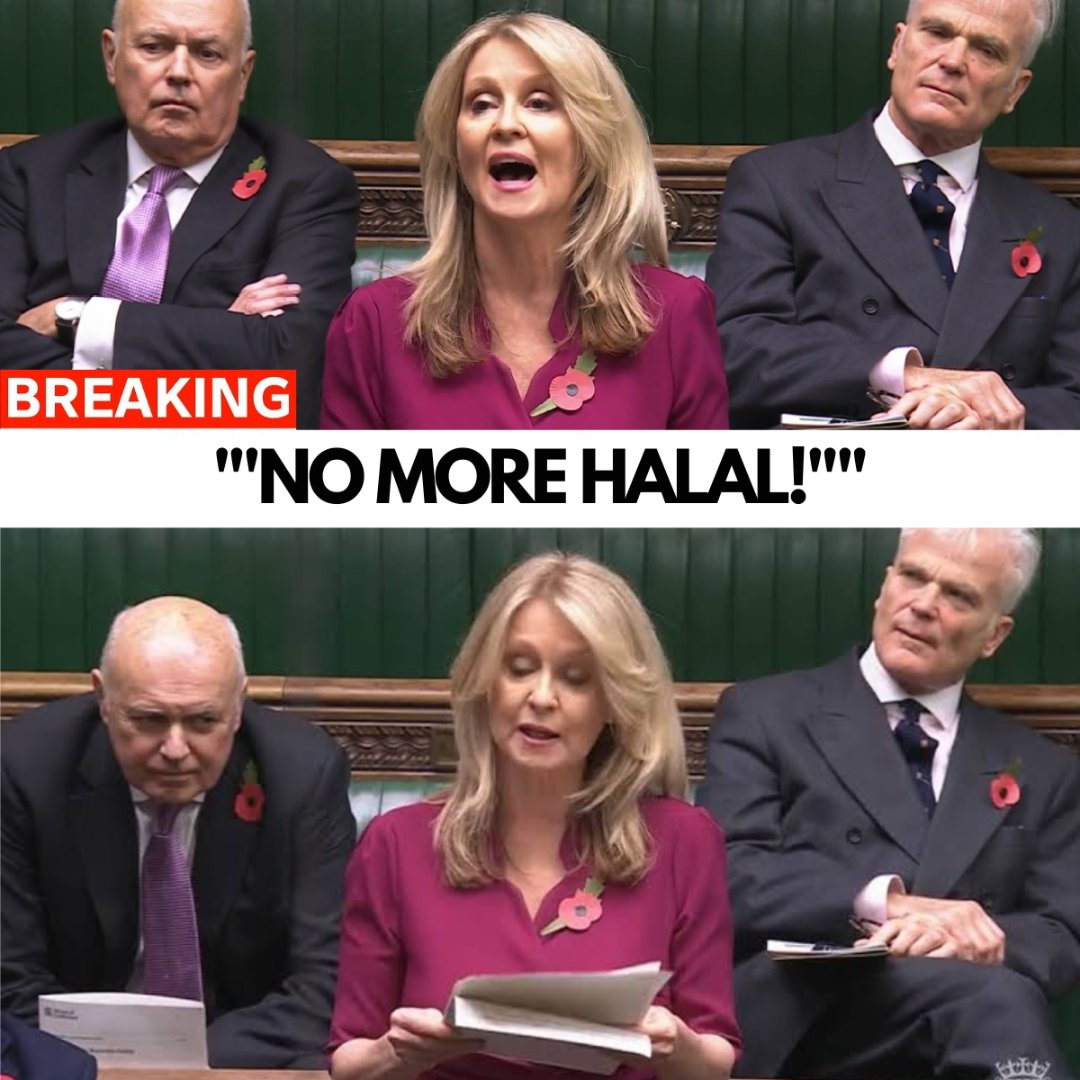
It does not ban halal meat.
It does not ban kosher meat.
And it does not currently prohibit religious slaughter without stunning.
Instead, McVey wants compulsory labels telling consumers that meat — or products containing meat — is halal or kosher.
Speaking in the Commons, McVey said the existing voluntary system was inconsistent and could leave customers unaware of what they were buying.
“Every consumer has a right to make an informed choice,” she argued.
For McVey, the dispute centres particularly on stunning.
Under UK rules, animals generally have to be stunned before slaughter so that they are unconscious and unable to feel pain.
There are, however, religious exemptions for halal and kosher slaughter.
Government guidance states that animals must normally be stunned unless they are being slaughtered according to religious rites.
Halal slaughter can involve either stunned or non-stunned animals, while traditional Jewish Shechita slaughter is carried out without pre-stunning.
That distinction is frequently lost in political debate.
The phrase “halal meat” does not automatically mean an animal was slaughtered while fully conscious.
Food Standards Agency figures show that most halal meat production involves stunning.
In its 2024 survey, for example, the FSA found that approximately 88% of halal meat chickens were stunned before slaughter.
Overall, 97% of poultry and 85% of red-meat animals processed in England and Wales were stunned.
That makes McVey’s proposal broader than simply labelling “non-stunned meat”.
Her bill specifically calls for identifying meat as halal or kosher.
McVey argues that religious-production methods themselves are information consumers may legitimately want when making purchasing decisions.
Her critics see a potential problem with that approach.
If the principal welfare issue is whether an animal was stunned, they argue that a label saying “stunned” or “non-stunned” could give consumers more precise welfare information without singling out religious communities.
That debate is likely to become increasingly important as the bill progresses.
McVey also highlighted the scale of religious slaughter.
She told MPs that, of roughly one billion animals processed in England and Wales during 2024, about 215 million were slaughtered for halal production.
The official 2024 slaughter survey confirms that religious slaughter constitutes a substantial part of particular meat markets, although the picture differs dramatically by species.
For sheep, 53.3% were halal with stunning and 27.8% were halal without stunning during the survey period.
For meat chickens, 18.9% were halal stunned and only 2.5% halal non-stunned.
Kosher Shechita accounted for much smaller proportions overall.
Those numbers reveal why blanket statements about “halal slaughter” can be misleading.
There is a major difference between religious certification and slaughter without stunning.
McVey nevertheless argued that the current system does not provide enough transparency.
She claimed halal and kosher meat can enter supermarkets, restaurants, schools and hospitals without consumers necessarily knowing its production method.
She also criticised Labour’s animal-welfare agenda, saying its strategy addressed issues ranging from farmed fish to pig stunning while failing to confront religious non-stun slaughter.
The wider policy question is genuine.
The Food Standards Agency itself states there is currently no legal requirement for meat to carry a label describing its slaughter method.
Businesses may voluntarily provide such information, but it must be accurate and not misleading.
The government also maintains a balancing position.
Defra and the FSA say they favour pre-slaughter stunning on animal-welfare grounds while recognising the rights of Jewish and Muslim communities to consume food prepared according to their religious beliefs.
So what actually happened in Parliament?
After McVey finished her speech, the Deputy Speaker put the question to MPs.
There was no recorded division.
The motion was agreed.
McVey was therefore given permission to introduce the bill, which received its First Reading.
That sounds significant — but it is only the beginning of the legislative process.
The bill is scheduled for a Second Reading on January 15, 2027.
At that stage MPs can debate the principle of the legislation more fully.
It would then still need to survive further Commons stages, scrutiny, the House of Lords and Royal Assent before becoming law.
This distinction matters because Ten Minute Rule Bills frequently attract attention without ultimately becoming law.
They are often used by MPs to put an issue on the parliamentary agenda.
So Labour has not yet been “forced” to impose restrictions on halal slaughter.
No ban has been passed.
No new restriction has taken effect.
What Parliament has done is allow McVey to formally introduce a proposal for compulsory labelling.
And that proposal applies to both halal and kosher meat.
The political battle ahead is therefore likely to centre on three competing principles.
Consumer choice.
Animal welfare.
Religious freedom.
Supporters will argue that consumers deserve to know exactly how their food was produced.
Opponents may argue that religious labels risk stigmatising Muslim and Jewish communities — particularly when most halal meat is already produced using stunning.
A potential compromise could focus more narrowly on the slaughter method itself: clearly identifying whether animals were stunned or non-stunned.
But that is not the legislation currently before Parliament.
For now, the real breaking-news headline is more precise:
Esther McVey has successfully introduced a bill seeking compulsory halal and kosher meat labelling — but Parliament has not banned religious slaughter, and the fight over whether the proposal becomes law is only beginning.