OUTRAGE ERUPTS AFTER RUPERT LOWE’S REMARKS REIGNITE NATIONAL DEBATE OVER GUNS, FREE SPEECH, AND POLITICALRESPONSIBILITY
A fresh political controversy has placed Reform UK MP Rupert Lowe at the center of a heated national conversation after comments he made during a discussion about firearms generated widespread criticism across Britain. The remarks, which some interpreted as invoking one of the country’s most traumatic mass shootings, quickly spread across social media and news platforms, prompting condemnation from political opponents, campaign groups, and members of the public. Supporters argued that Lowe’s words were taken out of context and that the backlash reflected a broader tendency to police political speech. Critics, however, maintained that references touching upon national tragedies require exceptional sensitivity regardless of intent. As reactions continue to unfold, the episode has reignited longstanding debates about political rhetoric, responsible public discourse, and the role of elected officials in shaping conversations on emotionally charged issues.
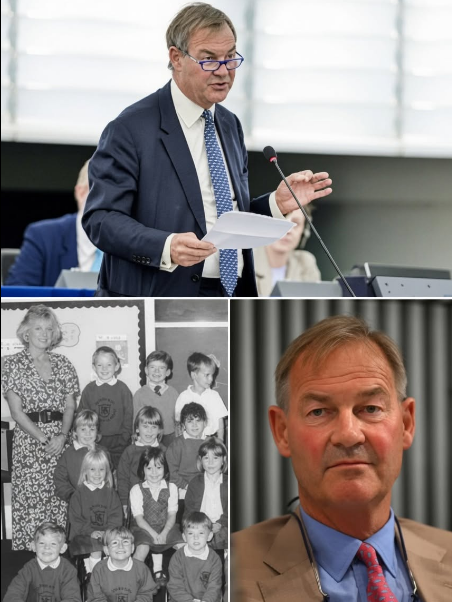
Britain has witnessed no shortage of political controversies in recent years, yet certain subjects continue to carry particular emotional weight. Gun violence remains one of those issues, largely because the United Kingdom has experienced relatively few mass shootings compared with many other countries. When tragedies have occurred, however, they have profoundly shaped public opinion and influenced national legislation. As a result, any public figure discussing firearms often faces close scrutiny, especially when historical events appear to be referenced. Against this backdrop, Rupert Lowe’s recent comments quickly became the focus of intense public attention.
The controversy emerged during a broader discussion surrounding firearm policy and the right to self-defense. According to reports and circulating video clips, Lowe made remarks that many viewers believed referenced one of Britain’s most devastating shooting incidents. While interpretations differed depending on which excerpts people viewed, the reaction was immediate. Social media platforms rapidly filled with criticism, commentary, and competing interpretations of what had actually been said. Within hours, the discussion had expanded far beyond the original conversation.
Critics argued that political leaders should exercise particular care when discussing subjects associated with national trauma. For families directly affected by violent incidents, memories remain deeply personal regardless of how much time has passed. Some campaigners suggested that introducing such comparisons into modern political debates risks reopening painful wounds while distracting attention from constructive policy discussion. Others questioned whether elected representatives have a heightened responsibility to consider the emotional impact of their public statements.
Supporters of Lowe presented a very different interpretation. Many insisted that his remarks had been selectively edited or quoted without sufficient context. They argued that full recordings painted a more nuanced picture and suggested that critics were deliberately focusing on isolated phrases rather than the broader discussion. Some supporters also claimed that political opponents were using the controversy to damage Lowe’s reputation rather than engaging with his wider arguments concerning public safety and firearms legislation.
As frequently happens in the digital age, the speed with which information spread contributed significantly to the intensity of the debate. Short video clips circulated widely across multiple social media platforms, often accompanied by strongly worded captions expressing either outrage or support. In many cases, users formed opinions based on excerpts lasting only a few seconds. Communication experts have long observed that such fragmented presentation can amplify misunderstanding by removing important context from complex conversations.
The incident also illustrates the increasingly influential role played by social media in shaping modern political controversies. Platforms reward emotionally engaging content, meaning that clips provoking anger, surprise, or disagreement often receive significantly greater visibility than more measured discussions. As a consequence, controversial moments can dominate national conversation long before complete transcripts or fuller explanations become widely available. This dynamic has become a defining characteristic of contemporary political communication.
Britain’s relationship with firearms differs substantially from that of many other democracies. Strict gun control laws introduced over several decades have contributed to comparatively low rates of firearm ownership and gun-related violence. Many citizens regard these regulations as an essential component of public safety, while others occasionally argue for limited changes in specific circumstances. Because firearm policy remains closely linked to historic tragedies, debates surrounding the issue often become highly emotional regardless of the specific proposals under discussion.
Several observers noted that references to historic acts of violence carry symbolic significance extending well beyond their immediate political context. For many people, such events represent defining moments in Britain’s collective memory. Public discussion involving these incidents therefore requires careful consideration not only of factual accuracy but also of emotional sensitivity. Whether or not Lowe intended to provoke controversy, critics argued that public officials should anticipate how certain comparisons may be received.
Political analysts pointed out that controversies involving language often reveal broader tensions already existing within society. Rather than creating entirely new divisions, such incidents frequently expose disagreements concerning values, priorities, and expectations of public leadership. In this case, reactions reflected wider debates over free speech, accountability, media coverage, and the standards to which politicians should be held. Those broader issues may ultimately prove more significant than the original comments themselves.
The response from political opponents was swift. Some politicians criticized the remarks as inappropriate, arguing that elected representatives should avoid language capable of causing unnecessary distress. Others called for clarification regarding the intention behind Lowe’s comments. While criticism varied in tone, much of it centered on the principle that political debate can remain robust without invoking events associated with profound national suffering.
Meanwhile, individuals sympathetic to Lowe argued that the reaction demonstrated an increasingly restrictive political environment in which controversial opinions attract disproportionate condemnation. Some expressed concern that politicians may become reluctant to discuss difficult issues openly if isolated remarks consistently generate intense public backlash. According to this
perspective, democratic debate benefits when participants can address challenging subjects without fear that every controversial phrase will dominate national headlines.
Media coverage itself also became part of the controversy. Different publications emphasized different aspects of the story, with some focusing primarily on the remarks themselves while others highlighted subsequent reactions from political figures and advocacy groups. Commentators noted that editorial framing can significantly influence how audiences interpret controversial events. Readers exposed to contrasting headlines sometimes reached markedly different conclusions despite examining the same underlying incident.
Experts in political communication frequently emphasize the importance of distinguishing between verified facts and interpretation during rapidly developing controversies. Video excerpts, eyewitness accounts, and social media commentary may each provide valuable information, yet none necessarily present a complete picture independently. As discussions evolve, additional context often emerges that allows more balanced assessment of disputed remarks. This principle has become increasingly important in an era of instantaneous digital communication.
The episode has also prompted renewed discussion regarding the responsibilities of elected representatives when participating in highly sensitive policy debates. Politicians are expected to express clear positions on contentious issues while simultaneously maintaining public confidence and demonstrating empathy toward those affected by historical tragedies. Achieving that balance is rarely straightforward, particularly when debates involve emotionally charged topics such as public safety, violent crime, or national security.
Beyond the immediate controversy, the discussion reflects continuing public interest in how Britain should address questions surrounding crime and personal security. While firearm ownership remains heavily restricted, broader conversations about policing, community safety, sentencing policy, and self-defense continue to feature prominently in political debate. These wider concerns help explain why remarks made during firearm discussions often receive substantial public attention even when no legislative proposals are directly involved.
Political historians observe that public controversies rarely exist in isolation. Instead, they often become intertwined with existing narratives surrounding individual politicians. Rupert Lowe has previously attracted attention for outspoken positions on immigration, policing, public spending, and governance. Consequently, reactions to his latest remarks were influenced not only by the specific comments but also by broader public perceptions regarding his political style and communication approach.
For Reform UK, the incident arrives during a period of growing national visibility. The party has increasingly positioned itself as a challenger to Britain’s established political parties by advocating significant changes across multiple policy areas. Greater public prominence, however, inevitably brings greater scrutiny. As political organizations expand their electoral reach, statements by senior figures frequently receive closer examination from journalists, opponents, and voters alike.
Whether the controversy ultimately influences public opinion remains uncertain. Political research suggests that short-term media attention does not always translate into lasting electoral consequences. Some controversies fade rapidly as new events dominate the news cycle, while others contribute gradually to broader perceptions regarding leadership, judgment, and credibility. Much depends on subsequent developments, public responses, and whether additional information emerges that changes understanding of the original remarks.
At present, supporters and critics remain sharply divided over what the incident represents. Some believe it demonstrates unacceptable insensitivity toward victims of historic violence, while others see it as an example of political rhetoric being interpreted in the harshest possible light. Without broader consensus regarding intent, much of the disagreement reflects differing expectations about how public figures should communicate on emotionally charged issues. Those contrasting perspectives are unlikely to disappear quickly.
Ultimately, the debate surrounding Rupert Lowe’s remarks extends beyond a single political controversy. It touches upon enduring questions concerning freedom of expression, public accountability, historical memory, media responsibility, and the standards expected of elected representatives. As Britain continues to navigate increasingly polarized political conversations, episodes such as this illustrate how language itself can become a catalyst for wider national reflection. Regardless of where individuals stand on the controversy, the discussion serves as a reminder that words spoken by public officials often carry consequences reaching far beyond the moment in which they are first uttered.