FARAGE DROPS A MIGRATION BOMBSHELL. The Reform UK leader says migrants arriving illegally should not be free to move into surrounding communities while their cases are processed.
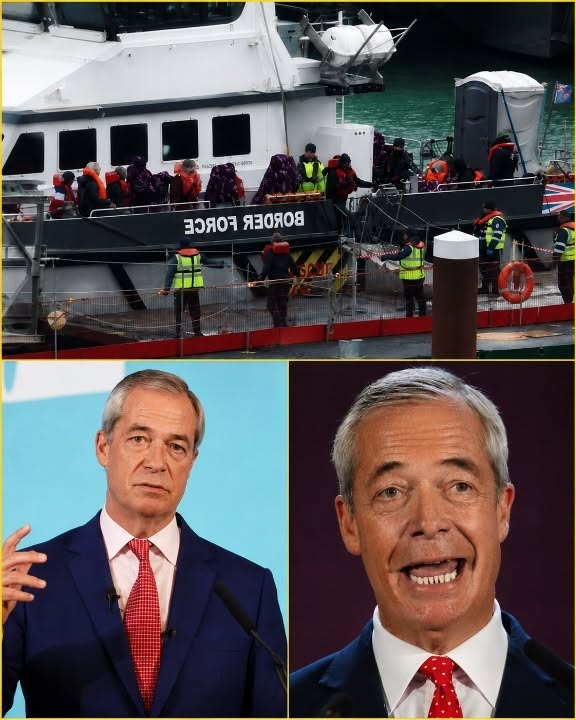
Farage’s Migration “Bombshell” Sparks Debate Over Detention Centres, Public Safety and Britain’s Border System
Nigel Farage has triggered a fresh political row after arguing that migrants who arrive in the United Kingdom illegally should not be free to move into surrounding communities while their asylum and immigration cases are being processed.
The Reform UK leader’s proposal would see certain accommodation sites operate more like detention centres, with people who enter the country illegally held in controlled facilities rather than placed in hotels, former military bases or community accommodation where they may be able to move around freely.
Supporters of the plan say it is a common-sense response to a system they believe has lost control. They argue that people who arrive illegally should not be allowed to disappear into communities while claims are processed, and that detention-style accommodation would help restore public confidence, protect local residents and deter future illegal crossings.
Critics, however, say the idea raises serious questions about legality, cost, capacity, human rights and practicality. They warn that turning asylum accommodation into detention centres could create a vast and expensive system that may face court challenges, staffing problems and international criticism.
The proposal has once again placed immigration at the centre of Britain’s political debate.
What Farage Is Proposing
Farage’s latest argument fits into Reform UK’s broader immigration strategy, which has focused on detention, deportation and deterrence.
Earlier reporting on Reform’s migration plans said the party wanted those arriving on small boats to face immediate arrest, while also building detention centres with capacity for tens of thousands of people. The Evening Standard reported that Farage had discussed plans to create 24,000 detention places and sign return deals with countries including Afghanistan and Eritrea.
GB News also reported that Farage had said a Reform government would transform military barracks currently used for asylum accommodation into detention facilities from the first day in office, with illegal migrants barred from entering nearby towns.
The latest framing is politically direct: if someone arrives illegally, they should not be treated like an ordinary resident while the state decides whether they have a right to remain.
For Reform supporters, this is the key distinction. They argue that asylum claims can still be processed, but that the person should remain in secure accommodation while that process takes place.
Why Supporters Call It Common Sense
Supporters of the proposal argue that the current system creates perverse incentives.
They say that if people can cross the Channel illegally, enter the asylum system and then live in the community while waiting for decisions, Britain sends the message that illegal entry may be rewarded with access to accommodation, support and eventually possible residence.
For those voters, detention-style accommodation is not only about security. It is about deterrence.
They believe fewer people would attempt dangerous Channel crossings if they knew arrival would mean detention and likely removal rather than release into the community.
Supporters also argue that local communities have been placed under unfair pressure. Across the UK, asylum hotels and former military sites have become flashpoints, with residents complaining about lack of consultation, pressure on services and concerns over safety. A recent High Court case involving a former army barracks in Crowborough, East Sussex, showed how deeply contested these accommodation decisions have become, with local campaigners arguing that the Home Office acted unlawfully and without proper consultation.
For Farage’s supporters, the answer is simple: if the government must house people while their claims are considered, those sites should be secure, controlled and separated from surrounding communities.
Critics Warn of Legal and Practical Problems
Critics say the proposal may sound simple but would be difficult to implement.
Detention is not the same as accommodation. A hotel room or barracks bed can be arranged relatively quickly. A detention centre requires secure facilities, trained staff, healthcare, legal access, safeguarding systems, monitoring, food, transport, fire safety, security procedures and oversight.
If the UK were to detain large numbers of people arriving illegally, the state would need a major expansion of detention capacity. Reform has previously been reported as discussing 24,000 detention places, but even that number may not be enough if arrivals and case backlogs remain high.
There is also the legal question. People who claim asylum have a right to have their claims assessed. Entering irregularly does not automatically mean someone has no protection claim. Under asylum law, a person may still qualify for refugee protection if they face persecution or serious harm in their country of origin.
Critics argue that mass detention could face legal challenges if it is applied too broadly, lasts too long, or fails to distinguish between adults, families, trafficking victims, children, people with medical conditions and those with strong asylum claims.
The Human Rights Debate
Human rights groups are likely to strongly oppose any policy that moves Britain toward large-scale detention of asylum seekers.
Their argument is that detention should be used only when necessary and proportionate, not as a default response to irregular arrival. They say many asylum seekers have fled war, persecution, torture or trafficking and should not be treated as criminals before their cases are heard.
Research on asylum seekers’ experiences in the UK has highlighted how border control and immigration systems can produce long-term insecurity, anxiety and uncertainty for people seeking protection.
Supporters of Farage’s proposal respond that compassion cannot mean loss of control. They argue that a country can assess asylum claims fairly while still preventing people who enter illegally from moving freely during the process.
That is the central moral divide: one side emphasises individual liberty and protection; the other emphasises sovereignty, deterrence and public order.
Public Safety and Community Confidence
One reason the proposal has gained traction is public concern over asylum accommodation.
In several towns, hotels and former barracks used to house asylum seekers have become centres of protest. Some protests have focused on public spending and lack of consultation. Others have been linked to local safety fears, misinformation, or anger after alleged crimes.
The government’s challenge is that even when claims are unproven, public trust can collapse quickly if residents feel they are being kept in the dark.
Farage’s proposal speaks directly to that distrust. By saying accommodation sites should be detention centres, he is offering a policy that appears to reassure communities: people who arrived illegally would be contained, monitored and prevented from entering local areas freely.
Critics argue this risks treating all irregular arrivals as dangerous, even when most have not been accused of crimes. They warn that the policy could deepen hostility toward asylum seekers and blur the line between immigration control and criminal punishment.
The Deterrence Question
The biggest claim behind the proposal is deterrence.
Farage and Reform UK argue that if Britain becomes much tougher, fewer people will attempt to cross the Channel. They say detention and removal would break the business model of people-smuggling gangs.
There is some evidence that enforcement pressure and cooperation with France can affect small-boat numbers. Financial Times reporting recently noted a sharp decline in small-boat arrivals in 2026, with analysis pointing to factors including intensified enforcement in France, fewer asylum seekers arriving in Europe, and UK measures such as returns cooperation and removals.
But critics caution that migration routes are highly adaptive. If one route becomes harder, smugglers may shift tactics. They may use larger boats, different launch points, forged documents or more dangerous methods.
That means detention may deter some arrivals, but it is unlikely to be a complete solution on its own.
Cost and Capacity
The cost of the policy would be a major issue.
Detention centres are expensive to build and operate. They require security staff, healthcare provision, legal access, maintenance, monitoring and transport. If the government detained thousands or tens of thousands of people, the cost could run into billions over time.
Supporters may argue that this cost is justified if it ends hotel use, reduces long-term asylum support spending and deters future crossings.
Critics may respond that the policy could simply replace one expensive system with another, especially if removals remain difficult because of legal appeals or lack of return agreements.
The key point is that detention only works as part of a wider removal system. If people are detained but cannot be removed, the state may end up holding them for long periods at huge cost.
Deportation Is the Hardest Part
Detention is only one half of the proposal. The other half is removal.
For the plan to work, Britain would need agreements with countries willing to accept returnees. That can be difficult when people lack documents, dispute nationality, or come from countries that are unsafe or unwilling to cooperate.
Reform has previously talked about large-scale deportations. The Independent reported that Farage’s “Operation Restoring Justice” was presented as a five-year emergency programme to detain and deport illegal migrants, with claims that hundreds of thousands could be removed during a first Reform parliament.
But the practical barriers are significant. Deportation requires identity verification, travel documents, receiving-country cooperation, legal process, transport capacity and sometimes diplomatic deals.
This is where critics say Reform’s plan may be politically powerful but operationally difficult.
The Political Impact
The proposal is politically effective because it is easy to understand.
Farage is drawing a clear contrast between Reform and the mainstream parties. His message is that Labour and the Conservatives have allowed illegal arrivals to remain in the country while Reform would detain and remove them.
For voters frustrated by small boats, asylum hotels and slow case processing, that message may be attractive.
It also places pressure on Labour and the Conservatives. If they reject the proposal, Reform can accuse them of being weak. If they move closer to it, Reform can claim it has forced the national conversation.
That is one reason immigration remains Farage’s strongest political territory. He is able to turn complex administrative failures into simple questions of control, fairness and sovereignty.
The Risk for Reform
However, the same simplicity creates risk.
If Reform promises detention and deportation on a massive scale, voters may eventually ask for exact answers: where will the centres be built, how much will they cost, who will staff them, how long will people be held, which countries will accept returns, and what happens when courts intervene?
A party campaigning from opposition can use bold language. A party seeking power must show a plan that survives contact with law, budgets and international diplomacy.
That is the test Farage’s proposal will face.
Conclusion: A Proposal That Captures Britain’s Immigration Divide
Nigel Farage’s call to turn migrant accommodation sites into detention centres has sparked intense debate because it captures the central divide in British immigration politics.
Supporters see the proposal as a necessary step to restore border control, deter illegal crossings and reassure communities that the law is being enforced.
Critics see it as legally risky, costly, impractical and potentially harmful to people who may have legitimate asylum claims.
Both sides are responding to real concerns.
Britain’s current asylum system is slow, expensive and widely distrusted. But replacing it with a detention-first model would require major legal, financial and operational changes.
The real question is not whether Britain should have control of its borders. Most voters agree that it should.
The question is whether Farage’s plan would deliver that control – or whether it would create a new system that is even more expensive, contested and difficult to manage.
For now, the proposal has done what Farage’s migration interventions often do: it has forced Westminster to talk about borders, detention and deportation on his terms.
And once again, Britain is divided over how far the state should go to regain control.