
U.S. Immigration Enforcement in Focus: Examining ICEDeportation Trends, Detention Data, and the Ongoing National Debate During Fiscal Year 2026
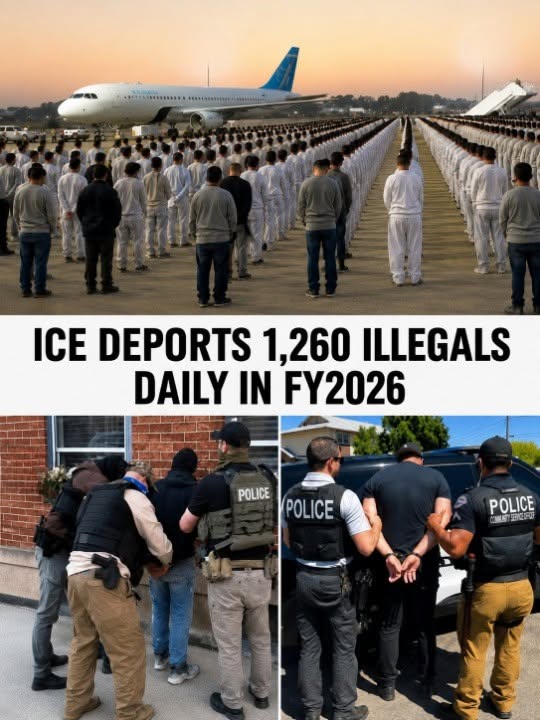
Immigration has remained one of the most closely watched and politically significant issues in the United States for decades, influencing elections, shaping domestic policy, affecting international relations, and generating intense public discussion across the political spectrum. Throughout Fiscal Year 2026, immigration enforcement has once again become a central topic following the release of new figures showing the continued pace of deportation operations conducted by U.S. Immigration and Customs Enforcement (ICE). According to recently reported data, ICE has carried out more than 356,000 deportations since the beginning of Fiscal Year 2026, averaging approximately 1,260 removals each day through the middle of July. At the same time, detention numbers have also continued to rise, with more than 65,700 individuals reportedly being held in ICE custody. The statistics have renewed debate over border security, immigration policy, public safety, humanitarian obligations, and the long-term direction of America’s immigration system.
POLICE
POLICE
POLICE
BREAKING
The newly reported figures provide a snapshot of current immigration enforcement activity rather than a complete picture of the broader immigration landscape. Deportation totals, detention capacity.
criminal history statistics, and monthly booking numbers all represent only part of a much larger system involving federal agencies, immigration courts, asylum officers, local law enforcement partnerships, and international cooperation with foreign governments. Immigration enforcement is a highly complex process governed by U.S. federal law, administrative procedures, judicial review, constitutional protections, and international obligations. As with previous years, the latest numbers have been interpreted differently by supporters and critics of current enforcement policies, each emphasizing different aspects of the available data.
According to the reported statistics, more than 356,000 deportations have taken place since the beginning of Fiscal Year 2026. Averaged across the reporting period through mid-July, that equates to roughly 1,260 removals every day. Deportation, formally known in many legal contexts as “removal,” generally refers to the process through which a non-citizen is ordered to leave the United States following immigration proceedings or other legal determinations. Deportations may involve individuals who recently crossed the border without authorization, people whose visas have expired, individuals who violated immigration laws, or non-citizens convicted of certain criminal offenses. Each case follows its own legal pathway, and not every individual encountered by immigration authorities ultimately faces removal.
While the overall deportation total has attracted considerable public attention, immigration experts often caution that raw numbers alone do not fully explain enforcement priorities. Deportation figures can fluctuate because of changes in migration patterns, available detention space, court backlogs, staffing levels, diplomatic agreements with countries accepting returning nationals, weather conditions affecting border crossings, and operational priorities established by federal agencies. Comparing one fiscal year with another can therefore require careful analysis rather than relying solely on headline totals. A higher number of removals may reflect increased enforcement capacity, greater migration flows, faster case processing, or a combination of several factors occurring simultaneously.
Another statistic drawing significant attention concerns ICE detention levels. According to the reported data, approximately 65,765 individuals are currently being held in ICE detention facilities. Immigration detention is intended to ensure that certain non-citizens remain available for immigration proceedings or removal while their cases are pending. Detention facilities vary considerably in size, management structure, and operational model. Some are operated directly by the federal government, while others are managed by private contractors or local governments under agreements with federal authorities. The conditions, oversight mechanisms, and management of these facilities have long been the subject of political debate, legal scrutiny, congressional oversight, and public interest.
The reported figures also indicate that roughly 60 percent of those currently detained either have criminal convictions or are facing pending criminal charges. This statistic has become one of the most widely discussed elements of the latest data release. Supporters of stronger immigration enforcement argue that prioritizing individuals with criminal histories reflects a focus on public safety and fulfills one of ICE’s stated enforcement objectives. They contend that concentrating resources on individuals convicted of crimes helps protect communities and reinforces the rule of law. From this perspective, criminal history remains an important factor in determining enforcement priorities, although immigration violations themselves are separate legal matters from criminal offenses in many cases.
Critics, however, note that the reported figure also means a substantial minority of detainees do not fall into the category of having criminal convictions or pending criminal charges. They argue that immigration detention includes individuals whose primary legal issue relates to immigration status rather than criminal conduct. Human rights organizations, immigrant advocacy groups, and some legal scholars have repeatedly emphasized that immigration violations are generally civil matters under U.S. law rather than criminal offenses. They therefore argue that discussions about detention statistics should carefully distinguish between individuals with criminal convictions, those facing unresolved charges, and those involved solely in immigration proceedings.
The distinction between criminal and civil immigration enforcement has become increasingly important in public conversations. Immigration law operates through a separate legal framework from the criminal justice system, although the two systems sometimes intersect. Individuals convicted of certain crimes may become removable under immigration law, while others may face immigration proceedings without ever being charged with a criminal offense. Consequently, statistics describing detention populations often require careful interpretation to avoid oversimplifying the diverse legal circumstances of people held in immigration custody.
Another notable development in the latest figures is the continued increase in detention bookings. According to the reported data, June recorded the highest monthly number of detention bookings so far during Fiscal Year 2026. Furthermore, July appeared to be on pace to exceed June’s total before the reporting period concluded. Rising detention bookings may reflect several different developments occurring simultaneously. Increased encounters at the border, expanded interior enforcement operations, improved operational capacity, additional detention space, or changes in enforcement priorities could each contribute to higher booking totals. Without further official analysis, it is difficult to attribute the increase to any single factor.
The pace of immigration enforcement is closely connected to broader migration trends affecting the United States. For several years, the country has experienced historically elevated numbers of encounters along portions of the southern border, creating significant operational challenges for immigration authorities. Border enforcement agencies, asylum officers, immigration judges, and federal detention facilities have all faced increased workloads as migration patterns evolved. These developments have fueled continuing debates over border security, asylum processing,
humanitarian protections, international cooperation, and congressional efforts to reform immigration
law.
Supporters of robust immigration enforcement generally argue that maintaining consistent deportation operations serves several important policy objectives. They believe effective enforcement discourages unauthorized immigration, strengthens respect for immigration laws, protects public resources, and helps preserve confidence in the legal immigration system. Many also argue that governments have a responsibility to remove individuals who have exhausted legal appeals or who have been ordered removed through established legal procedures. In their view, consistent enforcement demonstrates that immigration laws are meaningful only if they are implemented fairly and predictably.
Some policymakers further contend that visible enforcement can discourage future unlawful migration by signaling that immigration laws will be enforced consistently. This argument is frequently described as deterrence, suggesting that prospective migrants may reconsider irregular migration if they believe removal is likely. Whether enforcement alone significantly influences migration decisions remains the subject of ongoing academic research, with scholars pointing to numerous additional factors including economic opportunity, violence, family reunification, political instability, environmental pressures, and labor market demand.
Critics of current enforcement policies often raise different concerns. They argue that large-scale deportation operations can separate families, disrupt local communities, affect employers, and create humanitarian challenges for vulnerable migrants. Advocacy organizations have called for greater use of alternatives to detention, expanded legal representation, improved asylum processing, and broader immigration reform. They also emphasize the importance of ensuring due process protections throughout immigration proceedings so that individuals have an opportunity to present legal claims before removal decisions become final.
Humanitarian organizations likewise stress that immigration enforcement frequently involves individuals fleeing violence, political persecution, organized crime, or economic instability in their countries of origin. While not every migrant qualifies for asylum or other forms of legal protection under U.S. law, advocates argue that each case should receive careful individual review. Immigration judges, asylum officers, and federal courts therefore play critical roles in determining eligibility for various forms of immigration relief based on existing legal standards rather than public opinion or political debate.
The operational demands placed upon ICE have expanded considerably over the years. Managing detention facilities, coordinating transportation, supervising immigration court appearances, conducting investigations, executing removal orders, and working with international partners all require substantial personnel and financial resources. Federal agencies must also coordinate closely with Customs and Border Protection, U.S. Citizenship and Immigration Services, the Department of Justice, state and local governments, and foreign governments involved in repatriation efforts. Immigration enforcement therefore represents a large administrative system extending well beyond deportation statistics alone.
International cooperation remains another important component of removal operations. Deportations generally require receiving countries to accept returning nationals and issue necessary travel documentation. Diplomatic relationships, legal requirements, and logistical considerations can all influence how quickly removals occur. In some instances, deportations may be delayed because documentation cannot be obtained promptly or because receiving governments impose conditions affecting repatriation. These international factors can significantly influence annual deportation totals independent of domestic enforcement activity.
Immigration enforcement also carries important economic implications. Businesses in sectors such as agriculture, construction, hospitality, food processing, and healthcare have frequently reported labor shortages in recent years. Some economists argue that long-term immigration reform could help address workforce needs while maintaining secure borders. Others emphasize that immigration policy should prioritize legal pathways for employment while ensuring unauthorized migration is addressed through effective enforcement. Balancing labor market demands with immigration control remains one of the most challenging aspects of national policy discussions.
Public opinion on immigration continues to reflect diverse perspectives across the United States. Surveys conducted over many years have often found that Americans simultaneously support stronger border security while also favoring legal immigration and, in some circumstances, pathways for certain long-term undocumented residents to remain in the country under specified conditions. These seemingly contrasting positions illustrate the complexity of public attitudes. Immigration policy frequently involves balancing security, humanitarian responsibilities, economic considerations, constitutional principles, and practical administrative realities rather than choosing between simple alternatives.
Congress has debated comprehensive immigration reform for many years, but broad legislative agreements have proven difficult to achieve. Issues including border infrastructure, asylum procedures, employment verification, temporary worker programs, visa reform, legalization proposals, detention standards, and deportation priorities remain subjects of ongoing negotiation. As a result, executive agencies often implement immigration policies within existing statutory authority while broader legislative questions remain unresolved. Changes in presidential administrations can therefore produce shifts in enforcement priorities even when underlying immigration laws remain largely unchanged.
Legal oversight continues to shape immigration enforcement in significant ways. Federal courts regularly review challenges involving detention practices, asylum procedures, removal decisions, administrative regulations, and executive authority. Judicial rulings may influence how immigration laws are interpreted and implemented nationwide. Consequently, enforcement statistics represent not only administrative actions but also the outcome of an evolving legal framework shaped by legislation, executive policy, and judicial interpretation.
The latest ICE statistics therefore represent more than numerical measurements of enforcement activity. They illustrate the scale of one of the federal government’s most complex responsibilities while highlighting continuing questions about border management, immigration law, public safety, humanitarian protection, and national policy. Reported figures showing more than 356,000 deportations, approximately 65,765 individuals in detention, around 60 percent of detainees having criminal convictions or pending charges, and rising monthly detention bookings provide important insight into current operational trends. At the same time, these numbers do not by themselves resolve the broader debates surrounding immigration reform or establish conclusions about the effectiveness of particular policy approaches.
As Fiscal Year 2026 continues, immigration enforcement is likely to remain at the center of American political discussion. Future official data releases, court decisions, congressional debates, executive actions, and developments along international migration routes may all influence the trajectory of U.S. immigration policy. While supporters and critics will undoubtedly continue to interpret the available evidence differently, the reported figures underscore one clear reality: immigration enforcement remains a major component of federal government operations and a defining issue in ongoing conversations about national security, the rule of law, economic needs, humanitarian obligations, and the future direction of the United States’ immigration system. In an area where legal complexity, political disagreement, and human stories intersect, careful attention to verified facts, transparent reporting, and balanced analysis remains essential for understanding developments as they continue to unfold.