IRELAND AT A CROSSROADS: Large-Scale Demonstrations, Political Pressure, and the Debate Over the Nation’s Future
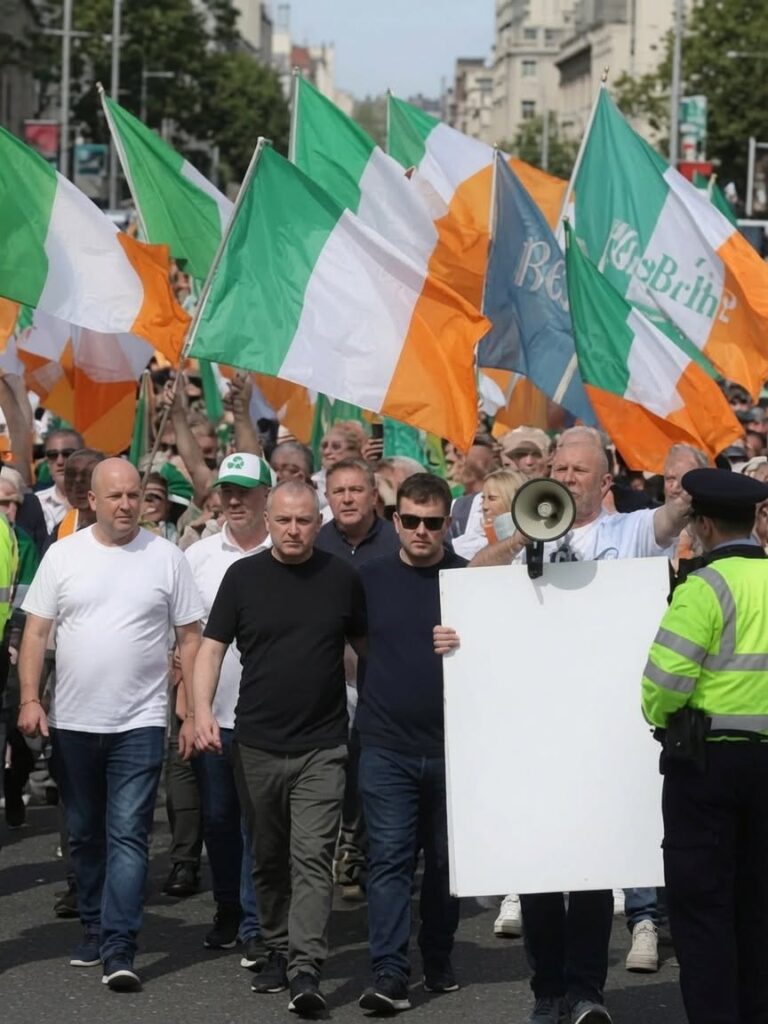
Ireland has entered another period of heightened political tension as large public demonstrations, growing dissatisfaction with government policies, and increasingly polarized public debate dominate headlines. Viral social media posts have described the situation in dramatic terms, with phrases such as “Ireland in Total Shutdown” and claims that “200,000 people marched on Parliament circulating widely online. While such figures and descriptions have attracted enormous attention, many of these claims remain difficult to independently verify, and available reporting presents a more nuanced picture of events.
BREAKING NEWS
Be
What is clear, however, is that Ireland is experiencing one of its most significant periods of political activism in recent years. Demonstrations concerning immigration policy, housing shortages, the cost of living, public services, and broader questions about national identity have brought thousands of people into city streets on multiple occasions. Supporters argue they are standing up for ordinary citizens whose concerns have gone unheard for years. Critics warn that some narratives surrounding the protests exaggerate events or risk deepening social divisions. The resulting debate has become one of the defining political conversations currently taking place across the country.
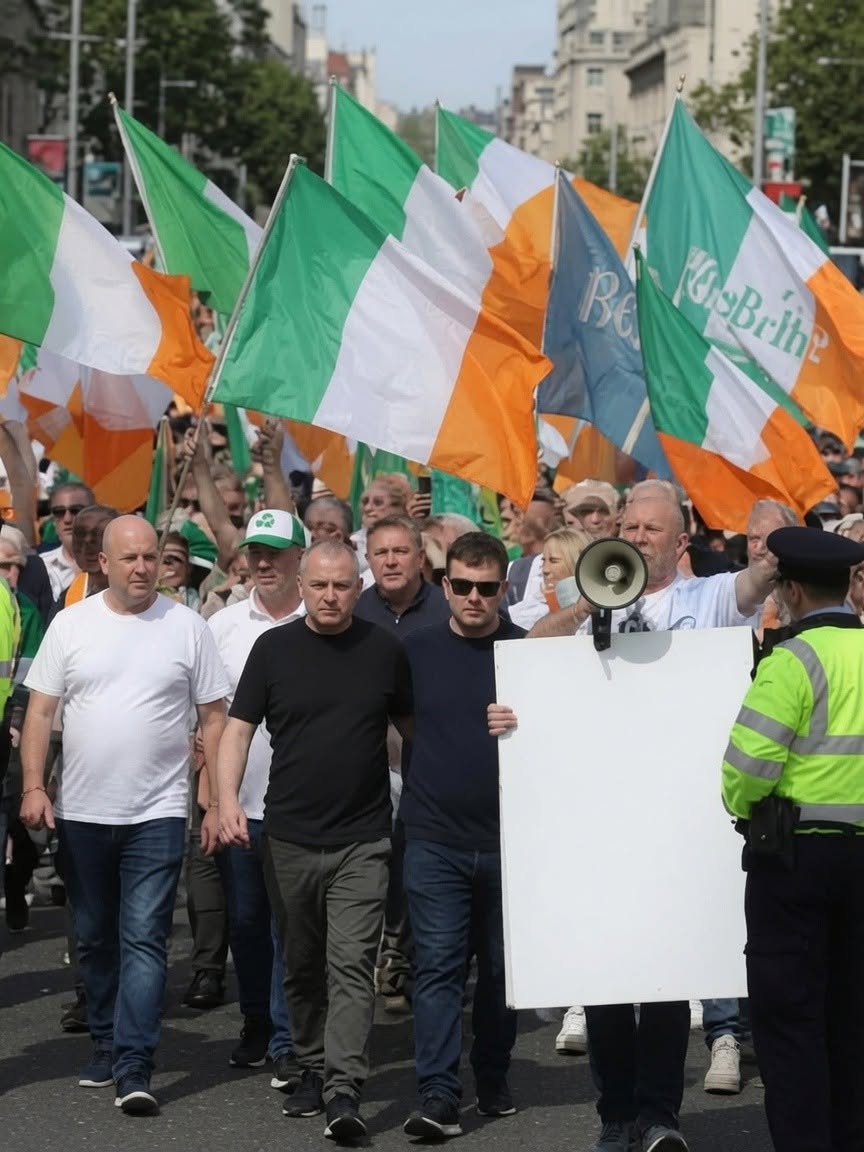
Images shared online show crowds carrying Irish national flags, gathering in central Dublin and marching through major streets. Such scenes have become increasingly familiar as demonstrations continue to draw participants from different regions. For many observers, the visual symbolism is powerful. The Irish tricolour has become the dominant image of these events, representing different meanings depending on who is carrying it. For some participants it symbolizes national sovereignty and democratic participation. Others believe it has increasingly become associated with broader political campaigns that extend beyond the immediate issues being protested.
The protests themselves are not centered around a single demand. Instead, they reflect the convergence of several long- running frustrations. Ireland continues to face an acute housing shortage that has driven rents and home prices to historic highs. Many younger people struggle to purchase homes, while waiting lists for social housing remain extensive. Rising living costs have added additional pressure on households already dealing with inflation and higher energy bills. Against this backdrop, immigration has become one of the country’s most contested political topics, with some citizens arguing that public infrastructure has struggled to keep pace with population growth.
Supporters of the demonstrations frequently argue that immigration policy cannot be separated from housing availability, healthcare capacity, school enrollment, and public spending. They contend that successive governments have failed to develop sufficient infrastructure while simultaneously accepting growing numbers of migrants, asylum seekers, and refugees. From this perspective, the protests are not directed at individuals but rather at government planning and resource management. Many participants insist they support legal immigration while calling for tighter border controls and more sustainable long-term policies.
Government representatives have consistently defended their approach, arguing that Ireland has both humanitarian responsibilities and international legal obligations. Officials maintain that the country must continue processing asylum applications while investing in housing, healthcare, and public infrastructure. Ministers have acknowledged that existing pressures are significant but argue that reducing immigration alone would not solve structural issues that have developed over many years. They point to decades of underinvestment in housing construction, planning challenges, and broader economic factors as major contributors to current shortages.
Political opponents offer different interpretations of these challenges. Some opposition parties argue that the government underestimated the pace of demographic change and failed to anticipate increased demand for essential public services. Others believe reforms to planning regulations, housing construction, and public investment should have occurred much earlier. These criticisms have fueled parliamentary debates that have become increasingly intense as public pressure has grown.
Social media has played an enormous role in amplifying every stage of the discussion. Videos showing large crowds marching through Dublin frequently accumulate millions of views within hours. Supporters describe these images as evidence of a nationwide political awakening. Critics counter that carefully selected camera angles, edited clips, and unverified attendance estimates can create misleading impressions about the actual scale of demonstrations. Independent verification of crowd sizes often proves challenging, particularly when organizers, commentators, and political opponents each present substantially different estimates.
One of the most widely circulated claims suggests that approximately 200,000 people marched on Ireland’s parliament. While this number has been repeated extensively across social media platforms, independent confirmation has not been established through official sources. Crowd estimation is inherently difficult, and different methodologies often produce significantly different figures. Until reliable independent assessments become available, such attendance claims should be treated with appropriate caution rather than accepted as established fact.
Another dramatic claim frequently accompanying these posts is that Ireland has entered a “total shutdown.” In reality, that phrase is largely rhetorical rather than literal. While demonstrations may temporarily disrupt traffic, public transportation, and city-center activity, Ireland continues to function as a democratic state with operating government institutions, businesses, schools, hospitals, and public services. Political tension can certainly create the perception of national crisis without necessarily indicating institutional collapse.
Nevertheless, the demonstrations reveal genuine political dissatisfaction among many participants. Interviews conducted by various media organizations during recent protests often highlight recurring concerns about affordability, taxation, healthcare waiting times, policing, crime, and confidence in political leadership. Many demonstrators describe feeling disconnected from policymakers whom they believe no longer adequately represent ordinary communities. Whether these concerns ultimately translate into major electoral shifts remains uncertain, but they clearly represent an important part of Ireland’s evolving political landscape.
Immigration remains perhaps the most emotionally charged aspect of the debate. Ireland has experienced significant population growth in recent years, including arrivals through humanitarian protection programs and asylum processes. For supporters of current policies, providing refuge to vulnerable individuals reflects Ireland’s humanitarian values and international commitments. For critics, the pace of arrivals has outstripped available housing and public resources, creating avoidable pressures on local communities. Both perspectives continue to shape increasingly vigorous public discussion. Experts frequently caution that complex social problems rarely have single causes or simple solutions. Housing shortages, for example, result from years of limited construction, planning delays, labor shortages within the building sector, financing challenges, demographic shifts, and broader economic conditions. Immigration may influence demand for housing, but economists generally note that supply-side issues have developed over decades. Similarly, healthcare capacity depends upon workforce recruitment, infrastructure investment, demographic aging, and long-term funding decisions rather than any one policy area alone.
The political consequences of sustained demonstrations remain uncertain. Ireland has experienced significant electoral changes throughout its modern democratic history, with public dissatisfaction periodically reshaping party support. Large demonstrations can influence political agendas, encourage parliamentary debate, and place additional pressure on governments to communicate policy more effectively. However, translating street protests into lasting electoral outcomes depends upon numerous factors, including voter turnout, party organization, policy proposals, and broader economic conditions.
Public trust has emerged as another central issue throughout the ongoing debate. Some protesters argue that traditional media organizations have underreported their concerns or mischaracterized participants. Journalists, meanwhile, emphasize the importance of verifying claims, avoiding unsupported narratives, and distinguishing peaceful demonstrators from isolated incidents involving disruptive behavior. This disagreement reflects broader international debates regarding media credibility, social media influence, and the challenges of reporting rapidly developing political events in the digital
era.
International observers have also followed developments with interest. Across Europe, governments continue grappling with similar questions surrounding immigration, housing affordability, labor markets, border management, and demographic change. Ireland’s experience therefore forms part of a much wider European conversation rather than an isolated national phenomenon. Policy debates unfolding in Dublin often mirror discussions taking place in London, Paris, Berlin, Rome, Amsterdam, Stockholm, and other capitals confronting comparable challenges.
Within Ireland itself, public opinion remains far from unanimous. Many citizens support stricter immigration controls while simultaneously endorsing humanitarian protections for refugees. Others prioritize expanded housing construction over changes to migration policy. Some emphasize economic competitiveness and labor market needs, whereas others focus on cultural identity and community cohesion. These overlapping viewpoints illustrate why political debate has become increasingly complex rather than dividing neatly into two opposing camps.
Economic considerations further complicate the discussion. Ireland has experienced remarkable economic growth over recent decades, attracting multinational corporations and becoming one of Europe’s strongest-performing economies by several measures. At the same time, that prosperity has not been experienced equally across all communities. Rising property values, increasing living costs, and uneven regional development have contributed to frustration among citizens who feel excluded from broader economic success. Such disparities often become especially visible during periods of political mobilization.
The role of law enforcement during demonstrations has also received attention. Irish authorities generally seek to facilitate peaceful assembly while maintaining public order and protecting safety. Most recent demonstrations have proceeded without major violence, although isolated incidents have occasionally required police intervention. Organizers frequently emphasize peaceful participation, while authorities encourage cooperation between demonstrators, local residents, businesses, and emergency services to minimize disruption.
Political analysts suggest that sustained public demonstrations often serve as indicators of deeper societal concerns rather than isolated events. Whether focused on housing, healthcare, immigration, taxation, or governance, protests frequently highlight areas where citizens believe existing institutions have failed to respond adequately. Governments may disagree with protesters’ proposed solutions while nevertheless recognizing the importance of addressing underlying grievances through policy discussion and democratic processes.
As Ireland moves forward, several questions remain unresolved. Will public demonstrations continue growing in size? Can policymakers develop housing strategies capable of easing affordability pressures? Will immigration policies evolve in response to changing public opinion? How will political parties position themselves ahead of future elections? And perhaps most importantly, can increasingly polarized debates be conducted in ways that preserve democratic dialogue while respecting differing viewpoints?
For now, Ireland stands at an important political moment marked by vigorous public participation, passionate disagreement, and intense national conversation. Claims of imminent government collapse or nationwide shutdown should be viewed cautiously unless supported by credible evidence. Yet the demonstrations themselves underscore genuine public concern about issues that many citizens believe require urgent attention. Regardless of differing political perspectives, the events unfolding across Ireland illustrate the continuing importance of democratic engagement, peaceful assembly, evidence-based policymaking, and open public debate in addressing the complex challenges facing modern societies.