Muslims Tried To MASS MIGRANT Into Poland, Then Get REJECTED at The Border Mus!!ms Tried To MASS MIGRANT Into Poland, Then Get REJECTED at The Border
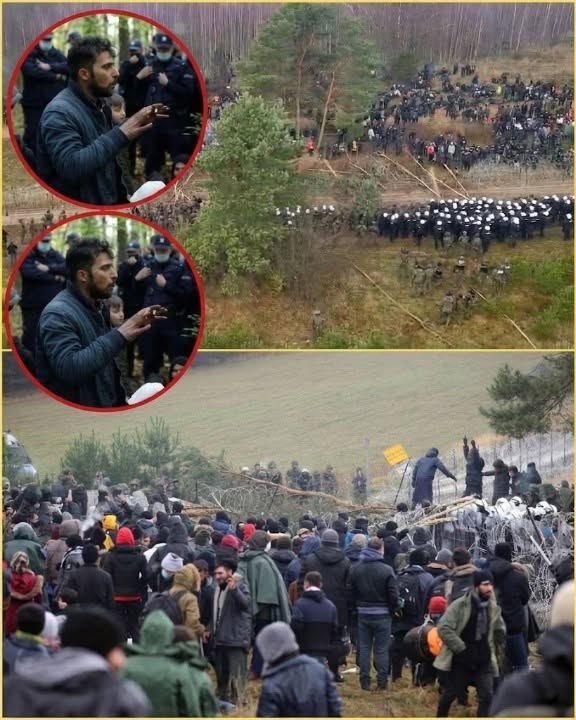
Poland’s Border Crackdown Reignites Europe’s Debate Over Migration, Security and Human Rights
Poland’s hardline response to migrant crossings along its border with Belarus has once again become a flashpoint in Europe’s wider immigration debate.
Viral posts have framed the situation in dramatic terms, claiming that “Muslims tried to mass migrate into Poland” and were “rejected at the border.” But the reality is more complex. The people attempting to cross into Poland through Belarus have included migrants and asylum seekers from a range of countries in the Middle East, Africa and Asia. Their religion is not the legal basis of the dispute. The central issue is irregular border crossing, asylum access, national security and what Poland says is a deliberate hybrid operation by Belarus and Russia.
Since 2021, Poland and the European Union have accused Belarusian leader Alexander Lukashenko’s government of helping direct migrants toward the EU border in retaliation for sanctions and as a way to destabilize the bloc. Poland has responded with border walls, surveillance, soldiers, restricted zones and tougher asylum rules. Associated Press reported that Poland’s border with Belarus has been heavily fortified, with around 13,000 soldiers and border guards deployed and approximately 30,000 attempted crossings recorded last year.
For supporters, Poland is defending its sovereignty, security and public order.
For critics, Poland’s policy risks violating asylum rights, endangering vulnerable people and normalising pushbacks that human-rights groups say are unlawful.
Why Poland Says the Border Is Different
Poland argues that its eastern border is not an ordinary migration route.
Warsaw says Belarus has deliberately brought or encouraged migrants toward the border as a political weapon. That claim is also widely recognised in EU discussions, with analysts describing the route as an example of the “instrumentalisation” of migration by a hostile state. A 2025 EU migration law analysis noted that since July 2021, Belarusian authorities have been accused of using migrants to destabilise Poland after EU sanctions against Minsk.
This is why Poland frames the issue as security first.
From Warsaw’s perspective, the migrants are not only individuals seeking entry. They are also being used by Belarus as pressure against Poland and the European Union. Poland therefore argues that strong border enforcement is necessary to defend the EU’s external frontier.
Supporters say this is exactly what a sovereign country should do: protect its borders, resist hostile pressure and prevent uncontrolled entry.
The Border Wall and “Zero Tolerance” Policy
Poland has invested heavily in border protection.
The country has built a steel barrier, expanded electronic surveillance, deployed drones and increased military and border- guard presence. Polish and pro-government sources have claimed major reductions in illegal crossing attempts after the crackdown. One report citing Poland’s interior ministry said illegal crossing attempts at the Belarus border fell from 3,306 in the first quarter of 2022 to 158 in the first quarter of 2026, a drop of nearly 96%.
For supporters, that is proof the policy works.
They argue that if borders are not enforced, smugglers and hostile regimes will keep exploiting weakness. They also say Poland has avoided some of the social and political problems seen in parts of Western Europe by refusing to accept uncontrolled migration.
This message has become politically powerful across Europe: strict border control, supporters argue, is not cruelty – it is prevention.
Human-Rights Groups Tell a Different Story
Human-rights organisations have sharply criticised Poland’s border practices.
Human Rights Watch accused Polish authorities of unlawful and sometimes violent pushbacks of people trying to enter from Belarus, arguing that people seeking protection were being forced back without their asylum claims being properly assessed.
Other NGOs have alleged abuse on both sides of the border. Polish Radio reported on a monitoring group’s report claiming migrants and refugees faced beatings, pepper spray, repeated pushbacks and humiliation from Polish and Belarusian forces.
Oxfam and partner organisations have also described conditions at the Poland-Belarus border as dangerous, alleging that pushbacks have left people without adequate food, water, healthcare or access to legal protection.
Poland rejects many of these criticisms or argues that extraordinary security conditions justify extraordinary measures. But the accusations have kept the country under international scrutiny.
Security Versus Asylum Law
The hardest question is whether Poland can protect its border while still respecting asylum law.
Under international and EU principles, people who may need protection should not be returned to places where they face serious harm without proper assessment. This is often described as the principle of non-refoulement. Critics say
pushbacks at the Belarus border risk violating that principle.
Poland argues that the situation is exceptional because Belarus is deliberately weaponising migration. Warsaw says allowing uncontrolled entry would reward hostile tactics and encourage further pressure.
This creates a difficult legal and moral conflict.
A state has the right to defend its borders.
But people still have the right to seek protection from persecution.
The question is whether Poland’s approach can satisfy both principles – or whether security has overwhelmed humanitarian obligations.
Why Religion Should Not Be the Focus
The viral framing of the issue as “Muslims tried to mass migrate into Poland” is misleading and risky.
People attempting the Belarus-Poland route have come from many countries and backgrounds, including Syria, Iraq, Afghanistan, Somalia, Cameroon and others. Some may be Muslim. Some may not. Their religion is not what determines whether they can cross a border or apply for asylum.
The legal issue is status, route, documentation, security risk and asylum eligibility—not faith.
Framing the issue as “Muslims versus Poland” turns a border-security debate into a religious identity conflict. That can fuel prejudice and make serious discussion harder.
A more accurate framing is this: Poland is rejecting irregular border crossings from Belarus while arguing that the route is being manipulated by a hostile regime.
That is already a serious debate. It does not need religious scapegoating.
Poland and the EU Migration Pact
Poland’s tough border stance also connects to its wider opposition to parts of the EU’s migration system.
The EU’s new migration and asylum pact entered into force in June 2026. It includes a solidarity mechanism under which member states can help frontline countries by accepting relocated asylum seekers, paying financial contributions or offering operational support. Polish officials have said Poland will not implement all parts of the pact, especially relocation obligations.
For Poland, this is about sovereignty.
Warsaw argues that it has already borne heavy burdens, including hosting large numbers of Ukrainians after Russia’s invasion, while also defending the EU’s eastern border against Belarusian pressure.
For Brussels, shared responsibility is essential. If every country refuses relocation or support, the EU asylum system becomes harder to manage.
This is why Poland’s border policy has become symbolic. It is not only about one frontier. It is about who controls migration policy in Europe.
Supporters See Poland as a Model
Supporters of Poland’s approach argue that the country has shown what firm leadership looks like.
They say Poland built barriers, deployed forces, refused pressure from Belarus, resisted EU relocation demands and reduced illegal crossing attempts. In their view, this is the opposite of what they see as weak border policy in Western Europe.
They also argue that Poland’s lower levels of irregular migration have helped protect public safety, social cohesion and national identity.
For these supporters, Poland is not rejecting people because of religion or race. It is rejecting illegal entry and defending the rule that borders must mean something.
Critics See a Dangerous Precedent
Critics argue that Poland’s approach risks normalising harsh border practices across Europe.
They warn that when governments label migration as a security threat, people seeking asylum can be treated as weapons rather than human beings. Critics also say pushbacks can deny people legal process and place them in danger, especially in forests and border zones where temperatures, injuries and lack of medical care can become life-threatening.
The New Yorker reported on the dangerous route through the Białowieża Forest, describing migrants facing surveillance, harsh conditions, violence and legal uncertainty while humanitarian workers try to provide aid.
This criticism does not deny that Belarus has exploited migration. It argues that Europe’s response must still respect basic rights.
A Debate Europe Cannot Avoid
Poland’s border crisis reveals the central dilemma of modern migration policy.
If borders are weak, smugglers and hostile regimes can exploit them.
If enforcement is too harsh, vulnerable people may be denied protection.
If EU countries refuse solidarity, frontline states are left under pressure.
If Brussels pushes too hard, national governments accuse the EU of overriding democracy.
There is no simple solution. But there are principles that should guide the debate: border control, legal process, public safety, humane treatment and accurate language.
Conclusion: Poland’s Border Policy Is About Security, Not Religion Poland’s rejection of irregular crossings at the Belarus border has become one of Europe’s most watched migration disputes.
Supporters say Poland is defending national security and showing that firm borders can stop illegal crossings.
Critics say the crackdown risks unlawful pushbacks, human-rights violations and the erosion of asylum protections.
Both arguments address real concerns.
But the issue should not be framed as “Muslims trying to invade Poland.” That language is inaccurate, inflammatory and unfair to millions of peaceful Muslims who have nothing to do with the Belarus border crisis.
The real story is about migrants and asylum seekers being pushed along a dangerous route, a hostile Belarusian regime accused of weaponising migration, and a Polish government determined to defend its frontier.
Europe’s challenge is to protect borders without abandoning law and humanity.
Poland believes it has found the answer through forceful enforcement.
The debate now is whether that answer is a necessary defence – or a warning about how far Europe may go in the name of security.