POLAND’S BORDER CRACKDOWN IS DIVIDING EUROPE
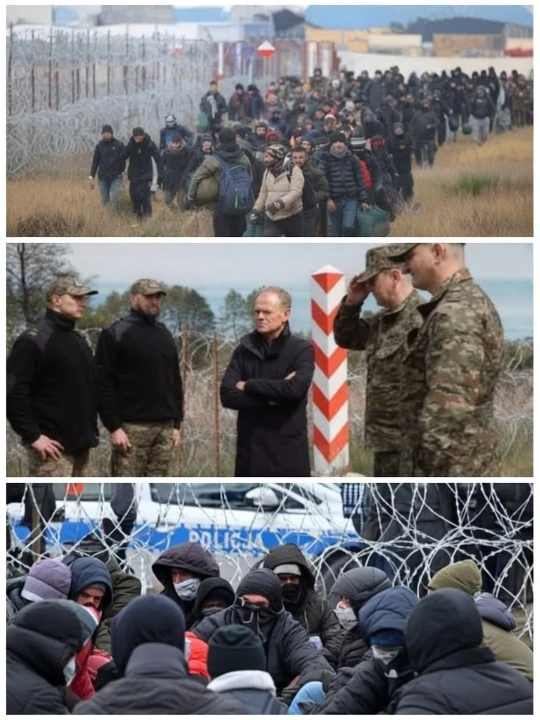
POLAND DRAWS A HARD LINE: Border Crackdown Divides Europe Over Security, Asylum and Human Rights
Along Poland’s heavily fortified frontier with Belarus, Europe’s migration debate has become a struggle over far more than fences, patrols and border crossings.
Warsaw argues that it is defending not only Polish territory, but also NATO and the European Union from a coordinated campaign in which vulnerable migrants are deliberately used as instruments of political pressure. Human-rights organisations respond that even a genuine security threat cannot justify denying people the right to seek protection.
That confrontation intensified again in July when the Polish government extended restrictions on asylum applications at the Belarusian border for another 60 days. The measure, introduced in March 2025 and repeatedly renewed, allows border authorities to refuse many applications for international protection from people arriving through Belarus. The latest extension, effective from July 20, was the eighth since the mechanism began.
Prime Minister Donald Tusk’s government says the policy is working.
According to Poland’s Interior Ministry, attempted irregular crossings along the Belarusian frontier fell dramatically over the previous year, while authorities recorded no successful crossings during the first half of 2026. Between March 27, 2025, and July 19, 2026, officials refused to accept applications from 448 foreign nationals but processed claims from 160 people classified as belonging to vulnerable groups. These are government figures and form the central evidence used by Warsaw to defend the restrictions.
For supporters, those numbers prove that determined enforcement can close an irregular migration route.
They argue that Belarus created the crisis by facilitating the travel of people from the Middle East, Africa and Asia before directing them towards the borders of Poland, Lithuania and Latvia. European institutions have also acknowledged that Belarus and Russia have sought to “instrumentalise” migration as a means of destabilising EU countries on their eastern flank.
From Warsaw’s perspective, this is not an ordinary refugee emergency.
Polish officials describe the frontier as part of a wider hybrid conflict involving organised border assaults, disinformation, political intimidation and pressure on security forces. The Interior Ministry has accused Belarusian state agencies of participating, directly or indirectly, in attacks against Polish soldiers and border guards.
That security argument carries particular weight in Poland. The country borders Belarus, Russia’s Kaliningrad region and war-torn Ukraine. A Polish soldier was fatally stabbed through the border barrier in 2024, an incident that hardened public attitudes and strengthened demands for greater protection of those serving on the frontier.
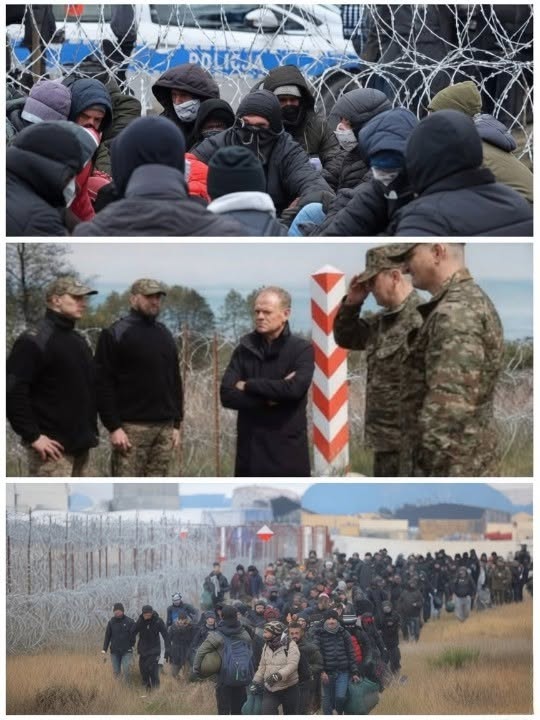
Poland has consequently transformed much of its border with Belarus into a militarised security zone.
A steel wall approximately 5.5 metres high stretches for about 186 kilometres and has been reinforced with cameras, motion detectors, barbed wire and military patrols. Access to sections of the surrounding border region has also been restricted, with the government arguing that controlled zones are necessary for operational security.
Supporters say the country has learned a lesson that Western Europe ignored for too long: once control of an external border is lost, the political and social consequences spread far beyond the frontier.
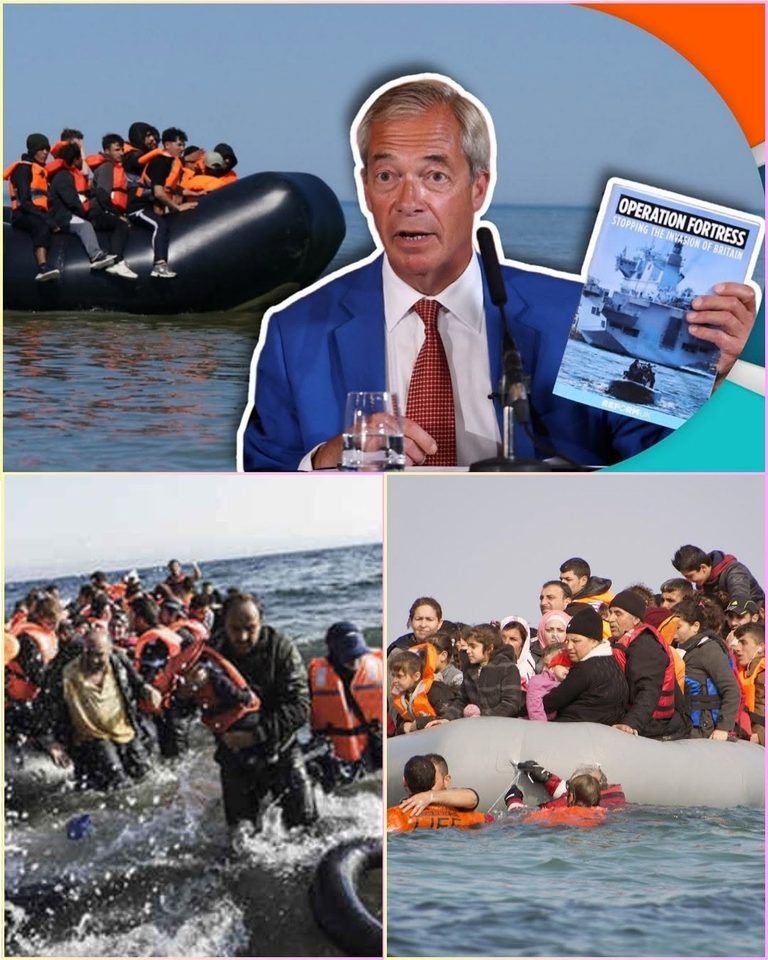
They point to repeated migration crises across the continent, from the Mediterranean to the English Channel, and argue that governments must discourage dangerous routes rather than allowing smugglers to determine who enters Europe. In this view, accepting asylum applications from everyone pushed towards the fence would reward Belarus’s strategy and encourage the operation to continue.
The crackdown has therefore gained support among voters who believe national sovereignty must come before abstract legal principles. It has also demonstrated that hard-line border policies are no longer limited to Poland’s nationalist opposition. Tusk leads a broadly centrist government, yet he has defended measures that resemble—or exceed—some of those introduced by the previous conservative administration.
That political shift reflects a broader change across Europe. Governments that once avoided restrictive language are increasingly presenting border control as essential to maintaining public confidence in asylum itself.
But Poland’s critics say an effective deterrent is not automatically a lawful one.
The Polish Ombudsman, refugee lawyers, humanitarian groups and the United Nations refugee agency have argued that international refugee law requires authorities to assess protection claims individually. They warn that a person escaping persecution does not lose the right to request asylum merely because a hostile government helped direct them towards the border.
This distinction lies at the heart of the controversy.
Belarus may indeed be exploiting migration, but the people caught between the two countries are not necessarily agents of Belarus. They include Syrians, Afghans, Somalis, Iraqis and others who may have fled war, dictatorship or political persecution. Some may be economic migrants without valid asylum claims, while others could face imprisonment, torture or death if returned.
Only an individual procedure can reliably separate one category from another, critics argue.
The case of Afghan migrants has made those concerns particularly urgent. Rights groups have warned that some Afghans who worked with the former Western-backed government or NATO forces could face serious danger under Taliban rule. Reports in 2026 described detainees who said they were repeatedly prevented from seeking protection after entering Poland through Belarus.
Critics also accuse authorities of stretching a border-specific emergency measure beyond its intended limits. According to accounts collected by legal organisations, some migrants apprehended elsewhere in Poland have faced the same restrictions if officials concluded that they originally crossed from Belarus. Polish authorities maintain that the security context justifies the policy, while opponents say this turns a temporary exception into a wider suspension of asylum rights.
Humanitarian workers describe another disturbing consequence: people trapped in the forests between Polish and Belarusian forces.
Migrants have reportedly endured cold, hunger, dehydration, injuries and repeated pushbacks. The Białowieża Forest, usually known as one of Europe’s great natural landscapes, has become a dangerous migration corridor in which volunteers search for people requiring food or medical assistance.
Warsaw rejects the suggestion that its border forces are indifferent to suffering. Officials say people requiring urgent medical treatment receive assistance and that vulnerable groups may still be permitted to apply for protection. The government insists that legal routes exist and that allowing unauthorised entry would assist smugglers and hostile foreign authorities.
The disagreement is therefore not simply between those who care about security and those who care about humanity. Both sides claim to be preventing exploitation.
Poland says weak enforcement allows Belarus and criminal networks to use migrants as weapons. Human-rights advocates say closed procedures leave those same migrants defenceless against abuse by governments on both sides of the fence.
The European Union’s position remains uncomfortable. Brussels has recognised the exceptional threat created by state-sponsored migration pressure and has allowed eastern member states greater flexibility. At the same time, EU officials continue to insist that emergency measures must be temporary, proportionate and compatible with fundamental rights.
This tension has become even more important since the EU’s new Migration and Asylum Pact entered its operational phase in June 2026. The system is intended to combine stronger external borders, faster processing and returns with shared responsibility and safeguards for people seeking protection. Poland’s border policy will test whether those objectives can coexist when migration is linked directly to national security.
For Warsaw, the answer is clear: without secure borders, the rest of the asylum system becomes meaningless.
For its critics, the opposite is true: if governments can suspend access to protection whenever migration is labelled a security operation, the right to asylum may exist only when it is politically convenient.
Poland’s crackdown has undeniably reduced movement across the Belarusian route, at least according to official figures. But its true legacy will not be measured solely by the number of people stopped.
It will be measured by whether Europe can defend itself against hostile state tactics without abandoning the laws and humanitarian principles it claims to represent.
That is why Poland’s frontier is dividing the continent. It has become the place where Europe must decide whether security and compassion can still exist together—or whether one must always be sacrificed to preserve the other.