UK on the Edge – Farmers and Truckers Unite in Nationwide Blockade Threat as Diesel Soars Past £2 Per Litre
LONDON — Britain is bracing for a wave of civil unrest as farmers and truckers, following six days of absolute chaos in Ireland, are now preparing a nationwide blockade that could bring the country to a grinding halt as early as next week. The alliance, forged in shared fury over skyrocketing diesel prices, represents one of the most serious domestic threats to the Starmer government since it took office.
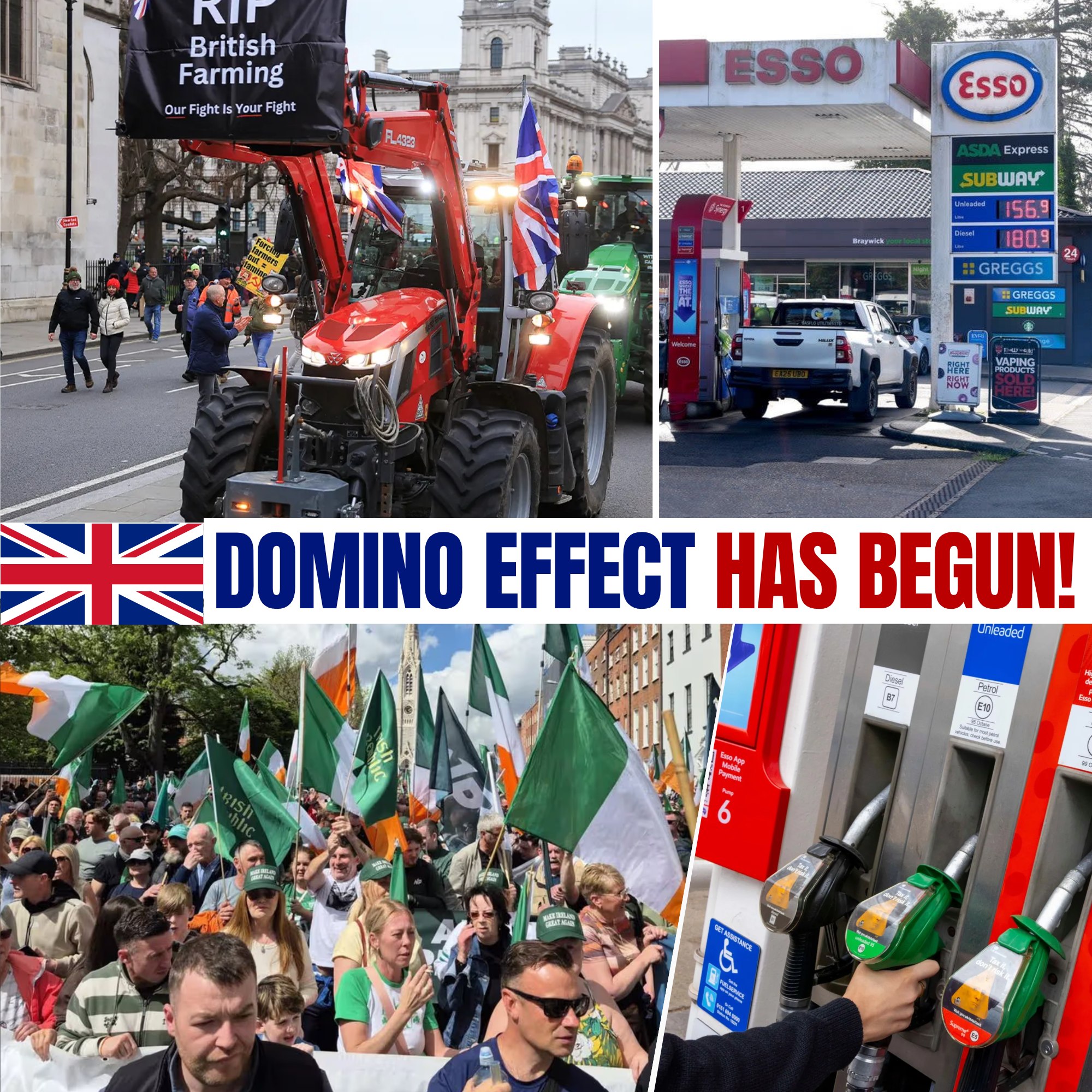
The trigger is simple but devastating. Diesel prices have surged past £2 per litre at thousands of filling stations across the United Kingdom — an increase of nearly 40 percent in just twelve months. For farmers whose machinery consumes hundreds of litres daily, and for truckers whose livelihoods depend on every penny of fuel cost, the situation has become unsustainable.
“I cannot pass on these costs,” said David Henshall, a third-generation farmer from Shropshire. “The supermarkets will not pay more for my produce. The public cannot afford higher food prices. So I am left absorbing the difference. And I am at the breaking point.”
The breaking point has now arrived. Organizers claim that tens of thousands of vehicles could participate in the planned blockades, targeting major ports, fuel distribution centers, and key highway intersections. The goal: to force the government to cut fuel duty or face an economic stan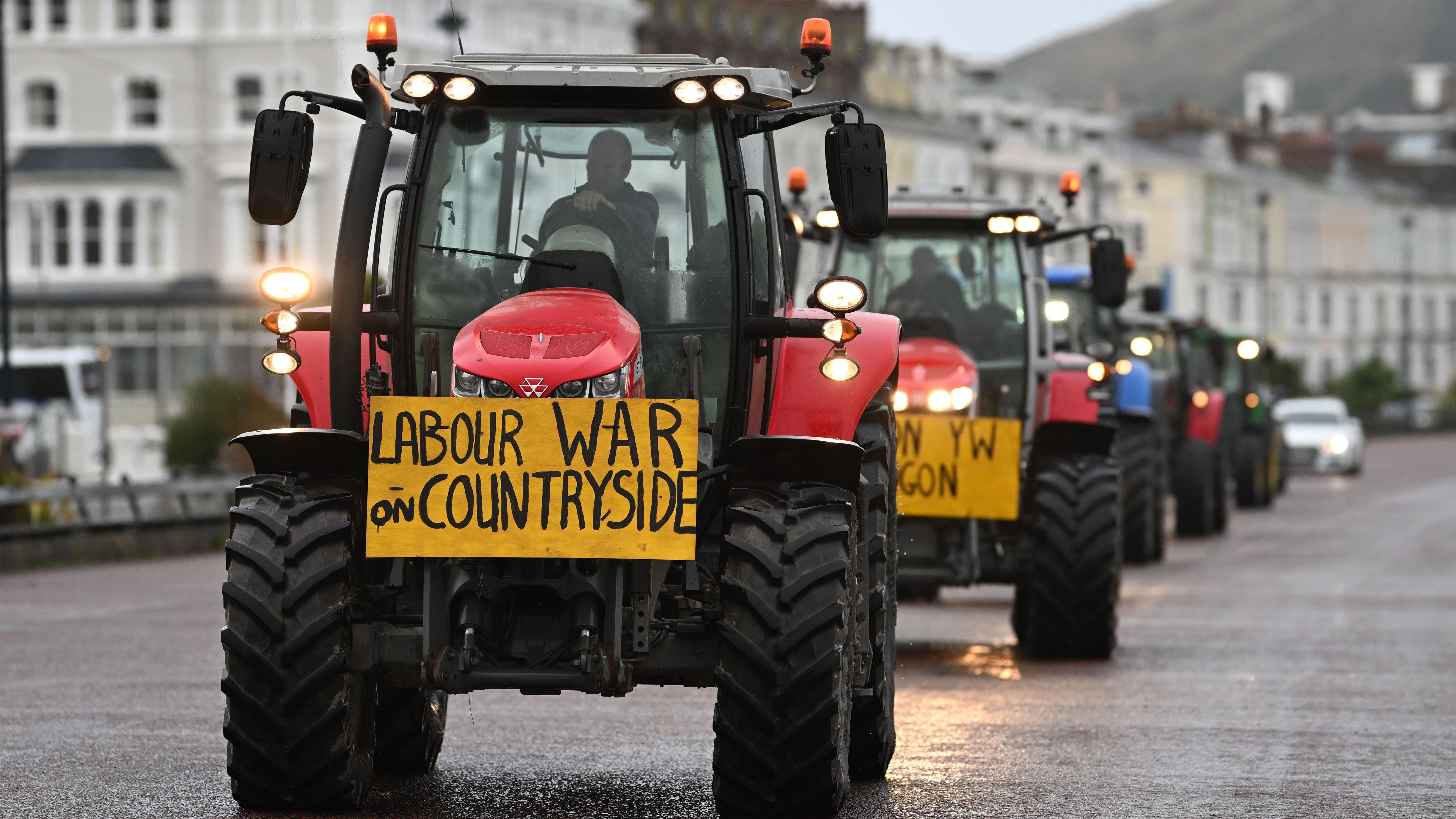 dstill.
“We are not extremists,” said a spokesperson for the newly formed United Hauliers and Farmers Alliance. “We are ordinary people who have been pushed to extraordinary lengths. If the government will not listen to our voices, they will listen to the silence of empty shelves and stationary wheels.”
The government’s response has been defensive and, critics say, tone-deaf. When confronted with the reality of fuel duty in a recent parliamentary session, Treasury ministers pointed to international oil prices and global supply chain disruptions — factors beyond domestic control.
“The suggestion that the government is profiting from this crisis is simply false,” said Chief Secretary to the Treasury Laura Trott. “Fuel duty has been frozen for years. The current price increases are driven by global markets, not by Treasury policy.”
The response left many listeners speechless — but not in the way the government had hoped. For farmers and truckers who watch fuel duty receipts flow into government coffers while their businesses bleed, the explanation felt like a evasion.
“They freeze duty but prices still go up because of VAT,” said Henshall. “VAT is a percentage. When the base price rises, VAT rises with it. That is extra money going to the government every time I fill my tank. Tell me again how they are not profiting.”
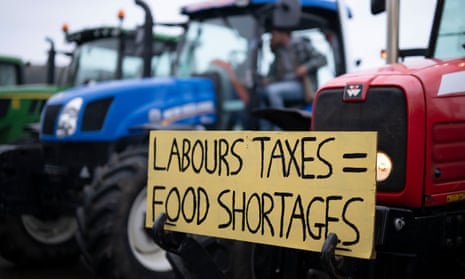
The Irish precedent is deeply alarming to British officials. For six days, blockades across Ireland brought the country’s transportation network to a near-standstill, with protests spreading from Dublin to Cork. The Irish government eventually offered concessions, but only after significant economic damage had been done.
“What happened in Ireland was a warning shot,” said political analyst Dr. Sarah Cameron. “British farmers and truckers were watching. They saw that disruption works. They saw that governments respond to pressure. Now they are organizing.”
The economic stakes are enormous. Britain’s just-in-time supply chain — already fragile after Brexit and the pandemic — could be catastrophically disrupted by a nationwide blockade. Supermarkets typically hold only a few days’ worth of fresh produce. Fuel distribution centers rely on continuous deliveries.
“A blockade of even 48 hours would empty fresh food sections,” said retail analyst James Walton. “A week would see fuel shortages at pumps. Two weeks would trigger panic buying and potential social unrest. This is not a minor inconvenience. This is a national emergency waiting to happen.”
The government has activated contingency planning, including discussions with the military about potential fuel distribution support. But officials acknowledge that there are no easy solutions.

“You cannot arrest your way out of a protest involving tens of thousands of people,” one senior official said, speaking anonymously. “Not when those people have the sympathy of millions who are also struggling with fuel costs.”
The public appears to side with the protesters. Polling conducted in recent days shows that 62 percent of Britons believe the government should cut fuel duty, with support rising to 78 percent among rural residents and small business owners.
“People are hurting,” said Cameron. “They see their energy bills, their fuel costs, their food prices — all rising. And they see politicians offering explanations that sound like excuses. That gap between lived experience and official response is where protests are born.”
The government’s room to maneuver is constrained by fiscal reality. Cutting fuel duty would cost billions in lost revenue — money the Treasury had budgeted for other priorities. But doing nothing risks an economic shutdown that would cost far more.
“This is a classic political dilemma,” said economist Paul Johnson. “The visible cost of cutting duty is immediate and measurable. The cost of inaction — lost economic output, disrupted supply chains — is diffuse and harder to quantify. But it is real. And it could be catastrophic.”
The organizers of the planned blockades have been careful to frame their movement as non-violent and focused on economic disruption rather than confrontation. “We are not looking for conflict with the police,” the alliance spokesperson said. “We are looking for a meeting with the prime minister. If he will talk, we will listen.”

The Starmer government has not yet agreed to such a meeting. But behind the scenes, officials are reportedly exploring potential concessions, including a fuel duty cut targeted at agricultural and commercial users rather than a blanket reduction.
“The politics are brutal,” Cameron said. “If Starmer gives in, he looks weak. If he holds firm, the country grinds to a halt. There is no good option. There is only the least bad option.”
The coming days will be critical. Organizers have scheduled a series of regional meetings to finalize blockade logistics. The government has deployed additional police liaison officers to farming and trucking communities. And across the country, millions are watching — and waiting.
“I do not want to blockade my own country,” Henshall said. “I want to farm. I want to feed people. I want to make a living. But right now, I cannot do any of those things. So I will do what I have to do. And I will not apologize for it.”
Whether the government can avert the crisis with last-minute concessions, or whether the blockades bring Britain to a halt, remains to be seen. But one thing is clear: the domino effect has begun. And no one knows where it will stop.