BORDER CRISIS: Shabana Mahmood faces reported calls to resign as Channel crossings and growing tensions over immigration put the government under pressure👇
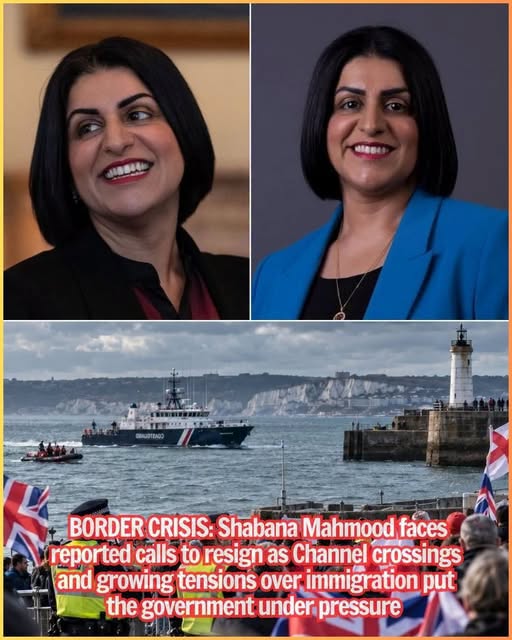
Britain’s Home Secretary Shabana Mahmood is confronting two politically connected but legally distinct challenges: reducing irregular Channel crossings and managing increasingly tense protests over migration.
Official figures show that returns of people who previously arrived by small boat have increased, while recent demonstrations in Dover and Portsmouth have raised difficult questions about policing, public order and the boundary between lawful protest and criminal conduct.
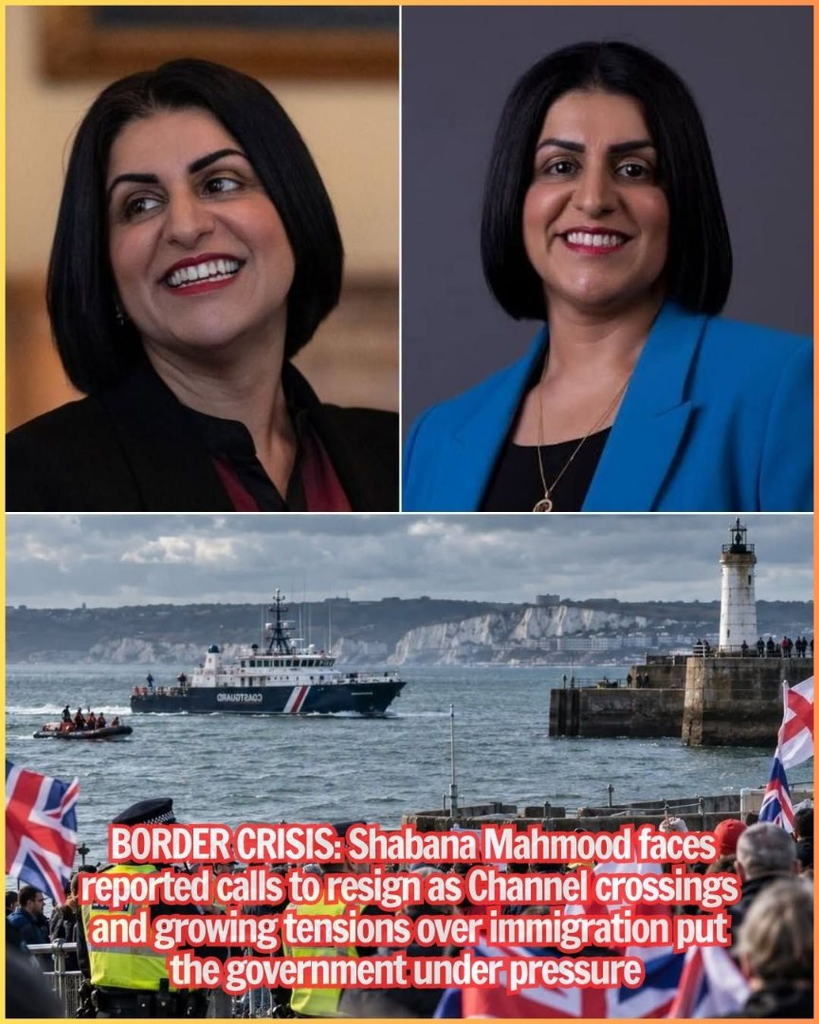
The images from Britain’s south coast in early September captured the complexity of the government’s immigration problem in unusually stark form.
On one side were people arriving after a hazardous journey across the English Channel.
On another were demonstrators angry about continued irregular migration.
Between them stood police officers, coastguard personnel and other emergency workers responsible for protecting both public safety and the legal rights of those involved.
For Home Secretary Shabana Mahmood, the confrontation represents something larger than a single protest or migration incident.
It illustrates the challenge facing the Home Office as it attempts to demonstrate that tougher enforcement is producing results while simultaneously ensuring that public frustration over immigration does not develop into intimidation, violence or serious disruption.
The political argument is therefore taking place on two tracks.
One concerns the border itself.
The other concerns what happens on Britain’s streets when people believe the border is not being controlled effectively.
And although those two issues increasingly overlap politically, they require very different government responses.
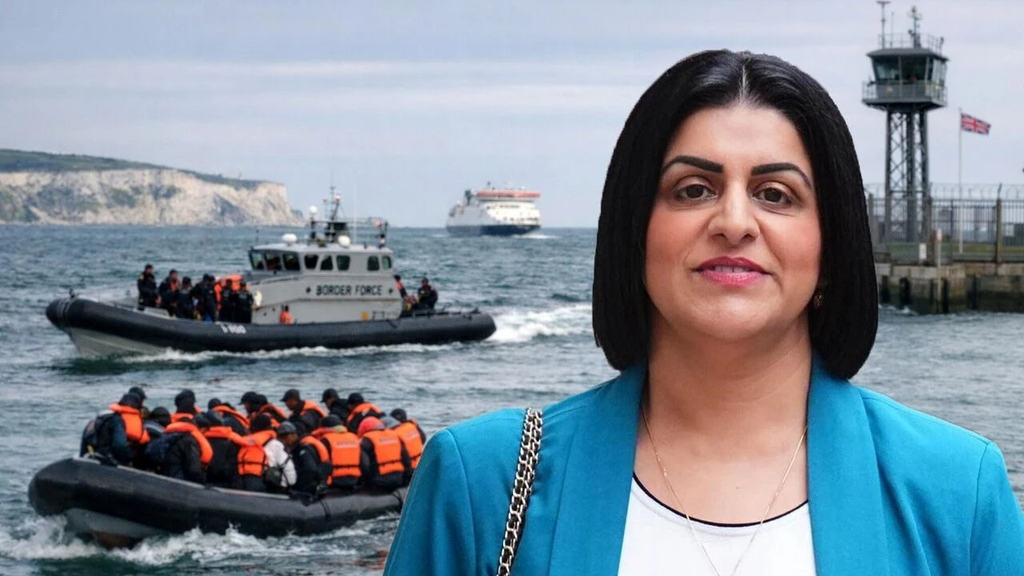
Portsmouth Became a Flashpoint
The latest escalation followed an unusual Channel crossing on September 6.
A boat carrying approximately 140 people was reported off the English coast after travelling from the Normandy area of France, considerably farther west than the routes normally associated with Channel crossings.
The vessel was ultimately brought toward Portsmouth, where those aboard were expected to undergo immigration processing.
News of the arrival spread rapidly online.
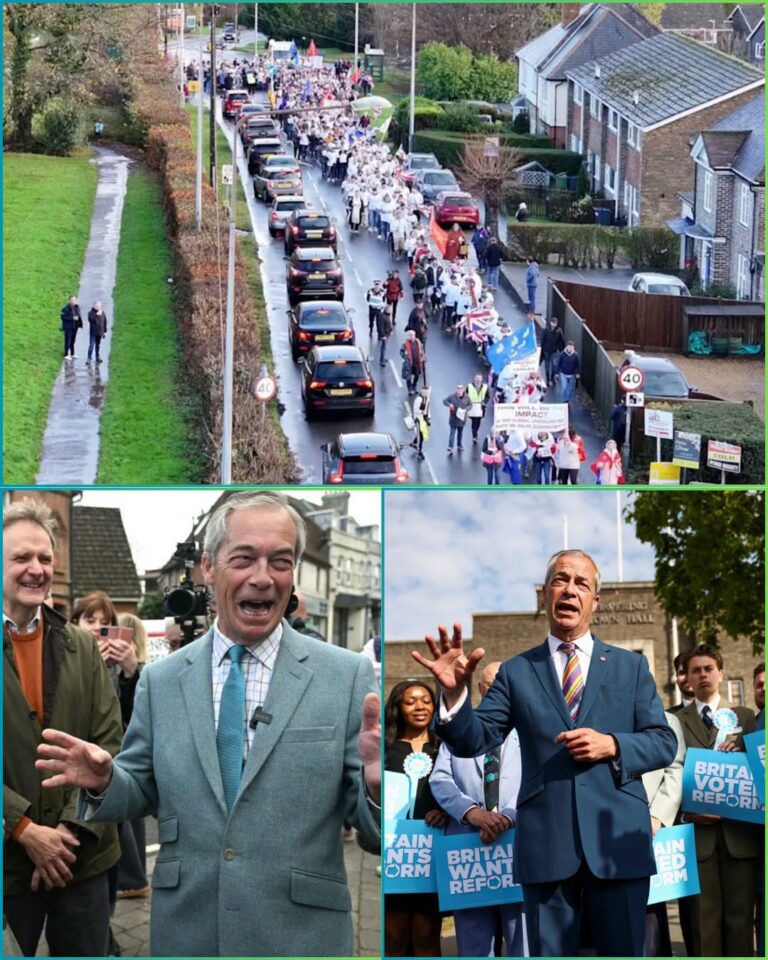
Within hours, hundreds of demonstrators had gathered near Eastney in Portsmouth.
Contemporary reporting described a significant police deployment as protesters attempted to prevent vehicles associated with the processing operation from leaving the area.
(The Guardian)
The incident soon became more serious.
The Crown Prosecution Service later said that several police officers were injured during the disorder and that police, Border Force and coastguard vehicles were damaged.
On September 15, a man admitted violent disorder after CCTV showed him using a metal gate during the confrontation with officers.
(Crown Prosecution Service)
That distinction is important.
People in Britain have a legal right to demonstrate against government immigration policy.
They are also entitled to argue for substantially stricter border controls.
But assaulting police officers or damaging property is not protected simply because it happens during a political demonstration.
That distinction has become central to Mahmood’s response.
Dover Had Already Provided a Warning
The Portsmouth disorder came only a day after another significant demonstration in Dover.
According to a statement to Parliament by policing minister Sarah Jones, approximately 150 people arrived at the Port of Dover at around 7:30 a.m. on September 5, many wearing face coverings.
Kent Police described the event as a no-notice protest.
Roads were blocked, access to the port was disrupted and traffic was temporarily halted. (GOV.UK)
The Port of Dover is not an ordinary protest location.
It is Britain’s busiest ferry port and an important part of the country’s freight infrastructure.
Blocking access therefore affects not only government activity but passengers, commercial vehicles and cross-Channel trade.
That created an immediate question for ministers and police:
At what point does disruptive protest stop being an exercise of democratic freedom and become unlawful interference with critical infrastructure?
It is not a question that can be answered simply by looking at the protesters’ political views.
The same legal principle must apply regardless of whether demonstrators are protesting immigration, climate policy, foreign policy or another issue.
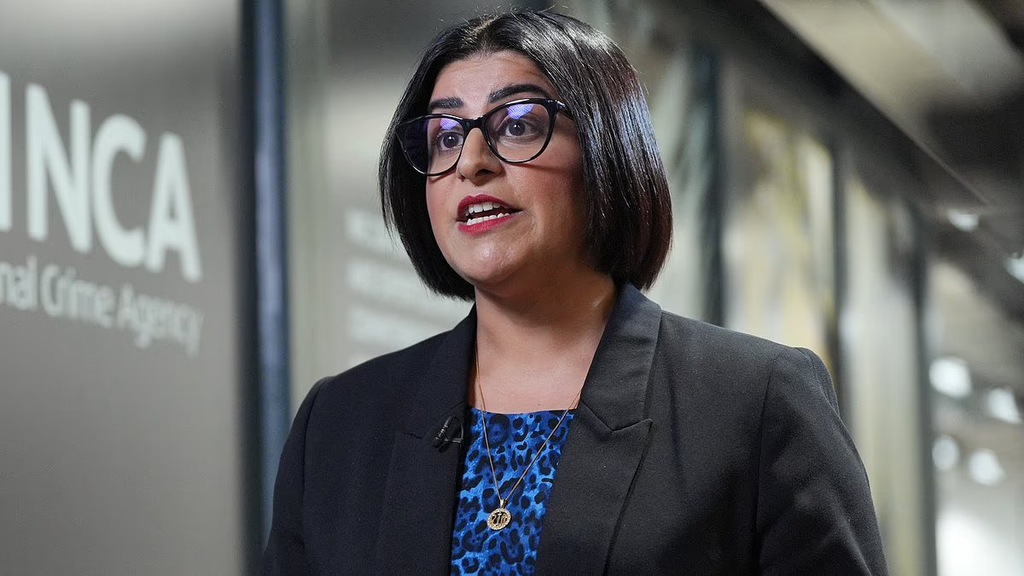
A Second Portsmouth Demonstration Was More Peaceful
Another protest was held in Portsmouth the following weekend.
This time the atmosphere was considerably more controlled.
Hampshire Police and Crime Commissioner Donna Jones said hundreds participated but that, with relatively limited exceptions, the event remained peaceful.