PARLIAMENTARY FIRESTORM: Tommy Robinson Threatens Total Chaos With Mind-Blowing Legal Strategy To Free Jailed Activist ‘Danny Tommo’!

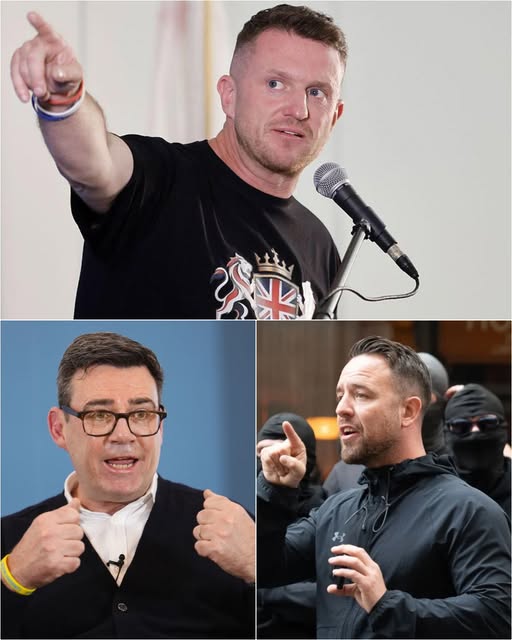
Danny Tommo Remains in Custody as Tommy Robinson Backs Challenge to High-Profile Channel Boat Case
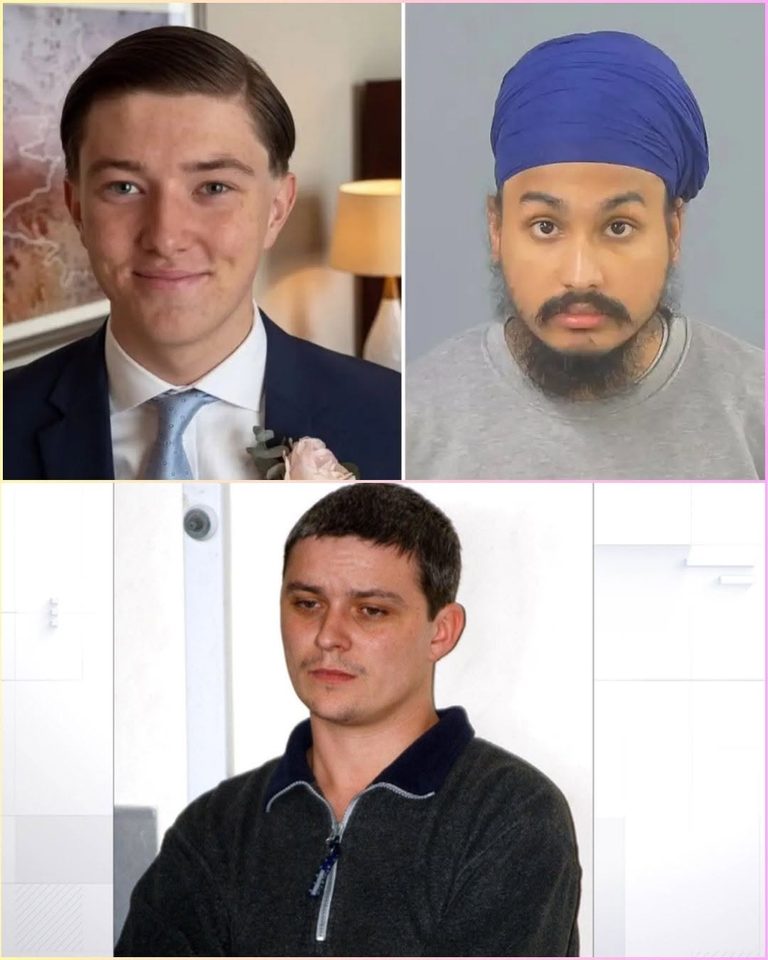
PORTSMOUTH — Anti-migration activist Daniel Thomas, widely known as Danny Tommo, remains in custody after a judge rejected his latest bail application, intensifying a politically charged dispute that has drawn support from Tommy Robinson and mobilised hundreds of protesters. But despite increasingly dramatic claims online, the case remains at this stage a criminal prosecution rather than the constitutional showdown some supporters have portrayed.
Thomas, 37, appeared by video link from HMP Winchester at Portsmouth Crown Court on September 29. He faces allegations arising from an incident in the English Channel on September 22 involving an inflatable boat.
He has pleaded not guilty to criminal damage and also denies a separate allegation that he failed to disclose the PIN to his mobile phone under Section 53 of the Regulation of Investigatory Powers Act 2000.
Judge James Newton-Price KC refused an application for bail made by Thomas’s barrister, Simon Pentol KC.
A provisional trial date has now been set for March 1, 2027, while Thomas is scheduled to return to court by video link on November 12.
Those developments are significant. But claims that Tommy Robinson has devised a legal manoeuvre capable of throwing Britain’s judicial system into “total chaos” go considerably beyond what has been established in court.
What is Thomas accused of doing?
The case originates from an incident in the Channel in which Thomas allegedly damaged an inflatable vessel.
Prosecutors allege that he used a knife on the boat while an emergency responder was still aboard. Video footage circulating online appears to capture at least part of the incident, although the footage and surrounding circumstances will ultimately have to be assessed as evidence during criminal proceedings.
Thomas disputes criminal liability.
At Basingstoke Magistrates’ Court on September 25, he pleaded not guilty to criminal damage and elected to have the case tried at Crown Court. He also pleaded not guilty to the allegation concerning his phone PIN.
The value of the alleged damage has itself been an issue because the vessel was reportedly returned to France, complicating an immediate assessment of the financial loss.
None of these allegations has yet been proved at trial.
Thomas therefore remains legally presumed innocent.
Why is Tommy Robinson involved?
Stephen Yaxley-Lennon, better known as Tommy Robinson, has publicly supported Thomas.
Robinson attended the September 25 proceedings at Basingstoke Magistrates’ Court and sat in the public gallery as Thomas appeared by video link.
He has subsequently questioned Thomas’s treatment and argued publicly that the case is politically motivated.
Robinson has also discussed arguments he says Thomas’s defence could raise, including questions concerning the alleged damage, evidence surrounding the Channel incident and police access to Thomas’s phone.
But an important distinction is being lost in some online coverage.
Robinson is not Thomas’s barrister.
The formal legal arguments in court are being made by Thomas’s defence team, including Simon Pentol KC. Robinson can campaign publicly, raise money, criticise prosecutors or discuss possible arguments, but those activities should not automatically be described as Thomas’s official “legal strategy.”
A source sympathetic to Robinson reported him discussing possible defence arguments and challenging the decision to remand Thomas, but that remains Robinson’s public account of the case rather than an authoritative statement of what the court will ultimately decide.
The bail battle
The most consequential development so far concerns Thomas’s liberty before trial.
He was initially remanded in custody following his magistrates’ court appearance.
His lawyers then sought bail at Portsmouth Crown Court.
Judge Newton-Price rejected the application on September 29 and remanded Thomas in custody. According to court reporting, the judge specifically indicated that he was setting political motivations aside when considering the bail decision.
That statement is particularly relevant because supporters have characterised Thomas’s detention as political punishment.
They are entitled to challenge the bail decision and question whether Thomas is being treated consistently with other defendants.
But the existence of a politically controversial defendant does not itself establish that a judicial decision was politically motivated.
Likewise, being refused bail does not establish guilt.
Pre-trial detention and criminal conviction are legally separate matters.
Hundreds mobilised after Thomas’s arrest
The political dimension of the case is nevertheless impossible to ignore.
Thomas founded Patriot Platform, an anti-migration movement that has organised demonstrations and disruptive actions in southern England.
After his arrest, supporters gathered outside a police investigation centre in Basingstoke demanding his release.
Sky News reported approximately 200 demonstrators, while other reporting put the gathering at around 300. Many were dressed in black and protesters chanted “Free DT.”
Police maintained a significant presence around both the demonstrations and court proceedings.
The mobilisation demonstrates that Thomas’s case has already developed significance far beyond an ordinary criminal-damage prosecution.
To supporters, he has become a symbol of opposition to Britain’s handling of irregular Channel migration.
To critics, his movement represents an increasingly confrontational form of anti-migration activism.
Those interpretations help explain the intense public attention surrounding what would otherwise be a relatively narrow set of criminal allegations.
Government criticism focuses on the protests
The original viral account also links the controversy to Manchester Mayor Andy Burnham.
Current reporting does not establish Burnham as the government figure issuing the principal warnings concerning Thomas’s recent demonstrations.
Instead, Angela Rayner, currently serving as Communities Secretary, has publicly criticised the style of protests associated with Thomas.
Rayner argued that peaceful political protest is legitimate but criticised masked demonstrations she regarded as intimidating to communities. She also expressed concern about hostility directed toward RNLI volunteers involved in rescuing people at sea.
Those comments concern protest tactics and public order.
They do not amount to government control over Thomas’s criminal proceedings.
In the British system, ministers do not simply decide whether a particular defendant receives bail. Bail is determined through the courts under legal rules and according to the circumstances before the judge.
Any allegation that ministers secretly directed Thomas’s detention would therefore require substantial evidence.
None has currently emerged publicly.
Why the case has become so politically explosive
Thomas’s prosecution comes during an unusually tense period in Britain’s migration debate.
His Patriot Platform has organised protests around ports and coastal communities associated with migrant arrivals.
Earlier in September, hundreds of black-clad demonstrators descended on Dover and blocked roads leading toward the port. Thomas had been working to bring disparate anti-migration groups together into a more coordinated movement.
Supporters argue that such activism reflects frustration with successive governments’ inability to stop irregular Channel crossings.
Critics argue that masked groups, disruptive tactics and confrontations around migrants and rescue services can intimidate local communities and create public-order risks.
Both debates now intersect with Thomas’s criminal case.
But they remain legally distinct.
A person can strongly oppose the government’s immigration policy without committing an offence.
Conversely, political opposition to immigration does not provide immunity from criminal law if prosecutors can prove an offence beyond reasonable doubt.
That distinction will be central when Thomas eventually faces trial.
Is there really a constitutional crisis?
Nothing currently reported supports such a conclusion.
There is no evidence that Parliament has been thrown into disorder over Thomas’s prosecution.
There is no established constitutional confrontation between the government and the judiciary.
And no verified legal manoeuvre from Robinson has emerged that could fundamentally destabilise Britain’s court system.
What does exist is a politically sensitive criminal case involving a prominent activist, a contested bail decision and an increasingly mobilised group of supporters.
That is consequential without requiring more dramatic language.
Thomas’s defence can challenge prosecution evidence, make further applications where legally permitted and advance arguments about the alleged offences when the case reaches trial.
The prosecution, meanwhile, will have to prove its allegations in court.
The judge and ultimately, where applicable, a jury must consider evidence rather than the political popularity or unpopularity of the defendant.
What happens next?
The timeline is now clearer than some viral accounts suggest.
The major Tuesday hearing already occurred on September 29.
Thomas appeared from HMP Winchester, his bail application was refused and a provisional trial date was established. His next scheduled court appearance is November 12, with the trial provisionally listed for March 1, 2027.
Tommy Robinson is likely to remain an influential public supporter, and Thomas’s detention may continue to provide a rallying point for anti-migration activists.
But public campaigning and courtroom strategy should not be conflated.
The central legal questions remain comparatively straightforward: Can prosecutors prove that Thomas committed criminal damage? Can they prove the separate alleged offence concerning his phone PIN? And will his defence establish sufficient grounds to defeat either allegation?
Those questions will be decided through criminal proceedings.
For now, Thomas remains an accused man awaiting trial — not a convicted offender, not someone whose guilt has been established, and not, on the evidence presently available, the centre of a constitutional crisis.