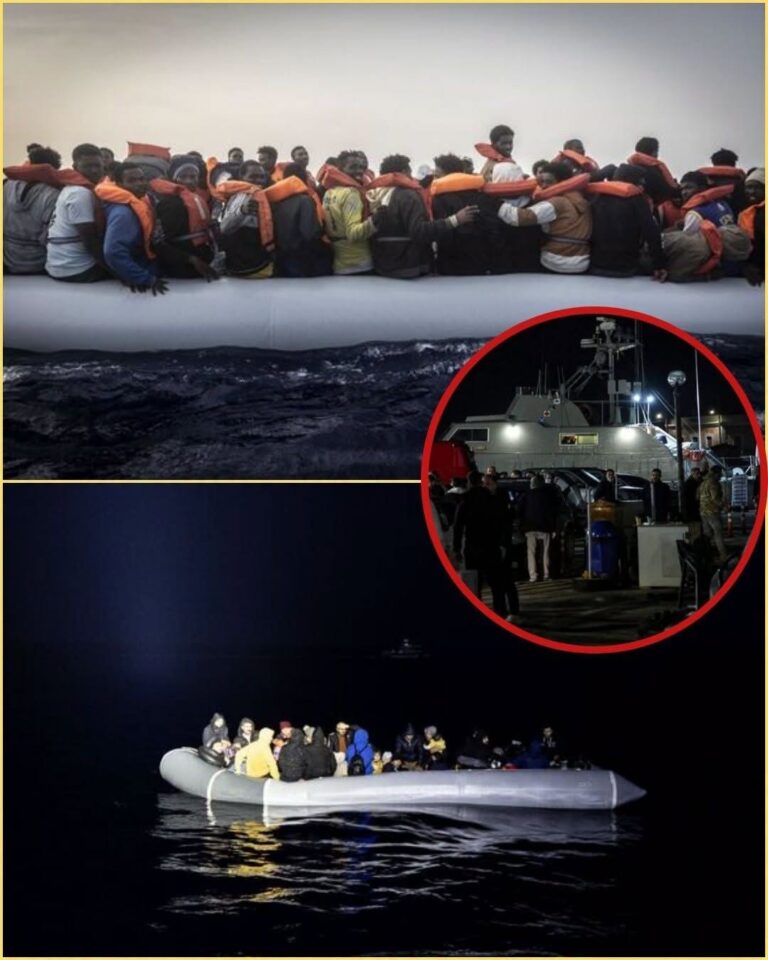
“400,000 COULD BE SENT BACK”: Nigel Farage’s Reform UK Unveils Explosive Asylum Crackdown — Including Reviews of Refugees Already Granted Status as Britain Braces for a Huge Legal and Political Battle.
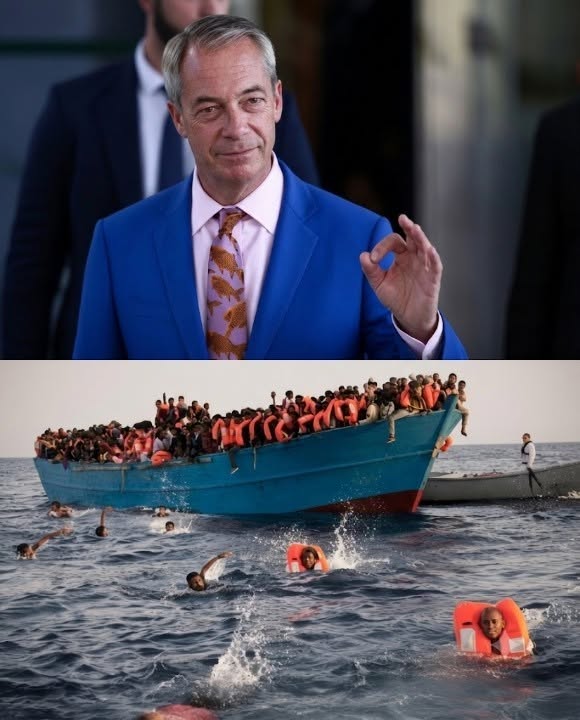
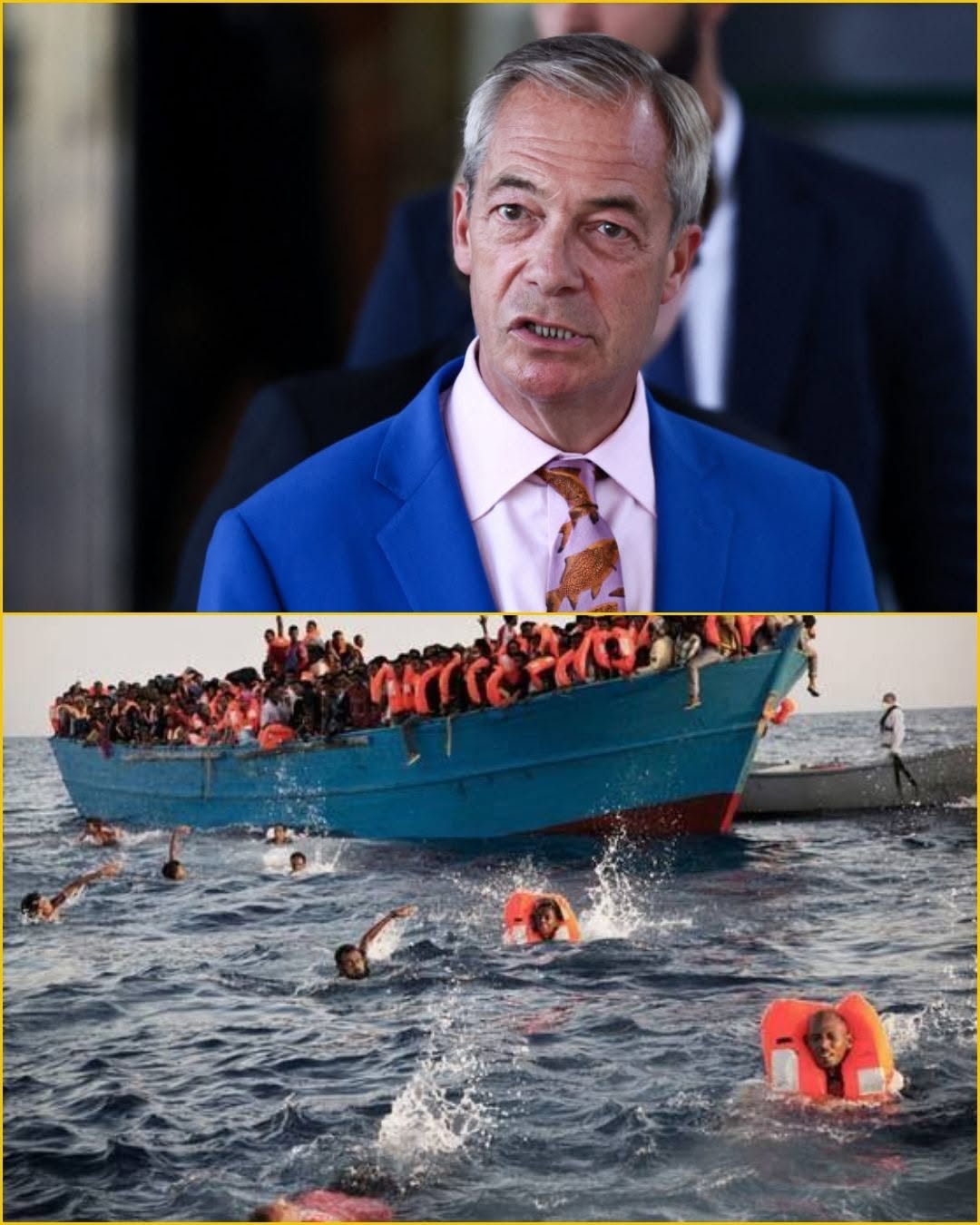
Farage Calls for Secure Detention Instead of Community Housing as Reform UK Escalates Migration Debate
Nigel Farage has intensified Britain’s immigration debate by arguing that people who enter the country illegally should not be allowed to move freely through surrounding communities while their cases are being dealt with, but should instead be held in secure accommodation pending removal or further immigration decisions.
The Reform UK leader has presented the proposal as part of a much broader overhaul of Britain’s asylum and immigration system.
Under the party’s current policy, people deemed to be in the United Kingdom illegally would face detention and deportation rather than hotel accommodation, ordinary housing or continued support in local communities.
Reform UK says it would establish a five-year emergency programme known as “Operation Restoring Justice”, create a UK Deportation Command and rapidly expand secure immigration detention capacity.
The party’s published plan calls for Secure Immigration Removal Centres capable of holding up to 24,000 people, alongside as many as five deportation flights per day.
Farage argues that this approach would address what he describes as a fundamental weakness in the existing system: people arriving without permission can be accommodated for prolonged periods while asylum claims, appeals and other legal processes continue.
Reform’s language is uncompromising.
Its official policy states that there would be “no more free housing” and that “detention and deportation will be the only outcome” for those it classifies as illegal migrants.
The proposal has taken on greater political significance because of growing disputes around large asylum accommodation sites.
In August, Reform criticised Labour government plans to house up to 1,250 single adult male asylum seekers at a former Ministry of Defence site near Piddington in Oxfordshire.
The government said the site would be self-contained and that residents could be managed and processed there.
However, the Home Office position was that the people housed at the site would not be detained and would generally be free to enter and leave.
Farage seized on that distinction.
He argued that large accommodation centres should function as secure facilities rather than open residential sites, warning that local communities should not be expected to accept large populations of recently arrived asylum seekers moving freely through surrounding villages and towns.
Reform has made similar arguments about the former RAF Wethersfield site in Essex.
The government has used the location to house hundreds of asylum seekers as part of efforts to reduce reliance on expensive hotels.
Residents at such sites are generally subject to immigration conditions but are not necessarily prisoners or immigration detainees.
That legal difference sits at the centre of the controversy.
Under the existing system, an asylum seeker is not automatically detained simply because he or she arrived in Britain irregularly.
A person may enter without valid immigration permission and subsequently claim asylum on the basis that returning to their country would expose them to persecution or serious harm.
The government can detain people in certain circumstances, but immigration detention is normally subject to legal safeguards and judicial scrutiny.
Reform wants to change that framework substantially.
The party says anyone entering Britain illegally would become ineligible for asylum under its proposed Illegal Migration (Mass Deportation) Bill.
It also plans to leave the European Convention on Human Rights and repeal the Human Rights Act, arguing that current human-rights protections make large-scale removals unnecessarily difficult.
Supporters see this as a straightforward principle.
They argue that if someone enters the country without permission, the state should retain control over that individual until the immigration process is complete.
Allowing people to leave accommodation sites, they say, undermines public confidence and creates additional pressure on police, transport, healthcare and other local services.
Some communities near asylum sites have also raised concerns about infrastructure, safety and the lack of consultation before large facilities are opened.
Those concerns do not necessarily mean residents oppose all asylum seekers.
In several areas, councils and MPs have argued that the issue is primarily one of scale.
Housing more than a thousand people at a former military site near a much smaller village can transform the relationship between the accommodation centre and the surrounding population.
For Farage, however, the argument goes beyond local planning.
He has described illegal Channel crossings as a “national security emergency” and says Britain must shift from managing arrivals to preventing entry and removing those already in the country without legal status.
Critics say the proposal raises serious legal and humanitarian concerns.
The first involves detention itself.
Detaining thousands of people who have not been convicted of a criminal offence is fundamentally different from imprisonment following a criminal conviction.
Immigration detention is administrative rather than punitive, but the practical consequences can still be severe.
People can lose their freedom for weeks or months while their cases are considered.
Human-rights organisations have long argued that detention should be used only where necessary and for the shortest possible period.
A system that automatically detained every irregular arrival could therefore face immediate legal challenges.
The second issue is capacity.
Reform’s proposed 24,000 detention places would represent a major expansion of Britain’s immigration detention estate.
Building secure centres requires land, staff, healthcare, security infrastructure and substantial operating budgets.
Even if new centres could be constructed rapidly, the government would still need enough immigration officers, caseworkers and legal personnel to process cases efficiently.
Otherwise, people could simply remain in detention for longer.
That raises another problem.
Detention does not automatically lead to deportation.
Before someone can be removed, authorities often need to establish identity and nationality, obtain travel documents and secure cooperation from the receiving country.
Some governments refuse or delay accepting returnees.
Others require extensive documentation.
People may also have outstanding legal claims, including allegations that deportation would expose them to torture or persecution.
This means the effectiveness of Farage’s system would depend heavily on diplomacy as well as enforcement.
Reform acknowledges that challenge.
Its programme calls for the Foreign Office to prioritise return agreements with other governments.
The party argues that Britain should use diplomatic, economic and other forms of leverage to ensure countries accept their nationals back.
Whether that would work at the promised scale remains uncertain.
There is also an important language issue in the debate.
Political statements frequently use “illegal migrant” as a broad description for people who arrive by small boat.
But immigration law is more complicated.
Someone may have entered unlawfully yet still possess a pending asylum claim that must be assessed.
Others may already have had their claims rejected and exhausted their appeals.
Still others may have been granted refugee status.
Treating all of those categories as identical can obscure significant legal differences.
That does not prevent a future Parliament from attempting to rewrite the law.
If Reform gained power with a sufficient Commons majority, it could seek to establish much more restrictive eligibility rules.
But some legal obligations, including the Refugee Convention and protections against returning people to torture, would remain relevant unless Britain also withdrew from or altered its relationship with those international agreements.
The political appeal of Farage’s proposal is nevertheless clear.
Public frustration over small-boat crossings, asylum hotels and the cost of the migration system remains significant.
Although recent official figures show that asylum claims and Channel arrivals have fallen compared with the previous year, nearly 100,000 people continue to receive asylum support, and accommodation policy remains a highly visible issue.
Labour has tried to reduce hotel use by moving people into alternative accommodation, including former military sites.
That approach has cut the number of people in asylum hotels, but it has transferred some of the political controversy to the communities surrounding larger sites.
Farage’s answer is fundamentally different.
Instead of distributing asylum seekers more widely, Reform would dramatically restrict their freedom while immigration authorities decide what happens next.
To supporters, that is common sense: people who enter without permission should remain under government control.
To opponents, it risks creating a vast system of detention involving people who have never been convicted of any crime and who may ultimately prove to have valid asylum claims.
The disagreement therefore goes beyond the question of where migrants sleep.
It concerns a much deeper principle: whether irregular entry should itself justify detention while a person’s legal status remains unresolved.
Farage has clearly answered yes.
The current government has not.
That difference is likely to become increasingly important as Britain moves closer to the next general election.
Reform UK wants voters to see the choice as one between an accommodation system that disperses migrants into communities and an enforcement system built around secure detention and rapid deportation.
Its critics will argue that the reality is far more complicated — legally, financially and practically.
What is certain is that Farage has once again pushed immigration policy toward one of its sharpest dividing lines.
The debate is no longer simply about stopping boats in the Channel.
It is increasingly about what Britain should do with people after they arrive — and how much freedom they should have while the state decides whether they can remain.