A MAJOR POLITICAL BACKLASH IS ERUPTING AFTER CLAIMS BRITAIN IS BEING “QUIETLY RESHAPED” UNDER KEIR STARMER
Britain’s New Political Fault Line: Identity, Free Speech and the Growing Revolt Against Westminster
For months, Britain’s political conversation revolved around inflation, housing shortages and economic stagnation. Then, almost abruptly, the national mood shifted. 🇬🇧
A series of controversies involving religion, immigration and free speech began colliding at the center of British politics, producing a backlash that now stretches far beyond Westminster.
What initially appeared to be isolated incidents — a Ramadan speech in Parliament, a controversial government policy document, and a high-profile immigration ban — have increasingly been interpreted by critics as part of a broader transformation underway inside modern Britain.
And whether those fears are justified or politically exaggerated, the reaction itself is becoming impossible for Britain’s political establishment to ignore.
At the center of the storm stands Keir Starmer, whose government now finds itself accused by opponents of governing through cultural favoritism while simultaneously narrowing the boundaries of acceptable public debate.
Supporters reject those claims entirely.
They argue the government is attempting to preserve social cohesion in an increasingly fractured society while containing extremism, polarization and communal hostility before tensions spiral further.
But the debate is no longer confined to fringe political circles.
It is now unfolding openly across Britain’s mainstream political landscape.
The controversy intensified after Starmer attended a Ramadan iftar event inside Westminster Hall earlier this year, where he praised Britain’s Muslim communities and described them as “the face of modern Britain.” (GB News)
To supporters, the remark reflected the multicultural reality of modern Britain.
To critics, however, the language symbolized something deeper — a political class increasingly redefining British identity around demographic change and multicultural symbolism rather than traditional national institutions.
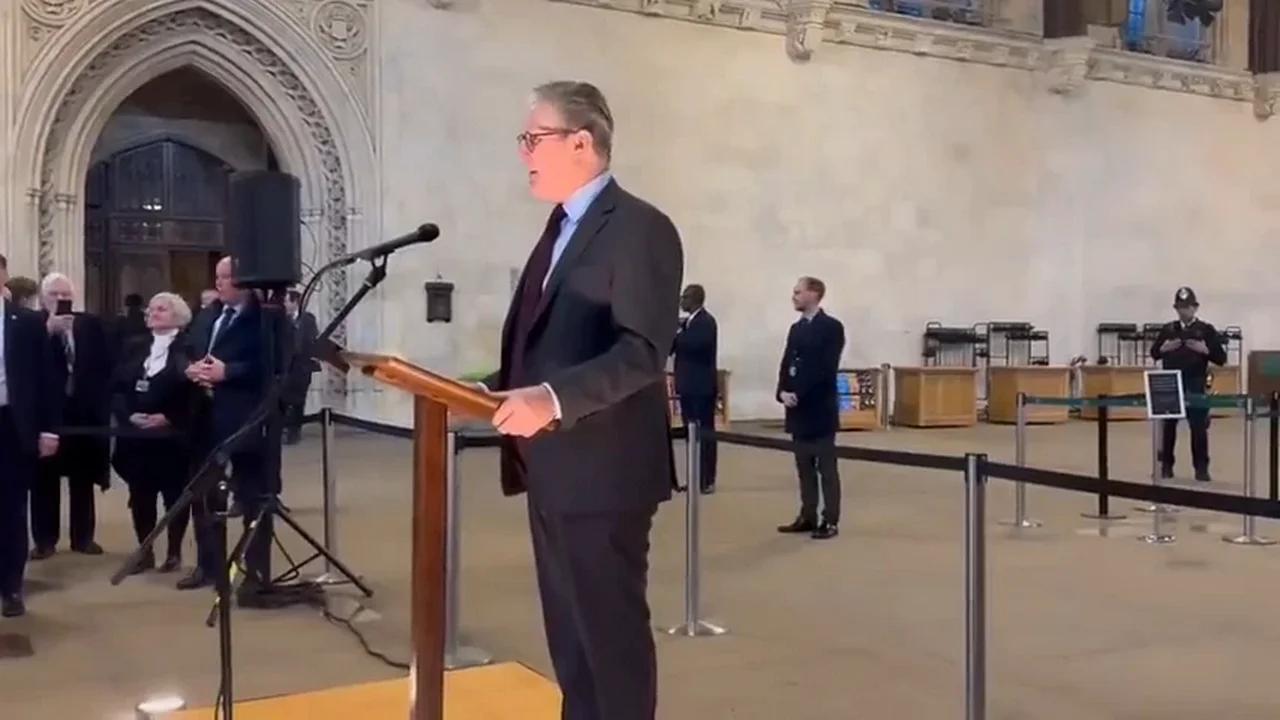

The reaction online was immediate and ferocious.
Clips from the speech spread rapidly across X, TikTok and Facebook, often accompanied by accusations that Labour was prioritizing identity politics over national unity.
Conservative commentators accused the government of attempting to court Muslim voters ahead of difficult local elections. (jewishnews.co.uk)
The backlash also exposed how politically sensitive public expressions of religion have become in Britain.
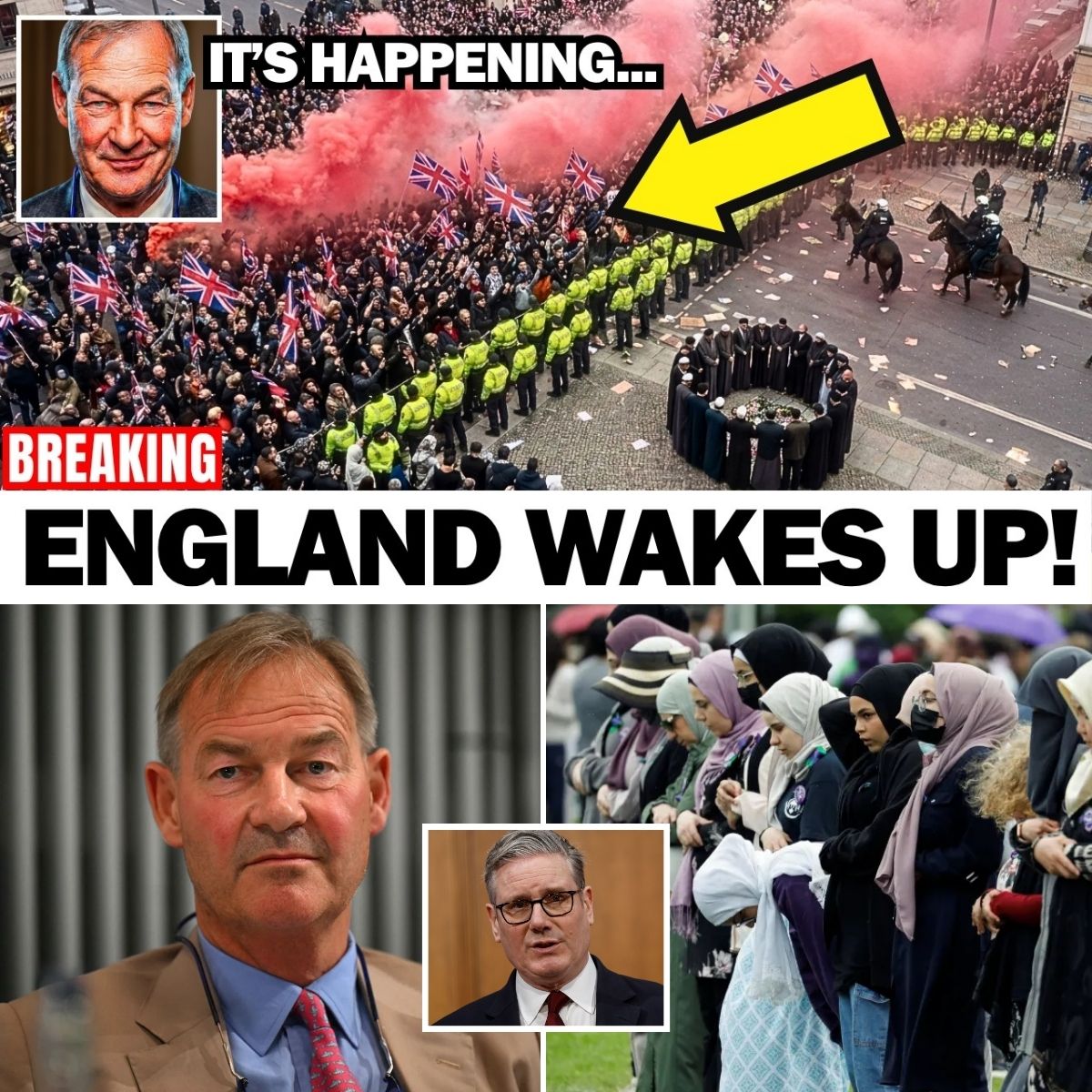
Only weeks earlier, mass Ramadan prayers in London’s Trafalgar Square had triggered another national argument after some Conservative figures described the event as “an act of domination.” (jewishnews.co.uk)
Labour condemned those remarks as anti-Muslim rhetoric.
But opponents of the government argued the response illustrated a growing asymmetry in how criticism involving Islam is handled compared to criticism of other religions or communities.
That perception — fair or unfair — now sits at the heart of Britain’s widening cultural divide.
The argument escalated further after the government introduced a new framework addressing anti-Muslim hostility.
The policy, presented inside a broader “social cohesion strategy,” sought to define and combat prejudice directed toward Muslim communities.
Supporters viewed the move as necessary protection against rising anti-Muslim abuse and extremism.
Critics saw something entirely different.
They warned the framework’s language was so broad that it risked chilling public debate on sensitive topics involving religion, immigration and crime.
Civil liberties advocates questioned whether journalists, researchers and politicians would increasingly avoid discussing controversial issues for fear of institutional punishment or reputational damage.
That concern intersected with one of Britain’s most politically explosive issues: the grooming gang scandals that have haunted British politics for more than a decade.
Successive investigations into child sexual exploitation in towns including Rotherham exposed catastrophic institutional failures involving police, councils and social services.
The subject remains deeply sensitive because many perpetrators came from Pakistani Muslim backgrounds — a reality that authorities were repeatedly accused of avoiding for fear of inflaming racial tensions.
Critics of the new anti-Muslim hostility framework argue Britain risks repeating those mistakes if institutions become excessively cautious about discussing patterns connected to ethnicity or religion.
Government supporters insist such concerns are exaggerated and often exploited by populist movements seeking to inflame division.
But the distrust is already embedded.
And politically, perception increasingly matters as much as policy itself.
The third controversy proved even more combustible.
In April, Colombian-born American conservative activist Valentina Gomez was reportedly blocked from entering Britain after political pressure surrounding her planned appearance at an event connected to far-right activist Tommy Robinson.
The decision triggered accusations that Britain’s immigration and speech policies are now being applied unevenly depending on ideology.
Critics pointed to cases where individuals accused of extremist rhetoric were allowed into Britain while Gomez was barred before speaking publicly on British soil.
Supporters of the decision argued governments routinely deny entry to figures deemed capable of inflaming tensions or threatening public order.
Yet politically, the symbolism proved damaging.
Especially online.
Gomez responded by mocking Britain’s immigration system, declaring she would “come by boat” if necessary — a direct reference to the thousands of migrants crossing the English Channel in small vessels each year.
The remark exploded across social media because it touched Britain’s most emotionally charged political issue: illegal migration.


For years, successive British governments promised to “stop the boats.”
Yet crossings have continued, turning the Channel into a symbol of state failure for many voters.
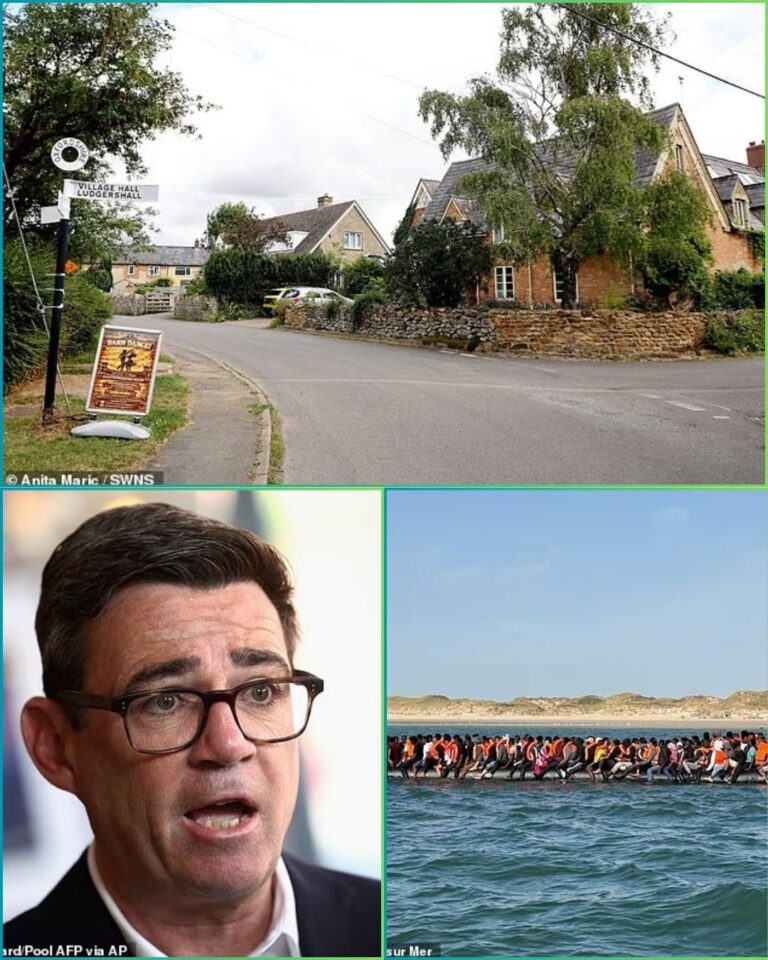
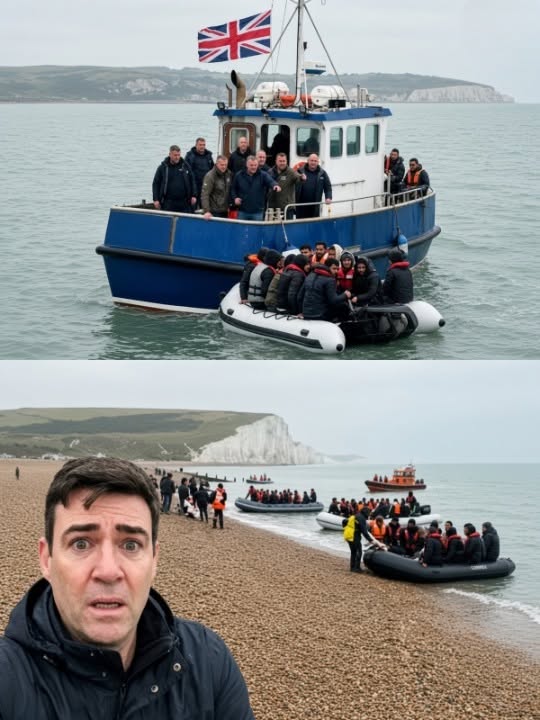
Images of overcrowded dinghies arriving on Britain’s southern coast have become politically radioactive.
The issue now fuels the rise of populist and anti-establishment parties across England.
Inside Labour, officials insist much of the outrage has been amplified by social media ecosystems designed to reward anger and division.
That is partly true.
Online political discourse in Britain has become increasingly emotional, conspiratorial and tribal.
But dismissing the backlash entirely as digital hysteria risks misunderstanding the deeper forces driving it.
Many voters no longer believe Britain’s political institutions speak honestly about immigration, integration or national identity.
That distrust did not emerge overnight.
It has accumulated gradually across years of scandals, policy failures and cultural fragmentation.
Britain now appears trapped between two competing fears.
One side fears rising nationalism, xenophobia and anti-Muslim hostility.
The other fears demographic change, weakening social cohesion and shrinking freedom of expression.
Both sides increasingly view themselves as defending Britain from existential decline.
And both believe the political establishment favors the other side.
That mutual suspicion is creating a dangerous cycle of radicalization.
For Starmer, the political timing could hardly be worse.
Labour already faces pressure over economic stagnation, public sector strain and growing voter frustration. (The Times)
Now cultural politics threatens to overshadow nearly every other issue.
The Prime Minister’s allies insist he is attempting to govern a deeply divided nation pragmatically.
Critics argue he is accelerating division by treating some communities as politically untouchable while dismissing concerns from others as prejudice.
The emotional core of the backlash is not merely immigration or religion.
It is legitimacy.
A growing number of British voters believe major changes to the country’s social fabric are occurring without democratic consent or honest public discussion.
Whether statistically justified or not, that feeling is politically potent.
And history repeatedly shows that when populations believe elites are ignoring their concerns, backlash movements grow rapidly.
That is already visible across Europe.
From France to Germany to the Netherlands, establishment parties have watched anti-establishment movements gain ground by focusing relentlessly on immigration, cultural identity and elite distrust.
Britain increasingly appears vulnerable to the same political realignment.
Especially as social media amplifies emotionally charged narratives at unprecedented speed.
The irony is that Britain remains, by international standards, one of the world’s most stable democracies.
Its institutions remain intact.
Its elections remain competitive.
Its press remains broadly free.
Yet politically, the country feels more psychologically fragmented than at any point in recent memory.
Even among moderate voters, fatigue is setting in.
Many no longer trust official reassurances.
Others no longer trust alternative media narratives either.
Instead, millions drift between competing information bubbles, each offering radically different versions of Britain itself.
One Britain celebrates multicultural modernity.
Another fears cultural displacement.
Increasingly, they coexist uneasily within the same country.
What happens next may depend less on policy than on trust.
If the government cannot persuade voters that concerns around immigration, integration and free speech can still be openly discussed within democratic institutions, anti-establishment forces will continue expanding.
At the same time, if Britain’s political debate descends entirely into communal suspicion and identity warfare, the country risks deepening polarization that becomes progressively harder to reverse.
For now, the controversies surrounding Ramadan speeches, speech regulations and immigration bans have become symbols far larger than the individual incidents themselves.
They represent competing visions of Britain’s future.


One vision sees a multicultural Britain adapting to demographic and cultural change.
The other sees a nation gradually losing coherence, confidence and freedom to speak openly about difficult realities.
The political battle now unfolding is not simply about policy.
It is about which of those stories millions of British voters ultimately decide to believe.
And that decision could reshape British politics for years to come. 🇬🇧