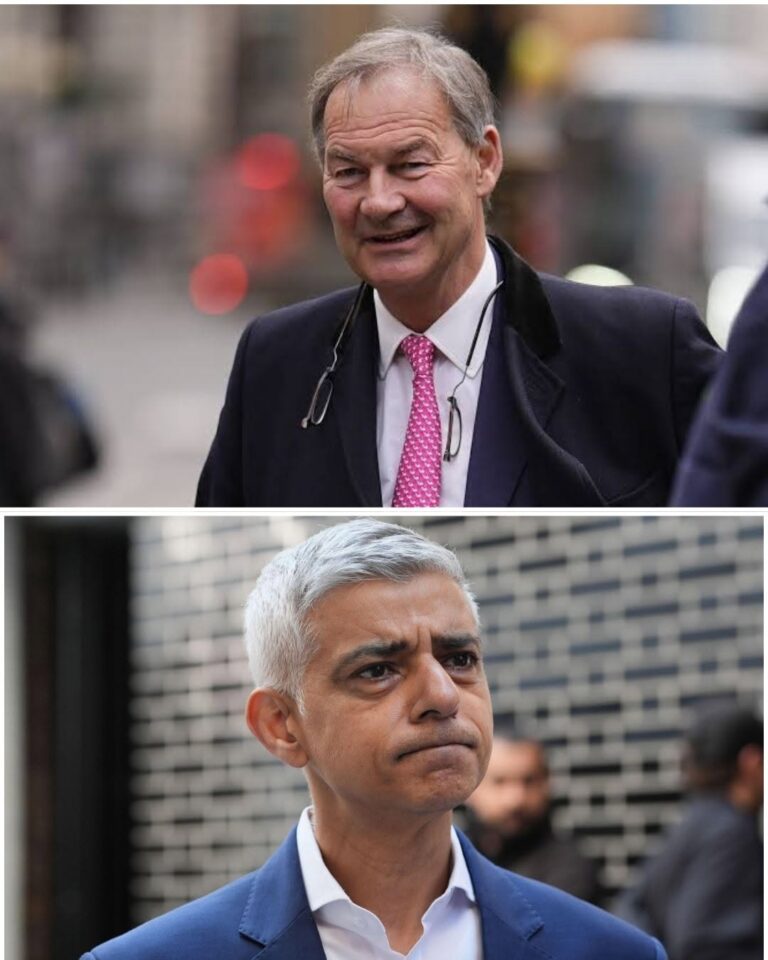
Westminster Hall just erupted — Reform’s Sarah Pochin said the quiet bit out loud.


Westminster Erupts as Reform MP Sarah Pochin Takes Aim at Britain’s Asylum System
Westminster Hall became the stage for another explosive confrontation over Britain’s migration crisis this week, as Reform UK MP Sarah Pochin delivered a speech that went far beyond the language of ordinary parliamentary debate.
Her message was blunt: the asylum system is not merely under pressure—it is, in her view, fundamentally broken.
Pochin pointed to anger in her constituency of Runcorn and Helsby, where petitions have reportedly attracted hundreds of signatures calling for migrant hotels to be closed, illegal arrivals to be removed, and financial support for asylum seekers to be reconsidered.
For Reform supporters, those numbers are evidence that public frustration has moved far beyond the political fringe.
For critics, however, the language used by Pochin risks inflaming tensions and portraying vulnerable migrants as a collective threat.
And that is precisely why the confrontation matters.
Britain’s migration debate has entered a new phase—one in which the argument is no longer simply about immigration numbers. It is increasingly about national identity, public spending, security, housing and trust in government.
“This Isn’t Fringe. This Is the Country.”
The political power of Pochin’s intervention lies partly in her attempt to connect Westminster with the mood she says exists in towns and communities across Britain.
The petitions from Runcorn and Helsby have become a symbol of that argument.
One petition reportedly attracted 461 signatures calling for migrant hotels to be shut and illegal arrivals deported.
Another attracted 871 signatures opposing financial payments to asylum seekers.
Whether those figures represent the views of the entire constituency is, of course, a different question.
Petitions measure the people motivated enough to sign them; they do not constitute scientific opinion polling.
But politically, they still matter.
They demonstrate that immigration has become an issue capable of mobilizing local communities.
For residents worried about housing shortages, public services or the visible presence of asylum accommodation in their towns, the issue is deeply personal.
The argument from Reform is that Westminster has spent too long treating those concerns as politically inconvenient rather than addressing them.
Pochin’s intervention is designed to say the opposite:
Listen to these people.
The Word “Invasion”
Perhaps the most controversial element of the speech was Pochin’s description of irregular migration as an “invasion” and a national-security emergency.
That language is deliberately provocative.
Supporters argue that Britain must stop pretending that uncontrolled or irregular entry is simply an administrative issue.
They point to small boats crossing the English Channel, organized smuggling networks and the enormous cost of processing and accommodating asylum applicants.
From that perspective, describing the situation as a security emergency is intended to force government action.
But the word “invasion” carries enormous emotional weight.
Britain is not literally facing a military invasion by asylum seekers.
Most people who arrive irregularly are civilians, and each asylum claim must be considered according to individual circumstances.
Critics therefore argue that describing migrants as an invading force risks stripping away those individual identities and turning a complicated humanitarian and legal issue into a confrontation between “Britons” and “outsiders.”
That distinction matters.
A government can be firm on border enforcement without treating every migrant as an enemy.
The Migrant Hotel Battle
At the heart of Britain’s political argument is the controversial use of hotels to accommodate asylum seekers.
Hotels became an increasingly visible part of the asylum system after the number of people seeking accommodation exceeded the available capacity in the conventional reception network.
For local residents, however, seeing hotels used to house asylum seekers can create a powerful impression that the government is prioritizing migrants while ordinary citizens struggle with housing.
The political optics are difficult.
A family on a council-housing waiting list may see a hotel filled with asylum seekers and ask a simple question:
Why is there accommodation for them when there isn’t enough for us?
That question deserves a serious answer.
But the underlying system is more complicated than the political image suggests.
Asylum accommodation is generally temporary and operates under different rules from ordinary social housing. The government also pays for accommodation because it has a legal responsibility to support eligible asylum seekers who would otherwise be destitute while their claims are processed.
Nevertheless, the costs are substantial.
And taxpayers have every right to demand that the system be efficient, transparent and properly controlled.
“Four-Star” Accommodation?
Pochin and other Reform politicians have repeatedly criticized the use of hotels, sometimes describing them as luxurious or “four-star” accommodation.
That characterization is politically effective because it taps into a widespread sense of unfairness.
Why should someone who has entered Britain illegally appear to receive accommodation, food and other support while working families face rising mortgages, rents and household bills?
But the reality of asylum accommodation varies considerably.
Many asylum seekers are housed in basic and sometimes overcrowded facilities rather than luxury hotels.
The issue is therefore not simply whether asylum seekers are living comfortably.
It is whether the government has created an expensive system that is financially unsustainable.
That is a much stronger criticism.
If hotel accommodation costs taxpayers enormous sums because the asylum process is slow, the obvious policy question is:
Why are decisions taking so long?
The Real Pressure Point: Speed
Britain’s migration debate often focuses on stopping boats.
But another crucial issue is what happens after people arrive.
An asylum system can only function properly if claims are processed efficiently.
Genuine refugees should receive protection without unnecessary delay.
People whose claims fail should be removed when there is no legal barrier to removal.
When cases remain unresolved for long periods, the government faces rising accommodation costs and communities face continuing uncertainty.
This creates the worst possible political combination.
Taxpayers pay more.
Asylum seekers remain in limbo.
Local residents become increasingly frustrated.
And politicians gain an opportunity to accuse the government of losing control.
The solution therefore cannot simply be tougher rhetoric.
It must involve faster decisions, better administration and effective returns agreements with countries of origin.
The Question of Cash Payments
Another controversial issue raised by Pochin concerns financial support for asylum seekers.
The British asylum system provides support to eligible applicants who would otherwise be destitute while their claims are being considered.
That support exists because people seeking asylum are generally restricted from working while their applications are pending.
The policy is intended to prevent people from becoming homeless or completely without means of survival.
But for critics, the system has become another symbol of perceived unfairness.
At a time when many British households are cutting spending, even relatively modest payments to asylum seekers can provoke anger.
This is why the debate has become so emotionally charged.
It is not necessarily about the amount of money involved.
It is about who deserves assistance from the state.
“Humane, Not Four-Star”
Pochin’s proposed alternative is to move asylum seekers out of hotels and into more basic holding or reception facilities.
Her argument is that Britain can remain humane without providing expensive hotel accommodation.
That idea deserves serious examination.
If accommodation can be provided safely and decently at significantly lower cost, taxpayers would have a legitimate reason to support such a reform.
But any alternative system would still need to meet legal and humanitarian standards.
People cannot simply be placed in inadequate facilities because they arrived irregularly.
There must be security, sanitation, healthcare and appropriate safeguards, particularly for children and vulnerable individuals.
The debate should therefore be about what constitutes adequate accommodation at a reasonable cost, rather than simply whether migrants deserve comfort.
The 2029–2036 Question
Perhaps the most politically explosive point concerns the Home Office’s long-term planning for asylum accommodation.
Critics have seized on plans involving contracts extending into the next decade as evidence that the government expects hotel and accommodation demand to continue.
Their argument is straightforward:
If ministers were genuinely confident that irregular migration would soon be brought under control, why would the government be planning for asylum accommodation years into the future?
It is a powerful political question.
But long-term procurement does not necessarily mean the government wants migration to remain high.
Governments routinely plan for future capacity because contracts take years to negotiate and infrastructure cannot be created overnight.
Still, the existence of long-term accommodation planning sends an unmistakable message about the scale of the challenge.
Westminster does not expect the asylum system to disappear.
The question is whether it expects to manage it better.
A Growing Divide
Pochin’s speech reflects a broader divide in British politics.
One side emphasizes sovereignty, border enforcement and taxpayers’ money.
The other emphasizes humanitarian obligations, international law and the dangers of inflammatory political language.
Between those two positions lies a large group of voters who may want both.
They want Britain to protect genuine refugees.
But they also want secure borders.
They want migrants treated humanely.
But they want illegal entry deterred.
They want asylum claims processed fairly.
But they do not want taxpayers paying indefinitely for failed applications.
In other words, many voters may not be demanding either completely open borders or complete isolation.
They may simply want a system that works.
The Reform Challenge
That is where Reform UK’s political opportunity lies.
The party has made immigration one of its defining issues, arguing that successive Conservative and Labour governments failed to control Britain’s borders.
Every hotel used for asylum accommodation, every delayed deportation and every new Channel crossing provides ammunition for that argument.
But the party also faces a responsibility.
It is relatively easy to describe the existing system as a disaster.
It is harder to design a system that is lawful, affordable, humane and genuinely capable of reducing irregular migration.
Britain needs answers to difficult questions.
How should asylum claims be processed?
Where should applicants be accommodated?
How quickly can failed applicants be removed?
What agreements are needed with other countries?
How should genuine refugees be protected?
And how can the government prevent people from exploiting the system while ensuring that legitimate claims are not rejected unfairly?
Those are the questions that ultimately matter.
A Political Storm That Is Not Going Away
The Westminster Hall confrontation is unlikely to be the last.
Immigration has become one of Britain’s defining political issues, and the anger behind it cannot simply be dismissed.
At the same time, political leaders must be careful not to turn public frustration into hostility toward entire groups of people.
The distinction between illegal entry, an asylum claim, a rejected application and a genuine refugee is crucial.
They are not the same thing.
A serious national debate must preserve those distinctions.
Britain can demand stronger borders without abandoning compassion.
It can insist on faster deportations without ignoring due process.
It can reduce hotel costs without treating vulnerable people as less than human.
And it can listen to angry communities without allowing anger to become collective blame.
That is the challenge facing Westminster.
Sarah Pochin’s intervention has made one thing unmistakably clear: there is a growing constituency that believes Britain’s migration system has gone too far, costs too much and operates with too little public consent.
Whether one agrees with her language or not, politicians ignore that sentiment at their peril.
Because beneath the shouting over hotels, boats, payments and deportations lies a much bigger question:
Can Britain build an asylum system that is both compassionate enough to protect those who genuinely need refuge—and strong enough to convince the public that its borders and resources remain under control?
Until Westminster can answer that question convincingly, the political revolt over Britain’s migration policy is unlikely to fade.