Harry Redknapp has sparked a major national conversation after sharing his views on Britain’s migration challenges.

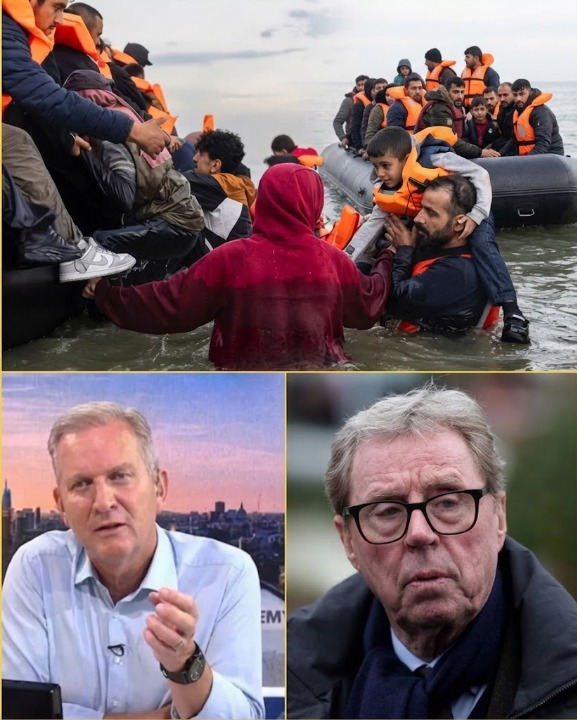
Harry Redknapp’s Migration Comments Reignite Debate Over Britain’s Borders, Language and Public Trust
Former football manager Harry Redknapp has unexpectedly found himself at the centre of Britain’s immigration debate after comments attributed to him about migration and border control began circulating widely online.
Redknapp, best known for managing clubs including Tottenham Hotspur, Portsmouth and West Ham United, has spent most of his public career discussing football rather than immigration policy. That is precisely why his intervention has attracted attention. When someone outside Westminster enters one of the country’s most politically sensitive debates, supporters often see the remarks as evidence of public frustration breaking through the language of professional politics.
Reporting of Redknapp’s appearance on TalkTV describes him reacting to footage concerning migrants attempting to enter Ceuta, the Spanish territory on the North African coast. During that discussion, he reportedly described Britain as having become “overrun” and referred to changes he believed he had witnessed around Bournemouth, an area with which he has long been closely associated.
The reaction illustrates why immigration remains one of Britain’s most difficult political subjects.
Supporters Say Redknapp Voiced a Familiar Frustration
Those sympathetic to Redknapp’s comments argue that he expressed concerns that many voters have raised for years: whether the government has sufficient control of the border, whether failed asylum seekers are removed quickly enough and whether local communities are being asked to absorb demographic change faster than public services can adapt.
To this audience, Redknapp’s appeal lies partly in his lack of political polish.
He is not a Home Office minister presenting carefully prepared statistics or an opposition politician seeking votes. His informal style can make his comments sound more like the frustration heard in pubs, workplaces and family conversations than conventional political messaging.
That does not prove that his assessment is statistically correct.
But it helps explain why such remarks resonate.
The government itself acknowledges that public confidence in the migration system has been badly damaged. In March 2026, the Home Secretary said Britain needed to restore “order and control” at the border while maintaining protection for people genuinely fleeing persecution. The government has simultaneously argued for lower migration, tougher enforcement and continued legal humanitarian routes.
Critics Focus on the Word “Overrun”
Redknapp’s critics have focused particularly on the language reportedly used.
Describing a country as “overrun” by migrants is very different from saying that migration is too high or that border enforcement is inadequate.
The word creates an image of a territory being overwhelmed.
Critics argue that such language can blur important distinctions between very different groups: people entering Britain legally for work, international students, refugees brought through approved schemes, asylum seekers, visa overstayers and people arriving through unauthorized routes.
Those categories are governed by different laws.
Someone visible in a town centre or living in a hotel cannot simply be identified by appearance as an “illegal migrant.”
That distinction is important because political debates can quickly move from criticism of government policy to assumptions about individuals.
A person can reasonably argue for tougher immigration controls without treating every foreign-born resident or asylum seeker as responsible for failures in the border system.
Britain Does Have a Significant Border Challenge
Criticism of inflammatory language does not mean Britain’s irregular migration problems are imaginary.
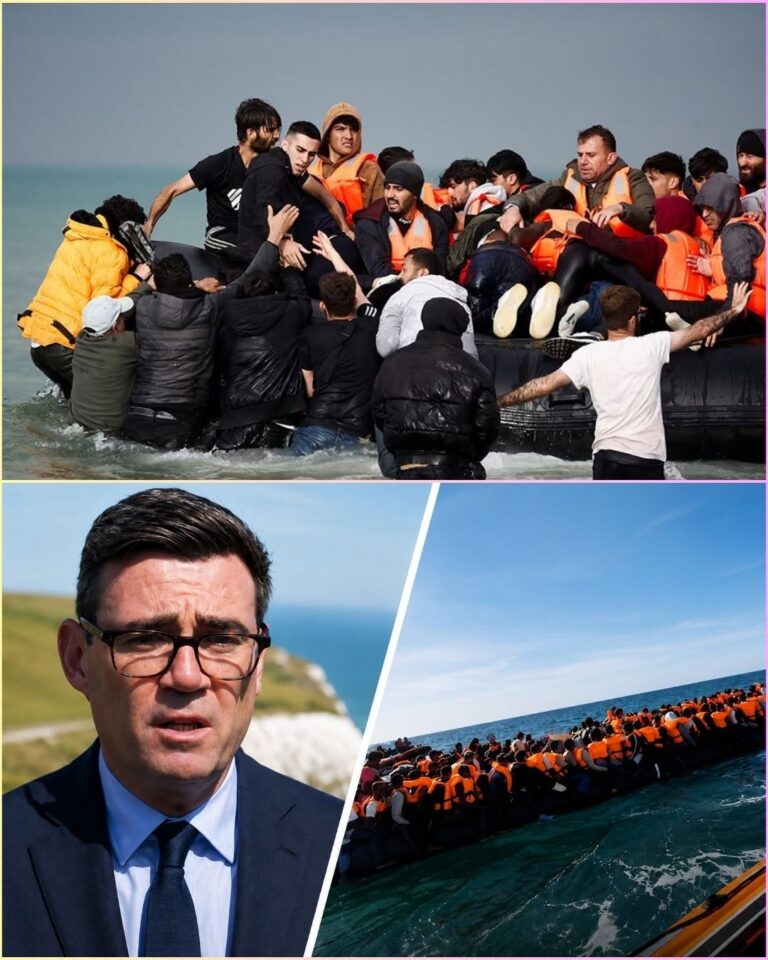
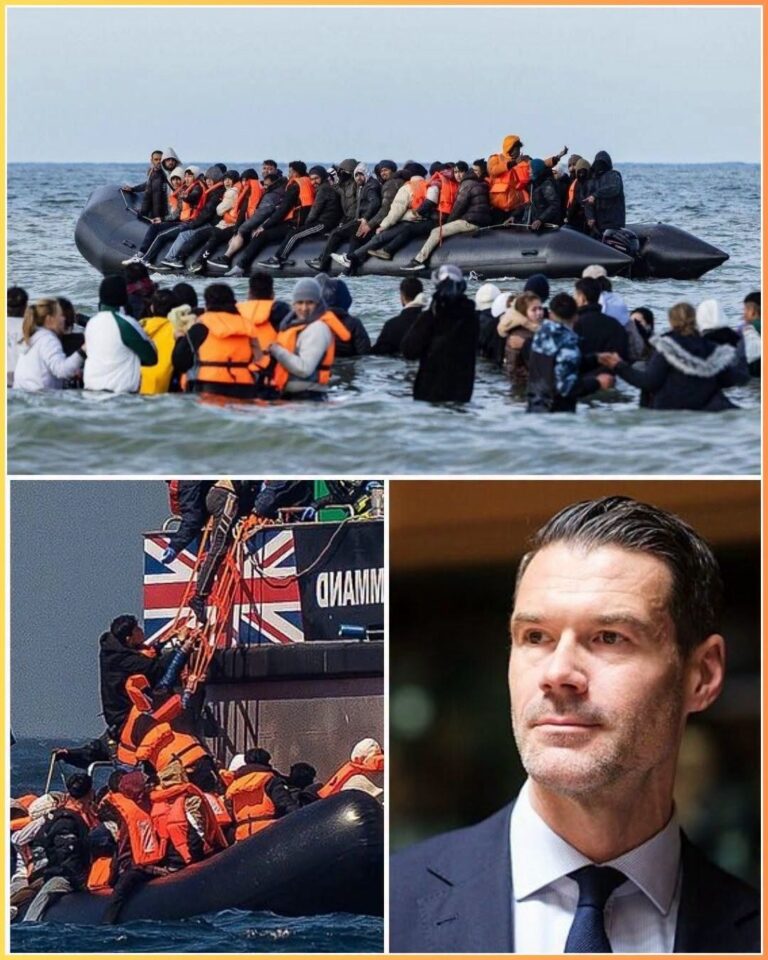
The government continues to face substantial numbers of unauthorized arrivals, particularly through small boats crossing the English Channel.
At the same time, the latest figures show that the picture is changing.
Small-boat arrivals fell by around 23 percent in the year ending June 2026 compared with the previous year. Asylum claims also fell significantly, while the number of asylum seekers housed in hotels dropped from 32,041 in June 2025 to 16,021 a year later.
These reductions allow ministers to argue that tougher enforcement and agreements with other countries are beginning to have an effect.
But tens of thousands of people continue to use unauthorized migration routes.
For voters who believe borders should be visibly and consistently controlled, falling numbers do not necessarily mean the problem has been solved.
Enforcement Has Also Been Expanded
The government has intensified removals and immigration enforcement.
In June, ministers said nearly 70,000 people with no right to remain in Britain—including foreign national offenders and immigration offenders—had been removed since the government took office. The government also announced plans to increase Immigration Enforcement staffing and funding.
The Home Secretary has separately argued that successful immigration policy requires a combination of border enforcement, faster decisions, international cooperation and legal migration rules linked more strongly to contribution and integration.
That presents a more complicated picture than slogans suggesting nothing is being done.
The political argument is increasingly about whether the measures are sufficient.
Bournemouth Becomes Part of the Argument
Redknapp’s reported references to Bournemouth are also revealing.
Local perceptions matter greatly in immigration debates.
Residents may observe changes in housing demand, population, hotels or public spaces and interpret those changes as evidence of national migration policy.
Those experiences should not simply be dismissed.
Local services can come under genuine pressure when populations change quickly, particularly where housing, healthcare and infrastructure were already stretched.
But personal observation also has limits.
Seeing greater ethnic diversity does not establish how many people entered Britain illegally, whether they are asylum seekers or whether migration is responsible for difficulties such as housing shortages.
Britain’s housing crisis, for example, reflects decades of insufficient construction, planning constraints, affordability problems and population growth from multiple sources.
Migration may contribute to demand, but it is not the sole cause.
The Debate Is More Complicated Than “Pro” or “Anti” Immigration
One reason Redknapp’s comments have produced discussion is that British public opinion cannot easily be divided into two camps.
A person may support controlled immigration while opposing irregular Channel crossings.
Someone may support refugees fleeing wars while believing rejected asylum applicants should be removed.
Voters may value migrant doctors, nurses, construction workers and entrepreneurs while simultaneously believing overall migration levels have become too high.
Likewise, people can object strongly to language such as “overrun” without supporting open borders.
That middle ground is often lost in highly polarized online arguments.
Government policy itself increasingly reflects this tension.
Ministers say Britain should remain willing to provide sanctuary while insisting that criminal smuggling routes must be disrupted and people without the legal right to remain should be returned. Parliamentary debate in July similarly acknowledged that public consent for asylum could erode if the government failed to demonstrate control.
Celebrities Can Change the Tone of Political Debate
Redknapp’s involvement raises another question: what happens when celebrities and sporting figures enter political arguments?
They are entitled to express opinions like anyone else.
Their fame, however, gives those opinions unusual reach.
A football manager does not automatically possess specialist knowledge about asylum law, migration economics or border security. But public figures can articulate emotions that technical policy discussions fail to capture.
This can be useful when it highlights genuine concerns politicians have overlooked.
It can also become problematic when emotionally powerful statements are treated as factual analysis simply because the speaker is famous.
The same standard should therefore apply to Redknapp as to politicians: his concerns can be discussed seriously, while individual claims should still be tested against evidence.
The Real Question Is Public Confidence
Perhaps the most important part of the controversy is not whether Redknapp chose the right word.
It is why comments such as his find an audience.
Successive governments have struggled to persuade the British public that immigration is being managed predictably.
Small boats are particularly damaging politically because they provide a highly visible symbol of people reaching Britain outside conventional visa routes.
Even relatively small numbers compared with overall legal migration can therefore have an outsized effect on perceptions of control.
At the same time, harsh rhetoric carries its own costs.
Migrants who entered legally, refugees who have rebuilt their lives in Britain and British citizens from immigrant backgrounds can understandably resent being discussed as though they collectively represent a national problem.
A credible migration system therefore requires two things at once: effective enforcement and responsible public language.
Redknapp’s Comments Reflect a Bigger British Argument
Harry Redknapp is unlikely to determine Britain’s immigration policy.
But the reaction to his remarks shows how deeply migration has moved beyond Westminster and into everyday cultural discussion.
For supporters, he has voiced frustration with a system they believe remains too weak.
For critics, his choice of language illustrates how legitimate concerns about border control can become generalized hostility toward migrants.
Both responses point toward the same underlying problem.
Britain needs an immigration and asylum system that the public considers controlled and fair, while ensuring that individuals are treated according to their legal status rather than stereotypes.
Current statistics show some reduction in asylum claims, small-boat arrivals and hotel use.
But statistics alone will not rebuild confidence.
The government will ultimately be judged on whether it can consistently enforce immigration decisions, dismantle smuggling networks, maintain workable legal migration routes and explain its policies honestly to communities experiencing change.
Redknapp’s intervention may therefore matter less because of his expertise on migration than because of what the response reveals.
Britain’s argument over immigration is no longer simply about how many people arrive.
It is also about trust, identity, fairness, language and whether citizens believe the political system is capable of discussing an extraordinarily difficult subject without either ignoring legitimate concerns or turning migrants themselves into convenient targets.