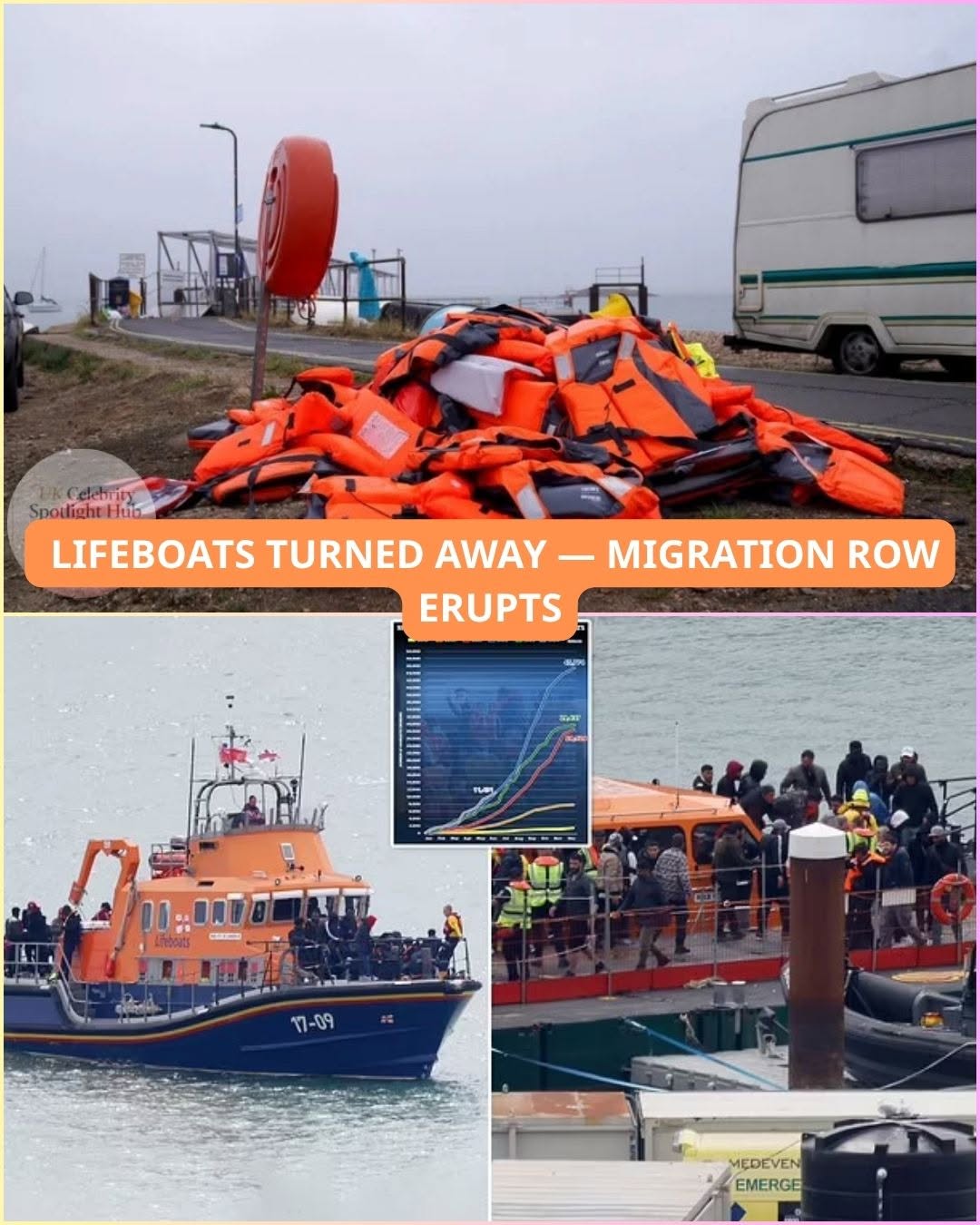
RNLI migrant rescue boats BLOCKED from two English ports before bringing 140 people ashore at Eastney
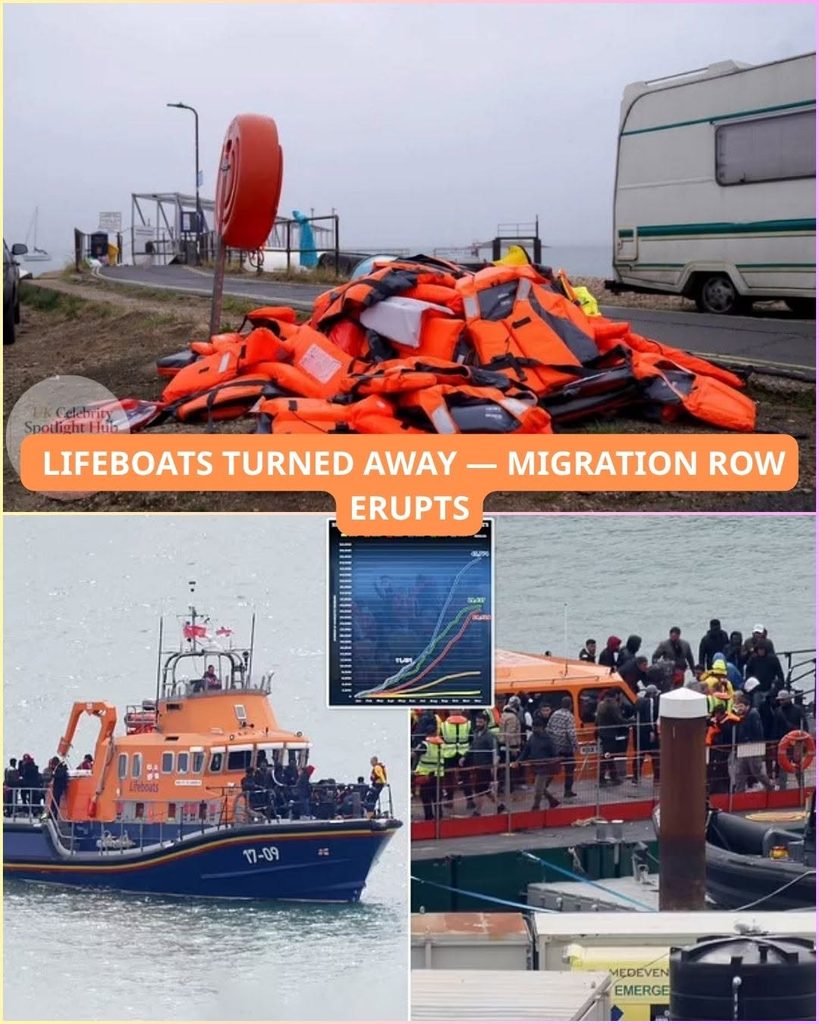
Two RNLI lifeboats carrying around 140 migrants were reportedly refused entry to ports in Southampton and Portsmouth before eventually bringing those rescued ashore at Eastney, according to newly revealed marine communications.
The incident has become the latest flashpoint in Britain’s increasingly heated debate over small-boat crossings and the role of the RNLI in responding to people in distress at sea.
On Sunday, two lifeboats operated by the charity picked up around 140 people from a single inflatable vessel in the Solent.

On Sunday, two lifeboats operated by the charity picked up 140 migrants from a single migrant vessel

PICTURED: Piles of lifejackets left by illegal migrants in Eastney after being dumped on the beaches of Hampshire
The boat is believed to have travelled from the Normandy coast, making it an unusually long Channel journey compared with the more common routes towards Kent.
Before the group was brought ashore at Eastney in Hampshire, the RNLI crews were reportedly denied access to both Southampton and Portsmouth.
According to the report, open marine VHF radio communications indicated that Southampton Vessel Traffic Service and the King’s Harbour Master Portsmouth would not allow the lifeboats into the ports.
Associated British Ports later confirmed that access to Southampton had been declined.
A spokesman said the port did not have suitable reception facilities available at the time.
The company added that Southampton would have responded differently if there had been an immediate safety-of-life emergency, if it had been the closest available port or if authorities had formally instructed the port to accept the vessels.

Hundreds of furious locals poured onto the streets in protest following the illegal migrants’ arrival
| PA
It said none of those conditions applied in this case.
After being unable to enter the two ports, the RNLI boats headed to Eastney.
Their arrival was followed by angry protests as hundreds of people gathered near the RNLI Portsmouth Lifeboat Station.
Some demonstrators blocked the road while police wearing riot gear formed lines in an attempt to control the situation.
Downing Street later condemned behaviour it described as intimidating and thuggish, while stressing that peaceful protest remained legitimate.
The Home Office said everyone brought ashore had subsequently left the landing area and was being transported for normal asylum processing.
The RNLI expressed frustration at the way the situation had been handled.
A spokesman said the charity was working with the relevant authorities to understand why access had been refused and said it was disappointed by the manner in which crews had been spoken to.
The organisation stressed that its volunteers give their time to save lives at sea.
The episode has nevertheless intensified political criticism of the RNLI from some opponents of current migration policy.
Reform MP Suella Braverman argued that ports should refuse entry to lifeboats carrying migrants and accused the Government of losing control of Britain’s borders.
She also used the controversial description of the RNLI as a “taxi service”, language the charity strongly rejects.
The RNLI maintains that its role is strictly humanitarian.
It says small boats attempting to cross the Channel are treated as being in distress and that its purpose is to respond when called upon to save lives.
Former RNLI volunteer David Wimble, now a Reform councillor, also defended crews despite his political opposition to small-boat crossings.
He said the charity itself was neutral and existed solely to rescue people in danger.
RNLI chief executive Peter Sparkes has meanwhile warned that staff and volunteers have faced growing abuse because of misinformation surrounding their Channel operations.
He said some volunteers had been targeted online and, in the worst cases, physically abused.
Sparkes argued that criticism of immigration policy should not be directed at crews responding to emergencies at sea.
The weekend’s events have therefore exposed a growing divide.
For critics, the repeated arrival of migrants rescued at sea has become symbolic of what they see as a failure of border policy.
For the RNLI, however, the issue is much simpler: when people are in danger on the water, its crews respond regardless of nationality, immigration status or politics.
The decision to deny the lifeboats access to Southampton and Portsmouth is now likely to fuel further debate over what should happen after migrants are rescued — and which ports should be responsible for receiving them.
What is clear is that the controversy surrounding Sunday’s rescue did not end when the passengers reached land.
Instead, it has become another major political battle over the Channel crossings, local protest and the responsibilities of one of Britain’s best-known lifesaving charities.