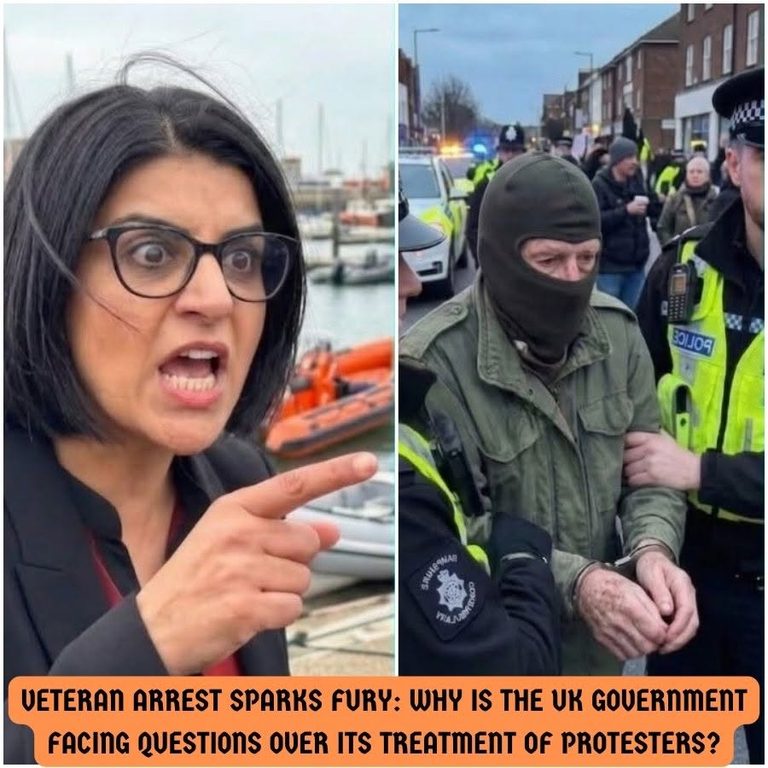
MASKED VIGILANTES SPARK OUTRAGE IN THE CHANNEL
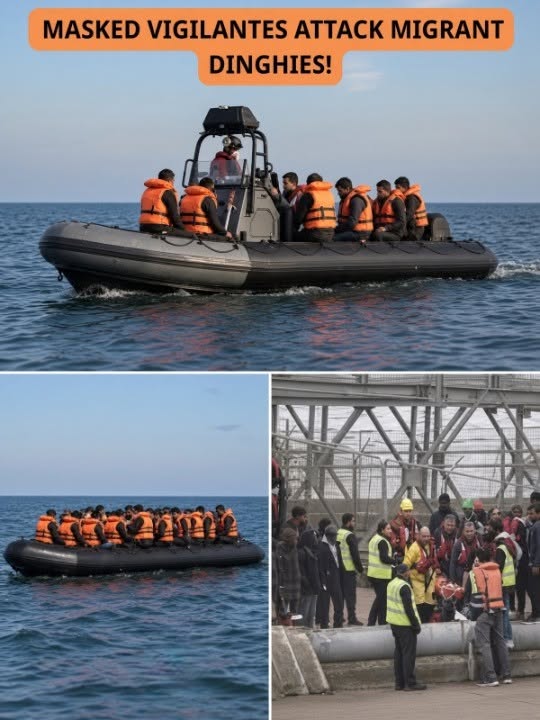
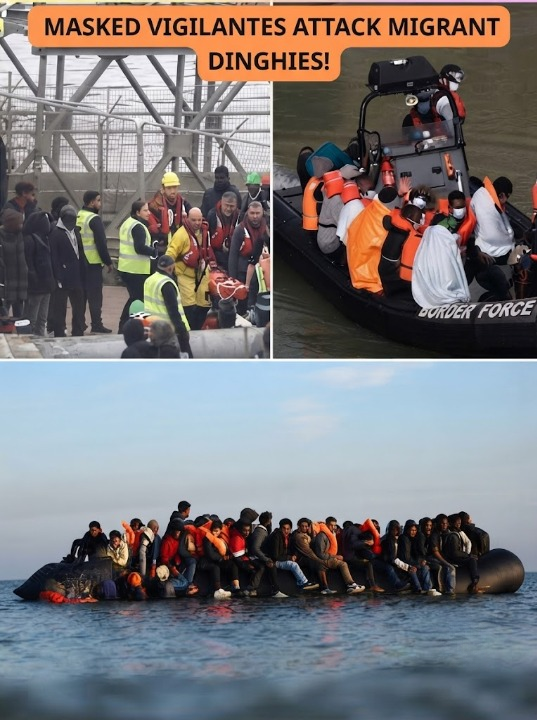
Masked Vigilantes in the Channel Spark Outrage as Migrant Boat Confrontation Fuels Border Debate
Footage said to show masked individuals confronting migrant boats in or around the English Channel has ignited an intense debate over border security, public frustration and the dangerous consequences of vigilante action. But as dramatic clips circulate online, crucial questions remain about exactly what happened and whether all the claims accompanying the footage are accurate.
A disturbing new controversy surrounding migration across the English Channel is attracting attention online after footage reportedly showed masked individuals attempting to confront boats associated with migrant crossings.
The images have prompted sharply different reactions. Some social-media users have portrayed the unidentified individuals as citizens frustrated by what they regard as a failure of governments to control irregular migration. Others have condemned the apparent intervention as reckless vigilantism that could endanger lives at sea and potentially interfere with the work of police, border authorities and rescue services.
Yet amid the anger, one fact is particularly important: dramatic footage does not necessarily provide the full story.
Without independent confirmation of when and where every clip was recorded, who the masked individuals were, what their intentions were and what happened before or after the recorded scenes, some of the most sensational claims circulating alongside the material should be treated cautiously.
What the controversy clearly demonstrates, however, is how combustible the debate over Channel crossings has become.
A Dangerous New Dimension
Small-boat migration has been one of Britain’s most divisive political issues for years. Governments have faced sustained pressure to prevent people from making unauthorized journeys from northern France, while humanitarian organizations have repeatedly warned of the deadly risks involved in crossing one of the world’s busiest shipping routes in unsuitable vessels.
The reported appearance of private individuals attempting to intervene introduces another potentially dangerous element.
Whatever someone’s political views on migration, attempting to confront vessels at sea can create serious risks. Small boats can be overcrowded and unstable, and sudden movements, collisions or panic among passengers could rapidly turn a confrontation into a rescue emergency.
That is why border enforcement at sea is normally left to trained authorities.
Critics of vigilante activity argue that private citizens cannot simply assume policing powers because they believe official policy has failed. Even when frustration with government is genuine, they say, individuals who take enforcement into their own hands risk escalating situations they may not fully understand.
Supporters of tougher border policies, meanwhile, say the controversy should not be dismissed merely as the behavior of a few masked individuals. For them, it reflects a deeper sense of frustration among sections of the public who believe successive governments have promised to control Britain’s borders without delivering visible results.
That political frustration is real even if vigilante action is not a legitimate solution.
Why Are Channel Crossings So Politically Explosive?
The issue has become symbolic of a much larger argument about sovereignty, immigration and confidence in government.
Critics of current migration policies frequently ask why people who have already reached safe European countries should be able to travel onward to Britain through unauthorized routes. They argue that failure to prevent crossings encourages people-smuggling networks and undermines confidence in the legal immigration and asylum systems.
For these voters, every boat reaching British waters can become evidence of a border system they believe is failing.
The opposing argument focuses heavily on humanitarian responsibilities and the complexity of asylum law.
Refugee advocates point out that the people attempting Channel crossings come from a variety of circumstances and cannot automatically be treated as a single category. Some may have legitimate claims for protection, while others may ultimately have applications rejected.
They also argue that reducing dangerous crossings requires more than enforcement alone. That could include cooperation with European governments, action against trafficking networks, faster asylum decisions and consideration of alternative legal pathways.
Those disagreements have turned the Channel into more than a geographical border. It has become one of the central political battlegrounds over what kind of immigration system Britain should operate.
Vigilantism Raises a Different Question
The latest controversy goes beyond whether Britain’s immigration rules are too strict or too weak.
It raises a more fundamental question: what happens when citizens decide that the government is failing and attempt to enforce their own interpretation of the law?
That possibility alarms legal and security experts because vigilantism can quickly become unpredictable.
Masked individuals confronting people at sea do not have the same training, accountability or legal authority as official agencies. They may not know whether a vessel is in distress, whether children are aboard or whether their actions could cause a dangerous reaction.
A confrontation can also escalate within seconds.
At sea, the consequences can be particularly severe. A situation that begins as an attempt to block or intimidate another vessel could potentially end with people in the water and emergency crews racing to prevent deaths.
For that reason, even politicians demanding significantly tougher border enforcement may be reluctant to endorse citizens taking direct action themselves.
A government can simultaneously support stronger borders and insist that enforcement remains the responsibility of lawful authorities.
Social Media Complicates the Picture
There is another important dimension to the controversy: the extraordinary speed with which dramatic footage can spread.
Short videos are frequently reposted without their original context. Captions may make claims that the footage itself cannot prove. Older recordings can also reappear and be presented as new incidents.
Images of masked individuals and migrant boats are particularly capable of generating strong emotional reactions before viewers have time to ask basic questions.
Where was the footage recorded?
When was it filmed?
Who recorded it?
Who are the masked individuals?
Did they actually attack or damage a boat, or was there only a confrontation?
Were authorities present?
Were any arrests made?
Those details matter enormously.
Until reliable authorities or credible reporting establish them, viewers should distinguish between what can actually be seen and what social-media accounts claim happened.
The Deeper Political Warning
Even if some of the most dramatic online claims surrounding the footage ultimately prove exaggerated, the reaction to it reveals something important about Britain’s migration debate.
Trust is becoming a central issue.
When citizens believe borders are not being effectively controlled, frustration can create fertile ground for increasingly radical responses. At the same time, when migrants are portrayed simply as an invading mass rather than individual human beings, the risk of intimidation and violence can increase.
Neither problem should be ignored.
Governments therefore face a difficult balancing act: demonstrating credible control of national borders while protecting human life, respecting legal obligations and preventing private groups from attempting to become unofficial enforcement forces.
The challenge is not merely stopping boats. It is maintaining confidence that the state — rather than angry groups on either side of the political argument — remains capable of enforcing the law.
What Happens Next?
Much depends on what investigators and credible reporting establish about the footage now circulating.
If individuals deliberately attempted to damage, obstruct or endanger migrant vessels, questions about possible criminal investigations could follow. If the videos have been mischaracterized or stripped of important context, that too would demonstrate the dangers of allowing viral claims to outrun verified information.
Either way, the controversy is unlikely to disappear quickly.
Britain’s argument over Channel migration has already moved far beyond statistics and policy documents. It touches questions of national sovereignty, humanitarian responsibility, public safety and trust in political institutions.
The sight of masked civilians apparently attempting to intervene adds an alarming new symbol to that debate.
People can legitimately demand stronger border enforcement. Others can legitimately argue for greater protection for asylum seekers. Those political disagreements belong in elections, Parliament, courts and public debate.
But the moment private individuals begin deciding that they themselves will enforce the border, the stakes change dramatically.
The Channel is already dangerous enough.
Turning it into a battleground between migrants and self-appointed vigilantes could make it more dangerous still — and whatever the frustrations surrounding Britain’s immigration system, that is a development authorities cannot afford to ignore.