Veterans, Protest Policing and Immigration: Claims of a Double Standard Fuel a New Political Row

Veterans, Protest Policing and Immigration: Claims of a Double Standard Fuel a New Political Row
A politically charged comparison between immigration enforcement in the United States and protest policing in Britain is fuelling a new debate over government priorities, civil liberties and the treatment of military veterans.
At the centre of the controversy are two separate sets of events: reports of immigration-fraud enforcement involving members of the Somali community in the United States, and claims that an elderly military veteran was arrested during an anti-migration demonstration in Portsmouth.
The incidents are not directly connected and took place under very different legal systems. Yet their proximity in time has allowed critics of the British government to draw a provocative comparison: while American authorities appear willing to devote substantial resources to alleged immigration fraud, they argue, British police are instead focusing their attention on protesters demanding tougher border controls.
That interpretation has spread rapidly online. But several of the most dramatic claims surrounding the controversy require careful scrutiny before firm conclusions can be drawn.
Portsmouth Protest Becomes Political Flashpoint
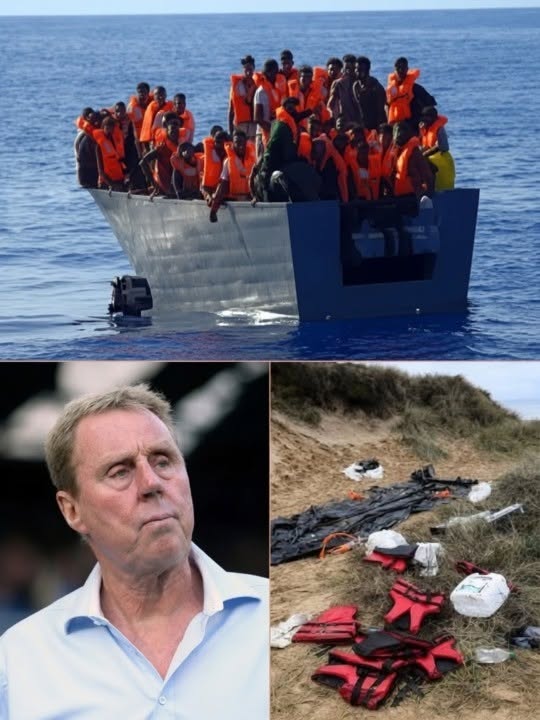
The Portsmouth demonstration came amid heightened tensions over migration and the arrival of people rescued or intercepted in the English Channel.
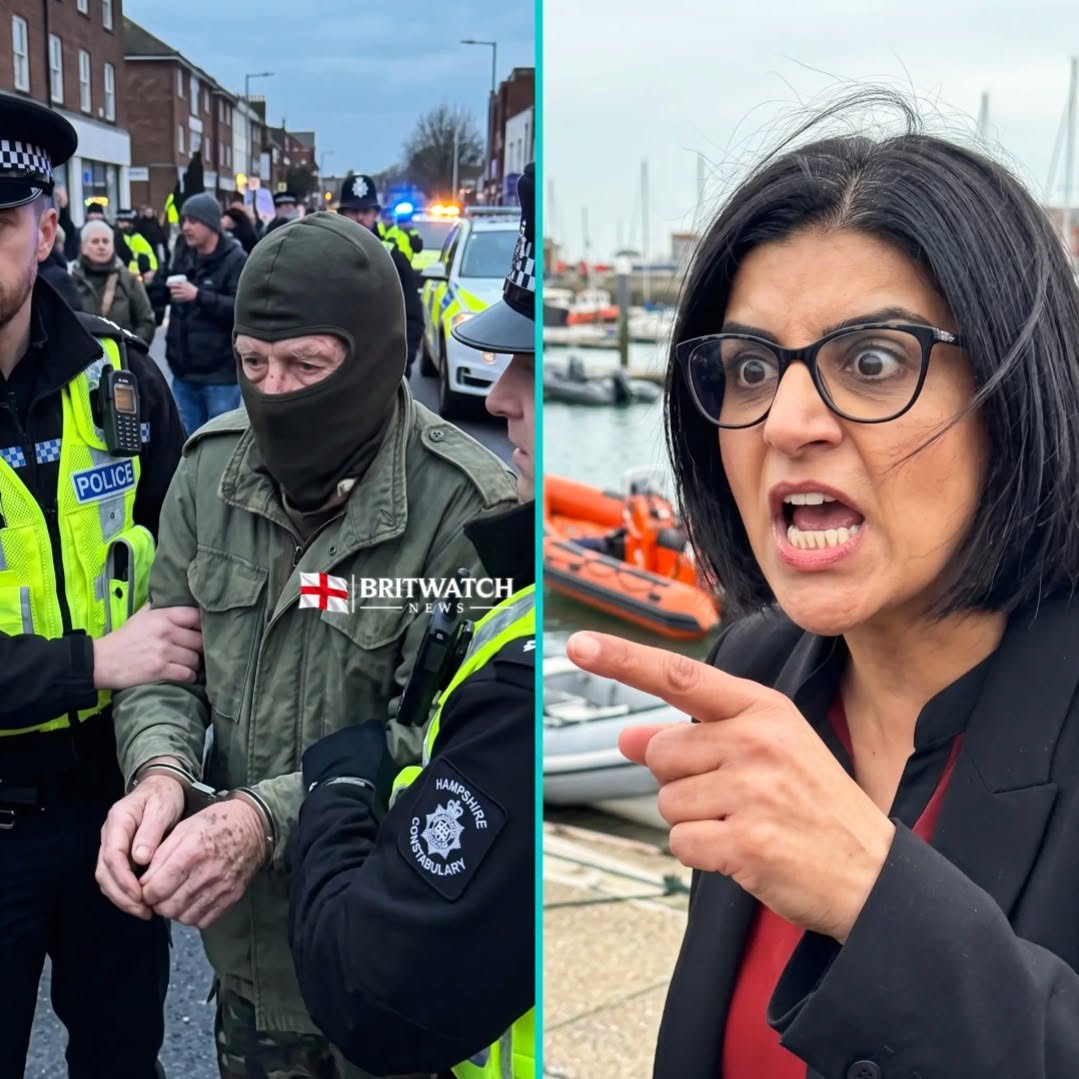
According to accounts circulating online, a 76-year-old veteran was among those detained during protest activity in the city. Critics have portrayed the arrest as evidence of excessive policing against people expressing concerns about immigration.
However, an arrest by itself does not establish that someone was detained simply for expressing a political opinion. The precise circumstances matter, including what police powers were in force, what officers believed had occurred and whether any conditions had been imposed on the demonstration.
Face coverings have become a particularly contentious issue.
Authorities can impose restrictions in certain circumstances, especially when police believe masks are being used to conceal identities during disorder or criminal activity. Supporters of stronger enforcement argue that masked individuals can make it more difficult for police to identify offenders when demonstrations turn violent.
Opponents, however, fear that broadly applied restrictions could interfere with peaceful protest.
That debate becomes particularly sensitive when enforcement involves elderly protesters or former members of the armed forces. Images or reports of veterans being detained inevitably carry political symbolism in a country where military service remains closely associated with public duty and sacrifice.
Did Ministers Order the Arrests?
Another major allegation is that senior ministers, including Home Secretary Shabana Mahmood, directly pressured Hampshire Police to make arrests.
That claim requires an important distinction.
A Home Secretary can publicly encourage police forces to use lawful powers available to them and can establish national policy priorities. That is not necessarily the same as personally directing officers to arrest particular individuals.
Operational policing in Britain is supposed to retain a degree of independence from day-to-day political control. Any assertion that ministers specifically ordered the arrest of an identified protester would therefore require strong evidence.
Nevertheless, political rhetoric matters.
When ministers demand robust enforcement around demonstrations, critics may reasonably ask whether similar standards are being applied consistently across protests representing different political causes.
That question — rather than the assumption of a proven political conspiracy — is where the broader controversy lies.
The American Comparison
Across the Atlantic, immigration enforcement has also generated headlines.
The original claims surrounding the controversy describe a large FBI-linked operation involving Somali immigrants accused of immigration fraud. Fraud involving immigration documents, visas, citizenship applications or related federal processes can result in serious investigations in the United States.
But claims about the scale of any particular weekend operation, the number of arrests and the agencies involved should be verified against official records before being treated as established fact.
Even where arrests have occurred, those arrested remain entitled to due process. An arrest or charge is not the same as a conviction.
Comparing American immigration enforcement with British protest policing is also complicated. The FBI, immigration authorities and local British police perform different functions under different laws.
Still, the comparison has political power because it taps into a much larger argument about priorities.
Critics of the UK government believe authorities are quicker to confront citizens protesting against migration than to tackle abuse of the immigration and asylum systems. Government supporters would reject that characterisation, pointing to immigration enforcement, removals, fraud investigations and border-security operations conducted separately from public-order policing.
Both issues can, of course, be enforced simultaneously. Action against a protester does not in itself demonstrate that immigration offences are being ignored.
Questions Over Government Data
The dispute becomes more serious when questions about transparency enter the discussion.
Critics have accused the government of resisting the disclosure of information that could reveal politically damaging details about immigration and related offences.
Legal disputes over government data can arise for many reasons, however, including privacy protections, national-security concerns, ongoing investigations and disagreements over freedom-of-information requirements.
A government’s decision to contest disclosure therefore cannot automatically be treated as proof that damaging information is being deliberately concealed.
But transparency remains essential.
If ministers want the public to trust official claims about immigration enforcement, asylum decisions, deportations and fraud, accessible and clearly explained statistics can help counter speculation.
When information is unavailable, incomplete or delayed, political narratives often fill the vacuum.
Flags, Free Speech and Criminal Penalties
Another claim circulating alongside the Portsmouth controversy suggests that people can receive two-year prison sentences simply for flying the British flag.
That assertion requires substantial qualification.
Displaying the Union Flag or St George’s Cross is not, by itself, a criminal offence in Britain.
Criminal liability could arise from conduct surrounding the display of flags — for example, criminal damage, dangerous placement, public-order offences or violations involving property — but describing such cases as imprisonment merely for “flying your own country’s flag” risks removing important legal context.
The distinction is significant because arguments about patriotism and free expression are increasingly becoming intertwined with Britain’s migration debate.
For many protesters, national flags represent identity, sovereignty and frustration with political institutions. For authorities, the relevant question is generally not the political symbolism itself but whether laws have been broken.
Treatment of Veterans Adds Another Layer
The controversy has also been connected to separate legal proceedings involving former members of Britain’s special forces.
Cases involving historical military operations are extraordinarily sensitive. Veterans and their supporters have sometimes argued that former soldiers face years of uncertainty and repeated legal scrutiny over decisions made in dangerous combat environments.
Others maintain that military service cannot place anyone permanently beyond investigation where credible allegations of unlawful conduct exist.
Those positions represent a difficult balance between accountability and fairness to personnel who served under extreme circumstances.
Using individual cases as evidence that the government is broadly “at war with veterans” goes beyond what the available facts necessarily demonstrate. Yet perceptions matter politically, particularly when the government is simultaneously discussing defence readiness, recruitment and the possibility that Britain may need more people willing to serve.
A Wider Crisis of Trust
Ultimately, the controversy is about more than one arrest in Portsmouth or one immigration operation in America.
It reflects declining trust over three emotionally powerful issues: immigration, policing and national service.
Those who believe Britain’s borders are inadequately controlled increasingly see protest as one of the few ways to force political attention onto the issue. When protesters are arrested, some interpret enforcement not as ordinary policing but as evidence that dissent itself is being suppressed.
Police and government officials face the opposite challenge. They must protect peaceful protest while responding when demonstrations create legitimate public-order or safety concerns.
The most inflammatory claim emerging from the debate — that Britain’s greatest threat is an “enemy within” — is political rhetoric rather than an established factual conclusion. Such language captures the anger of some government opponents, but it also risks transforming disagreements over policy into accusations of betrayal.
The more important democratic questions are narrower and answerable.
Were protesters treated proportionately? Were police powers applied consistently? Did ministers remain within the proper boundaries between political leadership and operational policing? Are immigration offences being investigated effectively? And is the government being sufficiently transparent about the evidence?
Those questions deserve scrutiny without assuming the answers in advance.
As migration continues to dominate British politics, the Portsmouth controversy demonstrates how quickly a local policing decision can become part of a much larger argument about borders, patriotism and trust in government.
For ministers, police and their critics alike, the challenge will be separating legitimate questions from claims that run ahead of the available evidence.