DOVER THROWN INTO CHAOS — BALACLAVA-CLAD PROTESTERS BLOCK FERRY PORT
Dover on Edge as Anti-Migrant Protest Targets Gateway to Britain
DOVER, England — Tensions surrounding Britain’s migration debate spilled onto the streets of Dover after protesters gathered near the Channel port, creating disruption around one of the country’s most strategically important transport gateways and forcing police to manage a potentially volatile public-order situation.
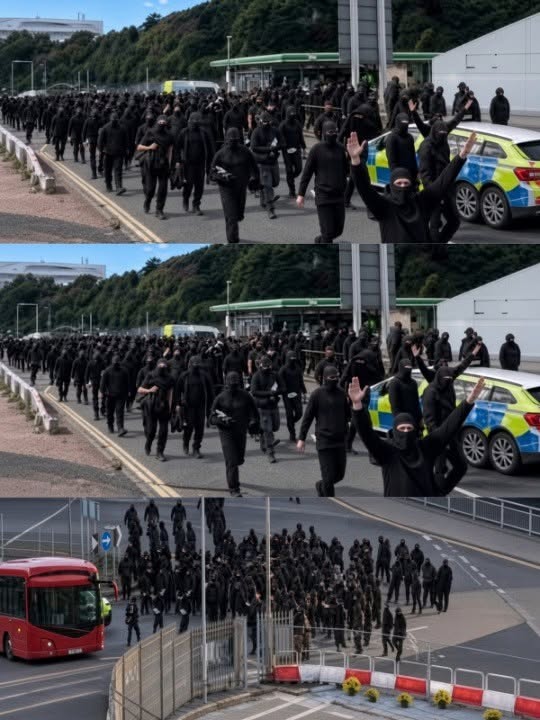
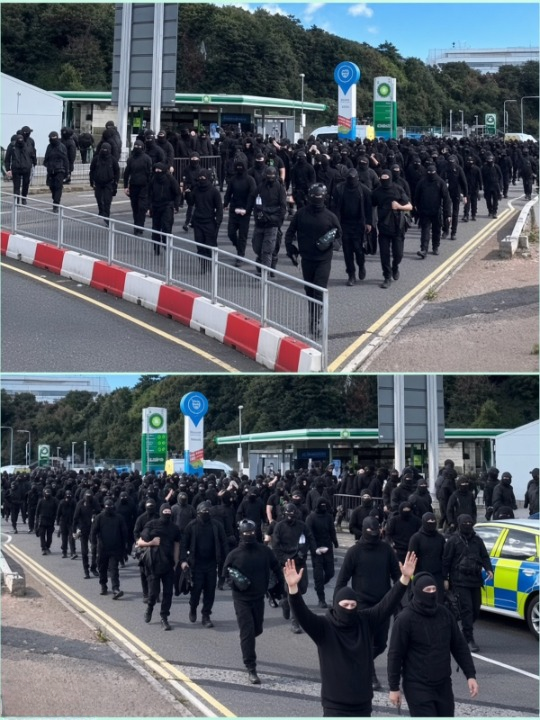
Images and accounts circulating online appeared to show demonstrators assembling around key roads in the Kent port town, with some participants reportedly wearing balaclavas or other face coverings. Organisers and supporters described the action as an anti-migrant protest and suggested demonstrations could continue for several days.
Claims that hundreds of people participated and that roads serving the ferry port were effectively blocked have circulated widely. However, the precise scale of the disruption, the number of participants and the extent to which normal port operations were affected would require confirmation from police, port authorities and transport operators.
What is clear is that Dover has once again become a highly symbolic stage for Britain’s increasingly bitter argument over migration.
Why Dover?
Few places represent Britain’s border debate as powerfully as Dover.
Facing continental Europe across the English Channel, the Kent town is home to one of Britain’s busiest passenger and freight ports. Thousands of vehicles routinely pass through the area as ferries connect the United Kingdom with France.
But Dover has acquired another political significance during recent years.
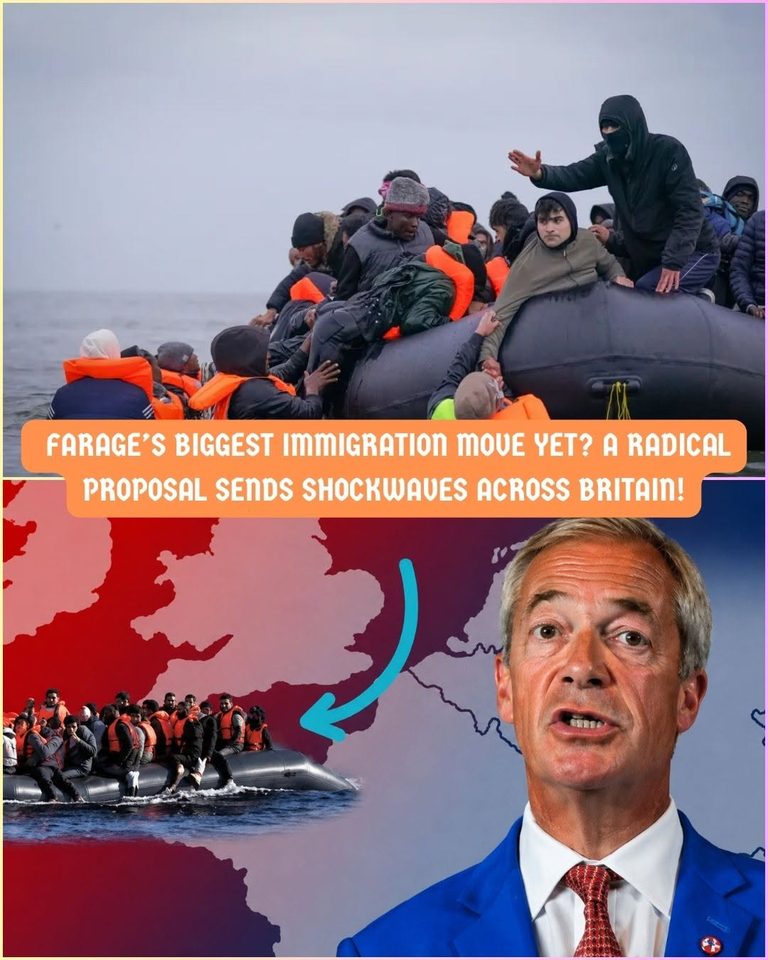
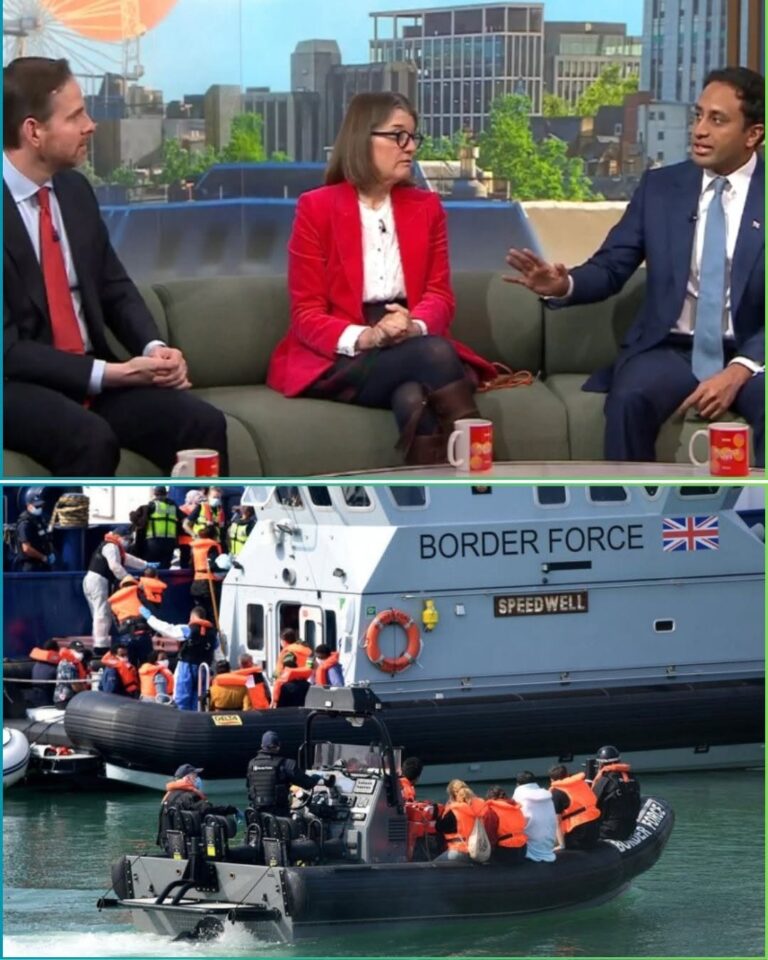
The coastline around Kent has become closely associated with small boats carrying migrants and asylum seekers across the Channel. Television footage of Border Force vessels, lifeboats and arrivals has repeatedly placed the region at the centre of Britain’s national conversation about border security.
For critics of current immigration policy, Dover has consequently become more than a port. It has become a symbol of what they describe as the government’s failure to maintain control of Britain’s borders.
That symbolism helps explain why protests in the town can attract attention far beyond Kent.
What Were Protesters Demanding?
The central message behind demonstrations of this kind is opposition to irregular migration across the English Channel.
Protesters have demanded tougher enforcement, faster removals of people who have no legal right to remain in Britain and stronger measures to prevent small boats from reaching UK waters.
For some demonstrators, the issue is also connected to the use of hotels and other accommodation for asylum seekers, the financial cost of the asylum system and broader concerns about the scale of immigration.
Those arguments have become increasingly prominent in British politics.
Successive governments have promised to reduce dangerous Channel crossings, while opposition parties and campaign groups have offered sharply different solutions ranging from expanded legal routes and faster asylum processing to detention, deportation and withdrawal from international legal agreements.
The result is a debate that has moved far beyond immigration statistics.
It now touches questions of sovereignty, national identity, human rights, policing and Britain’s relationship with international law.
Roads Become the Front Line
The most immediate concern in Dover was public order.
According to accounts surrounding the protest, demonstrators moved onto or near roads connected with the port, creating difficulties for traffic and requiring a police response.
Any substantial obstruction around Dover can have consequences well beyond the town itself.
The port is a critical link in Britain’s supply chain. Freight vehicles travelling between Britain and continental Europe depend on access routes through Kent, while tourists and local residents share many of the same roads.
Even relatively limited disruption can therefore produce congestion.
That is why police face a difficult balancing act whenever demonstrations take place near major infrastructure.
People have a right to peaceful protest. But that right exists alongside laws governing obstruction, intimidation, violence and public safety.
When protesters attempt to prevent vehicles from moving or enter restricted areas, officers must decide when protest crosses the line into unlawful disruption.
Face Coverings Add to Tensions
Reports that some demonstrators wore balaclavas have added another controversial dimension to the scenes.
A face covering does not, by itself, establish criminal intent. People attending demonstrations may conceal their identities for numerous reasons.
Nevertheless, masked groups at politically charged protests can create a more intimidating atmosphere, particularly when confrontations with police or counter-protesters appear possible.
For authorities, the central question is behaviour rather than appearance.
Police must distinguish between peaceful participants exercising their democratic rights and individuals who may be committing offences.
That distinction becomes especially important in an environment where short video clips can travel across social media within minutes, often stripped of the events that occurred immediately before or after the footage.
A Three-Day Protest?
Claims that demonstrators intended to maintain the action for three days immediately raised questions about how long disruption could continue.
A sustained protest around Dover would present significantly different challenges from a demonstration lasting only several hours.
Police resources would need to be maintained. Traffic management could become more complicated. Local businesses could face disruption, while residents might encounter repeated delays.
Yet declarations by protesters that they intend to remain for a certain period do not necessarily mean demonstrations will continue at the same scale throughout that period.
Numbers can rise and fall dramatically, police restrictions can alter where protesters are allowed to gather, and organisers can change plans.
The actual impact therefore depends on what happens on the ground rather than declarations circulating online.
A Town Caught in a National Argument
For residents of Dover, the situation presents a familiar frustration.
The town repeatedly finds itself at the centre of political battles largely driven by decisions made elsewhere.
Migration policy is determined in Westminster. Relations with France involve national governments. Asylum law operates through national and international institutions.
Yet Dover often experiences the practical consequences.
Residents encounter traffic disruption. Local police respond to demonstrations. Businesses deal with congestion. The town’s name appears in national headlines whenever another migration controversy erupts.
That creates a strange position for a community whose economic identity has long depended upon the movement of people and goods across the Channel.
Supporters and Critics See Different Stories
Supporters of anti-migration demonstrations argue that disruptive protests are sometimes necessary because politicians have failed to respond adequately to public concern.
They point to repeated government promises to stop dangerous small-boat journeys and argue that continued crossings demonstrate that existing policies have not worked.
Critics respond that targeting ports, hotels or locations associated with asylum seekers risks escalating tensions without addressing the complex reasons people attempt the Channel crossing.
Humanitarian organisations also emphasise that migrants are not a single category. People arriving in Britain can include asylum seekers fleeing persecution as well as individuals whose claims may eventually be rejected.
That distinction is often lost in heated political rhetoric.
The Bigger Battle Behind Dover
Whatever the final scale of the latest disruption, the scenes reveal something larger about Britain’s political climate.
Immigration has become one of the country’s most combustible issues.
Every Channel crossing can become political ammunition. Every protest can become viral footage. Every confrontation between demonstrators and police can rapidly be transformed into competing narratives about free speech, law and order, border control or extremism.
Dover sits directly at the intersection of all of them.
For protesters, the port represents Britain’s physical frontier with Europe and therefore the perfect location to demand tougher border controls.
For police, it is sensitive national infrastructure that must remain secure.
For residents and businesses, it is simply home — and disruption carries immediate consequences.
And for the government, demonstrations around Dover provide another reminder that the small-boats issue is not disappearing from public debate.
The unanswered question is whether increasingly confrontational demonstrations will push policymakers toward tougher action or simply deepen divisions surrounding migration.
Either way, Dover is once again carrying the weight of an argument much larger than the town itself.
Behind the blocked roads, police lines and angry slogans lies a fundamental political question Britain has struggled to resolve for years:
Who should be allowed to enter the country, how should its borders be enforced, and what happens when a significant section of the public believes the existing system is no longer working?
Until Britain finds an answer capable of commanding broader confidence, Dover is likely to remain not merely a gateway to the country — but one of the most visible front lines in the battle over its borders.