Krzysztof Bosak’s Remarks on Immigration and National IdentityRenew Debate Across Poland and Europe
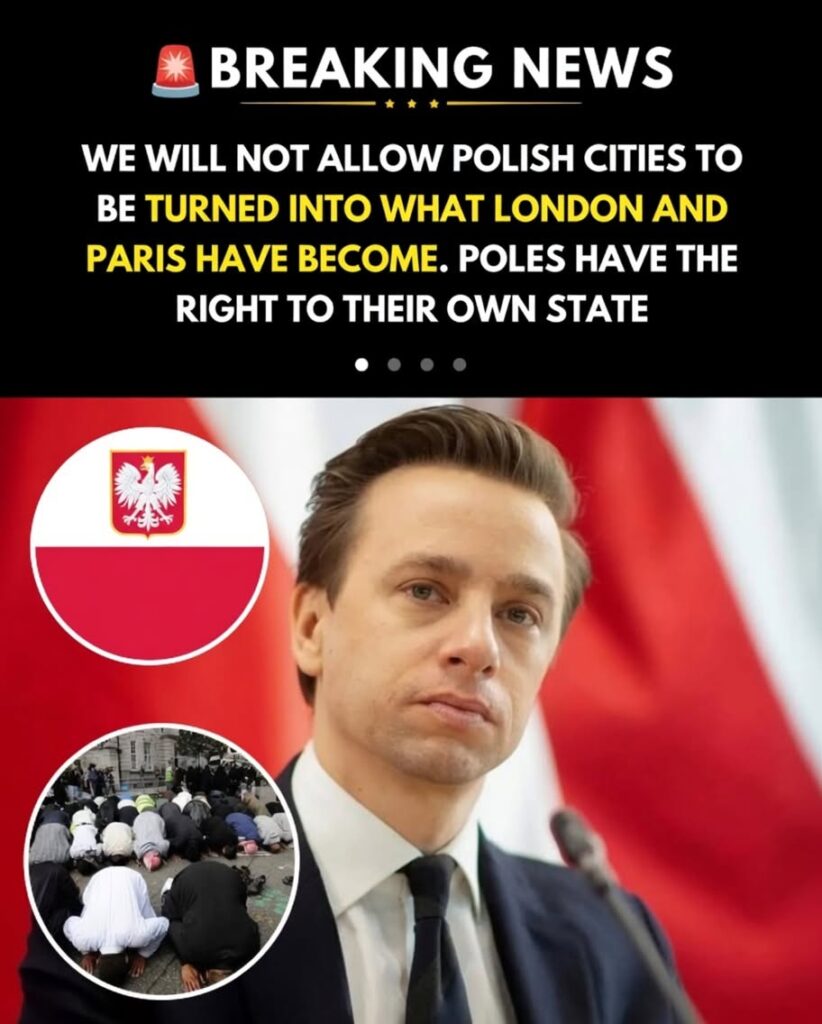
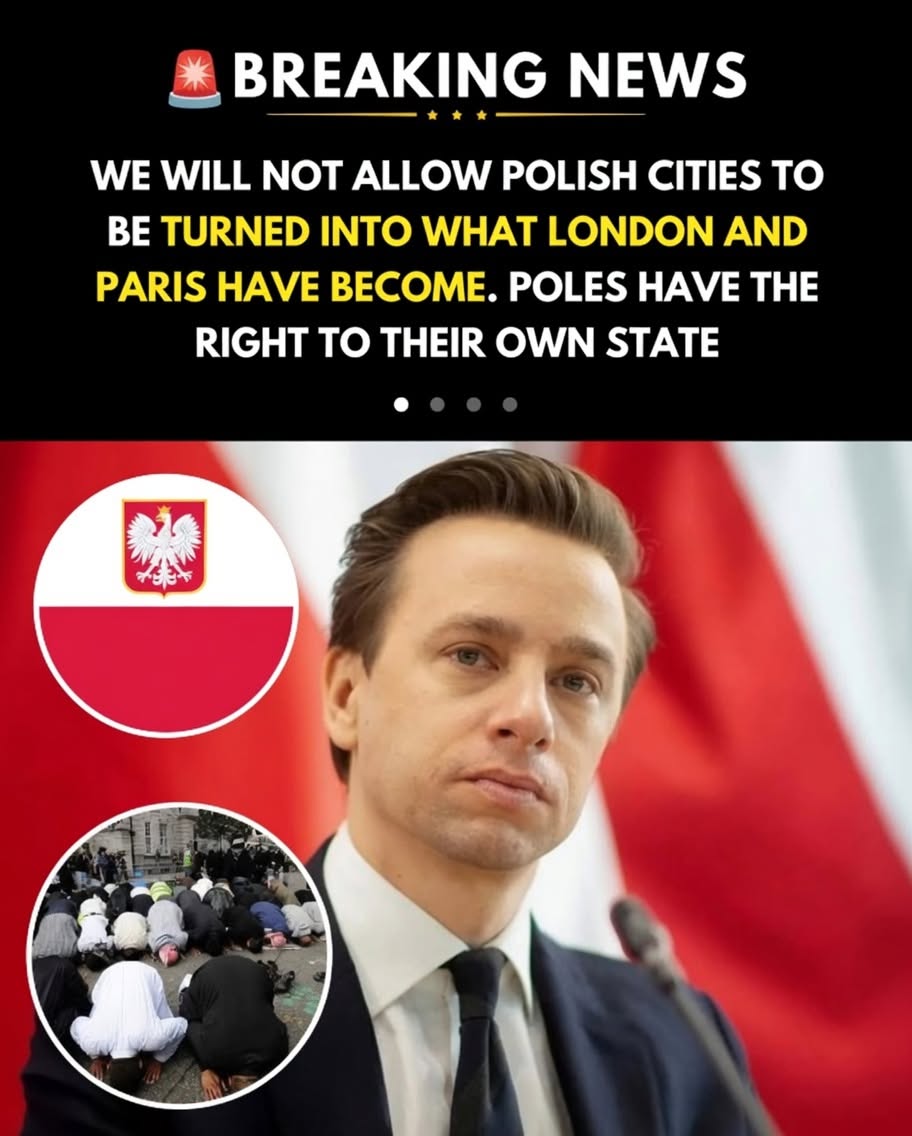
Comments by Polish politician Krzysztof Bosak have reignited discussion across Poland and beyond after he made strong statements concerning immigration, national sovereignty, and the country’s future identity. Speaking about Poland’s long-term direction, Bosak declared, “We will not allow Polish cities to become what London and Paris have become,” and added that “Poles have the right to their own state.” The remarks quickly attracted attention across Europe, prompting support from some political groups while drawing criticism from others, and once again placing immigration and national identity at the center of political debate.
Immigration has become one of the defining political issues across Europe over the past decade. Questions surrounding border management, asylum policy, labor migration, demographic change, cultural integration, and national identity continue to influence elections and public policy in many countries. Poland, like several other European nations, has increasingly debated how immigration should be managed while balancing economic needs, humanitarian responsibilities, and national security.
Bosak’s comments reflect positions he has expressed throughout his political career regarding sovereignty and immigration. He has frequently argued that Poland should retain full authority over its migration policy and should prioritize the interests of Polish citizens when making decisions concerning border control and long-term demographic development. His latest remarks continue that broader political message and have become another focal point in the country’s ongoing political discussion.
During his statement, Bosak referred to major Western European cities, saying that Poland should avoid developments he believes have occurred in places such as London and Paris. Although he did not provide a detailed definition of what he meant by those comparisons during the remarks, supporters generally interpret the statement as referring to challenges involving immigration, social integration, crime, community cohesion, and the management of increasingly diverse urban populations.
His second statement-that “Poles have the right to their own state-has generated particularly strong discussion. Supporters argue that every sovereign nation has the legitimate right to preserve its constitutional order, cultural heritage, language, and democratic institutions. From their perspective, national governments should retain the authority to determine immigration levels and establish policies that reflect the preferences of their own citizens.
Those who support Bosak’s position often argue that stronger border controls and carefully managed immigration policies contribute to national stability. They maintain that governments have a responsibility to ensure newcomers respect domestic laws, democratic institutions, and constitutional principles while integrating into the broader society. Advocates believe such policies can strengthen public confidence in immigration systems and reduce social tensions.
Many supporters also emphasize that the debate is not solely about immigration numbers but about integration. They argue that successful immigration depends upon participation in the labor market, learning the national language, respecting local customs, and accepting the legal framework of the host country. According to this view, preserving national identity and welcoming immigrants who integrate successfully are not necessarily contradictory objectives.
Critics, however, have expressed concern about the broader implications of Bosak’s rhetoric. Some argue that comparisons involving cities such as London and Paris may oversimplify complex social challenges that have multiple economic, historical, and demographic causes. They caution that broad political statements can sometimes reinforce stereotypes or contribute to greater polarization if they fail to acknowledge the diversity of experiences within immigrant communities.
Human rights advocates and some political commentators also stress that millions of immigrants across Europe contribute positively to their host societies through employment, entrepreneurship, education, healthcare, scientific research, and public service. They argue that discussions about migration should distinguish clearly between individuals who respect national laws and those who commit crimes, rather than treating immigration as a single uniform issue.
Others emphasize that integration is a shared process involving both newcomers and host societies. According to many social policy experts, successful integration requires access to education, language instruction, employment opportunities, housing, and community support. From this perspective, governments play an important role not only in controlling migration but also in creating conditions that allow immigrants who are legally present to become active participants in society.
Political analysts observe that Bosak’s remarks fit within a broader European trend in which questions of national identity have become increasingly prominent. Across several countries, political parties have debated how to balance border security, labor market needs, humanitarian obligations, and cultural cohesion. While individual governments have adopted different approaches, concerns about immigration continue to influence political campaigns throughout the continent.
The discussion also reflects differing philosophies regarding multiculturalism. Some policymakers argue that modern European societies benefit from cultural diversity while maintaining shared democratic values and equal treatment under the law. Others believe stronger emphasis should be placed on preserving national traditions, historical identity, and cultural continuity as immigration levels change over time. These differing perspectives continue to shape political debate across Europe.
Public opinion on immigration remains diverse both within Poland and across the European Union. Surveys conducted in various countries often show that citizens support legal immigration under certain conditions while simultaneously expressing concerns about border security, irregular migration, integration, and pressure on public services. The relative importance of these issues varies considerably depending on national circumstances and political context.
Experts note that immigration policy involves multiple competing priorities that governments must balance simultaneously. These include protecting national borders, fulfilling international legal obligations toward refugees, supporting economic development, maintaining public confidence, safeguarding national security, and promoting successful integration for those granted legal residence. Because these objectives sometimes pull in different directions, immigration remains one of the most complex areas of public policy.
Bosak’s comments have therefore become part of a much wider European conversation rather than an isolated political statement. Supporters see his remarks as an affirmation of national sovereignty and the right of democratic governments to determine their own immigration policies. Critics argue that the language risks deepening social divisions and oversimplifying highly complex issues involving migration and integration. Regardless of differing viewpoints, the discussion highlights how questions surrounding identity, citizenship, border management, and social cohesion continue to
Bosak’s comments have therefore become part of a much wider European conversation rather than an isolated political statement. Supporters see his remarks as an affirmation of national sovereignty and the right of democratic governments to determine their own immigration policies. Critics argue that the language risks deepening social divisions and oversimplifying highly complex issues involving migration and integration. Regardless of differing viewpoints, the discussion highlights how questions surrounding identity, citizenship, border management, and social cohesion continue to shape political debate across Europe, with governments, policymakers, and citizens seeking solutions that balance national interests, democratic values, human rights, and long-term social stability.