IRELAND ON THE EDGE: THE 2% REVOLUTION BEGINS! Is this the end of the Irish government? Ireland has entered DAY 5 of a total nationwide shutdown, and the stakes have just gone nuclear!
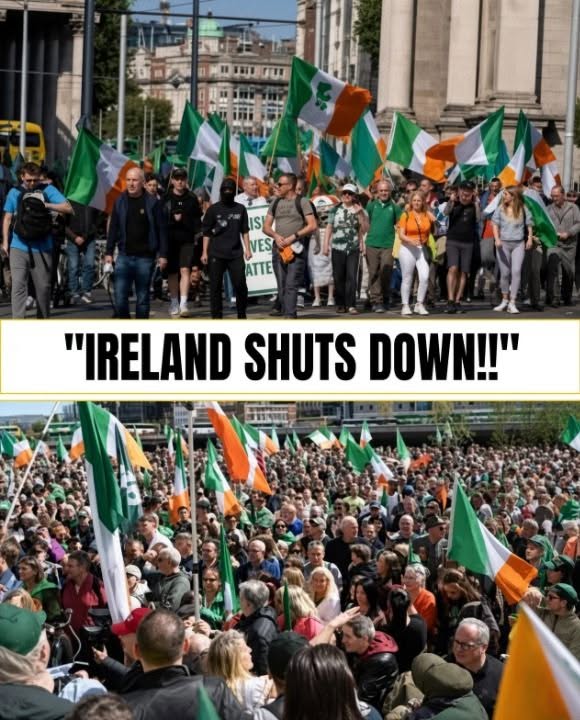
Ireland “On the Edge”? Fuel Anger, Strike Threats and Viral Claims of a “2% Revolution” Put Government Under Pressure
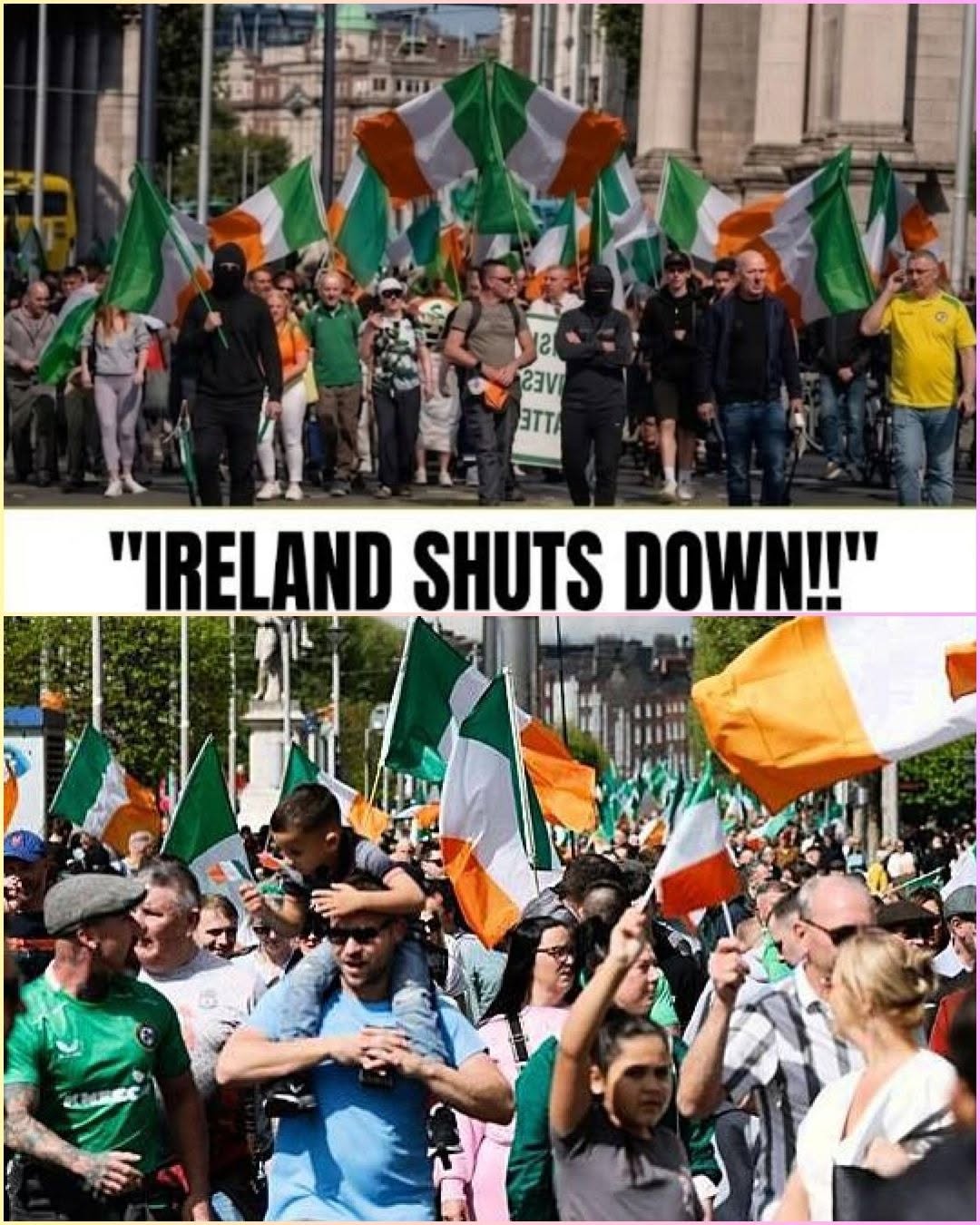
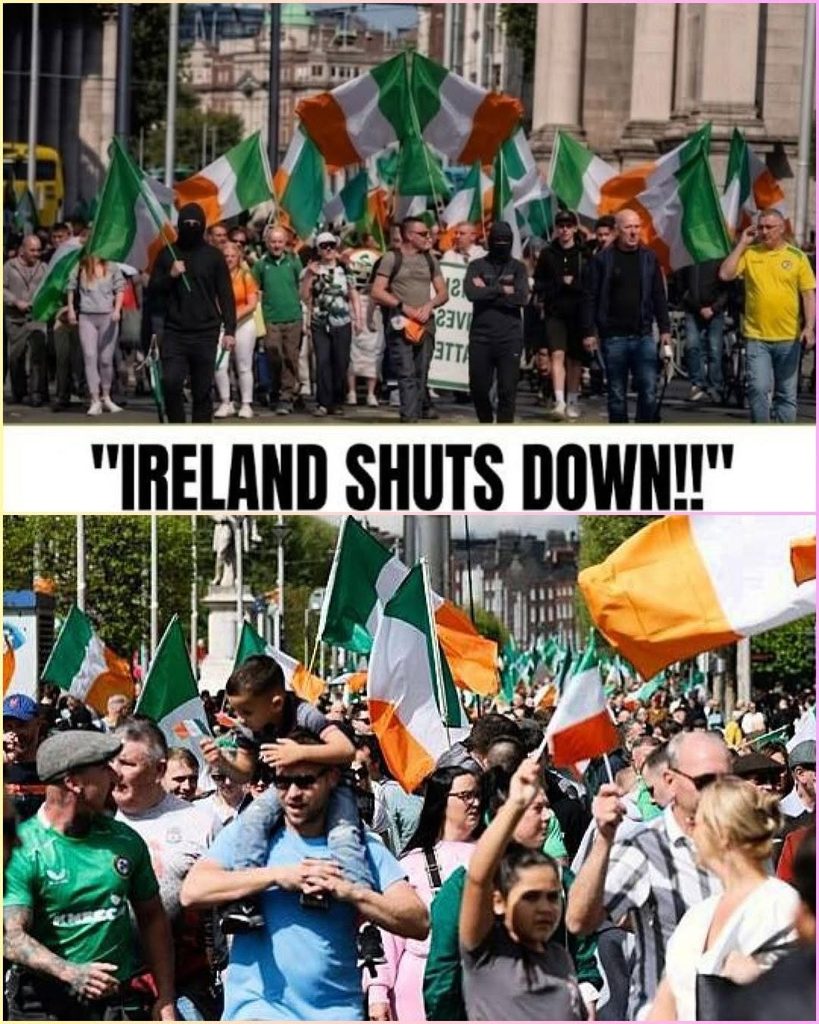
Dramatic claims that Ireland has entered the fifth day of a total nationwide shutdown, with 200,000 demonstrators descending on parliament, the military on standby and a mysterious “2% threshold” capable of bringing down the government, are spreading rapidly online. Ireland has experienced genuine and highly disruptive protests over fuel costs this year, and fresh industrial tensions are building. But the most explosive elements of the latest viral narrative are not supported by the credible evidence currently available. The real story is less apocalyptic — but politically significant nonetheless.
Ireland has certainly experienced an unusually turbulent year of economic and political pressure.
Fuel prices have angered motorists, farmers and hauliers. Earlier demonstrations disrupted parts of the country and interfered with fuel distribution. Meanwhile, public-sector unions are now threatening industrial action amid frustration over negotiations for a new pay agreement.
Those are real developments.
But combine them with old protest footage, dramatic crowd estimates and claims about constitutional mechanisms that do not appear to exist as described, and a different story emerges online:
Ireland is supposedly on the verge of revolution.
That requires much closer examination.
The Fuel Protests Were Real
The strongest factual foundation beneath the viral narrative is Ireland’s earlier fuel-price revolt.
During major protests in April, farmers, hauliers and others mobilized against sharply higher fuel costs. The disruption became serious enough to affect fuel distribution around the country and create substantial political pressure on the coalition government.
The government subsequently introduced major measures aimed at cushioning households and businesses from the energy shock.
The issue did not disappear.
By August, renewed increases at filling stations were creating another political dilemma as the government prepared to restore excise duties that had previously been reduced. Ministers eventually delayed parts of that restoration amid continuing concerns over fuel prices.
So the anger behind the online story is not invented.
The question is whether genuine earlier protests are now being transformed into claims about a new national shutdown.
Is Ireland Currently in a Five-Day Total Shutdown?
The evidence available does not support that description.
A genuine nationwide shutdown lasting five days would affect almost every aspect of Irish life.
Transport networks, businesses, schools, government services, supply chains and airports would potentially be affected.
Such an event would dominate Irish and international news.
Instead, current reporting is focused heavily on a different industrial dispute.
Members of Fórsa, Ireland’s largest public-sector union, voted overwhelmingly in favour of industrial action, including potential strikes, over the absence of a new pay agreement.
But union leaders have indicated that action could begin later in the month — not that Ireland is already experiencing a total national shutdown.
That distinction is enormous.
A vote authorizing possible future industrial action is not the same thing as the country being shut down today.
What About 200,000 People Marching on Parliament?
This claim also needs independent verification.
Crowd estimates are notoriously difficult even during genuine mass demonstrations.
Organizers frequently provide higher figures than police or independent observers.
Social-media accounts can inflate them further.
Without credible aerial analysis, police estimates or consistent reporting from multiple established news organizations, “200,000” should therefore be treated as a claim rather than an established attendance figure.
Ireland has a strong tradition of public demonstration, and large protests can certainly influence government policy.
But a viral number repeated thousands of times does not become verified simply through repetition.
Are Truckers and Fishermen Blocking the Country?
There is an important element of truth behind this imagery too.
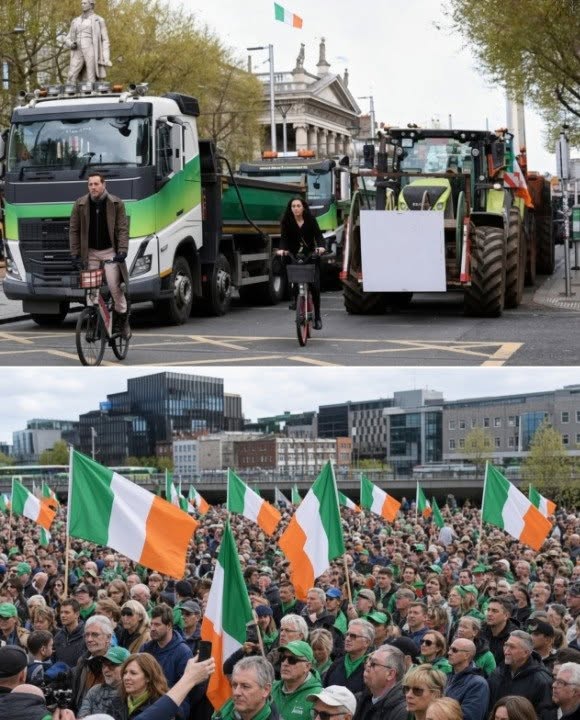
Previous fuel protests involved groups including farmers and hauliers, and disruption to roads and fuel infrastructure became a serious government concern.
Indeed, Garda Commissioner Justin Kelly warned earlier this summer that attempts to block roads, fuel depots, ports, airports or other critical infrastructure during Ireland’s EU presidency would face robust enforcement.
That warning demonstrates that authorities take the possibility of renewed blockades seriously.
But a warning about what police would do if infrastructure were targeted is not proof that every port and highway is currently being blockaded.
Again, possibility and present reality should not be confused.
Is the Military “On Standby”?
This is another claim requiring caution.
Ireland’s Defence Forces have legitimate domestic responsibilities and can support civil authorities under defined circumstances.
But claims that the military has been put on standby specifically to confront a current nationwide protest movement would require strong official confirmation.
Recent security deployments and discussions involving Ireland’s Defence Forces have also occurred in the context of the country’s EU presidency and wider European security concerns.
Images of security operations can therefore be misleading if detached from their original purpose and repackaged as evidence of government preparations for civil unrest.
The Mysterious “2% Threshold”
Perhaps the most extraordinary element of the viral story is the supposed mathematical trigger capable of forcing the Irish government to dissolve immediately.
No evidence presented with the claim establishes such a mechanism.
Ireland is a parliamentary democracy.
A government does not ordinarily collapse automatically because protesters reach a particular percentage of the national population.
Governments can lose parliamentary confidence.
Coalition partners can withdraw support.
A Taoiseach can seek dissolution of the Dáil under constitutional procedures.
Elections can change governments.
Political pressure from enormous demonstrations can certainly influence those processes.
But street attendance does not transform automatically into parliamentary votes.
Even if exactly 2% — or considerably more — of Ireland’s population demonstrated against the government, that fact alone would not constitute an automatic constitutional instruction dissolving the Dáil.