DANNY DYER CAUSES A STORM ON TV — HIS COMMENTS ABOUT THE PRIME MINISTER AND “THE ELITES” HAVE BRITAIN TALKING!
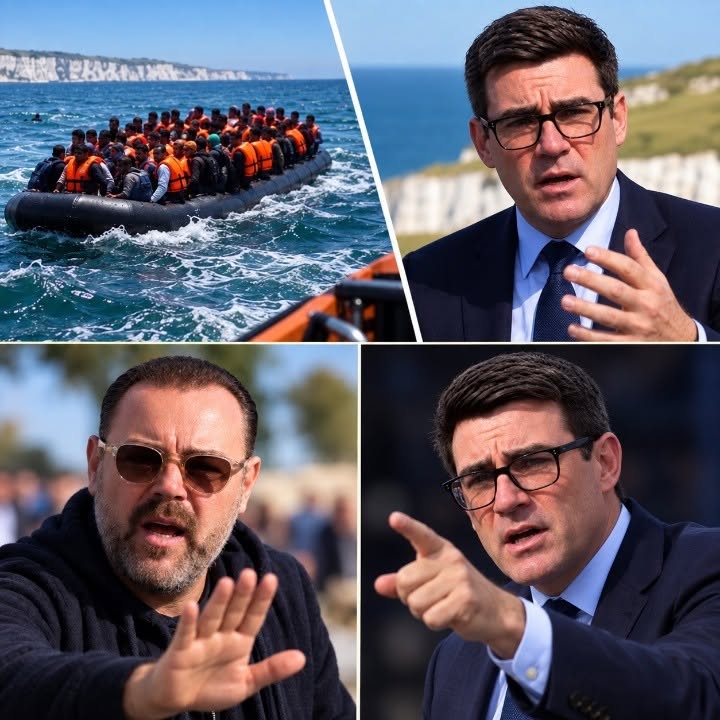
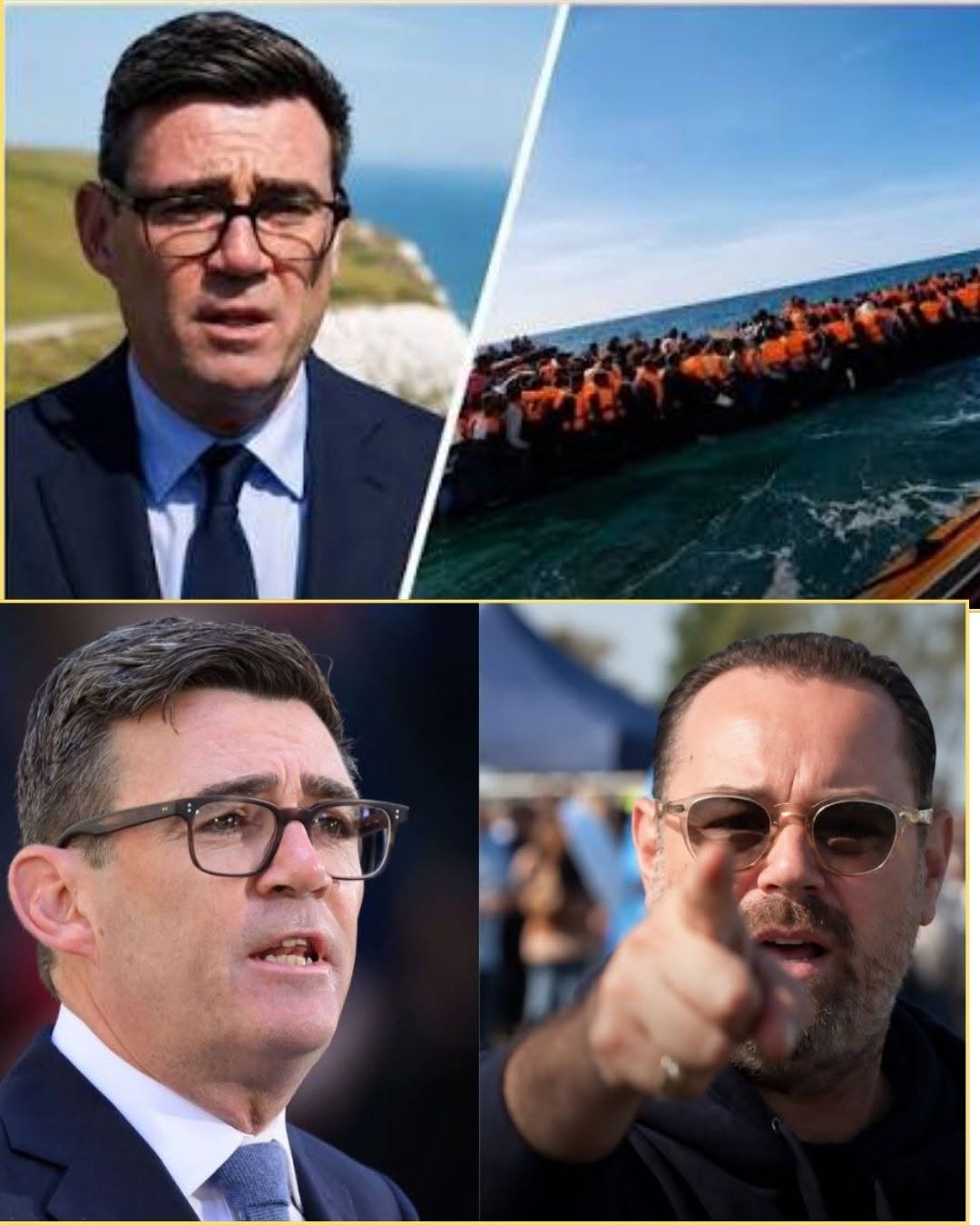
Danny Dyer’s Blunt Attack on Prime Minister Andy Burnham Goes Viral After BBC Interview
Danny Dyer has never been known for carefully rehearsed answers, but his latest encounter with a BBC political reporter has pushed the actor unexpectedly into the centre of Britain’s political conversation. Asked whether he had a message for Prime Minister Andy Burnham during a protest over sewage pollution, Dyer responded with a profanity-filled assessment of Britain’s recent political leadership. The footage quickly spread online — and even prompted a response from the Prime Minister himself.
It began as a demonstration about Britain’s water industry.
Actor Danny Dyer, his daughter Dani Dyer and singer Becky Hill joined campaigners in Leysdown-on-Sea, Kent, on Sunday, September 20, as Surfers Against Sewage pushed its campaign for water companies to be returned to public ownership.
More than 315,000 people had signed a petition supporting the campaign, according to contemporary reports.
Dyer had a particularly local connection to the issue.
He has been working at a caravan park on the Isle of Sheppey for a television project and told reporters he had become more aware of sewage pollution while spending time near the coast.
But it was not his comments about sewage that ultimately generated the biggest headlines.
It was what happened when the conversation turned to politics.
“Who Is He?”
BBC political reporter Michael Keohan asked Dyer whether he had a message for Prime Minister Andy Burnham about the campaign.
Dyer’s initial response was remarkable for its simplicity.
“I don’t know who the Prime Minister is, mate,” he said.
After being told it was Burnham, Dyer questioned who he was and said he had not voted for him. He then launched into a profanity-heavy criticism of Britain’s succession of recent prime ministers.
The language was unmistakably Danny Dyer — blunt, confrontational and far removed from the carefully controlled vocabulary normally heard in political interviews.
It was also unsuitable for an ordinary television news broadcast.
That distinction matters because some social-media descriptions have subsequently presented the exchange as an explosive uncensored live-TV confrontation.
The evidence supports a slightly different account.
The interview was conducted by the BBC at the protest, but Keohan subsequently shared the unfiltered footage online. Reporting on the episode specifically noted that the profanity-heavy material did not make it into the original broadcast.
So Dyer certainly gave the interview.
But describing the entire exchange as an uncensored “live television showdown” exaggerates what happened.
Did Nobody Vote for Burnham?
Dyer’s question about whether anybody had voted for Burnham also touches on a frequently misunderstood feature of Britain’s political system.
British voters do not directly elect a prime minister in a presidential-style national election.
They elect Members of Parliament.
The prime minister is normally the person able to command the confidence of the House of Commons, usually as leader of the party capable of forming a government.
Burnham became prime minister after succeeding Sir Keir Starmer as Labour leader earlier this year, following Starmer’s resignation. Burnham had returned to Westminster as MP for Makerfield before entering the leadership process.
That means Dyer was correct in the narrow personal sense that he had not cast a national ballot marked “Andy Burnham for Prime Minister”.
But neither had other voters in a direct nationwide prime-ministerial election, because that is not how Britain’s parliamentary system works.
The same principle has applied to previous prime ministers who took office between general elections.
Burnham Hits Back
The exchange might have remained another viral celebrity clip had Burnham ignored it.
He did not.
Asked about Dyer’s comments, the Prime Minister responded with humour, saying he was “not sure” who Danny Dyer was either.
The response transformed a short interview at a sewage protest into an unlikely political exchange between one of Britain’s best-known actors and the country’s new prime minister.
It also helped push the original footage far beyond the environmental campaign where it had started.
The episode subsequently became prominent enough to feature in BBC Newscast’s discussion of Burnham’s political week.
What About “The Elites”?
Some social-media versions of the story have framed Dyer’s comments as an attack on “the elites”.
That description needs caution.
Dyer has a long public history of speaking critically about Britain’s political establishment, class divisions and politicians he believes are disconnected from ordinary people.
But the reliable accounts of this particular exchange reviewed for this article do not establish that he used the phrase “the elites” during the viral Burnham interview.
It would therefore be misleading to place those words in quotation marks as though they were confirmed remarks from this specific conversation.
The broader anti-establishment interpretation is understandable.
The exact quotation is not currently established.
Why Did the Clip Resonate?
The significance of the exchange is not really that a celebrity swore at a politician.
Britain has seen plenty of that.
What made the footage politically interesting was the sentiment underneath Dyer’s language: disconnection from Westminster.
His apparent unfamiliarity with the new prime minister, his question about who had elected him and his criticism of successive leaders all touched on a wider frustration with political institutions.
That does not demonstrate that most Britons agree with him.
Nor does celebrity status give Dyer’s political opinions greater factual authority than anybody else’s.
But celebrities can articulate feelings that already exist among sections of the public, particularly when their language sounds less scripted than conventional political interviews.
Dyer’s style amplified that effect.
There was no manifesto, detailed policy proposal or carefully calibrated argument.
There was simply frustration.
The Story That Was Almost Forgotten: Sewage
Ironically, the political controversy risks obscuring why Dyer was being interviewed in the first place.
The Leysdown demonstration concerned water pollution and ownership of Britain’s water companies.
Surfers Against Sewage was campaigning for public ownership, while demonstrators argued that the existing model had failed to address sewage discharges adequately.
Dyer described water pollution as a “disgrace” and spoke about noticing unpleasant conditions around the coast.
The water industry has pushed back against the idea that nothing is being done.
Water UK said that no sewage spill was acceptable and pointed towards increased investment intended to reduce storm-overflow discharges. Southern Water, meanwhile, highlighted its £1.5 billion Clean Rivers and Seas Plan.
Those competing claims represent the substantive policy debate behind the celebrity headlines.
Should Britain’s privatised water system continue in its existing form with greater investment and regulation?
Or has the model failed badly enough to justify returning water companies to public ownership?
That was the question protesters wanted politicians to discuss.
Celebrity Intervention or Political Warning?
It would be easy to treat Dyer’s comments as nothing more than entertainment.
But the episode also demonstrates how quickly dissatisfaction with a specific issue can become dissatisfaction with politics more broadly.
A demonstration about sewage became a conversation about the legitimacy and identity of the prime minister.
Within days, the Prime Minister himself was answering questions about the actor.
That does not mean Dyer has become a political spokesman, nor does his criticism establish that Burnham lacks democratic legitimacy.
It does show how difficult it can be for governments to control political narratives once frustration moves outside traditional Westminster channels.
What Actually Happened
Strip away the viral headlines and the facts are relatively straightforward.
Danny Dyer attended a Surfers Against Sewage demonstration in Kent with his daughter and singer Becky Hill. A BBC reporter asked him what message he would send to Prime Minister Andy Burnham. Dyer initially said he did not know who the prime minister was, questioned whether people had voted directly for him and delivered a profanity-heavy criticism of Britain’s recent political leadership.
The uncensored exchange was subsequently shared online rather than broadcast in full as a live-TV confrontation.
Burnham then responded with his own joke that he was not sure who Dyer was.
And despite some viral descriptions, the available reporting does not establish that Dyer specifically used the phrase “the elites” during this exchange.
The real story is therefore less sensational than some headlines suggest — but perhaps more revealing.
A campaign intended to focus attention on sewage pollution unexpectedly produced one of the week’s most widely discussed political clips.
Dyer did not deliver a detailed analysis of the Burnham government.
He delivered something far simpler: an unscripted expression of political frustration.
Whether viewers regard that frustration as justified, misplaced or simply entertaining is a matter for them.
But the extraordinary attention generated by a few minutes beside the Kent coast suggests that the public argument about trust in Britain’s political leadership extends far beyond Westminster.