SHOCKING TWIST! Activist “Danny Tommo” charged after alleged migrant boat incident at sea!
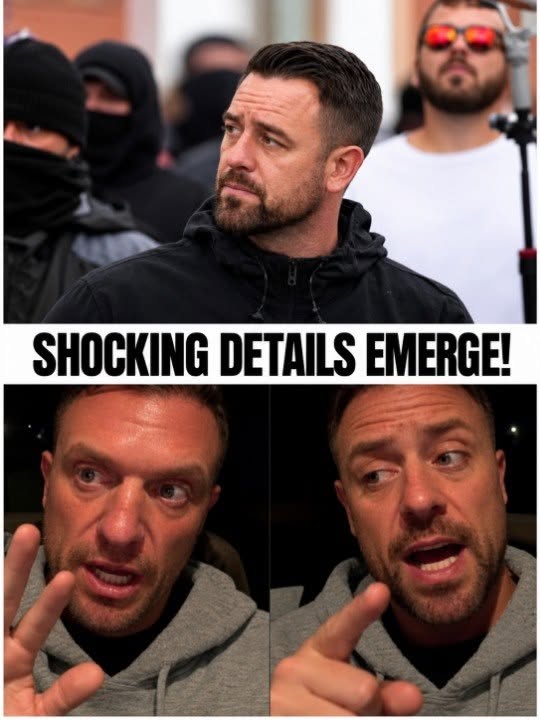
Danny Tommo Remanded After Channel Boat Incident: What Happened, What He Is Charged With and What Comes Next
Anti-migration activist Daniel Thomas, better known as Danny Tommo, has been remanded in custody after pleading not guilty to two charges arising from a dramatic incident in the English Channel. Prosecutors allege that Thomas damaged an adrift boat while an emergency responder was aboard, while a second charge concerns an alleged failure to provide police with the PIN to his mobile phone. The case has already attracted hundreds of supporters and accusations of “two-tier justice”, but the allegations remain unproven and will now proceed through the courts.
What began as another confrontation surrounding Britain’s small-boat crisis has rapidly become a criminal case attracting national political attention.
Daniel Thomas, 37, was charged on September 24 following an incident in the English Channel two days earlier.
Hampshire and Isle of Wight Constabulary said the criminal-damage allegation concerned damage caused to a boat while an emergency responder was on board. Thomas was separately charged under Section 53 of the Regulation of Investigatory Powers Act 2000 for allegedly failing to comply with a notice requiring disclosure of his phone PIN.
Thomas denies both allegations.
That distinction is particularly important because criminal proceedings are active and the Crown Prosecution Service has explicitly reminded the public that Thomas has a right to a fair trial.
What Allegedly Happened at Sea?
More details emerged when Thomas appeared by video link at Basingstoke Magistrates’ Court on September 25.
Prosecutor Kevin Lucie outlined the prosecution’s version of events, alleging that Thomas directed his vessel towards an empty, adrift boat and then used a knife to damage it.
A rescue crew was also approaching the vessel and, according to the prosecution account reported from court, an emergency responder was aboard when the boat was damaged and could be heard losing air.
Thomas was also alleged to have told the responder to leave the vessel, making comments about being in English rather than French territory.
These details describe the prosecution case.
They are not findings of fact by a court.
Thomas has entered a not-guilty plea, meaning the circumstances of the incident and his criminal liability remain matters for the judicial process.
Why Was He Arrested So Quickly?
The speed of the investigation has become a major theme among Thomas’s supporters.
The incident occurred on September 22. Thomas was subsequently arrested, and the CPS announced charges on September 24.
To supporters, that sequence has appeared unusually rapid.
But speed alone is not evidence that a prosecution is politically motivated.
The CPS says prosecutors reviewed the Hampshire Constabulary investigation and determined that there was sufficient evidence for the case to be brought before a court and that prosecution was in the public interest.
That test does not establish guilt.
As the CPS itself emphasised, deciding to prosecute means prosecutors believe a case should be presented to a court. Determining whether an offence has actually been proved is a separate matter for the court.
What Is the RIPA Charge?
The second allegation has attracted less attention than the dramatic events at sea but is legally separate.
Police say Thomas failed to comply with a notice requiring him to disclose his phone PIN.
He was therefore charged under Section 53 of the Regulation of Investigatory Powers Act 2000.
RIPA contains provisions allowing authorities, under specified circumstances, to require access to protected or encrypted information.
Failing to comply with a valid disclosure requirement can itself constitute an offence.
But Thomas has pleaded not guilty to this charge as well.
It should therefore not be reported as an established fact that he unlawfully refused to cooperate with police.
Hundreds Gather to Demand His Release
The arrest immediately triggered a mobilisation among Thomas’s supporters.
On the evening of September 24, several hundred people gathered outside a police investigation centre in Basingstoke because they believed Thomas was being held there.
Demonstrators chanted “free DT”, while dozens of police officers monitored the gathering.
Contemporary reporting described the demonstration as peaceful, with protesters moving out of the road to allow traffic through.
Some accounts put attendance at around 300, while other reporting simply described several hundred people.
For that reason, the viral claim that exactly 400 protesters demanded Thomas’s release should be treated as an estimate rather than a firmly established attendance figure.
Tommy Robinson Appears at Court
Stephen Yaxley-Lennon, better known as Tommy Robinson, also became involved.
Robinson attended the magistrates’ hearing and watched from the public gallery while other Thomas supporters were accommodated separately because of the level of interest.
After bail was refused, Robinson publicly criticised the decision and said Thomas’s legal team would continue the fight for bail at Crown Court.
Thomas’s supporters have increasingly framed the prosecution as another example of what they call “two-tier justice”.
Their argument is that anti-migration activists face aggressive enforcement while people entering Britain irregularly across the Channel receive accommodation and state support.
That is a political argument rather than a legal finding.
Are Migrants and Thomas Being Treated Under the Same Law?
Not exactly.
The comparison involves two different legal processes.
Thomas is a defendant facing specific criminal allegations.
People arriving across the Channel who make asylum claims enter Britain’s immigration and asylum system.
An asylum seeker being temporarily accommodated while the Home Office considers a protection claim is therefore not legally equivalent to a criminal defendant applying for bail.
That does not prevent legitimate scrutiny of whether policing and prosecution decisions are consistent.
But establishing “two-tier justice” would require evidence that comparable cases were treated differently for improper reasons.
The existence of different outcomes under different areas of law does not by itself prove political discrimination.
Bail Refused
At the September 25 hearing, Thomas pleaded not guilty to both charges and requested that his case be heard at Crown Court.
His bail application was refused.
He was remanded in custody pending his next appearance at Portsmouth Crown Court on September 29.
One account of the hearing reported Deputy Senior District Judge Tan Ikram saying there was a “real possibility of an immediate custodial sentence”.
That statement should not be interpreted as a prison sentence already having been imposed.
Thomas has not been convicted.
Remanding someone in custody before trial is also legally different from sentencing that person after conviction.
A Political Story and a Criminal Case
Thomas is a prominent anti-migration activist and founder of the Patriot Platform.
His activities have increasingly focused on Britain’s southern coastline as small-boat routes have changed and confrontations have developed around Border Force and rescue operations.
That political background inevitably shapes how supporters and opponents interpret the latest case.
Supporters see Thomas as someone taking direct action against a border system they believe has failed.
Critics argue that political protest does not provide immunity from ordinary criminal law if direct action crosses into criminal conduct.
The court’s task is narrower than either political narrative.
It will have to decide whether prosecutors can prove the particular offences alleged against Thomas.
What Happens Next?
The next scheduled stage is at Portsmouth Crown Court on September 29 after Thomas elected Crown Court trial.
His legal team can pursue the appropriate procedures concerning bail, while the criminal case itself will continue.
The evidence surrounding the boat incident will therefore become increasingly important.
Video footage may form part of the wider evidential picture, but a viral clip alone does not determine criminal liability. The court must consider admissible evidence, the prosecution case and Thomas’s defence.
The same principle applies to the RIPA allegation.
What We Know — and What Remains Unproven
Strip away the political language and several facts are firmly established.
Daniel Thomas has been charged with criminal damage and a separate RIPA offence concerning alleged failure to disclose his phone PIN. He has pleaded not guilty to both charges. Several hundred supporters gathered in Basingstoke after his arrest. Tommy Robinson attended his court hearing. Bail was refused, and Thomas was remanded pending proceedings at Portsmouth Crown Court.
What has not been established is equally important.
No court has yet determined that Thomas criminally damaged the vessel or unlawfully failed to comply with the RIPA notice.
Nor does the rapid prosecution itself establish that authorities were attempting to punish him for his political views.
Those questions must remain separate from the wider argument about immigration.
The Danny Tommo case has already become a political symbol. But inside the courtroom, it remains something much more specific: two criminal allegations, two not-guilty pleas and a defendant entitled to have the evidence against him tested before a court.
Whatever political controversy surrounds the case, that distinction will matter most as proceedings move forward.