Meloni’s Immigration Message Reignites Debate Across Europe
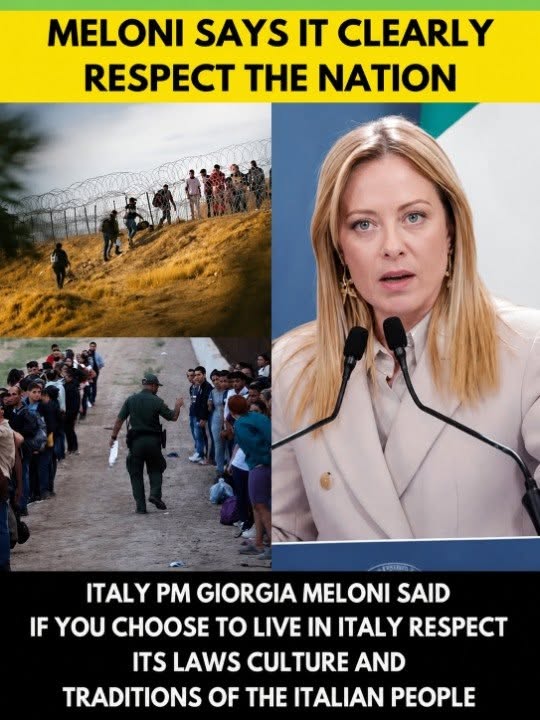
Immigration has once again become one of the defining political issues across Europe, and recent remarks by Italian Prime Minister Giorgia Meloni have added fresh momentum to an already intense public discussion. Speaking within the broader context of Italy’s migration policies, Meloni emphasized that individuals who choose to settle in Italy should respect the country’s laws, democratic institutions, cultural traditions and constitutional principles. While supporters viewed the message as a reaffirmation of national sovereignty and civic responsibility, critics argued that such statements risk oversimplifying the complex realities of migration and integration. As with many immigration debates in Europe, the reaction reflected deep divisions over how countries should balance border security, national identity and the protection of individual rights. Although Meloni’s comments were widely reported and discussed, their interpretation has varied significantly depending on political perspectives and national contexts.
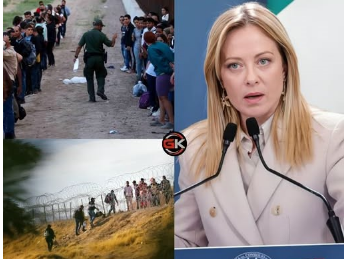
Italy has occupied a unique position within Europe’s migration landscape for decades. Located at the center of the Mediterranean, the country serves as one of the primary entry points for migrants and asylum seekers traveling from North Africa and the Middle East toward the European Union. Geographic reality has meant that Italian governments of different political backgrounds have repeatedly faced pressure to manage irregular arrivals while also meeting humanitarian obligations under international and European law. This challenge has rarely been confined to Italy alone, as migration through the Mediterranean often becomes a broader European issue requiring cooperation among multiple member states. Consequently, every statement from an Italian prime minister regarding immigration tends to attract attention well beyond Italy’s borders.
Since taking office, Giorgia Meloni has consistently presented immigration as one of her government’s highest priorities. Her administration has advocated stronger border management, increased efforts against human smuggling networks and closer cooperation with countries of origin and transit. Officials have argued that reducing dangerous sea crossings protects both national security and the lives of migrants who might otherwise attempt hazardous journeys organized by criminal trafficking organizations. Government representatives have repeatedly stated that legal migration pathways should exist but should be managed through clear rules established by the state. This distinction between legal and irregular migration has become a recurring theme throughout Meloni’s public messaging.
The prime minister’s recent remarks focused primarily on integration rather than immigration alone. According to the message widely circulated in public discussions, Meloni stressed that those who decide to build their lives in Italy should respect Italian laws and participate constructively in society. Supporters interpreted this as a straightforward expectation that applies equally to every resident regardless of background. They argued that successful integration depends upon acceptance of the constitutional order, equality before the law and respect for democratic institutions. In this view, shared civic values provide the foundation upon which culturally diverse societies can function peacefully without undermining social cohesion.
Many political supporters welcomed the statement as common sense rather than controversy. They argued that every sovereign nation has the right to define the legal framework governing residence and citizenship. According to this perspective, immigrants benefit from public services, educational opportunities and legal protections provided by the host country and therefore also carry responsibilities toward that society. Respecting local laws, learning the national language where possible and participating in civic life are often presented as practical steps that help newcomers integrate more successfully. Supporters further argue that these expectations should not be viewed as discriminatory because they apply universally rather than targeting any specific nationality or religion.
Others expanded the discussion beyond Italy by suggesting that many European countries face similar questions. Population movement, labor shortages, humanitarian crises and demographic change have all contributed to increased migration across Europe over recent decades. Governments have responded differently depending on domestic politics, economic conditions and historical experiences. Some have adopted more restrictive border policies, while others have placed greater emphasis on refugee protection and multicultural integration. These differing approaches have frequently become central issues during national elections, demonstrating how immigration continues to influence political debate throughout the continent.
Critics of Meloni’s remarks, however, caution against framing integration solely as an obligation placed upon migrants. They argue that integration is a two-way process requiring participation from both newcomers and the host society. According to this perspective, governments should ensure equal access to education, employment, healthcare and language training while combating discrimination that may hinder successful inclusion. Civic participation, critics contend, becomes far more achievable when migrants feel welcomed and have genuine opportunities to contribute economically and socially. They emphasize that integration policies should strengthen social cohesion without requiring individuals to abandon lawful aspects of their cultural or religious identity.
Human rights organizations have similarly argued that immigration debates should distinguish carefully between security concerns and the rights of individuals. International refugee law, European legal frameworks and national constitutions establish obligations toward people fleeing persecution or conflict. Humanitarian groups frequently stress that border enforcement measures should remain consistent with these legal commitments. They also argue that public discourse should avoid portraying migrants as a single homogeneous group because individuals arrive for many different reasons, including asylum, employment, family reunification and education. Treating these categories separately, they contend, leads to more balanced policymaking.
The question of cultural identity has become one of the most debated aspects of European politics. Some citizens believe that rapid demographic change can create uncertainty regarding national traditions, shared values and social cohesion. Others argue that European societies have historically evolved through cultural exchange and immigration and therefore remain capable of integrating diverse populations while preserving democratic institutions. Political leaders across the ideological spectrum have offered different answers to these concerns, reflecting broader philosophical differences about citizenship, multiculturalism and national identity. Meloni’s comments entered this wider conversation rather than creating
it.
Italy’s constitutional framework provides another important dimension to the discussion. Like other democratic nations, Italy guarantees fundamental rights and freedoms while expecting all residents to comply with national laws. Government officials frequently argue that constitutional principles including equality before the law and democratic governance form the common foundation for everyone living in the country. Supporters of Meloni’s position therefore view her emphasis on respecting laws and institutions as entirely consistent with constitutional expectations. Critics generally agree regarding the importance of legal compliance but differ over how cultural expectations should be communicated and implemented.
Immigration policy has also become closely connected with economic considerations. Italy, like several European countries, faces demographic challenges including an aging population and labor shortages in certain sectors. Businesses in agriculture, healthcare, construction and tourism often depend on migrant workers. Consequently, policymakers must consider not only border management but also workforce needs and long-term economic sustainability. Some economists argue that carefully managed legal migration can support economic growth when accompanied by effective integration policies. Others emphasize that public confidence in immigration systems depends upon governments maintaining orderly and transparent migration procedures.
European Union cooperation remains another critical element of the debate. Migration rarely affects only one member state because individuals may move across internal EU borders after entering the bloc. For this reason, Italy has repeatedly called for greater burden-sharing among European partners. Discussions have included asylum procedures, relocation mechanisms, external border management and agreements with countries outside the European Union. While member states generally agree that cooperation is necessary, they have often disagreed over how responsibilities should be distributed. These ongoing negotiations illustrate why immigration continues to challenge both national governments and European institutions.
Public opinion regarding immigration varies considerably across Europe and often shifts in response to current events. Periods of increased migration, economic uncertainty or security concerns can influence public attitudes, as can successful examples of integration within local communities. Opinion surveys frequently show that citizens distinguish between legal immigration, refugee protection and irregular migration, although the relative importance assigned to each issue differs among countries. Political parties from across the spectrum have adjusted their messaging accordingly, recognizing that immigration remains a decisive issue for many voters. Meloni’s comments therefore resonated within a political environment where migration consistently ranks among the public’s major concerns.
Media coverage has also played an important role in shaping perceptions of immigration. Supporters of stricter border controls sometimes argue that mainstream reporting underestimates public concerns regarding integration, crime or pressure on public services. Conversely, critics argue that sensational coverage can contribute to fear and polarization by emphasizing isolated incidents while overlooking successful integration stories. Responsible journalism seeks to distinguish verified facts from political rhetoric and to provide context that helps audiences understand complex policy questions. Because immigration involves law, economics, security, human rights and culture simultaneously, balanced reporting remains particularly important.
Integration itself encompasses many practical dimensions beyond political slogans. Language acquisition, employment opportunities, educational access and community participation are often identified by researchers as key factors influencing long-term outcomes. Local governments, schools, employers and civil society organizations frequently play central roles alongside national authorities. Successful integration programs often encourage interaction between newcomers and established communities while reinforcing shared civic responsibilities. At the same time, policymakers continue debating which measures prove most effective under different social and economic conditions.
The role of religion has occasionally emerged within broader integration discussions across Europe. Democratic constitutions generally protect freedom of religion while requiring compliance with national law regardless of religious affiliation. Governments therefore face the challenge of ensuring equal protection for religious practice while maintaining secular legal systems and constitutional principles. Most public debates focus not on religious belief itself but on how legal frameworks apply equally to everyone living within a country. These discussions often become politically sensitive because they involve questions of identity, individual liberty and public policy simultaneously.
Migration has also influenced electoral politics throughout Europe over the past decade. Parties advocating stronger border controls have gained support in several countries, while others continue promoting more expansive humanitarian approaches. Voters frequently evaluate governments based on their perceived ability to manage migration effectively while maintaining economic stability and social cohesion. Election campaigns often feature competing narratives regarding integration, security, labor markets and international obligations. Meloni’s government has consistently positioned controlled migration as one of its defining policy priorities, making immigration central to its broader political identity. Academic researchers often caution that migration cannot be understood through simple narratives alone. Individual migrants arrive under diverse circumstances, bringing different skills, educational backgrounds and aspirations. Likewise, receiving communities differ in economic capacity, institutional resources and historical experience with immigration. Effective policy therefore requires evidence-based analysis rather than assumptions about either migrants or host populations. Many scholars advocate evaluating integration outcomes using measurable indicators such as employment, education, language proficiency and civic participation rather than relying solely on political rhetoric.
Another recurring issue concerns the distinction between legal migration systems and irregular migration. Governments across Europe generally support legal immigration channels for work, study and family reunification while seeking to discourage unauthorized entry managed by criminal smuggling networks. Supporters of stronger enforcement argue that maintaining credible legal pathways depends upon reducing irregular migration. Humanitarian organizations respond that enforcement measures should always remain compatible with international legal obligations toward asylum seekers and vulnerable individuals. Balancing these objectives continues to present one of the most difficult policy challenges facing European governments.
International developments have further complicated the migration landscape. Conflicts, political instability, economic disparities and climate-related pressures continue influencing migration patterns globally. European governments therefore recognize that domestic immigration policy cannot be separated entirely from foreign policy, development cooperation and regional security. Agreements with neighboring countries, humanitarian assistance and international diplomacy increasingly form part of broader migration strategies. Italy has participated actively in such initiatives while advocating greater European coordination.
Ultimately, Giorgia Meloni’s recent remarks have once again highlighted one of Europe’s most enduring political debates rather than settling it. Her supporters see the message as a reasonable affirmation that anyone choosing to live in Italy should respect the nation’s laws and democratic institutions while contributing positively to society. Critics argue that integration should equally emphasize inclusion, equal opportunity and protection of lawful cultural and religious diversity. Both perspectives acknowledge that immigration presents significant challenges requiring thoughtful public policy, even if they disagree on priorities and methods. As Europe continues to navigate demographic change, humanitarian responsibilities and evolving political expectations, the discussion surrounding immigration is likely to remain central to public life, with governments striving to balance national traditions, constitutional values, human rights and social cohesion in an increasingly interconnected world.