HARRY REDKNAPP SPARKS FRESH DEBATE AS BRITAIN’S MIGRATION CRISIS RETURNS TO THE NATIONAL SPOTLIGHT
HARRY REDKNAPP SPARKS FRESH DEBATE AS BRITAIN’S MIGRATION CRISIS RETURNS TO THE NATIONAL SPOTLIGHT

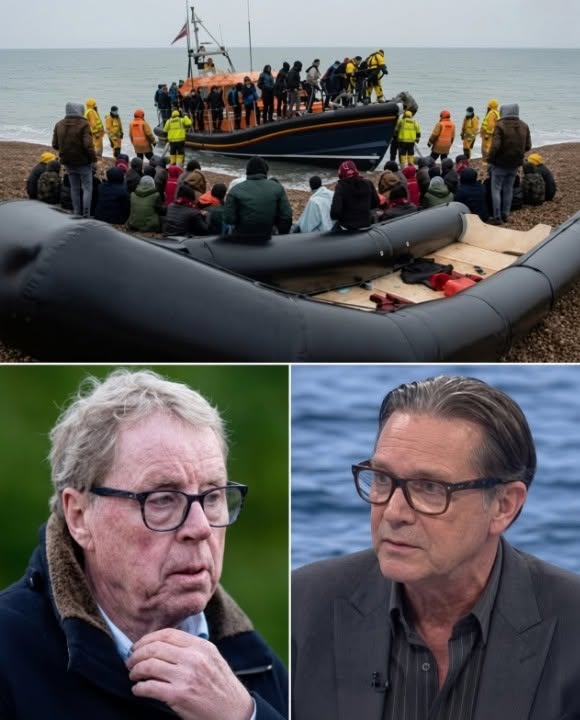
Harry Redknapp, one of the most recognizable personalities in English football, has unexpectedly found himself at the center of Britain’s increasingly heated immigration debate after comments attributed to the former Premier League manager generated a wave of discussion and sharply divided reactions. The original reports circulating around the story describe Redknapp as weighing in on the challenges surrounding immigration in the United Kingdom, with some people praising his willingness to speak openly while others strongly disagree with the position associated with him. However, because the material available here does not include Redknapp’s complete remarks or a verifiable direct quotation, his precise words should not be reconstructed or presented as fact. What can be said is that the reaction surrounding the story demonstrates just how politically sensitive migration has become in modern Britain. A discussion that might once have remained confined to Westminster, policy institutes and newspaper editorial pages now regularly draws celebrities, athletes, broadcasters and other public figures into the conversation. When someone with Redknapp’s enormous public profile becomes associated with the subject, the reaction can be immediate. Supporters may see an ordinary Briton saying what politicians are reluctant to say, while critics may question whether complicated questions involving asylum law, labor markets, border security and humanitarian obligations can reasonably be reduced to straightforward political messages. The result is another national argument over an issue Britain has repeatedly attempted — and repeatedly struggled — to resolve.
WHY HARRY REDKNAPP’S NAME IMMEDIATELY TURNED THE STORY INTO A NATIONAL TALKING POINT
Redknapp is not primarily known as a political campaigner, and that is precisely why his involvement attracts attention. For decades, British audiences have known him through football: as a player, manager, television personality and one of the sport’s most familiar characters. His managerial career took him through clubs including Bournemouth, West Ham United, Portsmouth, Southampton, Tottenham Hotspur and Queens Park Rangers, while his approachable public persona eventually made him recognizable even among people with little interest in football. That background gives any intervention on a major national issue a different character from the statements routinely delivered by professional politicians. Football figures occupy an unusual place in British culture. They communicate with audiences that cut across class, region and political affiliation, and their comments can reach people who might never watch a parliamentary debate or read a government policy document. This is why even relatively brief remarks can quickly become politically significant. Some members of the public interpret celebrity interventions as refreshing because they appear to come from outside Westminster’s carefully managed communications culture. Others argue that fame in sport does not necessarily provide expertise in immigration policy. The disagreement over who has the authority to speak is therefore becoming part of the controversy itself.
THE REACTION SHOWS HOW IMMIGRATION HAS BECOME ONE OF BRITAIN’S MOST EMOTIONALLY CHARGED ISSUES
The intensity surrounding the story cannot be understood without considering the broader political environment. Immigration has remained near the center of British politics for years, influencing the Brexit referendum, successive general elections and continuing arguments about the country’s economic and social future. Public concern encompasses several distinct issues that are frequently grouped together despite being governed by very different rules. Legal migration includes workers, international students and family visas. The asylum system deals with people requesting protection from persecution or other qualifying dangers. Irregular migration involves entry or residence outside normal legal channels. Small-boat crossings across the English Channel have become particularly politically visible because they provide dramatic images of people arriving on British shores and because successive governments have promised to reduce them. When these different categories are compressed into the single word “immigration,” public discussion can become confusing very quickly. A person criticizing illegal Channel crossings may not oppose legal immigration; someone defending refugee protections may simultaneously support stronger enforcement against people smugglers. Yet political arguments and social-media discussions often flatten these distinctions, creating the impression that Britain must choose between completely open borders and complete closure when actual policy contains many possibilities between those extremes.
SMALL-BOAT CROSSINGS HAVE BECOME A SYMBOL OF A MUCH LARGER CRISIS OF POLITICAL CONFIDENCE
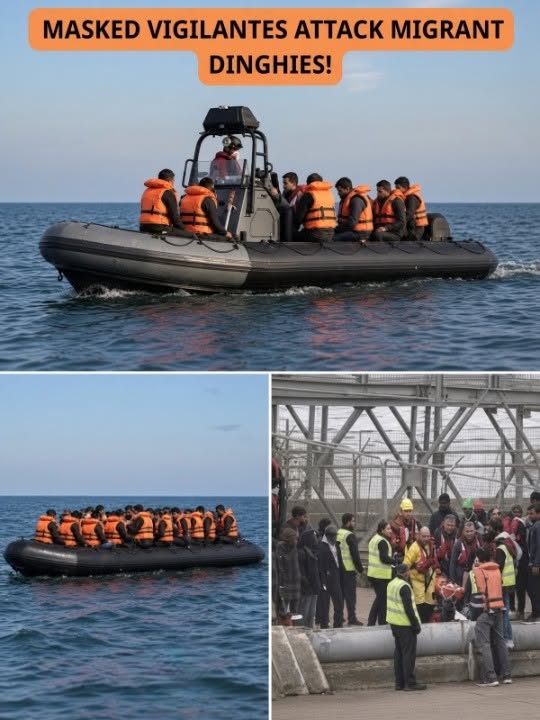
For many voters demanding tougher action, the most visible symbol of government failure is the continuing arrival of small boats across the Channel. The number of people involved represents only one component of Britain’s overall migration picture, but the political significance of the crossings extends far beyond their numerical share. They represent a basic question of state authority: can the government enforce its own borders? Every photograph of another boat reaching the coast can therefore reinforce the perception among critics that existing deterrence policies are not working. Governments face an exceptionally difficult challenge because the Channel is one of the world’s busiest shipping routes and attempting the crossing in small vessels can be extremely dangerous. Authorities must simultaneously prevent unauthorized entry, rescue people whose lives are in danger and dismantle criminal organizations profiting from the journeys. Supporters of stronger enforcement argue that a system in which people can pay smugglers and potentially reach Britain undermines legal migration routes and encourages further dangerous crossings. Humanitarian organizations respond that deterrence alone cannot eliminate demand for protection and that governments need safe, lawful and efficient mechanisms for handling legitimate asylum claims. These arguments have persisted through multiple governments because neither border enforcement nor asylum reform has produced a universally accepted solution.
SUPPORTERS OF TOUGHER CONTROLS SAY THE PUBLIC HAS WAITED TOO LONG FOR RESULTS
The reaction praising Redknapp’s reported intervention reflects a broader frustration visible among sections of the British electorate. Many voters believe governments have repeatedly promised to bring immigration under greater control without delivering the results they expected. Their concerns are not always identical. Some focus primarily on illegal migration and border enforcement. Others worry about pressure on housing, schools, healthcare or local infrastructure. Some believe rapid population growth can make integration more difficult, while others argue that the scale of migration should ultimately be determined by democratic choices rather than labor-market demand alone. Supporters of tougher policies frequently reject suggestions that concern about migration should automatically be interpreted as hostility toward migrants themselves. Their argument is that every country needs enforceable rules and that a system perceived as ineffective ultimately damages public confidence in immigration as a whole. From this perspective, prominent figures speaking openly about the issue can receive enthusiastic support precisely because some voters feel mainstream political language has become disconnected from their everyday concerns.
CRITICS WARN THAT SIMPLE ANSWERS CAN HIDE AN EXTRAORDINARILY COMPLICATED REALITY
Those on the other side of the argument emphasize that immigration policy involves far more than stopping people at a border. Britain relies on foreign-born workers throughout significant parts of its economy, including the National Health Service, social care, hospitality, agriculture, construction, research and technology. International students contribute substantially to universities and surrounding local economies. Refugees and asylum seekers fall under another legal framework altogether, with Britain carrying obligations toward individuals who qualify for protection. Critics of highly restrictive rhetoric therefore argue that policymakers must distinguish between categories rather than treating migration as one undifferentiated problem. They also warn against blaming migrants for structural problems that existed independently of immigration. Britain’s housing shortage, for example, reflects decades of construction policy, planning restrictions, investment patterns and regional inequality in addition to population growth. NHS waiting lists involve workforce shortages, demographic aging, funding decisions and post-pandemic pressures. Immigration can affect demand for services, but migrants can simultaneously work in the services experiencing that demand. The economic equation is therefore considerably more complicated than slogans on either side suggest.
ASYLUM IS WHERE THE SECURITY AND HUMANITARIAN ARGUMENTS COLLIDE MOST DIRECTLY
Few aspects of the debate generate more emotion than asylum. Supporters of strict border controls argue that people should not be able to choose Britain as a destination after passing through other safe European countries and then enter through an unauthorized Channel crossing. They contend that such a system advantages people capable of paying smugglers while potentially disadvantaging vulnerable refugees waiting through official processes elsewhere. Critics respond that international refugee protections exist precisely because people fleeing danger do not always travel through orderly administrative channels, and that an individual’s claim must be assessed according to law rather than rejected solely because the journey was irregular. The practical difficulty is designing a system that can determine valid claims quickly while removing people who have no lawful basis to remain. When processing takes months or years, almost everyone loses. Genuine refugees remain trapped in uncertainty, taxpayers bear accommodation costs, rejected applicants become more difficult to remove after establishing lives in the country, and public confidence declines. Faster decision-making, therefore, is one area where people with otherwise very different political perspectives may find some common ground.
THE DEBATE IS ALSO ABOUT WHETHER BRITAIN CAN CONTROL MIGRATION WITHOUT DAMAGING ITS ECONOMY
Economic reality creates another difficult balancing act. Employers in sectors experiencing labor shortages frequently argue that overseas recruitment remains essential. The NHS provides perhaps the most obvious example: international doctors, nurses and other healthcare professionals form an important part of the workforce. Social care providers similarly struggle to recruit sufficient staff domestically. Businesses therefore warn that dramatically reducing migration without simultaneously addressing skills shortages, wages, training and productivity could create serious economic disruption. Advocates of lower migration respond that reliance on imported labor can itself reduce incentives to invest in domestic workers, automation and training. They argue that businesses should not assume access to an effectively unlimited international labor pool and that immigration policy should serve the country’s long-term strategic interests rather than short-term employer requirements. Both arguments contain important economic questions, which is why governments repeatedly struggle to satisfy businesses demanding workers while responding to voters demanding lower migration.
WHY CELEBRITY INTERVENTIONS NOW TRAVEL SO QUICKLY THROUGH BRITISH POLITICS
The Redknapp controversy also illustrates how fundamentally social media has transformed political communication. Twenty years ago, comments from a football personality about immigration might have appeared in a newspaper interview, generated discussion for a day and then disappeared. Today, a few sentences can be transformed into clips, screenshots and headlines distributed to millions of users within hours. The most provocative interpretation often travels fastest. Context can disappear almost immediately, while audiences divide into supportive and hostile camps before many people have encountered the complete original remarks. Algorithms reward engagement, and anger produces engagement exceptionally efficiently. Consequently, comments about migration are particularly vulnerable to amplification because the subject already carries enormous emotional weight. This makes verification especially important. A headline saying that a celebrity “destroyed” an opponent or “said what everyone is thinking” may generate clicks, but it does not necessarily provide an accurate account of what was actually said. In Redknapp’s case, the absence of a complete verified quotation in the material provided means readers should be cautious about attributing specific arguments to him until the original comments can be examined directly.
WESTMINSTER CANNOT IGNORE THE PUBLIC MOOD SURROUNDING MIGRATION
Whatever politicians think about celebrity interventions, they cannot ignore the underlying public concern that gives these stories their power. Immigration has repeatedly demonstrated its ability to reshape British politics. The rise of UKIP, the Brexit referendum, debates over freedom of movement, Conservative promises to reduce migration, Labour’s evolving approach to border security and the growth of Reform UK all demonstrate how dramatically the issue can alter electoral competition. Parties that appear dismissive of voter concerns risk losing support, while parties promising radical solutions face pressure to explain whether their proposals are legally, economically and practically achievable. That dynamic creates a constant tension between rhetoric and implementation. It is relatively easy to promise lower migration or stronger borders. It is considerably harder to design policies that achieve those objectives without generating labor shortages, court challenges, diplomatic conflicts or humanitarian consequences. Voters increasingly judge governments not simply by what they announce but by whether measurable outcomes follow.
THE REAL QUESTION IS NOT WHETHER BRITAIN SHOULD HAVE BORDERS — BUT HOW THOSE BORDERS SHOULD WORK
Much of the most heated rhetoric obscures an important reality: relatively few participants in mainstream British politics advocate either completely unrestricted immigration or the complete elimination of immigration. The meaningful disagreement concerns where limits should be established, which categories should receive priority, how asylum claims should be processed, what legal routes should exist, how quickly rejected applicants should be removed and how migration levels should respond to economic needs. Effective policy therefore requires more than dramatic language. Britain needs reliable border surveillance, action against smuggling networks, sufficient asylum caseworkers, functioning return agreements with other governments, efficient courts, legal migration routes aligned with economic strategy and integration policies capable of maintaining social cohesion. None of these measures produces the immediate emotional impact of a political slogan, but together they determine whether an immigration system actually functions.
HARRY REDKNAPP MAY BE THE LATEST VOICE, BUT THE ARGUMENT IS MUCH BIGGER THAN ONE FOOTBALL LEGEND
Ultimately, the significance of the controversy is not simply that Harry Redknapp has become associated with Britain’s immigration debate. His involvement matters because it reveals how deeply the subject has moved beyond Westminster and into everyday British culture. Football supporters, business owners, healthcare workers, retirees, students and families are all participating in a national conversation about how much migration Britain needs, how its borders should be protected and what responsibilities it owes to people seeking refuge. Some see tougher controls as essential to restoring sovereignty and public confidence. Others fear that increasingly aggressive rhetoric risks turning vulnerable migrants into convenient political targets while failing to address the deeper administrative failures within the system. Many people hold elements of both views, wanting a country capable of enforcing its laws while remaining humane toward people genuinely escaping danger. That uncomfortable middle ground may ultimately be where a sustainable solution has to be found. Redknapp’s reported comments may dominate headlines temporarily, but the frustration, disagreement and uncertainty behind the reaction will remain long after the latest social-media storm disappears. Britain’s migration debate is not really about one celebrity, one political party or one controversial statement. It is about a country still attempting to reconcile border control with economic necessity, national sovereignty with international responsibility, and public demand for action with the complicated reality of governing. Until those tensions are resolved, every new intervention from a recognizable public figure has the potential to ignite the argument all over again.