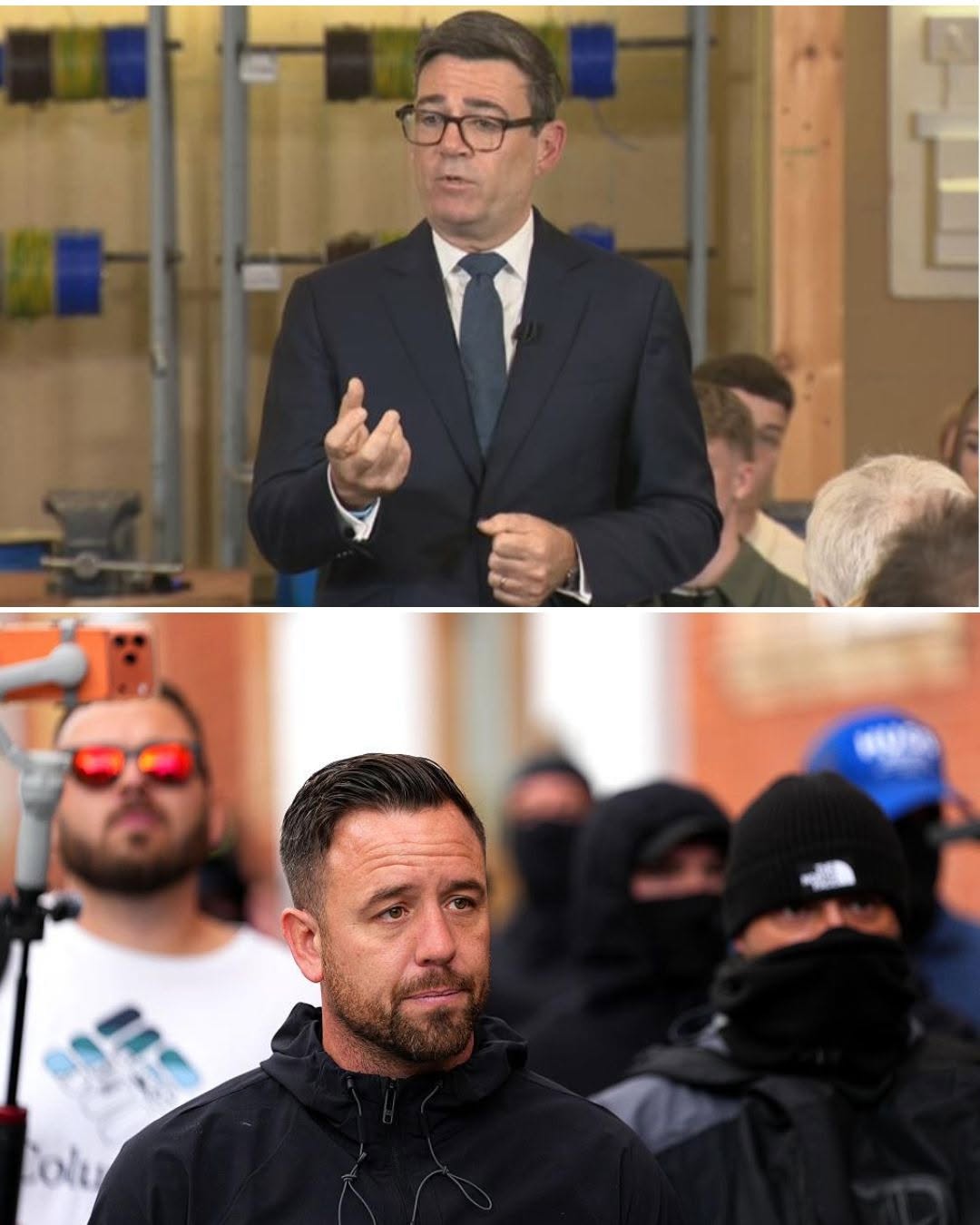
ATRIOT PLATFORM ISSUES WARNING TO BURNHAM: BORDERS, ACCOUNTABILITY AND THE CHANNEL DEBATE
A new activist group has publicly challenged the government over immigration enforcement while one of its prominent figures remains in custody awaiting trial. Here is what is known, what is claimed, and the wider political context.

A group calling itself the Patriot Platform has released a statement directed at Prime Minister Andy Burnham and Home Secretary Shabana Mahmood. The message demands stronger border enforcement, greater political accountability and an end to what it describes as the targeting of ordinary people who raise concerns about Channel crossings. The group insists it rejects violence and civil conflict, framing its aim as evidence-based research, documentation and public pressure. It claims its membership has grown following the arrest and remand of Daniel Thomas, known online as Danny Tommo.
Thomas faces trial in March 2027 on charges of criminal damage relating to an incident involving a dinghy in the Channel and a separate allegation of failing to provide a phone PIN to police.
He has pleaded not guilty. A judge refused bail and remanded him in custody. Supporters describe the case as politically motivated. The courts treat it as a standard criminal matter to be decided by evidence and a jury. Remand decisions are made under existing bail rules that weigh risk of further offences, interference with witnesses and the seriousness of the alleged offence.
The group’s stated position
In its public message the Patriot Platform says Britain is a country with borders and laws that should keep people safe. It argues that successive governments have failed to stop small-boat crossings despite repeated promises. The group says asking questions and demanding accountability is not extremism, and that documenting events will continue regardless of individual arrests. It outlines a two-stage plan focused on recruitment followed by organised research and exposure of verified failures.
The statement repeatedly rejects violence and calls instead for a system in which the law is applied consistently and the government answers to the public.
These claims sit within a broader public debate. Official figures continue to show significant numbers of people crossing the Channel in small boats. The government maintains that it is increasing returns of foreign national offenders, negotiating with France and other partners, and investing in enforcement. Critics across the political spectrum, including Reform UK, argue that the numbers remain too high and that deterrence is insufficient. Labour points to capacity pressures in the asylum and prison systems and to the need for legal routes alongside enforcement.
Context of the wider immigration argument

Channel crossings have been a dominant political issue for several years. Previous Conservative administrations and the current Labour government have both faced criticism for failing to reduce arrivals to the levels they promised.
Temporary and permanent changes to prison release rules have been driven by overcrowding rather than immigration policy alone, yet the two issues frequently appear together in public discussion. High-profile individual cases on both sides of the debate — early releases of certain offenders and remand decisions for activists — fuel claims of inconsistent priorities.
The Patriot Platform presents itself as a grassroots response to that frustration. Independent observers note that such groups often grow when mainstream parties are seen as unresponsive. At the same time, authorities and some community organisations warn that confrontational street activity, even when presented as peaceful monitoring, can heighten tension and risk disorder. The group’s own statement seeks to distance itself from violence, emphasising evidence and organisation over confrontation.
Political reactions and unresolved questions

Reform UK and other opposition voices have used the remand of Thomas and the continued arrivals to argue that the government prioritises certain narratives over consistent enforcement.
Government ministers reject the charge of double standards, pointing to record numbers of foreign-national offender deportations and ongoing work on returns agreements. They argue that criminal damage and interference with emergency responders cannot be excused by political motivation.
Two practical questions remain central. First, can enforcement measures — interceptions, returns, and legal routes — reduce irregular arrivals enough to restore public confidence? Second, can political debate and protest on immigration remain within the law while still exerting pressure on policy? The Patriot Platform says it intends to test the second question through sustained organisation and documentation. The courts will decide the first individual’s case on the evidence. The broader policy outcomes will be measured by official crossing and return statistics over the coming months.
The statement issued by the group is one more contribution to a long-running argument about borders, capacity and political trust. Whether it develops into a lasting organised force or remains a short-term reaction will depend on its ability to maintain non-violent discipline, produce verifiable information, and sustain public interest beyond individual arrests. For now it has placed its demands on the public record and signalled that it does not intend to disband.