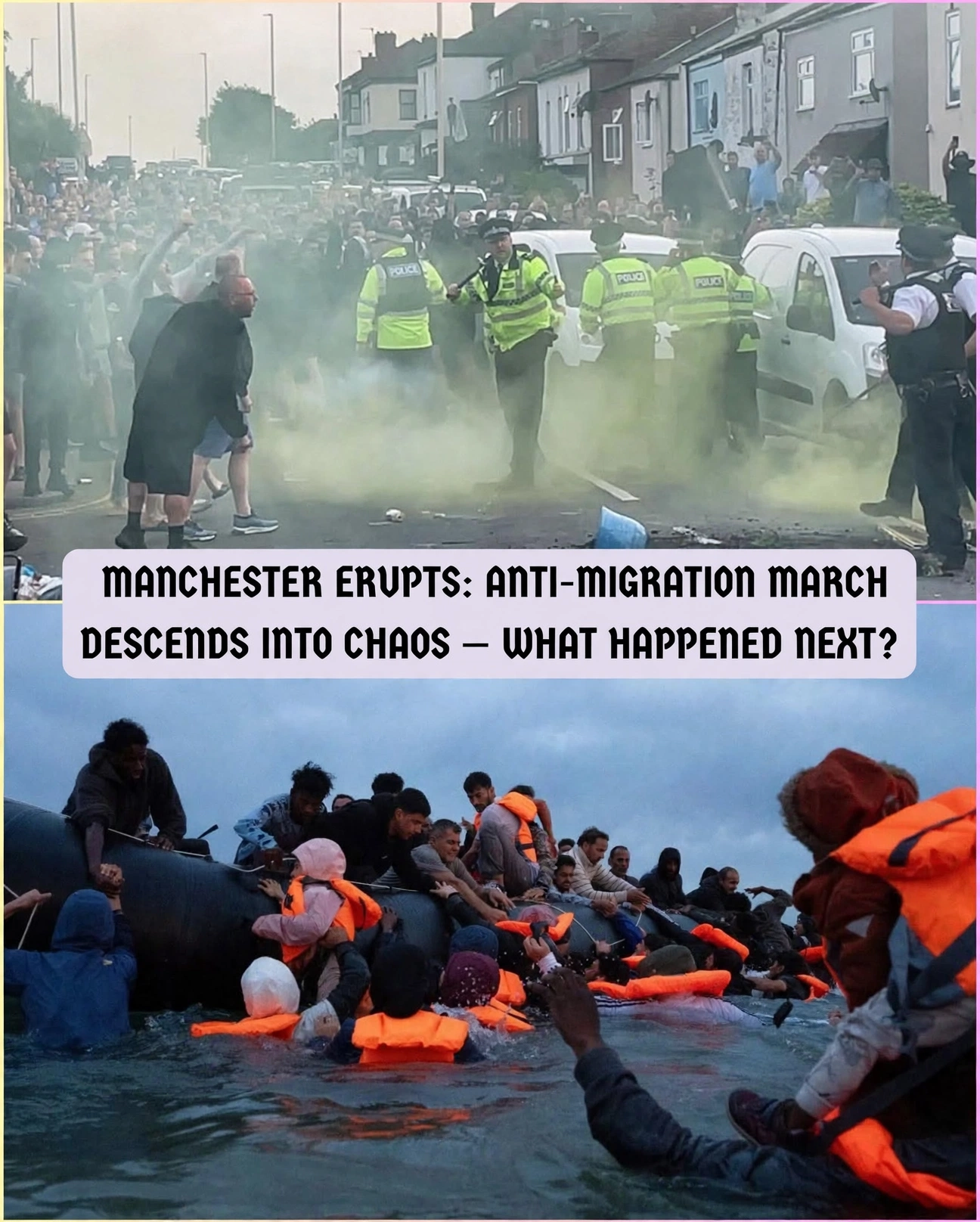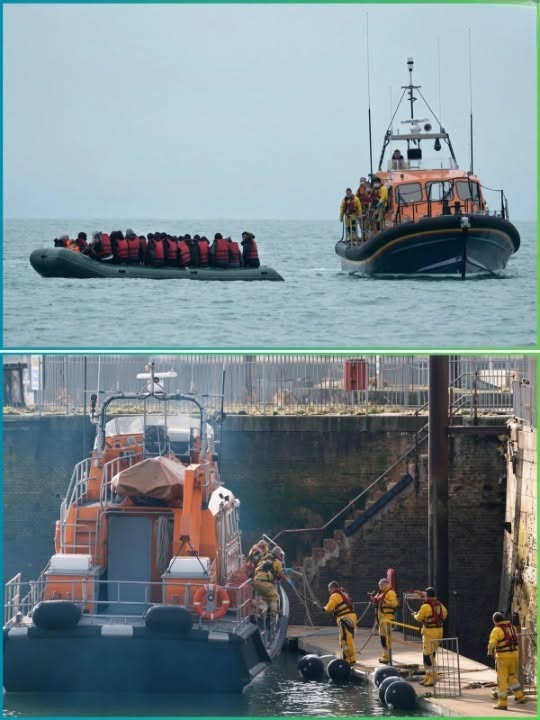
CHANNEL CHAOS LOOMS: FAR-RIGHT PROTESTERS PLAN TO TAKE THEIR OWN BOAT TO ‘STOP THE MIGRANT DINGHIES
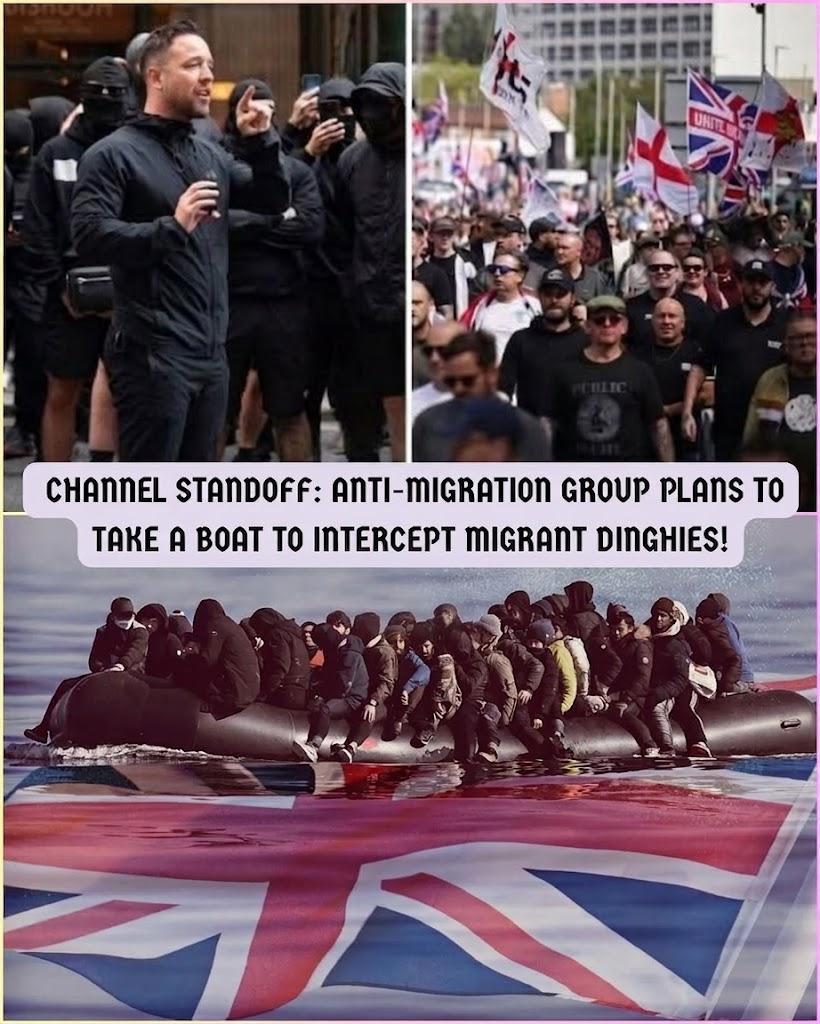

Fears of a dangerous confrontation in the English Channel are growing following reports that anti-immigration activists are considering taking their own vessel to sea in an attempt to disrupt or confront migrant dinghies travelling toward Britain.
The reported plan has immediately intensified an already bitter national debate over irregular migration, border enforcement and the limits of political protest.
Supporters of tougher immigration controls may see the proposal as a dramatic response to years of frustration over small-boat crossings. Critics, however, warn that civilian attempts to intervene in one of the world’s busiest shipping routes could put migrants, protesters and professional rescue crews in serious danger.
Important details remain unclear, including precisely which individuals would participate, what vessel they would use and what they mean by “stopping” migrant boats.
Those uncertainties matter.
There is a significant difference between sailing into the Channel to stage a symbolic protest, observing migrant boats from a safe distance, and physically attempting to block, board, tow or redirect a crowded dinghy.
The latter possibilities would raise much more serious legal and safety questions.
From Street Protest to Action at Sea
Anti-immigration demonstrations have become increasingly visible as the number of people attempting to reach Britain in small boats remains a major political issue.
Until now, most protest activity has taken place on land—outside accommodation facilities, near ports or in town centres.
Taking that campaign onto the Channel would represent a significant escalation.
The appeal to activists is easy to understand.
Images of small boats crossing from northern France have become one of the defining symbols of Britain’s immigration debate. For campaigners who believe successive governments have failed to secure the border, physically travelling into the Channel could be presented as a way of taking direct action where politicians supposedly have not.
But the sea is fundamentally different from a demonstration outside Parliament.
A confrontation on land can usually be separated or contained by police.
At sea, a mistake can kill people within minutes.
The Channel Is Already Dangerous
The English Channel may appear relatively narrow on a map, but it is an exceptionally challenging environment for small vessels.
Large commercial ships routinely pass through its shipping lanes. Weather can deteriorate. Visibility can change. Currents are powerful, and small inflatable boats carrying large numbers of people can be unstable.
Many migrants attempting the crossing have limited maritime experience and may not possess adequate safety equipment.
Adding another civilian vessel deliberately attempting to interfere with their journey could create unpredictable consequences.
If activists approached too closely, a migrant boat could change direction suddenly.
Passengers might panic or move toward one side of an inflatable vessel, destabilizing it.
A collision could puncture a dinghy or throw people into the water.
Even actions intended only to obstruct a boat could unintentionally create a rescue emergency.
That is why any reported plan to “stop” boats must be distinguished from ordinary political protest.
What Does ‘Intercept’ Actually Mean?
This may ultimately be the most important question.
If protesters intend merely to sail in international or British waters while displaying banners, their actions would raise one set of issues.
If they intend to physically interfere with another vessel, the situation becomes considerably more serious.
Private citizens do not simply acquire law-enforcement powers because they believe the government is failing to enforce immigration rules effectively.
Border enforcement at sea involves trained authorities operating under specific legal powers and safety procedures.
There is also a fundamental humanitarian principle involved.
Whatever a person’s immigration status, someone facing imminent danger at sea must not be deliberately placed at greater risk.
A migrant may ultimately have an asylum claim accepted or rejected. That decision belongs to the relevant legal process.
It cannot safely be decided through a confrontation between activists and passengers aboard an inflatable boat.
Protesters Would Also Be Putting Themselves at Risk
The danger would not be limited to migrants.
Activists taking an unsuitable vessel into busy waters could themselves require rescue.
Operating at sea demands knowledge of navigation, communications, weather conditions and collision regulations.
A protest boat surrounded by commercial traffic, Border Force vessels, lifeboats and small migrant craft could create additional pressure on organizations already responsible for preventing loss of life.
That produces an obvious irony.
A mission intended to protest the cost of irregular migration could end with British emergency services spending additional resources rescuing the protesters themselves.
Professional maritime authorities would therefore be expected to take any credible plan seriously.
Why Activists Believe Direct Action Is Necessary
The political motivation behind such a proposal should not simply be dismissed.
Public frustration over Channel crossings is real.
Governments have repeatedly promised to reduce irregular migration, target smuggling organizations and strengthen cooperation with France.
Yet boats have continued to arrive.
For some activists, each successful crossing is evidence that conventional policy has failed.
They argue that Britain possesses a border in theory but lacks the willingness or ability to enforce it in practice.
From that perspective, direct action becomes a form of political theatre designed to expose what protesters regard as government weakness.
Even if activists never physically intercept a single boat, images of their vessel in the Channel could attract enormous online attention.
That may itself be part of the objective.
The ‘Far-Right’ Label Requires Care
The description of participants as “far-right” also deserves scrutiny.
Some organizations and individuals involved in anti-immigration activism may reasonably be classified that way based on their ideology, associations or documented statements.
But opposition to immigration alone does not establish that someone belongs to the far right.
Accurate reporting should identify the specific group and explain why a political label is being applied rather than using it as a substitute for evidence.
This distinction is especially important when reporting protests involving many participants who may have different motivations.
Some may be committed ideological activists.
Others may simply be residents angry about immigration policy.
Those categories should not automatically be treated as identical.
Smugglers Remain at the Centre of the Crisis
The confrontation also risks distracting attention from the criminal networks responsible for organizing many Channel crossings.
People-smuggling operations can charge migrants substantial sums to reach Britain.
Authorities on both sides of the Channel have spent years attempting to disrupt these networks, seize equipment and prevent departures.
Supporters of tougher enforcement argue that the persistence of crossings demonstrates that these measures remain insufficient.
Humanitarian organizations counter that enforcement alone cannot eliminate demand and that governments also need functioning asylum procedures and controlled legal pathways.
Both debates become harder if private groups begin inserting themselves into active maritime operations.
Rather than disrupting smugglers, an uncoordinated civilian intervention could complicate the work of Border Force, police, coastguards and rescue organizations.
A Major Test for Authorities
If the reported plan develops into a genuine attempt to launch a vessel, authorities could face a difficult balancing act.
People retain rights to political expression and peaceful protest.
Preventive action therefore requires an appropriate legal basis rather than simply disagreement with the protesters’ political views.
At the same time, authorities have responsibilities concerning navigation, public safety and potential criminal conduct.
Officials will need to assess what organizers actually intend to do rather than relying solely on inflammatory descriptions circulating online.
If the purpose is symbolic protest, authorities may primarily need to manage safety.
If organizers intend physically to obstruct vulnerable boats or interfere with official operations, the legal implications could be significantly different.
Anger Cannot Replace Maritime Safety
The Channel migration crisis has generated extraordinary frustration across Britain.
People are entitled to demand stronger borders.
They are entitled to protest government immigration policy.
They are also entitled to argue that existing enforcement has failed.
But political frustration does not remove the dangers of the sea.
A crowded inflatable boat is not a safe arena for a confrontation between rival political causes.
Migrants aboard it may eventually be removed from Britain, granted protection or have their cases resolved in another way. Those questions should be decided by law.
The immediate question at sea is much simpler: will everyone return to shore alive?
That is why the reported protest plan represents something potentially more consequential than another demonstration.
If activists genuinely attempt to intercept migrant dinghies, the authorities may confront a situation in which border politics, freedom of protest and maritime safety collide in real time.
The government can—and should—be challenged over its ability to control Britain’s borders. But turning the English Channel into a stage for civilian confrontation would introduce risks that no political slogan can control once something goes wrong.