Poland’s Border Policy and the European Argument Over Asylum
Poland’s Border Policy and the European Argument Over Asylum
How a crisis on the frontier with Belarus became a test of the European Union’s migration rules, its security doctrine and its commitment to the right to seek asylum
Warsaw, 20 October 2026
Updated 21 October 2026: this article was re-checked against the latest reporting and updated with Prime Minister Donald Tusk’s post-summit statement of 18 October 2026 and a verification of the visa and deportation figures now circulating with the viral posts. No new, independently verified escalation at the border itself had been reported as of the update.
Reading time: approximately 30 minutes
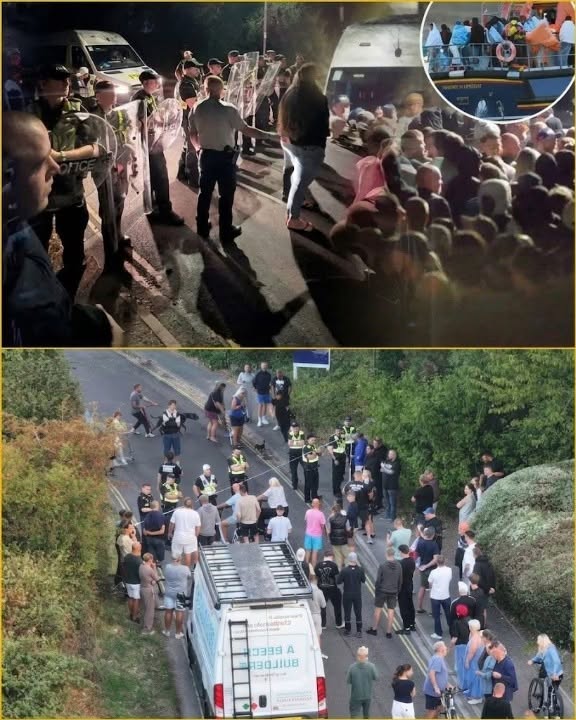
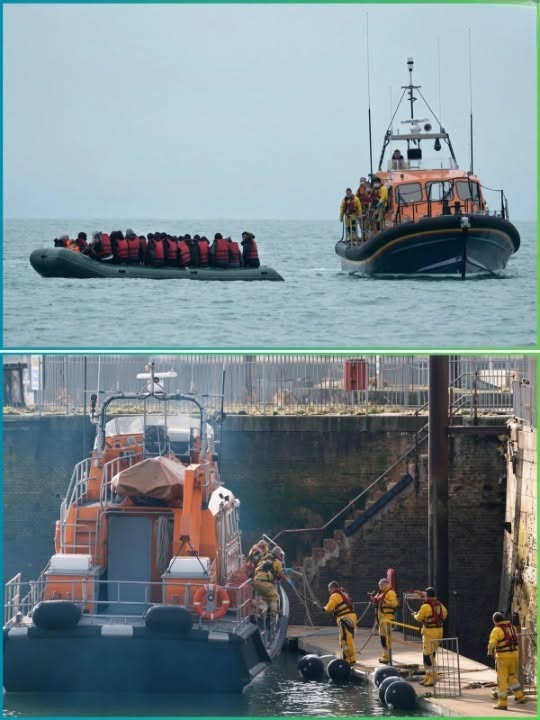
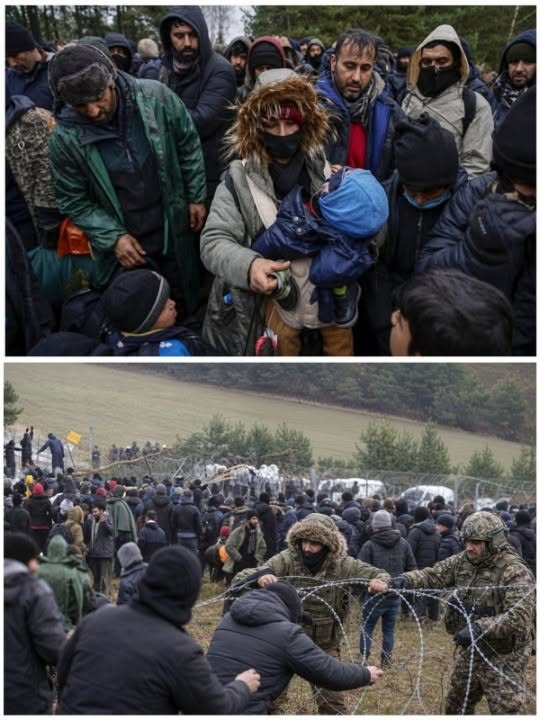
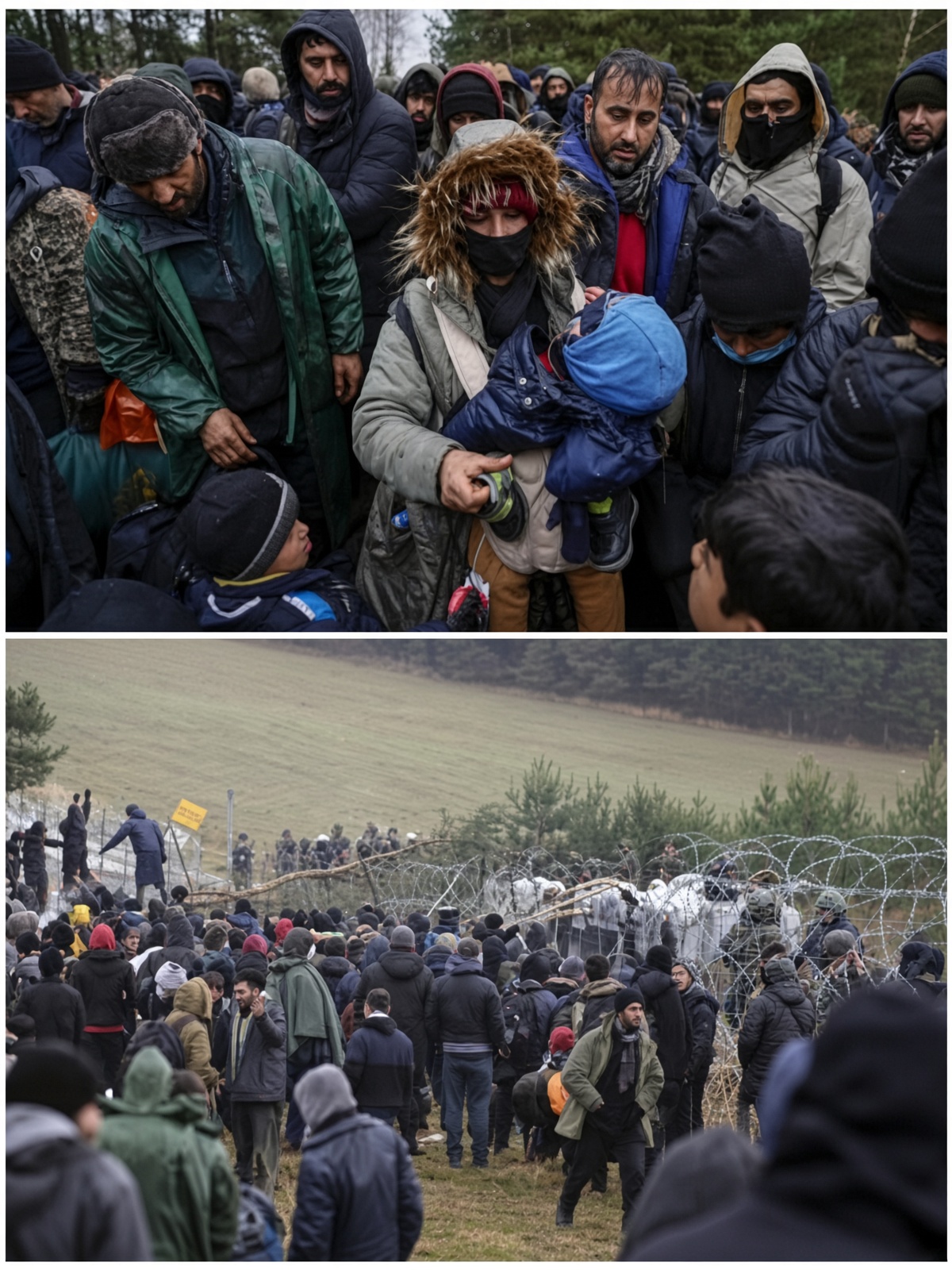
The images move faster than the facts. In recent days, social media posts have circulated showing people at Poland’s eastern frontier being turned back by uniformed officers, accompanied by captions describing a fresh confrontation at the border, an administration hardening its stance and a continent splitting over how to respond. The posts are short, confident and, in the way of viral content, imprecise. They present a single moment of friction at a fenced frontier as though it were a change of situation.
The documented situation at the Polish–Belarusian border is less dramatic in its daily movement and more consequential in its accumulated effect. Attempted irregular crossings have fallen to a fraction of their levels of a year earlier, according to figures published by Poland’s Interior Ministry. The issue that continues to divide Poland and its European partners is not primarily the existence of a physical barrier — barriers at external frontiers are common and broadly accepted across the European Union — but a law under which the right to apply for asylum can be suspended for most people who cross irregularly from Belarus. That law, introduced in March 2025 for an initial period of 60 days, has been renewed continuously since, most recently by a large parliamentary majority in mid-September 2026. It has drawn support from the European Commission, which accepts Poland’s argument that migration on this route has been deliberately organised by a neighbouring state, and sustained criticism from courts, legal scholars and humanitarian organisations, several of which argue that the measure is incompatible with Poland’s obligations under European and international law.
This article sets out what has been established about the frontier, what remains disputed, and where the accounts of governments, courts and campaigners diverge. It relies throughout on named sources: the Polish Interior Ministry and Border Guard, the European Commission, the Court of Justice of the European Union, Frontex, the EU’s border agency, and organisations including Human Rights Watch, Human Rights First and the Platform for International Cooperation on Undocumented Migrants (PICUM). Where a claim cannot be corroborated — including several elements of the framing now circulating online — the article says so directly.
Why this frontier matters
Poland’s border with Belarus runs for roughly 400 kilometres through forest, marsh and river, including the Białowieża Forest, one of Europe’s last large areas of old-growth woodland and a protected UNESCO site. Since 2021, that border has also been the setting for a confrontation that both sides describe in terms well beyond migration control. Poland and the European Union accuse Belarus, supported by Russia, of deliberately encouraging and facilitating people — many of them from the Middle East and Africa — to travel to Minsk and then cross into EU territory irregularly, as a form of pressure on the bloc. Belarus does not publish equivalent crossing data and has disputed the characterisation.
The stakes for the European Union extend beyond Poland. The route touches the central question of EU migration policy: whether the right to seek asylum, guaranteed under the EU Charter of Fundamental Rights and the 1951 Refugee Convention, can be limited when a member state judges that arrivals are being used as an instrument by a hostile government. Poland’s answer, since March 2025, has been a qualified yes. Several other member states have watched the precedent closely; Greece has twice suspended asylum applications temporarily, in 2020 and again in 2025. Hungary, meanwhile, was fined €200 million by the Court of Justice of the European Union in June 2024 for breaches of EU asylum law arising from a different, and in the Court’s view unlawful, approach. The argument in Warsaw is therefore closely followed in Brussels, Athens and Budapest alike.
Two Polish security personnel have died as a result of assaults at the border since 2021, according to reporting on the crisis. Human-rights groups say a number of migrants have also died in the border forests and rivers; early reporting put the figure for 2021 alone at at least seven. Both sets of deaths are cited frequently in the debate, and both are contested in their detail. What is not contested is that the frontier has become a place where the EU’s external border policy is being written in practice, one renewal of an emergency law at a time.
How we got here
The present situation began in 2021. Following disputed elections in Belarus in 2020 and the sanctions imposed by the European Union in response, Belarusian authorities loosened visa arrangements and, according to Poland and the EU, actively encouraged people from third countries to travel to Belarus with the intention of crossing into the EU. Tens of thousands of people have attempted the crossing since then, the largest number into Poland and smaller numbers into Latvia and Lithuania. Many arrived in Minsk on flights from cities in the Middle East, travelled to the border region and attempted to cross on foot through forest and marshland.
Poland’s response, under the then government led by the Law and Justice party (PiS), combined emergency powers with physical infrastructure. A state of emergency was declared in the border region in 2021. Legislation was adopted that rights groups said allowed people who had crossed irregularly to be removed without an individual assessment of their protection needs — a practice commonly described as pushback. Journalists and humanitarian workers were excluded from the immediate border area. Polish courts have since found, in several cases, that particular pushbacks were unlawful; in July 2025 a court awarded compensation for the first time to two Afghan nationals who had been detained without justification in 2021 and returned to Belarus.
Construction of a steel barrier, approximately 5.5 metres high, along much of the Belarus frontier followed, together with expanded electronic surveillance — cameras, sensors and monitoring systems intended to detect movement before it reaches the fence. Soldiers were deployed alongside the Border Guard. A buffer zone along the border, from which journalists and NGO workers are largely kept away, has been maintained in varying forms.
The change of government in Warsaw in late 2023 altered the language of the policy more than its substance. Donald Tusk, who as opposition leader had criticised the previous government’s pushback policy, has in office as prime minister fortified the barrier, continued the deployments and, in 2025, introduced the asylum-suspension law described below. The shift has been widely noted in Polish and European commentary, and it explains a feature of the current debate that outside observers sometimes miss: the restrictive measures at the Belarus border are not the policy of one party. They command, as the parliamentary votes show, a broad consensus in Poland, even as they divide opinion in the rest of Europe.
The barrier
The physical facts of the frontier are among the least contested parts of the story. Poland has constructed a steel barrier approximately 5.5 metres in height along most of the length of its border with Belarus. The barrier is supplemented by an electronic surveillance network: cameras, motion sensors and monitoring posts whose purpose, according to the Border Guard, is to detect approaches before people reach the fence itself, and to direct patrols to the point of crossing. The government also maintains a buffer zone along the border — an exclusion area, adjusted in width over time, from which journalists, activists and NGO workers are largely barred, with access granted only under controlled conditions. Soldiers are deployed alongside border guards in the border region.
The barrier is not a wall in the sense of a continuous sealed line. Rivers, wetlands and terrain interrupt it, and the surveillance systems are designed to cover the gaps. What the barrier does, according to official Polish accounts, is channel irregular crossings toward places where they can be detected and intercepted. Whether it deters people from attempting the crossing at all, or simply reroutes them, is disputed: the Belarusian side does not publish data on departures, so the effect of the barrier alone cannot be separated from other measures, including the legal changes described below and the cooperation arrangements Poland has pressed for further upstream.
The buffer zone has been a particular focus of criticism. The Interior Ministry presents it as an operational necessity: a working area for the Border Guard and the armed forces in which uncontrolled civilian movement would complicate operations. Humanitarian organisations and press-freedom groups argue that it creates a zone in which Polish and international law cannot be independently monitored, and in which the treatment of people caught at the border cannot be verified by anyone outside the authorities. The zone’s practical effect is that much of what happens at the immediate frontier is known only through the Border Guard’s own accounts, the statements of people who emerge from the zone, and court proceedings after the fact.
Two further elements of the infrastructure bear noting. First, the barrier and the surveillance were built and maintained under governments of different political character — the steel fence was constructed under the previous PiS government, and the current government led by Donald Tusk has fortified and extended the system rather than dismantling it. Second, the eastern border corridor, which covers Poland, Latvia and Lithuania, has seen substantial investment in similar measures across all three countries, with cooperation between the three border services.
A final point about the barrier concerns what it has replaced. Before 2021, the Polish–Belarusian frontier was a conventional land border: crossings at official points, patrols between them, and a forested borderland that people on both sides treated as a shared natural landscape. The barrier has turned that landscape into a security installation. The Białowieża Forest, which the fence bisects, is home to the European bison and to protected habitats; conservationists raised early objections to the construction’s ecological effects, and those objections have largely been set aside in favour of security arguments — a trade-off that the government has barely felt obliged to defend, and that the opposition to the policy continues to cite as evidence of how completely the emergency logic has taken hold.
The law
On 26 March 2025, Poland’s president signed into law a measure allowing the government to temporarily suspend the right to apply for international protection — the legal term for the right to make an asylum claim — for people entering the country irregularly via the Belarus border. The suspension was introduced for an initial period of 60 days. It has been renewed continuously since, and in mid-September 2026 the Sejm approved another extension by 418 votes to 16, a margin that reflects cross-party support for the measure.
The law contains exceptions. Unaccompanied minors, pregnant women, people clearly at risk of serious harm, and people whose country of origin does not raise security concerns may still apply for protection. In practice, according to lawyers and NGOs who work with people apprehended at the border, the application of the exceptions is inconsistent: it is the border guards on the ground who determine whether an exception applies, and there is no established procedure for an independent review of that determination at the point of apprehension. The government, for its part, has argued that the exceptions are applied as the law requires, and that the system is designed to distinguish between people in need of protection and a flow that is being directed by the Belarusian authorities.
The legal reasoning of the Polish government rests on the concept of instrumentalisation: the claim, shared by the European Commission, that Belarus and Russia are using migration as a tool of pressure against Poland and the EU — a form of so-called hybrid warfare. The argument is that standard asylum procedures, designed for spontaneous arrivals, are not suited to a flow that is being organised by a third state, and that the suspension is therefore a necessary and proportionate security measure. The Commission has said that measures of this kind must be “temporary, necessary, proportionate, and well-defined” — a formulation that the Polish government presents as a description of its law.
The criticism is of several kinds. Legal scholars and rights organisations argue that the right to seek asylum is individual and unconditional under the Refugee Convention and EU law: a person who arrives at a border and asks for protection must have the claim assessed, whatever the circumstances that brought them there. They argue that a blanket suspension based on the route of arrival, with the exceptions applied at the discretion of the officers conducting the interception, is incompatible with those obligations, and they note that the suspension has been “temporary” for more than a year and a half. Polish courts, as noted above, have found particular pushbacks unlawful, and the July 2025 compensation award to two Afghan nationals established, for the first time, a financial consequence for a state body in connection with a return carried out under the earlier regime.
A related and frequently contested point concerns what the law does not do. It does not create a criminal offence of seeking asylum, and it does not authorise the use of force against people at the border. What it does is remove, for most people crossing irregularly on this route, the legal avenue by which their claim would be registered and assessed, and it removes, for the Border Guard, the requirement to register the claim. Whether that amounts to a denial of the right to seek asylum in practice — as the critics contend — or a lawful limitation of a procedural right in exceptional circumstances — as the government contends — is the central legal question, and it is unlikely to be resolved except by the European courts.
The numbers
Every participant in this debate argues from numbers, and the numbers require careful handling, because of how they are produced.
The headline Polish figures are striking. Official data from the Interior Ministry show attempted irregular crossings at the Belarus border falling to roughly 215–235 attempts in the first five months to half of 2026, compared with more than 10,600 — over 15,500 in some reporting of the same window — in the equivalent period of 2025. That is a decline of about 98 per cent. The ministry presents the figure as evidence that the combined effect of the barrier, the surveillance systems and the asylum-suspension law has reduced the flow to a residual level.
Three qualifications matter to the interpretation of that trend. The first is that the figures count attempts, not people. The same person may attempt to cross several times, or be recorded attempting several times, and the figure therefore measures the level of activity at the border rather than the number of individuals involved. The second is that the counts are produced by one side of the border. Belarus does not publish equivalent data on people leaving its territory toward Poland, and there is no independent monitoring body present at the immediate frontier — the buffer zone ensures that journalists and NGOs are not in a position to corroborate individual incidents. The third is that the figure, even taken at face value, sits within a broader European context. Frontex, the EU’s border agency, recorded a fall of roughly 25 per cent in irregular migration to the European Union overall, with about 166,900 unauthorised entries recorded between January and November of the most recent reporting year. On the EU’s eastern border corridor specifically, Frontex recorded approximately 10,500 attempted entries — mostly Ukrainian and Somali nationals — a fall of about 37 per cent. Poland’s sharper decline therefore forms part of a general downward trend, though a substantially steeper one.
Against that background, the specific claims now circulating online should be weighed carefully. On 8 September 2026, Poland’s Border Guard reported more than 50 attempted irregular crossings over several days in the Narewka sector of the border; the Guard said most of those involved withdrew toward Belarus and the rest were apprehended. That is a documented official report, and it is also, on its own, difficult to interpret: a single-sector tally over several days does not by itself establish a change in the overall level of activity at the border, and it stands against the ministry’s own annual figures, which show activity at a small fraction of its former level. One independent weekly monitoring of the frontier covering 28 September to 4 October 2026 recorded zero attempted crossings in its window. Neither figure, alone, settles the question of what the border currently looks like; together, they indicate a frontier that remains watched, staffed and contested, but at which crossings are no longer occurring at anything like the scale of previous years.
The statistics also conceal a question that neither side’s data can answer: what has happened to the people who would previously have attempted the crossing. Some may have chosen other routes into the EU; some may have remained in Belarus; some may have abandoned the journey. There is no reliable accounting of any of those three groups, and claims in either direction — that the policy has protected people from exploitation, or that it has left people stranded in danger — go beyond the available evidence.
The security argument
The Polish government’s case, stated fairly, begins with a premise it regards as established: that since 2021, Belarus, with the support of Russia, has treated migration as an instrument of state policy. The evidence cited includes the organisation of flights and visa arrangements that channelled people to Minsk, the direction of groups to the border, and the refusal of the Belarusian authorities to take people back. On this account, the people moved to the border are instruments of a policy directed from Minsk and Moscow; the purpose is to pressure Poland and the EU, to consume the resources of their border services, and to create political division inside member states. The deaths of two Polish security personnel in assaults at the border since 2021 are cited as evidence that the confrontation at the frontier is physical as well as political, and Poland situates its response within its broader security posture — a country that shares a border with Belarus and with Ukraine, and that has been the principal logistical hub for western support to Ukraine since Russia’s full-scale invasion in 2022.
From that premise, the government’s conclusions follow. If the flow is organised by a foreign state, the government argues, then standard procedures designed for spontaneous asylum arrivals are the wrong instrument, because they reward the organising state with the very outcome it seeks: visible pressure on the EU’s frontier. The barrier and the surveillance reduce the number of people who can be moved across the border; the asylum-suspension law removes the procedural entitlement that, in the government’s account, the organising state exploits. The government argues that the suspension is narrow in scope — it applies only to people crossing irregularly from Belarus, not to people who apply for protection at official crossings or arrive by other means — temporary in form, subject to parliamentary renewal, and subject to exceptions for people who are clearly vulnerable. It also points to the results: a 98 per cent fall in attempted crossings is, in its presentation, evidence that the policy works.
The European Commission has been broadly favourable to Poland’s approach, in the specific context of instrumentalisation. Its stated position is that measures of this kind must be “temporary, necessary, proportionate, and well-defined”, and it has accepted that Poland faces a situation in which migration is being used as a tool by a neighbouring state. Warsaw also notes that the border measures command overwhelming parliamentary support — the September 2026 extension passed by 418 votes to 16 — and argues that this democratic mandate is itself relevant to the legitimacy of the policy.
The strongest form of the security argument acknowledges the cost and contests its weighting. On this view, the rights of individuals at the border are real, but they are not the only rights in play: the government has obligations to its own citizens, to the personnel it stations at the frontier, and to the integrity of an external border that Poland guards on behalf of the entire Schengen area. A state that is required, in this account, to register an asylum claim from every person presented at its border by a hostile neighbour has, in effect, delegated control of its border to that neighbour. Poland’s supporters argue that no member state would accept that position if its own frontier were the one being tested, and they note that several other member states have adopted, or sought, measures in the same direction.
The humanitarian argument
The counter-case, also stated fairly, begins from a different premise: that whatever the conduct of the Belarusian state, the people at the border are individuals, and the rights at stake attach to individuals, not to the governments that moved them. On this account, a person who arrives at the EU’s external border and asks for protection is entitled, under the Refugee Convention and EU law, to have that request assessed individually. Campaigners argue that the fact that Belarus organised the journey does not make the traveller’s fear of persecution any less real, and that many of the people who attempted the crossing — from countries including Afghanistan, Syria, Yemen and Somalia — have protection needs that would be recognised if their claims were examined. They argue that the route of arrival is, legally, irrelevant to the right, and that a state which suspends the right wholesale for a category of arrivals has crossed a line that the law does not permit it to cross, whatever the provocation.
The practical criticism concentrates on what happens at the point of interception. Because the suspension law removes the obligation to register a claim, people apprehended after crossing irregularly can be returned to Belarus without their circumstances being assessed, subject only to the exceptions in the law — exceptions which, lawyers say, are applied inconsistently and by the officers carrying out the interception. Groups working at the border describe people being returned across the frontier without food, water or medical assessment, and describe deaths in the forests and rivers of the border zone; early reporting put the number of migrant deaths in 2021 at at least seven. Polish courts have found individual pushbacks unlawful, and the July 2025 award of compensation to two Afghan nationals — detained without justification in 2021 and returned to Belarus — is cited by critics as a judicial finding that the earlier practice breached the law. The government responds that procedures are followed and that its personnel operate under difficult conditions; but the absence of independent observers in the buffer zone means that, for most incidents, neither account can be independently verified.
The criticism extends beyond the people crossing to the people who try to help them. Human Rights First reported on 22 September 2026 that activists assisting migrants at the border face home searches, seizure of phones, questioning, online threats and shrinking funding, and that several remain under investigation or prosecution. PICUM recorded at least 20 people facing legal proceedings in Poland in 2025 for helping migrants. The cases are not all of one kind, and the authorities argue that some concern smuggling rather than humanitarian assistance; but the boundary between the two has been tested in court. In March 2026, five activists who had been prosecuted for providing food, clothing and shelter to migrants in 2022 were finally acquitted — four years after the events in question. That sequence was noted across Europe: the prosecution ended in acquittal, but the process itself, campaigners argue, is the deterrent. On 16 October 2026, the Interior Ministry withdrew a proposal that would have broadened criminal liability for aiding undocumented migrants, after criticism that it could expose humanitarian workers to prosecution — an outcome that rights groups welcomed as evidence that the criticism had been heard, and that the government presented as a routine legislative adjustment.
The humanitarian argument, at its strongest, is about precedent as much as about Poland. If instrumentalisation by a third state is accepted as sufficient grounds to suspend the right to seek asylum, critics argue, then the right is conditional on the behaviour of governments the asylum seeker did not choose and cannot control — and the precedent is available to any state that can plausibly describe an arrival flow as organised. They note that the suspension has now been in force, through continuous renewal, for more than eighteen months, and they ask at what point a measure described as temporary becomes a settled feature of the system.
A divided Europe
The argument inside Poland is mirrored, with variations, across the European Union — because the question Poland has posed is not only Polish.
The European Commission’s position has been, as noted, broadly favourable to Warsaw, within the limits of its formula that suspension measures be “temporary, necessary, proportionate, and well-defined”. That position reflects the political reality that the Commission accepts the instrumentalisation analysis: it has described the organised movement of people to the EU’s borders by Belarus and Russia as a security threat, not an ordinary migration flow, and it has supported the eastern member states with funding and personnel. Against that, Human Rights Watch, in a statement on 15 October 2026, criticised what it described as a wider European drift on asylum — a pattern in which governments across the bloc, citing exceptional circumstances of one kind or another, have restricted access to protection. The criticism was directed at the EU as a whole rather than at Poland alone.
Member states have moved in different directions. Greece suspended asylum applications temporarily in 2020, during a confrontation with Turkey at its land border, and again in 2025 on certain routes — decisions that drew criticism from rights bodies but no sanction from the EU institutions. Hungary presents the opposite case: in June 2024 the Court of Justice fined Hungary €200 million for breaches of EU asylum law, after finding that Hungary’s system — which required most people to declare their intention to seek asylum at embassies outside the EU — unlawfully restricted access to protection. The contrast between the treatment of the two cases is itself part of the debate: Hungary’s critics argue that its measures were directed at asylum seekers as such, without the instrumentalisation context that Poland can cite; Poland’s critics reply that the difference lies mainly in which explanation the Commission chose to accept.
The wider framework within which all of this sits was settled, on paper, in June 2026, when the EU Pact on Migration and Asylum was fully enacted. The Pact was the product of years of negotiation and was intended to do two things at once: to speed up procedures at the external border, including the screening and, in some cases, detention of new arrivals, and to distribute responsibility for asylum seekers more evenly among member states through a solidarity mechanism. Its provisions on crisis situations acknowledge, in general terms, that member states may face circumstances — including the instrumentalisation of migration — that require exceptional measures. How far those provisions stretch, and whether Poland’s law falls within them, has not yet been tested to a conclusion in the European courts.
The result is a Union that has legislated for a common system while tolerating, in practice, considerably different national approaches at its edges. Poland’s position is defensible within the politics of the bloc and contested within its law. That combination — political acceptance, legal uncertainty — is why the frontier keeps returning to the agenda, and why each renewal of the suspension law is watched well beyond Warsaw.
What is verified, what is not: the claims behind the viral framing
Because the social media framing of this story is running ahead of the evidence, this section addresses its central claims one by one.
“New reports of migrants being turned away at the frontier” — PARTLY VERIFIED, CONTEXT MISSING.
On 8 September 2026, Poland’s Border Guard reported more than 50 attempted irregular crossings over several days in the Narewka sector, saying most of those involved withdrew toward Belarus and the rest were apprehended. That report is documented. What the viral framing does not establish is that this represents a new development. Attempted crossings have been a continuous, if much reduced, feature of the frontier since 2021; a single-sector figure over a few days does not by itself indicate a change in the overall pattern. One independent weekly monitoring of the frontier covering 28 September to 4 October 2026 recorded zero attempts. The claim of a sudden escalation is unverified.
“Supporters call it a necessary security measure” — VERIFIED AS A DESCRIPTION OF THE POSITION.
The Polish government and the European Commission both present the border measures in security terms: Warsaw describes them as a response to the instrumentalisation of migration by Belarus and Russia; the Commission accepts that analysis and describes the relevant measures as needing to be “temporary, necessary, proportionate, and well-defined”. The parliamentary vote of mid-September 2026 — 418 to 16 for a further extension of the suspension law — is documented. Whether the measures are in fact necessary and proportionate is the substance of the legal and political dispute, and is not something this article can adjudicate.
“Critics raise humanitarian concerns” — VERIFIED AS A DESCRIPTION OF THE POSITION.
Courts, legal scholars, Human Rights Watch, Human Rights First and PICUM, among others, have raised sustained objections to the suspension of the right to apply for asylum, to the lack of independent monitoring in the buffer zone, and to the treatment of people who assist migrants. Polish courts have found individual pushbacks unlawful. Those objections are documented. Whether the objections are well-founded as a matter of law is, again, for the courts; the July 2025 compensation award to two Afghan nationals is, to date, the most concrete judicial finding.
Claims about who is crossing — UNVERIFIED AS FRAMED.
Some online accounts describe the people crossing in terms of religion. Official Polish and Frontex statistics do not establish religion; they record nationality and route. Frontex data for the eastern corridor records mostly Ukrainian and Somali nationals. Nationality, religion, immigration status and asylum eligibility are separate questions, and conflating them is a feature of the viral framing, not of the documented evidence. Specific claims about the religious composition of recent crossing attempts are unverified and should be treated as such.
“The debate over Europe’s immigration policies is heating up once again” — PLAUSIBLE BUT UNVERIFIED AS A CHANGE OF TEMPERATURE.
The debate is real and ongoing: the September 2026 parliamentary renewal, the October 2026 withdrawal of the proposed criminal-liability broadening, the Human Rights Watch statement of 15 October 2026 and the continuing Frontex reporting all belong to it. But the debate did not begin with the viral posts; it has been running, without interruption, since 2021. The suggestion that it has suddenly intensified rests on the recent social media activity rather than on any documented policy change.
The numbers most often quoted — VERIFIED WITH QUALIFICATIONS.
The Interior Ministry’s figure of roughly 215–235 attempts in the first five months to half of 2026, versus more than 10,600 (over 15,500 in some reporting windows) in the same period of 2025, is the official count, and the arithmetic of a ~98 per cent decline follows from it. The qualifications are those set out in “The numbers” above: attempts are not people, the count is produced by one side of the border, and there is no independent verification. The Frontex figures — roughly 166,900 unauthorised entries into the EU between January and November of the most recent reporting year, down about 25 per cent; roughly 10,500 attempted entries on the eastern corridor, down about 37 per cent — are the agency’s published data and should be attributed accordingly.
Update, 21 October 2026: the argument moves to Brussels — and the numbers get recycled
Two developments since this article was first completed deserve to be recorded, because both are now travelling with the viral posts, and one of them is not new at all.
The first is political, and it is genuine. European Union leaders met in Brussels on 15–16 October 2026, with migration on the agenda; Prime Minister Donald Tusk held meetings on the margins with fellow leaders, including a dedicated migration session alongside the prime ministers of Italy, Denmark and the Netherlands. On Sunday 18 October, in a statement published after the summit, Mr Tusk restated Poland’s position in its most uncompromising form to date: “Poland will not repeat the mistakes of other European countries, nor will it pay for them. We are firmly defending the border against illegal migration, we have our own asylum policy — we do not accept applications — and we deport those who break Polish law. On security issues, we will be relentless. That is what I told the leaders of Europe in Brussels.” At his Brussels press conference, Mr Tusk went further in characterising the direction of European opinion, saying that what Poland is doing — a tough asylum policy, border control, stopping illegal entries — is “slowly becoming, if not yet a European doctrine, something most would like to emulate, and some already are.”
That last claim should be read for what it is: the prime minister’s own characterisation of the summit, offered by the leader with the strongest interest in presenting Poland’s national policy as Europe’s emerging consensus. It is evidence that Warsaw now argues its case in Brussels from a position of confidence, and it aligns with the Commission’s acceptance of the instrumentalisation analysis. It is not, by itself, evidence that a majority of member states have adopted the Polish asylum suspension as a model, and no summit conclusion to that effect has been published. The critics’ position, set out above, was not altered by the summit: no European court has ruled the suspension lawful, and the humanitarian organisations’ objections stand unanswered in law. What the weekend changed was the rhetoric — Poland’s prime minister no longer defends the policy as a national exception requiring tolerance, but presents it as the template others should follow. That shift, from exception to exemplar, is the real development of the past week, and it is political rather than operational: no new measure at the border accompanied it.
The second development is a caution about the information ecosystem around this story. Posts now circulating present a striking set of figures as fresh announcements by the Polish government: work visas cut by 87 per cent, work permits down 69 per cent, deportations roughly tripled, student visas down 65 per cent. The figures are real, and they are official — but they are not new, and they do not date from this week. They come from an Interior Ministry statement published on gov.pl on 9 June 2026, comparing the first quarter of 2026 with the first quarter of 2022: work visas issued fell from 123,000 to 16,000; work permits from 122,000 to 38,000; enforced returns rose from around 900 to around 2,700 — an increase of almost 200 per cent; and student visas, on the ministry’s figures, fell from nearly 31,000 in 2021 to 11,000 in 2025. The ministry presented the numbers under the headline that Poland had “regained control over immigration.” Secondary coverage this week has re-presented those June figures as a new announcement, in some cases alongside the prime minister’s genuine October statements, in a way that makes routine government statistics from the summer read as a fresh escalation in the autumn. Readers encountering the figures should attribute them correctly: official, contested in their interpretation like all of the numbers in this debate — and four months old.
Separately, and for completeness: as of this update, no new Border Guard communiqué, court ruling or parliamentary decision altering the position at the Belarus frontier had been reported since this article was completed on 20 October. The current 60-day period of the asylum suspension, approved in mid-September, runs to mid-November 2026, when a further renewal decision will fall due — the next scheduled point at which the facts, rather than the rhetoric, are likely to change.
What comes next
Several open questions will shape what happens at the frontier, and none of them has a certain answer.
The first is legal. The asylum-suspension law has been renewed continuously since March 2025; each renewal reopens the question of whether a measure described as temporary can remain compatible with EU law indefinitely. The European Commission’s formula — “temporary, necessary, proportionate, and well-defined” — has so far been read in Warsaw as cover; it could equally be read, in Luxembourg, as a test. No ruling to date has determined the law’s status under EU law, and it is a fair assumption that the question will eventually reach the Court of Justice.
The second is political. The measure’s broad parliamentary support — 418 to 16 — makes its abandonment unlikely under any Polish government in the near term, and the instrumentalisation context gives it defenders well beyond Poland. At the same time, the Interior Ministry’s decision on 16 October 2026 to withdraw the proposal broadening criminal liability for aiding undocumented migrants shows that domestic and European criticism can still alter the government’s course. The question is whether the pressure now directed at the periphery of the policy — activists, exceptions, oversight — will eventually reach its centre.
The third is practical. The figures show that attempted crossings have fallen to a small fraction of their earlier level. The durability of that decline is unknown. Belarus has not published data on departures, and there is no reliable accounting of where the people who would previously have attempted the crossing have gone — to other routes, back to their countries of origin, or into limbo in Belarus. A decline measured at one frontier may be a displacement rather than a resolution, and that possibility is acknowledged, in private, on both sides of the argument.
The fourth is European. The Pact on Migration and Asylum, fully enacted in June 2026, was intended to bring a common framework to precisely these situations. Its crisis provisions have yet to be fully tested against a sustained instrumentalisation claim, and Poland’s law sits, uncomfortably, alongside them — a national measure renewed every two months inside a system that was designed to make national improvisation unnecessary. How Brussels handles that tension will matter well beyond the Polish border, because other frontiers — Greece, Cyprus, the Balkans — are watching.
What is certain is that the frontier will continue to be watched. The barrier stands; the surveillance watches the gaps; the soldiers and the border guards remain posted; the law comes up for renewal again, and the same arguments will be made, by the same sides, with the same documents. Whether the viral images capture a new confrontation or a routine day at a contested border, the dispute they claim to illustrate is real — older, deeper and more consequential than the posts suggest.
The fifth is about information itself. The buffer zone has now been in operation, in varying forms, for most of the crisis — which means that for five years, the principal witness to events at the immediate frontier has been the Border Guard, and the principal check on its account has been the judiciary, after the fact. Neither the Polish public nor the European public has a steady, independent record of what the policy does at the point of application. The independent weekly monitoring that recorded zero attempts over 28 September to 4 October 2026 shows that observation is possible when it is attempted; it also shows how sparse it is. Until independent monitoring is routine, the argument will continue to be conducted between two sets of figures that cannot be reconciled, because neither side can see what the other sees.
Sourcing note. This article draws on official publications and statements from Poland’s Interior Ministry and Border Guard; the European Commission; the Court of Justice of the European Union; Frontex; and the following organisations and publications: Human Rights Watch, Human Rights First, the Platform for International Cooperation on Undocumented Migrants (PICUM), and Polish and international press reporting on the crisis since 2021, including reporting on parliamentary votes, court proceedings and Border Guard communiqués. Where figures are given, the producing institution is named. No anonymous or unsourced claims have been used; where the available evidence does not support a claim, the article states that it is unverified. Figures and events are current as of 20 October 2026. The update of 21 October 2026 draws additionally on reporting of the EU summit in Brussels of 15–16 October 2026 and of Prime Minister Tusk’s statement of 18 October 2026, and on the Interior Ministry statement published on gov.pl on 9 June 2026.