LABOUR IN CHAOS: INTERNAL REVENGE PLOT EXPOSED?!
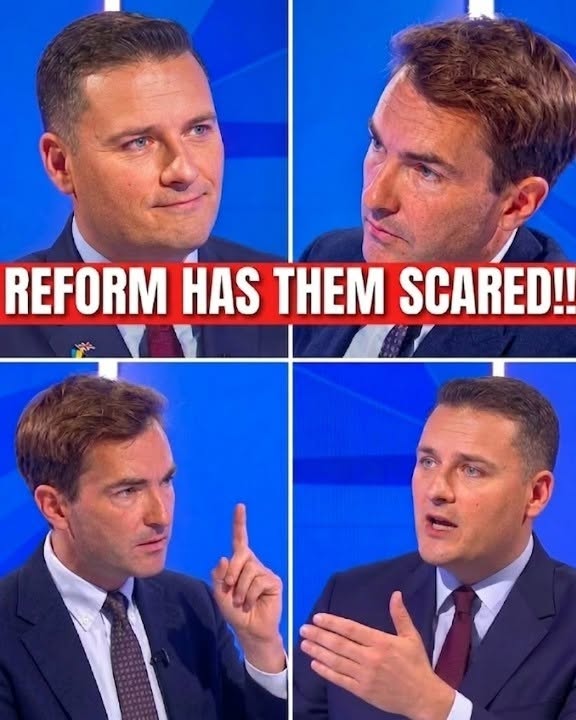

Labour Faces Fresh Infighting Claims as Wes Streeting Defends His Role After Cabinet Comeback
Labour is facing renewed accusations of internal chaos after Wes Streeting returned to the Cabinet under Prime Minister Andy Burnham, months after his dramatic break with Keir Starmer and a bitter leadership battle that exposed deep divisions inside the party.
The latest row centres on claims that loyalists left outside government are furious after being “banished to the wilderness” in Burnham’s reshuffle, while some backbenchers are reportedly preparing to cause trouble over the autumn Budget. Critics describe the atmosphere as revenge politics. Labour insiders insist the new government is focused on stability, defence, public services and economic renewal.
The controversy has placed Streeting back in the spotlight. He is now Defence Secretary, a major comeback after resigning as Health Secretary earlier this year and telling Starmer he had lost confidence in his leadership. GB News reported in May that Streeting quit with a blistering resignation letter accusing Starmer’s government of “drift” and a “vacuum” of vision, while saying it would be “dishonourable and unprincipled” to remain in post after losing confidence in the prime minister.
Now, with Streeting back at the top table, critics are asking whether Labour has healed — or merely buried its civil war under new job titles.
Streeting’s Fall, Challenge and Return
Streeting’s political journey over the past year has been one of the most dramatic inside Labour.
Under Starmer, he was one of the government’s most high-profile ministers and was widely seen as a future leadership contender. In May 2026, he broke publicly with Starmer, resigned as Health Secretary and confirmed he had told the then prime minister he would challenge him for the Labour leadership during a short Downing Street meeting. The Independent reported that Streeting later told BBC Radio 4’s Today programme he had been “very honest” with Starmer about where he believed the government was going wrong, adding: “I don’t think there’s anything wrong with ambition.”
That challenge placed Streeting at the centre of Labour’s factional crisis.
The Straits Times described him as a former Starmer ally turned rival, noting that his resignation came during a period of deep weakness for the prime minister and that Streeting’s candidacy would likely face resistance from parts of Labour’s left.
But the story did not end with Starmer.
After Andy Burnham became prime minister, Streeting was brought back as Defence Secretary. The Times reported that Burnham appointed Streeting to the defence brief during his first Cabinet formation, replacing Dan Jarvis, while John Healey was appointed Chancellor and several major Starmer-era figures exited government.
That appointment has now become one of the most controversial symbols of Burnham’s attempt to unite Labour.
Why Some Labour MPs Are Angry
The anger among some Labour MPs is not hard to understand.
Every reshuffle creates winners and losers. But this one followed months of leadership plotting, resignations, briefings and factional suspicion. For MPs loyal to Starmer, Streeting’s return to Cabinet may feel like a reward for turning against the previous prime minister.
For Burnham loyalists, the appointment may look pragmatic: Streeting is experienced, media-savvy, and regarded by supporters as one of Labour’s strongest communicators.
For those left out, however, the message may feel brutal.
They may ask why loyalty was punished while rebellion was rewarded.
That is the emotional core of the alleged backbench anger.
The “Revenge” Budget Threat
The autumn Budget now looms as a possible flashpoint.
Budgets are always moments of danger for governments, especially when public finances are tight. Tax rises, welfare changes, defence spending, housing commitments and public-sector pay can all trigger rebellions from different wings of the party.
Labour had already faced major anxiety over a previous Budget under Starmer. In November 2025, the Financial Times reported that internal speculation about a possible Streeting-linked challenge intensified ahead of a critical Budget, with concerns over tax rises, Labour’s falling poll numbers and pressure from Reform UK.
That history matters because it shows how Budget pressure can turn ordinary discontent into leadership danger.
Now Burnham faces a similar test. If MPs who feel excluded decide to rebel, the Budget could become the first major test of his authority.
The danger is not necessarily that the government collapses. Labour still has a large parliamentary base. The danger is that internal dissent undermines the image of unity Burnham is trying to project.
Streeting’s Defence
Streeting’s defence is likely to be simple: he acted on principle.
When he resigned under Starmer, he said he had lost confidence in the prime minister’s leadership and believed Labour needed a serious debate about its future. His supporters argue that he did what senior politicians are often criticised for failing to do — he made his position clear, accepted the risk and then returned to serve under a new prime minister.
His critics see it differently.
They argue that Streeting turned against a leader who had given him senior office, then found his way back into power after Starmer fell. In their view, the language of integrity cannot erase the appearance of ambition.
Both interpretations will now follow him into the Ministry of Defence.
A Difficult Defence Brief
Streeting’s new job is not symbolic. Defence is one of the hardest briefs in government.
In a speech at the Farnborough International Air Show on 22 July 2026, Streeting framed defence as central to jobs, growth, re-industrialisation and national security. He said investment had to be matched by modernisation, arguing that “modernisation without investment is impractical, but investment without modernisation is irresponsible.”
That speech shows how Burnham’s government wants to link defence spending to economic renewal.
But it also creates political risks. If the government increases defence spending while asking for restraint elsewhere, Labour MPs on the left may push back. If spending promises appear unfunded, fiscal hawks may object. If welfare or tax decisions are linked to defence priorities, the Budget could become explosive.
Streeting has already been associated with arguments that welfare spending may need to be cut to fund defence. The Straits Times reported that he had previously argued money for defence had “to come from somewhere,” making him a divisive figure within the centre-left Labour Party.
That is why his appointment matters beyond personality politics.
It signals a direction.
Old Wounds From the Starmer Era
Labour’s internal wounds did not begin with Burnham.
In late 2025, Streeting publicly denied plotting against Starmer after reports of a No. 10 operation against him. The Guardian reported that he condemned anonymous briefings as “self-defeating” and evidence of a toxic culture inside Downing Street, while insisting he was loyal at that time.
The Sun reported that Streeting demanded action against No. 10 “traitors” who he said had framed him as part of a plot, intensifying Labour’s civil war ahead of a difficult Budget.
Those episodes created lasting mistrust.
Some MPs believed Downing Street was briefing against potential successors. Others believed ambitious ministers were manoeuvring while the government struggled.
Burnham inherited that atmosphere. He did not create all of it. But he now owns the task of managing it.
Burnham’s Gamble
Burnham’s appointment of Streeting can be read two ways.
It may be a unity move: bring rivals into the tent, use their strengths and prevent factional warfare.
Or it may be a provocation: reward a former challenger while leaving loyalists outside government.
The success of the strategy depends on whether Burnham can make the Cabinet look like a team rather than a settlement of scores.
That will be tested quickly.
If the government delivers on housing, cost of living, defence and public services, internal anger may fade. If the Budget disappoints or polling worsens, every excluded faction will look for leverage.
The Bigger Problem: Labour’s Identity Crisis
Behind the personality drama lies a deeper question: what is Labour now?
Is it a party of fiscal discipline and defence expansion?
A party of social housing and regional renewal?
A party of welfare reform?
A party of public service rebuilding?
A party that can defeat Reform UK on borders, patriotism and security without abandoning progressive values?
Streeting represents one answer: tough-minded, media-friendly, reformist, pro-defence and comfortable challenging parts of the Labour left.
Burnham represents another: regional, communitarian, interventionist and focused on housing, public services and working-class identity.
The backbench rebellion threat shows that not everyone inside Labour accepts the emerging settlement.
Conclusion: Labour’s Civil War Is Not Over
The latest claims of backbench anger and Budget revenge show that Labour’s internal crisis did not end when Andy Burnham entered Downing Street.
Wes Streeting’s return as Defence Secretary has reopened old questions about loyalty, ambition and whether rebellion is now rewarded inside the party.
Supporters say Burnham is building a broad Cabinet and using strong talent wherever he finds it.
Critics say Labour loyalists have been pushed aside while former rebels are promoted.
The truth is that Labour is still recovering from a bruising leadership collapse, and the autumn Budget may reveal whether the party has genuinely united or merely paused its civil war.
Streeting says he acted with integrity.
His critics see betrayal.
Burnham wants discipline.
Backbenchers want influence.
And voters watching from outside Westminster may ask a simpler question: while Labour fights itself, who is governing the country?