
Westminster Divided as Reform UK Renews Call to Leave the European Court of Human Rights Amid Small Boats Debate
Britain’s long-running debate over irregular migration has once again intensified after Reform UK renewed its call for the United Kingdom to withdraw from the European Court of Human Rights (ECtHR), arguing that such a move would allow the government to implement tougher measures against people arriving in small boats across the English Channel. The proposal has generated immediate political controversy, with supporters describing it as a necessary step to restore border control, while critics argue it would have profound legal, diplomatic, and constitutional consequences. Although the announcement has reignited fierce public debate, whether leaving the ECtHR would permanently stop small boat crossings remains a matter of political opinion rather than an established fact.
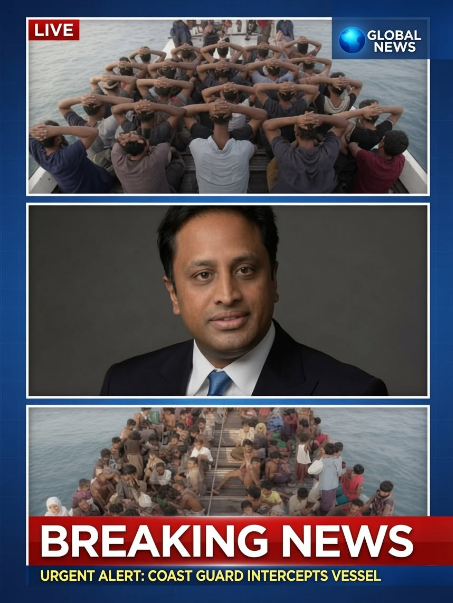
The issue of small boat crossings has become one of the defining political challenges facing successive British governments. Over recent years, thousands of migrants and asylum seekers have attempted the dangerous journey across the Channel in inflatable boats, often organized by sophisticated criminal smuggling networks operating across Europe. Government ministers from different administrations have repeatedly pledged to reduce the crossings through stronger enforcement, closer cooperation with France, tougher immigration legislation, and expanded international agreements. Despite these efforts, the issue continues to dominate political discussion and remains one of the most contentious topics in British public life.
Reform UK argues that Britain’s current legal framework prevents authorities from acting as decisively as they should. Party leaders have repeatedly claimed that international human rights
obligations, particularly those associated with the European Convention on Human Rights and interpreted by the European Court of Human Rights in Strasbourg, restrict the government’s ability to remove people who arrive illegally or whose asylum claims have been rejected. According to Reform UK, leaving the ECtHR would provide Parliament with greater freedom to design immigration policies focused primarily on deterrence, rapid removals, and stricter border enforcement.
Supporters of Reform UK’s position argue that migration policy should ultimately be determined by elected lawmakers rather than international judges. They contend that Parliament should have the final authority to decide who may remain in the country, particularly in cases involving illegal entry. Some supporters also believe that tougher deportation policies would weaken the business model of organized smuggling gangs by reducing the likelihood that migrants who cross illegally would be permitted to remain in Britain while their claims are processed. In their view, restoring stronger national control over immigration policy is essential to rebuilding public confidence in the asylum system.
Critics strongly dispute these arguments. Constitutional lawyers, refugee organizations, and many opposition politicians maintain that leaving the European Court of Human Rights would not automatically remove Britain’s obligations under domestic law or international refugee conventions. They argue that many legal protections affecting asylum seekers arise from multiple sources, including the UK’s own Human Rights Act, the 1951 Refugee Convention, and other international agreements. According to these critics, withdrawing from the ECtHR would therefore be far more legally complex than campaign slogans often suggest.
The distinction between the European Court of Human Rights and the European Union is another important aspect of the debate. Although both institutions are frequently discussed together in political discourse, they are separate organizations with different legal foundations. The European Court of Human Rights belongs to the Council of Europe rather than the European Union. Britain remained a member of the European Convention on Human Rights after leaving the EU through Brexit. Consequently, proposals to withdraw from the ECtHR concern Britain’s human rights commitments rather than its relationship with the European Union itself.
Reform UK’s proposal has also revived discussion about the role of the Human Rights Act 1998, which incorporates many Convention rights into domestic British law. Some advocates of withdrawal argue that leaving the Convention should be accompanied by replacing the Human Rights Act with a new British Bill of Rights. Others believe Parliament could reform domestic legislation without necessarily withdrawing from the Convention altogether. These constitutional questions remain subjects of significant legal and political disagreement.
Government ministers have consistently stated that reducing illegal migration remains one of their highest priorities. Current and previous administrations have introduced legislation designed to strengthen border enforcement, accelerate asylum decisions, expand detention capacity, and increase returns of individuals with no legal right to remain in the United Kingdom. At the same time, ministers have emphasized cooperation with France and other European partners in disrupting criminal smuggling organizations operating across the Channel. The effectiveness of these measures continues to be debated by political parties across the spectrum.
Opposition parties generally reject Reform UK’s proposal to leave the European Court of Human Rights. Many argue that Britain’s international reputation has historically been strengthened by its commitment to the rule of law and international human rights standards. They warn that withdrawing from the Convention could affect diplomatic relationships, judicial cooperation, and Britain’s broader standing within Europe. Critics also argue that many of the operational challenges surrounding migration-including asylum processing backlogs and international cooperation-would remain even if Britain left the Court.
Human rights organizations emphasize that international law distinguishes between individuals who enter a country irregularly and those who may nevertheless qualify for refugee protection. Under the Refugee Convention, people seeking asylum may be entitled to have their claims examined regardless of the manner in which they entered the country. Advocacy groups argue that any reforms must continue to respect due process, individual assessments, and protections against returning individuals to countries where they face persecution or serious harm. These organizations maintain that border security and humanitarian obligations should not be viewed as mutually exclusive objectives.
Immigration specialists also caution that migration flows are influenced by numerous factors extending beyond domestic legislation. Conflicts, political instability, economic hardship, family reunification, and organized criminal smuggling all contribute to migration pressures. Experts note that changes in one country’s asylum system can influence migration routes, but they rarely eliminate migration altogether. Consequently, many analysts believe that any long-term strategy will require a combination of stronger enforcement, international cooperation, more efficient asylum processing, and measures targeting criminal trafficking networks.
Public opinion remains deeply divided on the issue. Opinion surveys have consistently shown that immigration ranks among the most important concerns for many British voters, although attitudes differ regarding the appropriate policy response. Some citizens favor significantly stricter border controls and more rapid removals of those arriving illegally. Others prioritize maintaining Britain’s humanitarian obligations while improving the efficiency of the asylum system. These differing priorities have contributed to increasingly polarized political debate ahead of future elections.
The language surrounding immigration has itself become a subject of controversy. Headlines describing proposals as a “nuclear option” or promising to “stop the boats forever” reflect political messaging rather than verified outcomes. Whether any particular policy would permanently end small boat crossings cannot be established in advance. Previous governments have introduced numerous initiatives intended to deter illegal crossings, with varying levels of success. As a result, analysts generally caution against treating definitive political promises as guaranteed policy outcomes.
The renewed attention given to Reform UK’s proposal also reflects broader debates about sovereignty that have continued since Brexit. Supporters often argue that leaving the European Union was intended to restore parliamentary control over British laws and borders, and that withdrawing from the European Court of Human Rights would represent the next logical step in that process. Opponents respond that international legal commitments remain an important safeguard for individual rights and should not be abandoned in response to contemporary political pressures. These competing visions of sovereignty continue to shape many aspects of British constitutional debate.
Ultimately, Reform UK’s proposal has become another focal point in Britain’s wider conversation about migration, border security, human rights, and national sovereignty. The party’s call to withdraw from the European Court of Human Rights represents a significant political proposal rather than an enacted government policy. Whether such a step would substantially reduce irregular migration-or produce broader legal and diplomatic consequences-remains the subject of ongoing political disagreement, legal analysis, and public debate. As Parliament, political parties, legal experts, and voters continue to examine the proposal, the future direction of Britain’s immigration system is likely to remain one of the country’s most consequential and closely watched political issues.