Polish Politician’s Remarks on Mosques and Immigration Spark Intense Debate Across Europe
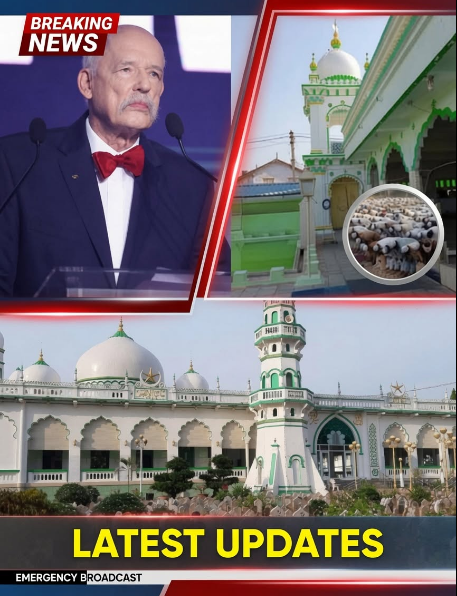
Comments made by Polish politician Janusz Korwin-Mikke regarding Islam, mosque construction, and immigration have ignited widespread political debate, drawing strong reactions from across the ideological spectrum. His remarks, which have circulated extensively on social media and in news reports, have prompted renewed discussion about freedom of religion, immigration policy, national
security, and the limits of political rhetoric in democratic societies. Supporters and critics alike have weighed in, illustrating how questions surrounding migration and cultural integration continue to divide public opinion across Europe.
The controversy began after Korwin-Mikke reportedly called for restrictions on the construction of mosques and made additional comments suggesting forceful opposition if necessary. The statements quickly attracted significant attention online, with excerpts shared widely on platforms including X, Facebook, YouTube, and other social media sites. As the remarks spread, they became the focus of broader discussions extending well beyond Poland, reflecting ongoing debates taking place throughout Europe over immigration, religious freedom, and national identity.
Supporters of Korwin-Mikke argued that his comments reflect concerns held by some voters regarding immigration, integration, and the preservation of national culture. They contend that governments should have the authority to determine immigration policy, regulate development projects through existing planning laws, and address public concerns about social cohesion and security. Some supporters also argue that politicians should be free to express controversial opinions without fear of political backlash, provided those opinions remain within the law.
Critics, however, strongly condemned both the tone and substance of the remarks. Many argued that calls to prohibit places of worship or language suggesting military opposition risk inflaming tensions and undermining principles of religious freedom protected by democratic constitutions and international human rights agreements. Several commentators emphasized the importance of distinguishing between debates over immigration policy and the rights of individuals to practice their religion peacefully.
The incident has once again highlighted the complex relationship between immigration policy and broader questions of national identity. Across Europe, governments continue to face difficult decisions regarding border management, asylum systems, labor migration, integration policies, and demographic change. These issues have become increasingly prominent in election campaigns and parliamentary debates, with different political parties proposing sharply contrasting approaches.
Religious freedom remains another central aspect of the discussion. Most European constitutions guarantee the right to practice religion, while also allowing governments to regulate construction projects-including religious buildings-through planning, zoning, and safety laws that apply to all developments. Legal experts note that any restrictions targeting a specific religion would generally need to comply with constitutional protections and applicable national and international legal standards.
The controversy has also fueled debate over political rhetoric. Analysts note that highly charged language often attracts considerable public attention and generates extensive online engagement. While supporters may view such rhetoric as direct and uncompromising, critics argue that
emotionally charged statements can deepen political polarization and make constructive dialogue more difficult.
Social media played a major role in amplifying the discussion. Short video clips and quotations spread rapidly across digital platforms, reaching audiences far beyond Poland. Communication experts caution, however, that isolated excerpts may not always convey the full context of longer interviews or speeches, encouraging viewers to consult complete recordings and reliable reporting before drawing conclusions.
Political observers note that debates surrounding immigration and integration are not unique to Poland. Similar discussions are taking place across many European countries, where governments face differing public expectations regarding border control, humanitarian responsibilities, labor shortages, public services, and social integration. These competing priorities have produced diverse policy responses throughout the European Union and neighboring states.
Supporters of more restrictive immigration policies frequently argue that governments should prioritize border security, effective enforcement of immigration laws, and integration measures that encourage shared civic values. Others maintain that migration has contributed economically and culturally to European societies and stress the importance of balancing security concerns with commitments to human rights, international law, and religious liberty.
The remarks have also prompted discussion about the responsibilities of political leaders during periods of heightened public tension. Many commentators argue that elected officials play an important role in shaping public discourse and therefore have a responsibility to communicate carefully, particularly on issues involving religion and minority communities. Others emphasize that robust political debate—including controversial viewpoints-is an important feature of democratic societies, provided it remains within legal boundaries.
Legal scholars point out that European countries maintain different constitutional frameworks governing freedom of expression and restrictions on speech. While political speech generally receives strong legal protection, governments may also enforce laws addressing incitement, discrimination, or public order where applicable. Whether particular statements violate those standards depends on the specific legal framework and factual circumstances in each jurisdiction.
The reaction from the public has reflected Europe’s diverse political landscape. Some citizens praised Korwin-Mikke for addressing issues they believe mainstream politicians avoid, while others
expressed concern that such rhetoric could contribute to social division and increase tensions between communities. These contrasting responses demonstrate the continued sensitivity of debates surrounding immigration, religion, and national identity.
Independent analysts emphasize the importance of separating verified facts from opinion during highly charged political controversies. While political figures are entitled to advocate policy changes, claims regarding the likely consequences of those policies should ideally be assessed using evidence, official data, legal analysis, and informed public debate rather than emotion alone.
Ultimately, the controversy surrounding Janusz Korwin-Mikke’s remarks has become part of a much wider European conversation about immigration, religious freedom, integration, and political leadership. Regardless of differing opinions on his statements, the episode illustrates how issues touching on identity, security, and fundamental rights continue to generate strong public interest. As debates over these subjects evolve, careful examination of the facts, respect for democratic institutions, and informed civic discussion remain essential to understanding the complex challenges facing European societies today.