A sharp debate regarding the future of political funding in the UK erupted during a recent televised exchange between Reform UK leader Nigel Farage and John Cryer, the former chairman of the parliamentary Labour Party.

The confrontation highlighted deep partisan divisions over proposed changes to campaign finance rules, following massive recent donations to Reform UK.
The debate centered on recent actions by the Labour government, which Farage characterized as an attempt to retroactively alter regulations to target his party’s financial backing. Farage accused the government of acting like a “communist regime” by seeking to pass legislation specifically designed to block two major individual donors who recently provided Reform UK with £72 million.
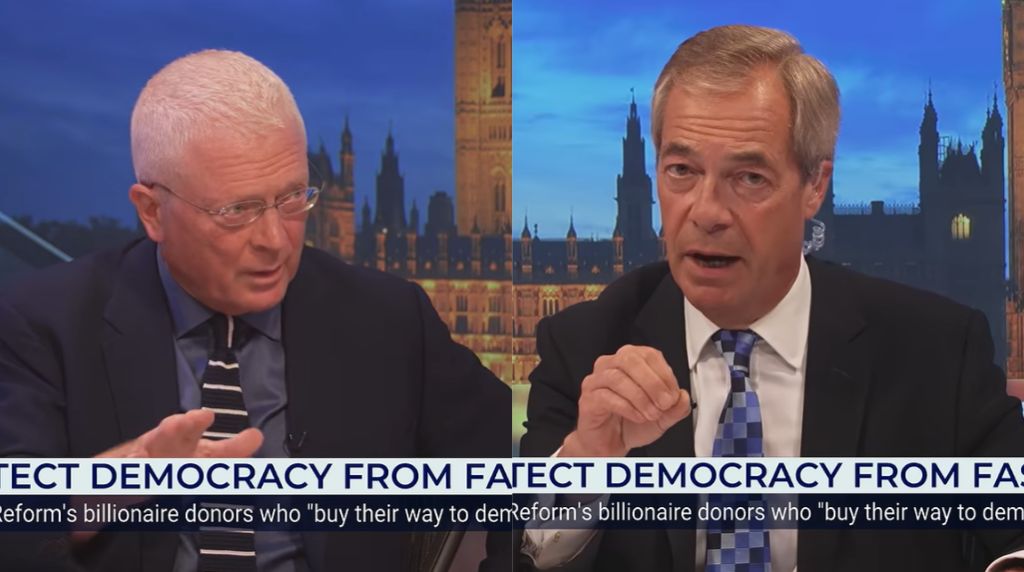
Cryer defended the government’s direction, arguing that the proposed changes are rooted in the Rycroft Review, published in late March, which recommended amending legislation to tackle foreign donations.
Farage immediately contested this characterization, emphasizing that the donors in question are British citizens who reside abroad, not foreign nationals. “They’re not foreign, they’re British, they live abroad,” Farage stated. He defended the right of British expatriates to participate in the domestic political process through donations.
Cryer maintained his position, arguing that significant political influence through financial contributions should require domestic residency. “If you want to be involved in British politics and you want to donate… you should live here,” Cryer argued, suggesting it is inappropriate for individuals who choose not to live under a government to exert massive financial influence over its elections.
The conversation then shifted to the broader issue of donation caps and the role of trade unions in funding the Labour Party. Farage stated he had “no problem” with a general cap on donations, provided it applied equally to all entities, including trade unions.
Cryer attempted to draw a distinction between direct political donations and the “affiliation fees” paid by trade unions to the Labour Party, which he described as indirect membership fees. He noted that while affiliation fees provide steady income, unions typically increase direct donations during election years.
Farage dismissed the distinction, arguing that “it’s big money” regardless of how it is categorized. He warned that imposing a cap on individual or corporate donations—citing a proposed £100,000 limit—while allowing unions to contribute millions would create an unbalanced system. “If we have a donations cap… and yet the unions can give millions, that doesn’t work,” Farage argued.
Both men agreed on one point: their opposition to state-funded political parties. Farage warned that strict donation limits would inevitably lead down the route of state funding, while Cryer stated he did not want his taxes funding parties he opposed, such as the Conservatives or Reform UK.
The exchange highlights the escalating tension between Reform UK and the Labour government over campaign finance. As the government considers new legislation based on the Rycroft Review, Reform UK continues to aggressively defend its recent fundraising success as a necessary equalizer in British politics.