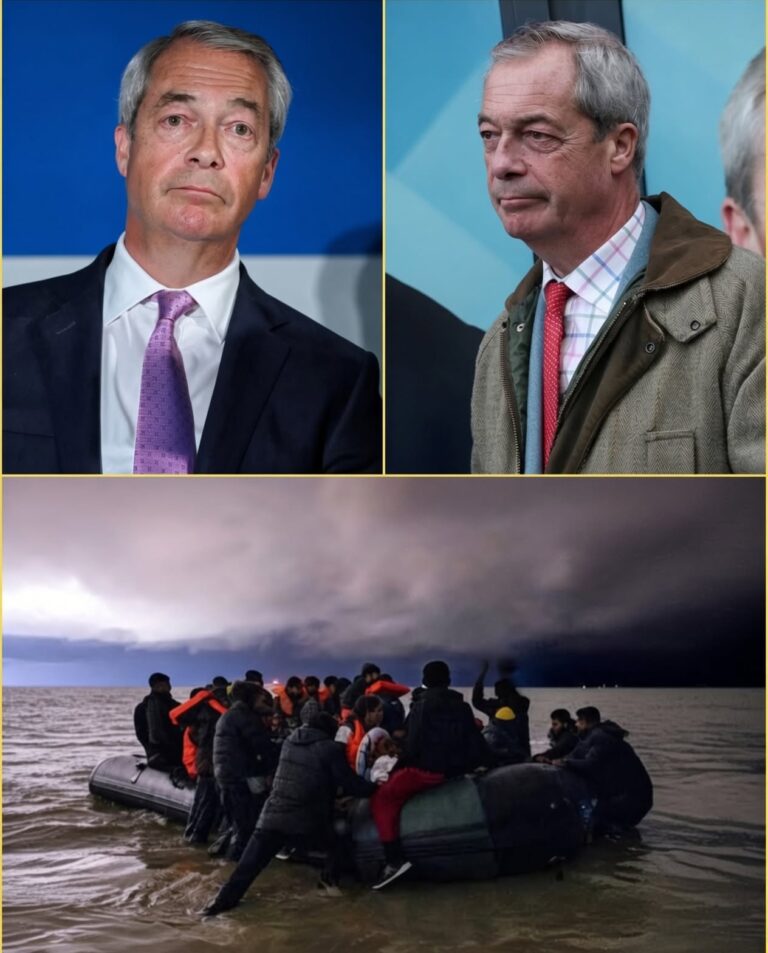

CHILLING COVER-UP SCANDAL: Zia Yusuf has just hurled explosive accusations at Labour over hidden crime and immigration stats—and the terrifying secret details secretly scrubbed from official reports have left political insiders completely frozen in disbelief…

An explosive online claim alleges that Reform UK politician Zia Yusuf has accused Labour of concealing sensitive crime and immigration statistics. The allegation raises serious questions about government transparency, public safety and the reliability of official data. But without an identifiable statement, supporting documents or evidence of deliberate suppression, the alleged cover-up remains unverified.
A Political Allegation That Demands Answers
A dramatic headline has placed Zia Yusuf at the centre of a new controversy involving crime statistics, immigration and the Labour Party.
According to the circulating claim, Yusuf has made serious accusations about information allegedly removed from official government reports.
The headline suggests that politically sensitive details were deliberately concealed, leaving the public unaware of important facts.
If supported by evidence, such allegations would raise legitimate concerns about transparency and accountability.
However, the supplied account does not identify which statistics were supposedly hidden, which reports were altered or who authorised any changes.
It also provides no authenticated quotation from Yusuf, official correspondence or independent investigation establishing that a cover-up occurred.
There is currently insufficient evidence in the supplied material to conclude that Labour deliberately concealed crime or immigration statistics.
The allegation nevertheless touches on an important public issue: how governments collect, publish and explain information that influences national debates.
Who Is Zia Yusuf?
Zia Yusuf is a British businessman and political figure closely associated with Reform UK.
He became chairman of the party in 2024, following its emergence as a significant force in British electoral politics.
Yusuf has been involved in the party’s organisational development and public communications, including its approach to immigration, public spending and government accountability.
His political profile reflects Reform UK’s broader criticism of the established political parties.
The party has consistently argued for tighter immigration controls and greater scrutiny of government performance.
Supporters regard its approach as a necessary challenge to Westminster politics.
Critics question some of its policy proposals and the way immigration-related concerns are presented.
Within that political environment, allegations about missing official statistics can attract immediate attention.
However, a politician’s prominence does not establish the accuracy of every accusation attributed to them.
The original statement and its supporting evidence would need to be examined before drawing conclusions.
What Does the Alleged Cover-Up Involve?
The most important unanswered question concerns the information supposedly removed from official reports.
The circulating headline refers broadly to crime and immigration statistics but identifies no specific dataset.
That distinction matters because these subjects are measured through different administrative systems.
Crime statistics may come from police-recorded incidents, victim surveys, court records or criminal justice databases.
Immigration statistics may concern visas, asylum applications, border arrivals, residence permits or population estimates.
These measures cannot be treated as interchangeable.
For example, police-recorded crime figures reflect offences recorded by law enforcement agencies, while survey-based estimates can capture experiences that were never reported to police.
Similarly, an asylum application is not equivalent to an illegal border crossing.
Without knowing which figures are being discussed, it is impossible to assess whether information was omitted, revised, delayed or deliberately suppressed.
How Crime Statistics Are Produced
In England and Wales, the Office for National Statistics publishes major statistical releases concerning crime.
These draw on sources including the Crime Survey for England and Wales and police-recorded crime data.
The two approaches measure different aspects of offending.
Victim surveys can provide insights into crimes that may never come to police attention.
Police records, meanwhile, are influenced by reporting behaviour, recording practices and operational changes.
Certain offences are better measured through one source than another.
Consequently, apparent differences between statistical releases do not automatically indicate wrongdoing.
Data may also be revised when new information becomes available or recording methods improve.
Such changes should be explained transparently.
A credible allegation of manipulation would require evidence showing that figures were intentionally altered or withheld to mislead the public.
The supplied headline does not establish that this happened.
Immigration Data and Public Understanding
Immigration statistics are another frequent source of political disagreement.
In the United Kingdom, official information is published by bodies including the Home Office and the Office for National Statistics.
Different releases measure different things.
Visa statistics describe permissions granted under particular immigration routes.
Asylum statistics concern applications, decisions and related processes.
Population estimates and migration figures attempt to measure broader demographic changes.
These categories can overlap, but they are not identical.
Confusion arises when figures from different sources or time periods are compared without explanation.
A headline might describe a change in visa grants as though it represented an equivalent change in net migration.
Similarly, an administrative backlog can affect the number of decisions recorded during a particular period.
These methodological issues deserve scrutiny, but they are not proof of concealment.
The Sensitive Debate Over Crime and Immigration
The relationship between immigration and crime is politically sensitive and analytically complex.
Public discussion sometimes treats migrants as a single category, even though people arrive under very different circumstances.
Students, workers, refugees, asylum seekers and people without lawful immigration status have distinct legal and social situations.
Crime data also varies according to offence type, geography, age, socioeconomic circumstances and recording practices.
A responsible analysis must account for these factors.
It should distinguish allegations, arrests, charges and convictions rather than treating them as equivalent measures of criminal behaviour.
Where reliable data identifies a specific public safety problem, governments should address it.
Equally, broad claims about entire communities should not be made without appropriate evidence.
Transparency is essential precisely because inaccurate statistics can undermine both public confidence and fair policymaking.
What Would Constitute a Genuine Cover-Up?
A government cover-up is a serious allegation.
It implies more than an incomplete table, an administrative delay or a disputed statistical methodology.
To establish deliberate concealment, investigators would need evidence that relevant information existed, was intentionally withheld or altered, and that the action was designed to mislead.
Such evidence might include internal correspondence, conflicting versions of reports, documented instructions or findings from an independent investigation.
An unexplained omission could justify questions, but it would not by itself prove political interference.
Official statistics are also produced within institutional frameworks intended to protect professional independence.
The UK Statistics Authority and the Office for Statistics Regulation have roles in promoting standards and scrutinising the use of official statistics.
Where concerns arise, those mechanisms can provide an avenue for examination.
Why Labour Faces Scrutiny
As a governing party, Labour is accountable for the policies and administrative decisions taken under its leadership.
That includes decisions concerning immigration management, policing and public information.
Opposition parties are entitled to question whether the government is publishing relevant statistics accurately and promptly.
They may also challenge whether existing data provides an adequate picture of public safety.
However, there is a difference between criticising a government’s policy choices and accusing it of intentionally hiding evidence.
The latter requires specific proof.
The circulating headline does not identify any Labour minister, department or official responsible for the alleged suppression.
Nor does it establish when the supposed alteration occurred.
Without those details, the accusation cannot fairly be presented as a confirmed scandal.
The Political Power of Missing-Data Claims
Allegations about hidden statistics can be especially influential because they appeal to concerns about government secrecy.
If people already distrust political institutions, a suggestion that important numbers have disappeared may appear plausible.
The phrase “scrubbed from official reports” creates an impression of deliberate wrongdoing.
But it can also obscure less dramatic explanations.
Data may be moved to a separate publication, withdrawn temporarily for quality checks or presented differently following methodological changes.
Sometimes a figure was never collected in the form being demanded.
None of these possibilities should be assumed without evidence.
The appropriate response is to identify the missing information and establish why it is unavailable.
What Evidence Is Needed?
A reliable investigation would begin with Yusuf’s original statement.
Journalists would need to establish precisely what he alleged and whether he identified supporting documents.
The relevant government reports should then be examined, including earlier versions where available.
Publication dates, methodological notes and explanations of revisions could help clarify whether information was removed.
If the figures were genuinely withheld, the responsible department should be asked to explain why.
Independent statistical authorities could also assess whether official standards were followed.
Crucially, any conclusion should distinguish a failure of transparency from deliberate political manipulation.
These are related but different allegations.
Why Public Trust Depends on Reliable Statistics
Accurate data is essential to democratic decision-making.
Governments use statistics to allocate resources, evaluate policies and identify emerging problems.
Journalists rely on them to hold officials accountable.
Citizens use them to assess competing political claims.
When information is incomplete or difficult to interpret, public confidence can weaken.
That is why statistical transparency matters regardless of which party holds power.
Labour, the Conservatives, Reform UK and other political organisations should all be subject to the same expectations of accuracy when presenting numerical claims.
A strong public debate requires more than dramatic accusations.
It requires accessible evidence, clear definitions and a willingness to correct mistakes.
Conclusion: Serious Questions, but No Verified Cover-Up
The circulating headline alleging that Zia Yusuf exposed hidden crime and immigration statistics presents a potentially serious accusation against Labour.
If official information had been deliberately suppressed for political purposes, that would warrant independent investigation and public accountability.
However, the supplied account identifies no specific report, missing dataset, responsible official or documentary evidence.
It also does not establish the precise statement supposedly made by Yusuf.
There is therefore no sufficient basis to conclude that Labour orchestrated a cover-up of crime or immigration statistics.
The wider issue remains important.
The public deserves accurate information about crime, immigration and government performance.
Political leaders should be able to challenge official figures, while statistical authorities should explain their methods and corrections openly.
But transparency cannot be defended through unsupported allegations.
The most credible path forward is to examine the underlying records, establish the facts and ensure that public debate is guided by evidence rather than sensational claims.