DANNY TOMMO DABS HIS EYES IN COURT AS ‘DINGHY SLASHING’ CASE TAKES DRAMATIC TURN
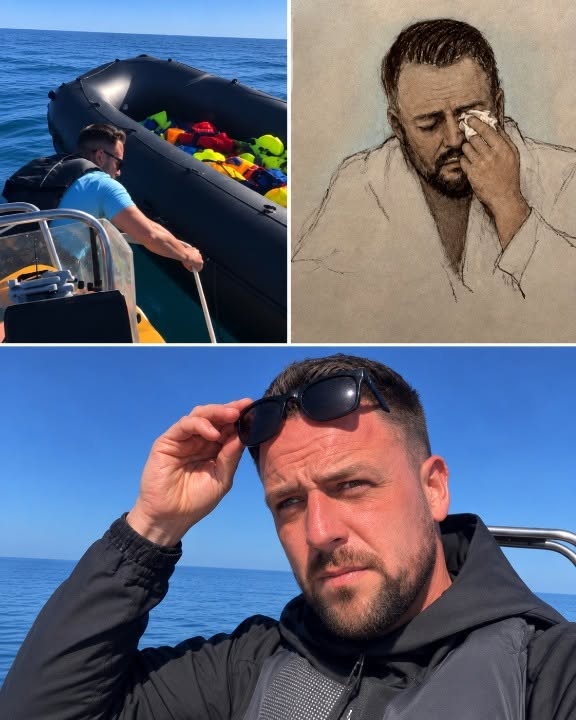
Danny Tommo Remanded in Custody as Channel ‘Dinghy Slashing’ Case Moves Toward Crown Court Trial
PORTSMOUTH — Anti-migrant activist Daniel Thomas, better known to supporters as Danny Tommo, will remain in custody after being refused bail as the criminal case surrounding an alleged incident involving a dinghy in the English Channel moves toward trial.
Thomas, 37, appeared by video link at Portsmouth Crown Court on September 29, following an earlier appearance at Basingstoke Magistrates’ Court. He faces allegations connected with an incident in the Channel on September 22 that was broadcast online and subsequently investigated by Hampshire Police.
The case has attracted substantial attention because of Thomas’s involvement in anti-migration activism and the politically charged debate surrounding small-boat crossings.
But the proceedings themselves concern specific criminal allegations, and Thomas denies wrongdoing.
An emotional moment in court
One relatively small moment during Thomas’s initial court appearance quickly attracted attention.
Appearing by video link at Basingstoke Magistrates’ Court on September 25, Thomas was seen dabbing his eyes with a tissue during the hearing. A court sketch distributed by PA depicted the moment.
The observation was also reported by the BBC and other news organisations.
The reason for Thomas’s apparent emotion cannot be established simply from his appearance, and it would be inappropriate to infer his state of mind from the gesture.
At his subsequent Crown Court appearance, Thomas appeared via video link from HMP Winchester and was reported holding a Bible. His application for bail was refused, meaning he will remain in custody while the proceedings continue.
What is Thomas accused of?
The principal charge is criminal damage.
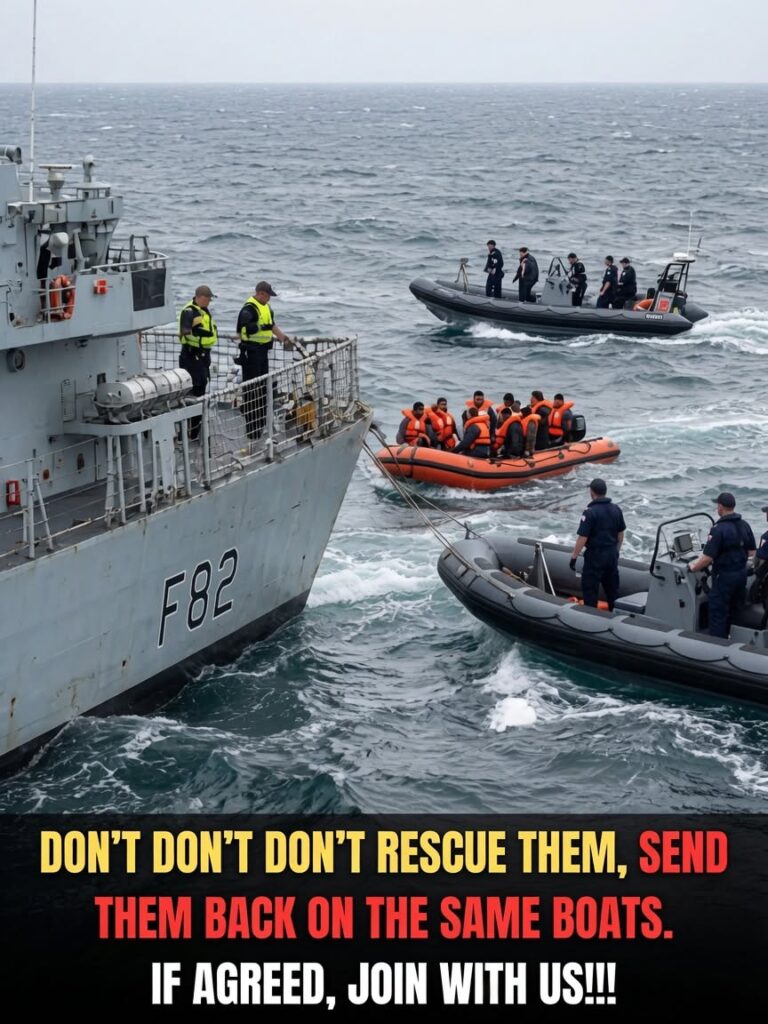
Prosecutors allege that Thomas damaged an inflatable boat in the English Channel on September 22. Video footage posted online appeared to show him approaching a dinghy and using a blade against it while an emergency or rescue worker was aboard.
According to reporting from the initial hearing, prosecutors told the court that a crew member was on the inflatable vessel while air could be heard escaping.
Thomas’s own livestream footage became central to public discussion of the incident.
The Guardian reported that the footage appeared to show Thomas approaching the dinghy and saying that he wanted to get rid of the boat. A rescue worker subsequently boarded it, and Thomas was recorded telling the person to leave the vessel.
The dinghy had reportedly been involved in transporting migrants across the Channel before the alleged damage occurred.
Thomas was arrested following the incident and subsequently charged.
Importantly, a criminal charge is an allegation rather than a finding of guilt. The prosecution will have to prove its case through the court process, and Thomas is entitled to the presumption of innocence unless and until convicted.
A second charge involving his phone
The Channel incident is not the only matter before the court.
Thomas has also been charged with failing to disclose the PIN for his mobile phone after receiving a police notice requiring him to do so.
That charge was brought under Section 53 of the Regulation of Investigatory Powers Act 2000.
At his September 25 appearance, Thomas pleaded not guilty to both the criminal-damage allegation and the charge relating to disclosure of his phone PIN.
The court was told that the criminal-damage matter could have been dealt with in the magistrates’ court. Thomas, however, elected to have the case tried before a jury at the Crown Court.
That decision moves the proceedings into their next, potentially much longer phase.
Why was he kept in custody?
After his initial appearance, Thomas was remanded in custody rather than released on bail.
At Portsmouth Crown Court on September 29, another application for bail was refused. Reporting from the hearing indicates that the judge stressed that political considerations were not part of the decision on bail.
That distinction matters because Thomas is not simply an anonymous criminal defendant.
He is associated with the Patriot Platform and has become a prominent figure in recent anti-migration demonstrations. He has participated in protests connected with migrant arrivals and Channel crossings, subjects that have generated intense political debate in Britain.
His supporters have consequently portrayed the case in political terms.
The legal proceedings, however, will ultimately turn on the charges, admissible evidence and applicable law rather than broader arguments about British immigration policy.
Supporters gather around the case
Thomas’s appearances have also attracted attention outside the courtroom.
Stephen Yaxley-Lennon, widely known as Tommy Robinson, attended the Basingstoke hearing and sat in the public gallery. Supporters of Thomas also gathered outside the court, while hundreds had previously assembled outside a police investigation centre in Basingstoke following his arrest.
Police increased their presence amid the demonstrations.
The case therefore sits at the intersection of two very different issues: an individual criminal prosecution and a much wider national argument over migration across the English Channel.
Keeping those questions separate will become increasingly important as the case progresses.
Thomas’s political views do not determine whether he committed the offences alleged against him. Equally, arguments about immigration policy do not resolve the factual and legal questions the jury may eventually be asked to decide.
What happens next?
The next significant stage is preparation for trial.
Thomas has entered not-guilty pleas, so prosecutors will be required to present evidence supporting the charges while the defence will have the opportunity to challenge the prosecution’s account and present its own case.
A provisional trial date has been set for March 1, 2027, according to reports from the Crown Court proceedings. A further hearing is expected on November 12.
Until then, Thomas is expected to remain in custody unless his legal position regarding bail changes.
The eventual trial may examine the circumstances surrounding the Channel encounter in considerably greater detail, including the video footage, the condition and ownership of the vessel, events involving the rescue worker and evidence connected with Thomas’s actions and intentions.
The separate allegation concerning access to his mobile phone will also remain part of the proceedings.
For the moment, however, the legal position is straightforward.
Daniel Thomas has been charged with criminal damage and with failing to disclose his phone PIN. He has pleaded not guilty. Bail has been refused, and the case is proceeding through the Crown Court.
The images of Thomas dabbing his eyes with a tissue — and later appearing from prison holding a Bible — may have become the most visually striking moments surrounding the proceedings.
But they do not determine the outcome.
That will depend on evidence presented in court, arguments from the prosecution and defence, and ultimately the decisions made through the judicial process.