“DEFENDER OF THE FAITH” OR “DEFENDER OF FAITHS”? KING CHARLES, CHRISTIANITY AND THE BATTLE OVER THE MONARCHY’S IDENTITY
“DEFENDER OF THE FAITH” OR “DEFENDER OF FAITHS”? KING CHARLES, CHRISTIANITY AND THE BATTLE OVER THE MONARCHY’S IDENTITY

Claims that King Charles III has abandoned his coronation commitment to Christianity are fuelling a wider argument about national identity, religious pluralism and the future of the Crown. But the constitutional reality is more complicated: Charles remains legally “Defender of the Faith” and Supreme Governor of the Church of England, even as he has deliberately presented the monarchy as a protector of religious freedom for people of many faiths—and none.
The words shouted outside Buckingham Palace were designed to shock.
“Charles is a traitor.”
For those making the accusation, the argument appears straightforward. King Charles III inherited a monarchy deeply intertwined with Christianity. At his coronation in 2023, he placed his hand on the Bible and took solemn oaths associated with the established Church of England.
Yet Charles has also spent decades promoting interfaith dialogue and has spoken repeatedly about protecting Britain’s religious diversity.
To some critics, that represents an unacceptable dilution of the monarch’s historic Christian role.
To supporters, it represents something very different: a Christian king performing his constitutional obligations while recognising that the country over which he reigns is religiously diverse.
The dispute has consequently become about much more than one phrase.
It touches upon one of the most difficult questions facing the modern British monarchy:
Can the Crown remain explicitly Christian while serving a country in which millions of citizens follow other religions—or no religion at all?
Before answering that question, however, one widely circulated claim needs an important correction.
King Charles has not formally changed his title from “Defender of the Faith” to “Defender of Faiths.”
His official constitutional position remains Christian.
And the coronation oath he took in 2023 remains unchanged.
What Charles Actually Swore at His Coronation
The coronation of Charles III on 6 May 2023 was unquestionably a Christian ceremony.
It took place in Westminster Abbey.
It was conducted by the Archbishop of Canterbury.
Charles was anointed with holy oil.
Biblical passages were read.
Christian prayers were offered.
The Eucharist formed part of the service.
And the King swore the legally prescribed Coronation Oath.
The Church of England’s official liturgy records Charles placing his hand on the Bible before making his promises.
One element concerned his responsibility toward the established Church.
The Church of England explains that Charles, like monarchs before him, undertook to maintain the settlement of the Church of England and its doctrine, worship, discipline and government as established by law.
That commitment was not removed.
It was not replaced with a generic multi-faith oath.
And Charles has not subsequently announced that he is abandoning it.
He Is Still “Defender of the Faith”
This is the most important factual distinction in the current controversy.
The Royal Family’s own official description continues to state:
“The Sovereign holds the title ‘Defender of the Faith and Supreme Governor of the Church of England’.”
The Church of England likewise explains that Defender of the Faith forms part of the King’s formal legal title.
So the claim that Charles has officially “downgraded” the title to “Defender of faiths” is misleading.
No such constitutional substitution has taken place.
The difference lies instead in how Charles interprets the broader responsibilities of a monarch in a religiously diverse country.
And that debate predates his accession by decades.
Where Did “Defender of Faiths” Come From?
The controversy has unusually deep roots.
Long before becoming King, Charles expressed interest in ensuring that the monarchy recognised Britain’s changing religious landscape.
He spoke extensively about Islam, Judaism and other religious traditions and cultivated relationships with religious leaders outside Anglican Christianity.
His comments over the years generated speculation that he wanted to reinterpret Defender of the Faith as something closer to defender of faith or defender of faiths.
That produced concern among some traditionalists.
If the monarch is Supreme Governor of the Church of England, they asked, how can he simultaneously position himself as an equal defender of every religion?
Charles’s eventual position became more nuanced.
He did not abandon the traditional title.
Instead, he presented his Anglican identity as compatible with protecting the religious freedom of others.
Christianity Remains Constitutionally Different
This point is sometimes lost in arguments about inclusion.
Britain is religiously diverse.
But England does not have a constitutionally neutral relationship with every religion.
The Church of England is established by law.
The monarch is its Supreme Governor.
Bishops sit in the House of Lords.
Senior episcopal appointments involve constitutional procedures connecting Church and Crown.
Ecclesiastical legislation has a distinctive relationship with Parliament.
The coronation itself is a Christian religious service.
That means Christianity—and specifically Anglican Christianity—continues to occupy a constitutional position that Islam, Hinduism, Sikhism, Judaism and other religions do not.
Whether that arrangement should continue is a legitimate political and constitutional question.
But it remains the current arrangement.
The Title Is Nearly 500 Years Old
“Defender of the Faith” has a complicated history.
Its origins lie with Henry VIII.
Pope Leo X granted Henry the title Fidei Defensor in 1521 after the king defended Catholic sacramental teaching.
That might seem ironic given what followed.
Henry subsequently broke with Rome.
Parliament then bestowed the title upon him in a different constitutional setting in 1546, and subsequent English—and eventually British—monarchs continued using it.
The monarchy’s relationship with Christianity consequently survived the Reformation, civil war, restoration, union and the transformation of Britain into a modern parliamentary democracy.
It is therefore understandable why traditionalists view the title as more than ceremonial decoration.
The Monarch Is Not Simply the “Head of All Religions”
Charles’s support for religious diversity does not make him constitutional leader of Britain’s other faiths.
He has no equivalent position in British Islam.
He does not govern Jewish religious institutions.
He is not the religious leader of Britain’s Hindus or Sikhs.
His constitutional role remains uniquely connected to the Church of England.
The Royal Household itself makes this distinction.
It describes both the King’s specific constitutional relationships with Britain’s established churches and his longstanding work supporting other faith communities.
Those are two different responsibilities.
Charles Sees Them as Compatible
Shortly after becoming King in September 2022, Charles explained how he understood that relationship.
Speaking to faith leaders at Buckingham Palace, he described Britain as a “community of communities.”
He said the sovereign possessed an additional responsibility to protect the country’s diversity, including maintaining space for religious belief and practice.
That was a revealing statement.
Charles was effectively saying:
his constitutional identity remains Anglican;
but his public responsibility extends to citizens who are not Anglican.
Critics see a contradiction.
Charles sees continuity.
The Coronation Explicitly Addressed Religious Freedom
This was also built into the 2023 coronation.
Immediately before the oath, the Archbishop of Canterbury referred explicitly to the established Church’s responsibility to help create an environment in which people of different faiths and beliefs could live freely.
That wording is important because it undermines the idea that multi-faith recognition was secretly introduced after Charles became King.
It was openly discussed during the coronation itself.
Yet the ceremony remained unmistakably Christian.
The King Was Anointed in a Christian Ceremony
The religious core of the coronation was not transformed into a generic celebration of spirituality.
The Church of England described it explicitly as a Christian service, centred on the anointing of the King and rooted in Christian symbolism.
The Crown Jewels themselves carry Christian symbolism.
The Sovereign’s Orb is surmounted by a cross.
During the coronation, Charles was reminded through the presentation of the Orb of the Christian understanding that earthly political authority is subordinate to God.
These were not minor details.
They were central to the ceremony.
So Has Charles “Pushed Christianity to the Back”?
That is ultimately an interpretation rather than a straightforward factual claim.
There is little basis for saying Charles has constitutionally removed Christianity from the monarchy.
He has done no such thing.
But critics are responding to something real:
Charles has deliberately emphasised religious pluralism more visibly than many traditionalists would prefer.
He regularly engages with leaders of different faiths.
He speaks about religious diversity.
He emphasises tolerance.
And he views protecting religious freedom as part of his sovereign responsibility.
Whether that represents weakening Christianity or applying Christian principles to a plural society depends heavily on one’s conception of monarchy.
Charles Continues to Speak Explicitly About Christianity
Evidence from the King’s own recent speeches complicates the narrative that he is embarrassed by Christianity.
During his April 2026 address to the United States Congress, Charles described the Christian faith as a “firm anchor and daily inspiration” in his life.
He also referred directly to Easter and explained how his Christian faith informed his hope for reconciliation and understanding.
At Easter in 2025, Charles issued an explicitly Christian message centred on Jesus, the Easter story and the biblical virtues of faith, hope and love.
Those are difficult statements to reconcile with the claim that Charles has simply abandoned his Christian identity.
But Notice What Else He Says
Charles regularly places Christian teaching alongside respect for other traditions.
His 2025 Easter message discussed Christian teachings about love while also acknowledging parallels with Jewish ethics, Islam and other religious traditions.
Similarly, his 2026 congressional address moved from his own Christian faith toward the importance of understanding among people of different religions.
That pattern is characteristic of Charles.
He begins from Christianity but reaches toward pluralism.
Traditionalists may dislike that approach.
But it is more accurate than saying he simply replaced Christianity with multiculturalism.
Queen Elizabeth II Was More Inclusive Than Some Remember
The contrast with Elizabeth II is also frequently exaggerated.
The late Queen had an unmistakably Christian personal faith.
Her Christmas broadcasts increasingly spoke explicitly about Jesus Christ.
She took her position within the Church of England seriously.
Yet Elizabeth also defended religious pluralism.
In a major 2012 speech at Lambeth Palace, she emphasised the Church of England’s role in enabling people of other faiths to practise their religions freely.
The principle Charles now articulates therefore did not suddenly appear with his reign.
Elizabeth Saw the Established Church as a Protector, Not a Monopoly
This is perhaps the most important continuity between mother and son.
Elizabeth’s conception of establishment was not:
Christianity is protected, therefore other religions should be marginalised.
Instead, she argued that the established Church had a responsibility to create space in which other religious communities could flourish.
The Church of England explicitly cited Elizabeth’s formulation when explaining the wording used during Charles’s coronation.
Charles has expanded that emphasis.
He did not invent it.
Why the Debate Has Become So Emotional
Because the argument is not really only about theology.
It is about Britain.
For some citizens, Christianity represents an essential thread connecting contemporary Britain with its history.
Its influence can be seen in churches and cathedrals, national ceremonies, holidays, literature, law, art, music and language.
Christmas and Easter remain embedded in the national calendar.
The monarch is crowned in Westminster Abbey.
The national anthem asks God to save the King.
To people who value that inheritance, changing the monarchy’s religious language can feel like changing Britain itself.
Others See Britain Differently
For others, modern Britain cannot be understood primarily through one religion.
Millions of people describe themselves as having no religion.
Others are Muslim, Hindu, Sikh, Jewish, Buddhist or members of smaller faith communities.
They serve in the armed forces.
They work in hospitals.
They run businesses.
They sit in Parliament.
They are British citizens.
From this perspective, a monarch who presents himself as serving only Anglicans would struggle to fulfil the modern Crown’s symbolic role.
Charles’s challenge is to accommodate that reality without severing the monarchy from the institution that gives his coronation much of its meaning.
The Census Changed the Conversation
Britain’s religious landscape has changed substantially.
The 2021 census for England and Wales produced a historically significant result: fewer than half of respondents identified as Christian.
At the same time, the number reporting no religion increased substantially, while Muslim, Hindu and other communities continued to form important parts of the population.
Those demographic changes do not automatically determine constitutional arrangements.
Constitutions often preserve institutions older than contemporary demographics.
But they inevitably affect debates over legitimacy.
What Is the Monarchy For?
This is the deeper question.
If the monarch’s primary role is historical continuity, preserving inherited institutions becomes especially important.
If the monarch’s primary role is national representation, adaptation becomes more important.
The British monarchy has survived partly because it has done both.
It preserves ancient ritual while continuously changing the way that ritual is interpreted.
That tension is not new.
It is practically the history of the institution.
The Monarchy Has Never Been Frozen in Time
Today’s monarchy would be unrecognisable to many medieval kings.
The sovereign no longer personally governs.
Parliament controls taxation.
Government is conducted by ministers accountable to the House of Commons.
Catholics can participate fully in political life despite centuries of sectarian conflict.
The empire has largely disappeared.
Royal marriages operate under different expectations.
Media scrutiny has transformed royal privacy.
Women and men now have equal succession priority among those born after the relevant reform.
The monarchy survives partly because it changes.
The harder question is determining which changes preserve the institution and which eventually hollow it out.
Traditionalists Fear the Second Possibility
This explains the argument expressed in the viral post:
“Keep stripping it back and soon there’s nothing left to respect.”
It captures a genuine conservative concern about institutions.
Traditions can appear individually dispensable.
Remove one ceremony.
Modernise another title.
Reduce another religious connection.
Simplify another ritual.
No individual change destroys the monarchy.
But critics worry that cumulative modernisation could eventually leave an institution possessing royal branding without the cultural substance that made royalty distinctive.
That is a serious argument.
Modernisers See the Opposite Danger
Their concern is that refusing to change could make monarchy irrelevant.
An institution that appears to represent only one ethnic, religious or social conception of Britain could gradually lose support among a changing population.
Modernisers therefore argue that inclusion is not a threat to monarchy.
It is part of its survival strategy.
For them, Charles’s interfaith approach is not dismantling tradition.
It is adapting tradition so that more citizens can see themselves within it.
William Will Inherit the Same Problem
The debate will not end with Charles.
Prince William will eventually inherit both the Crown and its religious complexities.
He will become Supreme Governor of the Church of England unless constitutional arrangements change beforehand.
He will also inherit a country likely to be even more religiously diverse and secular than the Britain his father inherited.
William will therefore confront the same fundamental choice:
How explicitly Christian should the public identity of the monarchy remain?
A “Streamlined Monarchy” Is a Separate Question
The idea of a smaller or more streamlined monarchy generally concerns the number of working royals, public expenditure, institutional efficiency and the distribution of royal duties.
It does not automatically imply dismantling the monarch’s religious role.
The two debates sometimes overlap rhetorically, but they should not be conflated.
Reducing the number of working royals is one question.
Changing the constitutional relationship between Crown and Church is another.
The latter would have far deeper implications.
Could Charles Actually Change His Religious Role by Himself?
Not completely.
This is another important point.
The monarchy exists within law.
Charles cannot simply wake up one morning and unilaterally abolish the Church of England’s established status.
Nor can he casually rewrite statutory elements of the constitutional settlement.
Parliament would have to become involved in substantial constitutional change.
The King’s preferences matter symbolically.
They do not give him unlimited constitutional power.
“Defender of Faiths” Is Therefore More Philosophy Than Legal Title
This distinction resolves much of the apparent contradiction.
Legally and constitutionally:
Charles is Defender of the Faith.
Symbolically and socially:
Charles believes the sovereign should protect the freedom of different faith communities.
Those statements can coexist.
Whether they should coexist is the political and philosophical debate.
But they are not mutually exclusive as a description of the current system.
Protecting Muslims Does Not Require Abandoning Christianity
One increasingly common argument suggests that acknowledging one faith necessarily diminishes another.
That does not logically follow.
A Christian monarch can defend a Muslim citizen’s right to worship without becoming Muslim.
He can oppose antisemitism without becoming Jewish.
He can defend a Hindu temple without becoming Hindu.
He can protect an atheist’s freedom of conscience without abandoning his own faith.
Religious liberty means precisely that.
But Equality Before the Law Raises Questions About Establishment
There is nevertheless a genuine constitutional tension.
If all religions are equally protected, why should one church retain privileged constitutional status?
Republicans and secularists have asked this question for decades.
Some religious minorities also support disestablishment.
Interestingly, however, some non-Anglican religious leaders defend the established Church because they believe it helps maintain a public role for religion generally.
So the debate is not simply Christians versus everyone else.
Charles’s “Community of Communities”
The King’s phrase offers perhaps the clearest explanation of his philosophy.
Britain, in his view, does not require everyone to become culturally identical.
Instead, different communities coexist within a larger national framework.
The monarchy can therefore function as an umbrella institution.
The question critics ask is whether an umbrella can still have a distinctive identity of its own.
That is where the argument becomes difficult.
Christianity Without Exclusivity
Charles appears to be attempting something quite specific:
a Christian monarchy without religious exclusivity.
The King retains Anglican obligations.
The coronation remains Christian.
The established Church remains established.
But the Crown publicly affirms that Muslims, Jews, Hindus, Sikhs and people without religion are equally members of the national community.
That model has precedent in Elizabeth II’s reign.
Charles simply expresses it more explicitly.
Why Some Christians Remain Uncomfortable
For some Christians, that formulation goes too far.
They worry that Christianity is increasingly treated as heritage rather than truth.
Cathedrals remain useful for state ceremonies.
Christmas remains culturally popular.
Biblical language survives in coronations.
But Christian belief itself can appear increasingly peripheral.
When political and royal institutions enthusiastically celebrate multiple faiths while traditional Christian teaching declines in public influence, some Christians perceive an imbalance.
Their concern cannot simply be dismissed as hostility toward other religions.
It can also reflect anxiety about the disappearance of their own tradition.
But “Other Faiths First” Is Harder to Establish
The stronger claim—that Charles systematically places other religions ahead of Christianity—is difficult to sustain from his official conduct.
His coronation remained Christian.
His formal title remains Defender of the Faith.
He remains Supreme Governor of the Church of England.
His Easter messages are explicitly Christian.
And as recently as April 2026, he publicly described Christianity as a personal anchor and inspiration.
That does not mean critics must approve of his interfaith philosophy.
It does mean the claim of outright Christian abandonment goes beyond the evidence.
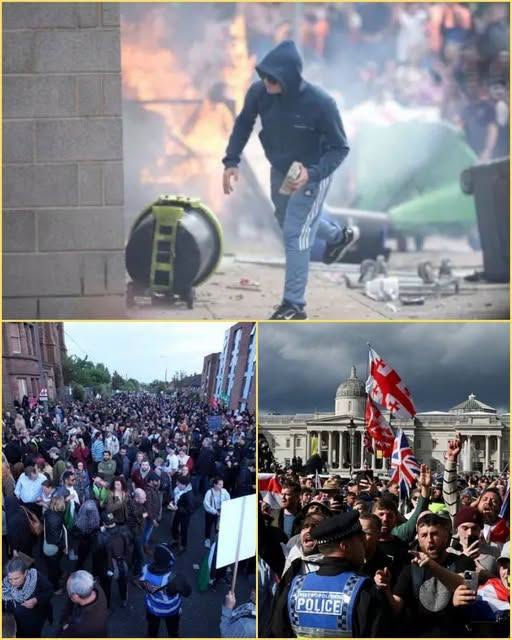
What About the Protest Outside Buckingham Palace?
This requires particular caution.
Images of demonstrations are easily detached from their original context.
A photograph showing protesters near Buckingham Palace does not by itself establish what demonstration was taking place, what slogans were shouted, when the photograph was taken or how many people participated.
Likewise, a viral caption stating that “Charles is a traitor” was shouted outside Buckingham Palace this week requires independent reporting or verifiable footage before it should be treated as established fact.
The broader debate about Charles’s religious role is well documented.
The specific protest claim should be treated separately unless reliable evidence confirms it.
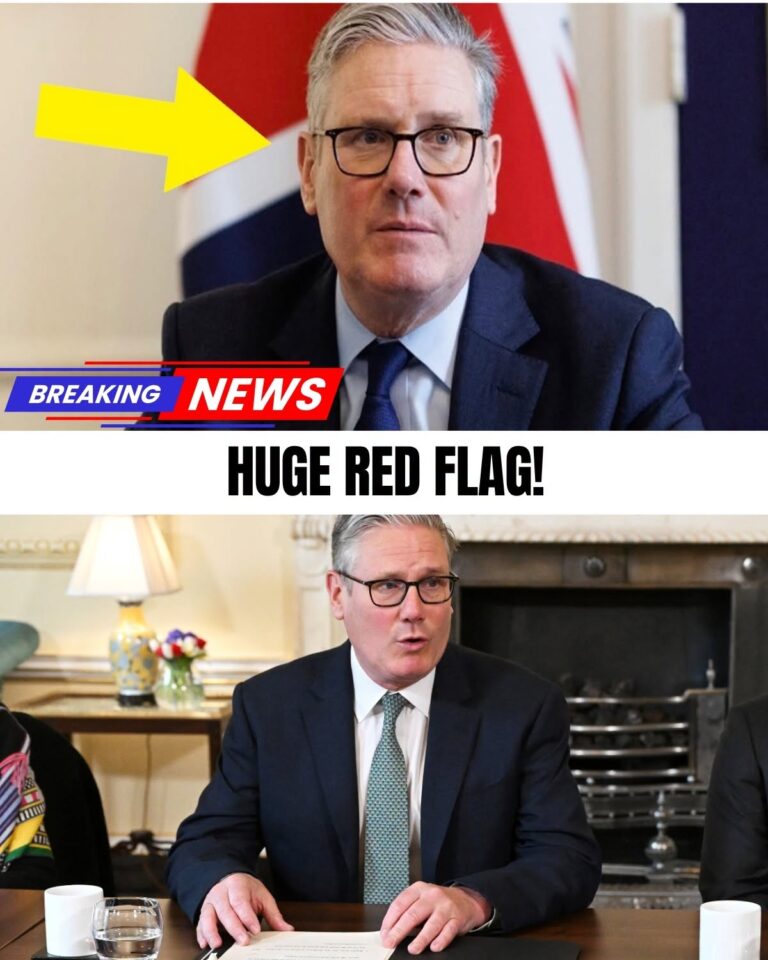
The Image Is Not Proof of the Caption
This is increasingly important in online political discussion.
A composite image can contain:
a genuine photograph of Charles;
a genuine photograph of a demonstration;
and a completely unsupported description connecting the two.
Every individual photograph may be authentic while the resulting narrative is false or misleading.
Images provide evidence of what they actually show.
They do not automatically verify the caption attached to them.
“Traitor” Is Also a Serious Word
There is a difference between saying:
“I believe Charles is weakening the Christian character of the monarchy.”
and saying:
“Charles is a traitor.”
The first is political or religious criticism.
The second historically carries much more serious implications.
Nothing in the evidence examined here demonstrates that Charles has committed treason by supporting interfaith relations.
People may passionately oppose his interpretation of monarchy.
But constitutional disagreement is not treason.
The King Cannot Answer Like a Politician
Charles also occupies an unusual position.
A prime minister can defend policy in Parliament.
An opposition leader can give interviews attacking critics.
The King generally cannot engage in partisan argument.
The constitutional monarchy depends substantially upon political restraint.
Consequently, accusations against Charles can circulate without the monarch directly entering a television studio to rebut them.
The Royal Household instead communicates through official speeches, engagements and constitutional practice.
Those provide the best evidence of what Charles’s position actually is.
His Own Words Reveal a Consistent Pattern
Across decades, Charles’s approach has been surprisingly consistent.
He identifies personally as Christian.
He values Britain’s Christian inheritance.
He expresses concern about persecuted Christians.
He promotes dialogue between religions.
He defends Muslims against collective blame for terrorism.
He opposes religious persecution.
And he sees the sovereign as having a responsibility to protect freedom of conscience.
The Royal Household’s official account documents precisely that combination.
People can disagree with the philosophy.
But it is difficult to describe it as a sudden post-coronation betrayal.
Charles Was Doing This Long Before He Became King
That is another weakness in the idea that something dramatically changed after 2023.
As Prince of Wales, Charles spent decades working on interfaith relations.
In 2020, during a visit to Bethlehem, he explicitly described himself as a Christian while speaking about his lifelong effort to improve understanding among different faith communities.
In 2017, at a memorial service for King Hussein of Jordan, Charles again explicitly identified himself as Christian while paying tribute to a Muslim monarch.
His philosophy was visible long before he inherited the throne.
The Real Change Was Britain
In some respects, Charles changed less than the country around him.
Britain became more secular.
Immigration increased religious diversity.
Traditional church attendance declined.
Public attitudes toward religion changed.
Political debates around multiculturalism intensified.
The internet amplified identity conflicts.
Against that background, positions Charles had held for decades acquired new political significance.
What once looked like eccentric royal interfaith activism now sits at the centre of arguments about British identity.
National Identity Does Not Have a Simple Definition
Is Britain a Christian country?
Historically and constitutionally, Christianity has unquestionably shaped it.
Demographically, modern Britain is much more complicated.
Is Britishness cultural?
Legal?
Historical?
Civic?
Religious?
Ethnic?
Most serious definitions contain several of those elements.
The monarchy sits precisely where they overlap.
That is why disputes about royal symbolism become disproportionately intense.
The Crown Is a Container for National Memory
Kings and queens represent continuity.
They connect generations that otherwise share little.
Charles was born while George VI was King.
His mother reigned for seven decades.
His son and grandson represent the monarchy’s likely future.
The Crown therefore compresses history into a living institution.
When its rituals change, people who value continuity can experience that as personal cultural loss.
That reaction deserves to be understood rather than mocked.
But National Memory Is Not the Same as National Exclusion
The opposite danger also deserves recognition.
Preserving Christian heritage does not require treating citizens of other religions as less British.
A Sikh soldier can serve the Crown.
A Muslim doctor can swear loyalty to the King.
A Jewish judge can administer British law.
An atheist taxpayer can value constitutional monarchy.
The Crown’s challenge is symbolically incorporating all of them without becoming so generic that it represents nothing distinctive.
That Is Charles’s Gamble
Charles appears to believe he can do both.
Maintain the Christian Crown.
Protect the established Church.
Retain the coronation oath.
Speak openly about his Christian faith.
And simultaneously become a visible protector of religious pluralism.
If that works, the monarchy may retain ancient roots while adapting to modern Britain.
If it fails, critics on both sides may become dissatisfied.
Traditionalists may see Christianity being diluted.
Secularists may see Anglican establishment as anachronistic.
Religious minorities may still see the monarch’s Anglican privileges as unequal.
Charles is trying to occupy the narrow ground between them.
Would Removing Christianity Actually Make the Monarchy More Modern?
Perhaps.
But it could also create an unexpected problem.
Once the monarchy is stripped of religious symbolism, hereditary authority becomes harder to explain.
A coronation is not merely a presidential inauguration with crowns.
Its religious character presents kingship as service, obligation and stewardship rather than personal political power.
The Christian symbolism places limits around the monarch.
The King kneels.
He is anointed.
He swears oaths.
He receives symbols of authority under the Cross.
The message is that even a king answers to something higher than himself.
Remove that framework and the monarchy risks becoming primarily celebrity plus ceremony.
Traditionalists therefore have a substantial point when they argue that ritual gives monarchy meaning.
But Ritual Has Always Evolved
The counterargument is equally strong.
A tradition that cannot adapt can become a museum exhibit.
Charles’s coronation itself demonstrated this balancing act.
Its theological centre remained Christian.
Yet representatives of different religions participated in elements surrounding the service.
Women played more prominent ceremonial roles.
The liturgy emphasised service.
The ceremony recognised contemporary Britain while retaining ancient symbols.
It was neither Elizabeth II’s coronation repeated unchanged nor a secular inauguration.
That hybridity is likely to define Charles’s reign.
What William Eventually Does May Matter More
Charles came to the throne in his seventies with well-established views.
William belongs to another generation.
His relationship with religion, national identity and the established Church will therefore receive enormous scrutiny as his responsibilities increase.
If William significantly reduces the monarchy’s Christian emphasis, traditionalist concerns will grow.
If he strongly reasserts it, Britain may experience a different debate about inclusion and establishment.
There is no path that avoids controversy entirely.
The Constitution May Eventually Need a Wider Debate
At some point Britain may have to confront directly questions it has historically preferred to manage through ambiguity.
Should the Church of England remain established?
Should the monarch remain Supreme Governor?
Should bishops continue sitting automatically in the House of Lords?
Should coronations remain explicitly Anglican?
Could a future monarch belong to another denomination?
What exactly should “Defender of the Faith” mean in a predominantly secular and religiously plural society?
These are constitutional questions, not merely culture-war slogans.
They deserve more than social-media captions.
What We Can Say With Confidence
Several facts cut through the controversy.
King Charles remains Defender of the Faith.
He remains Supreme Governor of the Church of England.
He swore the traditional coronation commitments associated with the established Church in 2023.
His coronation was explicitly Christian.
He also believes the sovereign should protect religious freedom for people belonging to different faiths.
That interfaith philosophy predates his accession by many years.
And Queen Elizabeth II herself spoke positively about the Church of England helping other faiths live freely in Britain.
Those facts leave plenty of room for disagreement.
But they make the debate more accurate.
What Is Not Established
There is no evidence in the constitutional sources that Charles has formally replaced his title with “Defender of Faiths.”
There is no evidence that his 2023 oath has been revoked.
There is no evidence that the Church of England has ceased to be established because Charles supports interfaith dialogue.
And the specific claim that protesters shouted “Charles is a traitor” outside Buckingham Palace “this week” should not be treated as confirmed without reliable reporting or complete, verifiable footage establishing when and where the incident occurred.
That distinction is particularly important when photographs and dramatic captions circulate together.
Conclusion: Charles Has Not Abandoned “Defender of the Faith”—But He Is Redefining What a Christian King Means in Modern Britain
The argument surrounding King Charles III reveals a genuine tension within the British monarchy, but not quite the one suggested by the most dramatic social-media posts.
Charles has not formally changed his constitutional title from Defender of the Faith to Defender of Faiths.
He remains Supreme Governor of the Church of England.
He took a Christian coronation oath.
He was anointed during an explicitly Christian service.
And he continues publicly discussing Christianity as a central influence on his own life. As recently as April 2026, he described the Christian faith as a firm personal anchor and inspiration.
What Charles has done is argue that those Christian and constitutional commitments are compatible with another responsibility: protecting the freedom of Muslims, Jews, Hindus, Sikhs, members of other religions and people with no religious belief to live as full members of British society.
That philosophy is controversial.
But it is not new.
It stretches back through Charles’s decades as Prince of Wales, and elements of it can also be found in Queen Elizabeth II’s own understanding of the established Church.
Traditionalists nevertheless raise a question the monarchy cannot ignore.
If every historic element is gradually broadened, modernised or reinterpreted, at what point does adaptation become dilution?
Modernisers have an equally difficult question for traditionalists.
If the monarchy cannot symbolically represent a country whose religious composition has changed dramatically, how does it retain legitimacy for future generations?
Neither question has an easy answer.
That is why arguments about four words—“Defender of the Faith”—carry such extraordinary weight.
They are ultimately arguments about what Britain believes itself to be.
Charles’s solution appears to be a monarchy that remains institutionally Christian while treating religious liberty as part of that Christian responsibility.
Whether history judges that as wise adaptation or excessive dilution will depend partly on what happens after him.
For now, however, one distinction should remain clear.
King Charles III has broadened his interpretation of whom the Crown must serve. He has not formally abandoned the Christian title he swore to uphold.
And that difference separates a legitimate national debate about monarchy, Christianity and pluralism from the much stronger—and currently unsupported—claim that Britain’s King has simply betrayed his coronation oath.