France just gave a FURIOUS response to Nigel Farage’s shock “Operation Fortress”!
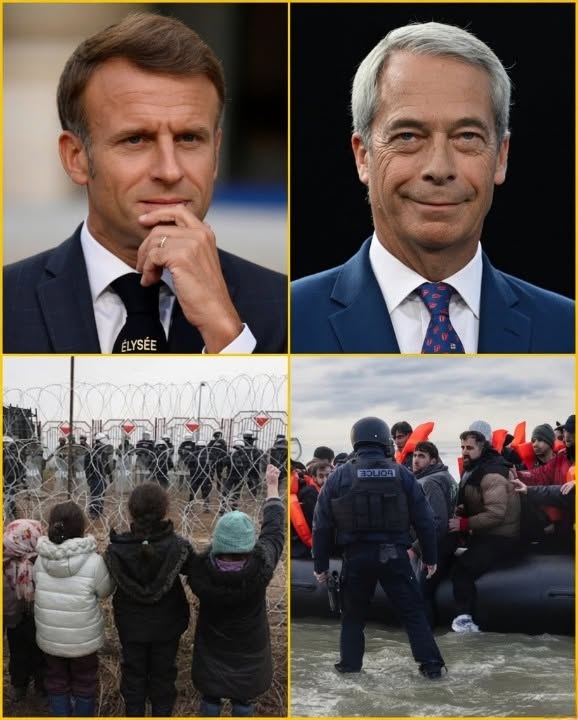
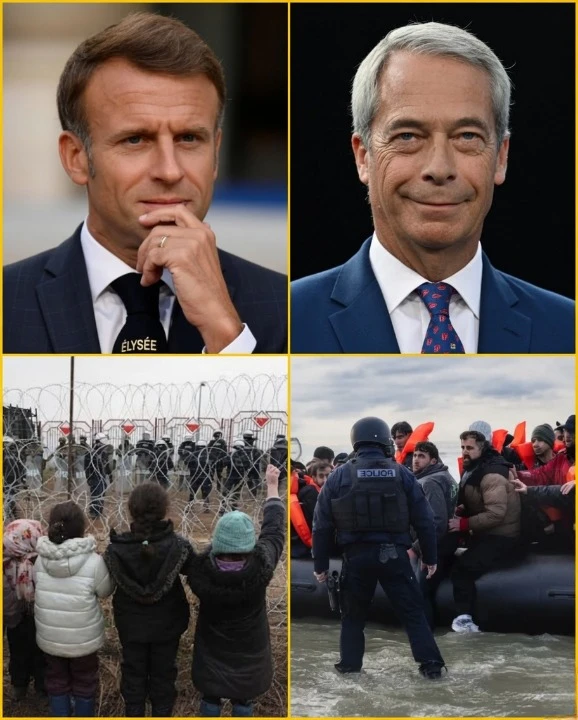
France Hits Back at Farage’s “Operation Fortress” as Channel Border Row Explodes
France has delivered a sharp warning over Nigel Farage’s proposed “Operation Fortress,” saying any attempt by Britain to use the Royal Navy to force small boats back to French shores would risk breaching French sovereignty and international law.
The warning came after Reform UK set out one of its most dramatic border proposals yet: a military-led operation in the English Channel aimed at ensuring that no unauthorised small boat reaches the UK. Under the plan, migrants attempting the crossing would be intercepted, detained, given food and water, and returned under escort to France or Belgium. Farage has presented the proposal as a decisive answer to years of failed promises on small boats.
For Reform supporters, the message is simple: if the Channel route is illegal and dangerous, Britain should stop the boats before they arrive.
For critics, the plan is legally fragile, diplomatically explosive and operationally risky.
France’s response has now turned the proposal from a domestic immigration policy into an international dispute.
The French Sovereignty Problem
The central issue is not whether Britain can patrol its own waters. It can.
The issue is whether Britain can force people back onto French territory without French agreement. Legal experts quoted by The Guardian argued that using British vessels to return people to France without consent would raise serious questions of French sovereignty and international law.
That is the legal wall facing Operation Fortress.
Britain can intercept, rescue, detain and process people within the limits of law. But forcing another sovereign country to receive them is a different matter. France is effectively saying: you cannot solve Britain’s border problem by imposing a return policy on French beaches.
That is why the plan has caused such a strong reaction in Paris.
Farage’s 14-Day Promise
Farage’s political pitch is that a Reform government would move fast and decisively. Reform figures have described Operation Fortress as the largest military operation in the Channel since the Second World War, and Farage has promised to stop small boat crossings within a short deadline once in power.
That promise is designed to contrast Reform with Labour and the Conservatives, both of whom have promised control but failed to end crossings completely.
The appeal is obvious. Many voters are tired of hearing that the problem is complicated. They see boats still arriving, asylum accommodation still being used, and public money still being spent on enforcement that has not ended the route.
But the simplicity of the promise is also its weakness.
Stopping all crossings would require more than naval patrols. It would require French cooperation, lawful returns, detention capacity, safe interception procedures, rapid processing and a response to smugglers adapting their tactics.
Without those pieces, “stop the boats in 14 days” risks becoming a campaign line rather than an operational plan.
The Border Deal Reform Is Attacking
Reform’s wider attack is aimed at the UK-France border deal.
The UK has agreed to provide £662 million to France between 2026/27 and 2028/29 under a new three-year funding agreement. The House of Commons Library says £501 million will strengthen existing controls in northern France, while £161 million is available for new tactics.
The government argues that cooperation with France is already working. Ministers say UK-French efforts have stopped tens of thousands of attempted crossings, with Home Office statements citing more than 44,000 or 46,000 prevented attempts since the election or since July 2024.
But critics argue that “prevented attempts” do not satisfy the public when boats continue to arrive. A prevented crossing is invisible. A dinghy landing on the English coast is not.
That is the flaw Reform is exploiting: the government measures success by what is stopped; voters often judge failure by what still gets through.
The Real Weakness in the System
There is a real weakness in the current system, but it is not a secret conspiracy.
Britain relies heavily on French enforcement to prevent departures before boats enter the Channel. French police can disrupt groups, seize equipment, carry out patrols and arrest suspected smugglers. But once people are in the water, especially in overcrowded inflatable boats, safety and legal limits become much more difficult.
The UK government says new specialist French police units have been deployed in northern France under the latest deal, including riot and crowd-control officers trained to respond to smuggler tactics.
Yet smugglers continue to adapt. They use larger boats, faster launches, scattered groups and so-called “taxi boat” tactics, where vessels pick people up from the water after leaving from another location.
This is why the border deal remains politically vulnerable. Even if French cooperation stops many attempts, every successful crossing makes the agreement look weak.
Why Operation Fortress Is Politically Powerful
Operation Fortress is powerful because it gives a simple answer to a visible problem.
The government says the UK-France deal is reducing attempts.
Reform says the boats are still coming.
The government says international law and diplomacy matter.
Reform says British security comes first.
The government says cooperation with France is essential.
Reform says France has been paid enough and Britain must act directly.
That message will resonate with voters who believe Westminster has spent years explaining failure instead of stopping crossings.
But political force does not automatically create legal feasibility.
The hardest question remains unanswered: what happens when France refuses to take people back?
Why France’s Response Helps Reform Politically
Ironically, France’s warning may help Farage with his base.
Reform can now argue that Britain is being blocked not only by Westminster lawyers and human-rights rules, but by France itself. To voters already frustrated by Channel crossings, Paris’s objection may sound less like a legal warning and more like confirmation that Britain has lost control.
That does not mean Reform’s plan would work.
It means the argument works politically.
Farage is framing the issue as a test of will: either Britain takes control, or it remains dependent on France, courts and international agreements.
His critics frame it differently: either Britain follows the law and negotiates workable returns, or it creates a dangerous confrontation in one of the world’s busiest shipping lanes.
Conclusion: A Furious Row, but No Easy Answer
France’s response has made Operation Fortress one of the biggest border controversies in British politics.
Farage says the Royal Navy should be used to stop unauthorised boats and return people to France or Belgium.
France says any forced return to its territory without agreement would violate sovereignty and international law.
The government says UK-France cooperation has prevented tens of thousands of attempted crossings.
Reform says taxpayers are still paying hundreds of millions while boats keep arriving.
All of these claims point to the same uncomfortable reality: Britain’s Channel policy is stuck between public demand for visible control and the legal, maritime and diplomatic limits of unilateral action.
There is no verified “secret truth” France is desperate to hide.
But there is a very public weakness: Britain cannot fully solve the Channel crisis without either stronger cooperation from France or a lawful alternative returns system that actually works.
That is why the row matters.
It shows that stopping the boats is not only about naval assets or political will. It is about law, sovereignty, diplomacy, enforcement and whether Britain can turn public anger into a policy that survives contact with reality.