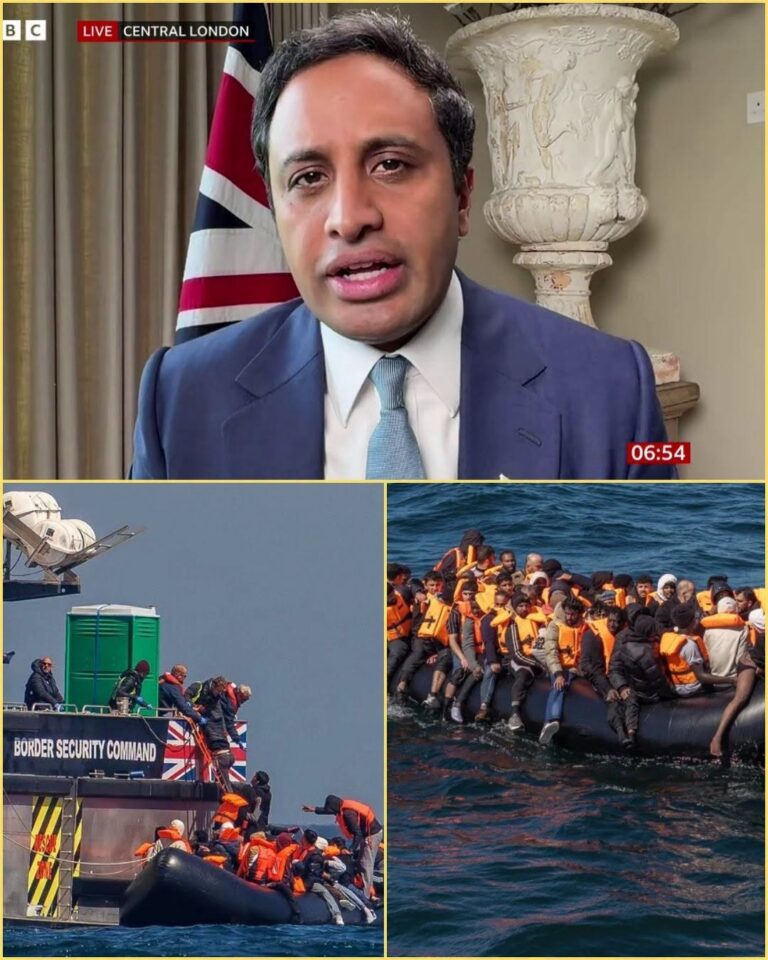
Harry Redknapp Sparks Fresh Debate Over Britain’s Migration Crisis!
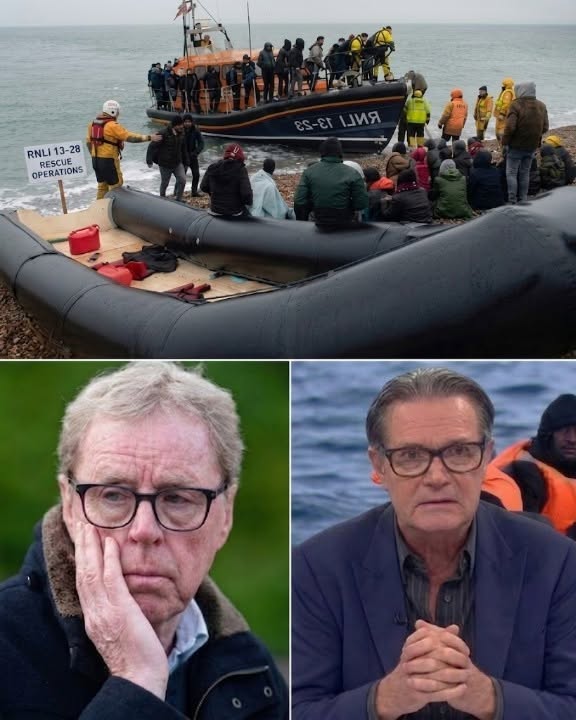
Harry Redknapp and Britain’s Migration Debate: Viral Claims Spark Questions Over What He Actually Said
Harry Redknapp has become the latest well-known British public figure to be drawn into the country’s increasingly heated immigration debate, after social-media posts claimed the former football manager had made outspoken remarks about Britain’s migration crisis. The posts have generated enthusiastic support from some users and criticism from others — but the central problem is that there is currently no clear, independently verified record establishing exactly what Redknapp supposedly said about immigration.
That distinction matters.
Redknapp, one of English football’s most recognisable personalities, has spent decades in the public eye. He managed clubs including West Ham United, Portsmouth, Southampton, Tottenham Hotspur and Queens Park Rangers and has remained a familiar television and media personality since leaving full-time management.
Because of that prominence, comments attributed to him can reach audiences far beyond the traditional political world.
But searches of recent credible reporting do not reveal a substantial, authenticated intervention by Redknapp on the current migration crisis matching the viral description now circulating.
No clear interview, complete video, transcript or original statement has emerged establishing the supposedly explosive remarks.
For now, therefore, reports that Redknapp has suddenly “weighed in” decisively on Britain’s immigration debate should be treated cautiously.
What Did Harry Redknapp Actually Say?
That is precisely the question the viral posts leave unanswered.
The wording promises readers that Redknapp has made remarks strong enough to create a “wave of reactions,” yet the initial claim does not provide the quotation.
There is no programme name.
There is no date.
There is no interviewer.
There is no link to an original recording.
And there is no detailed explanation of whether Redknapp was supposedly talking about legal immigration, asylum seekers, small boats, border enforcement or integration.
Those are very different subjects.
A statement arguing that Britain should reduce net migration would not be equivalent to a demand concerning asylum seekers.
Criticism of illegal Channel crossings would not automatically amount to opposition to legal immigration.
Without the original words, readers cannot responsibly determine what Redknapp’s position actually is.
Redknapp Has Generated Controversy Before
The absence of verified immigration comments does not mean Redknapp has avoided politically sensitive remarks.
In March 2025, he attracted considerable attention after joking about England manager Thomas Tuchel during a public appearance.
Redknapp called the German coach a “German spy” and appeared to make a gesture resembling a Nazi salute. The episode was subsequently widely reported.
A month later, Redknapp acknowledged that the joke had “badly backfired,” telling Al Arabiya that it had been intended simply as humour.
That incident is relevant for one reason: it demonstrates that when Redknapp makes genuinely controversial public remarks, there is usually identifiable footage, reporting and a subsequent opportunity for him to explain himself.
That evidentiary trail is currently missing from the migration claim.
It would therefore be risky to construct a detailed political position for him based solely on a viral headline.
Why His Name Fits the Story So Easily
Redknapp’s public image may help explain why such a claim is plausible enough to spread.
Throughout his career, he cultivated a reputation for speaking plainly and avoiding highly polished corporate language.
His interviews frequently relied on humour, anecdotes and direct opinions.
That style makes him an attractive figure for social-media accounts seeking a familiar celebrity voice to attach to a controversial political argument.
The same phenomenon occurs with actors, footballers, television presenters and retired athletes.
A supposedly “ordinary” or “straight-talking” celebrity criticising politicians can generate far more engagement than another statement from a party spokesman.
But familiarity does not authenticate a quotation.
The fact that a statement sounds like something a person might say is not evidence that they said it.
The Immigration Debate Behind the Viral Claim Is Very Real
Even if Redknapp’s supposed intervention remains unclear, the political controversy surrounding immigration is unquestionably genuine.
Britain continues to struggle with several overlapping questions.
How high should legal migration be?
How should Britain respond to people arriving across the Channel in small boats?
How quickly should asylum claims be processed?
What should happen to people whose applications are rejected?
And how should the country balance economic demand for foreign workers with pressure on housing and public services?
These questions have become increasingly difficult because the word “immigration” is often used to describe very different categories of people.
Legal workers arriving on visas are migrants.
International students are migrants for statistical purposes.
Refugees admitted through humanitarian programmes are another category.
Asylum seekers arriving by irregular routes form another.
People who remain after exhausting their legal right to stay represent yet another group.
Treating all of them as though they have identical circumstances produces more heat than clarity.
Why Public Figures Entering the Debate Matters
Celebrity interventions can nevertheless influence how political issues are discussed.
A retired football manager does not have authority over immigration law, but someone with Redknapp’s public profile can reach audiences who rarely follow parliamentary debate.
Supporters of stricter controls often welcome celebrity voices because they believe traditional political and media institutions underestimate public concern about migration.
They argue that prominent figures who speak openly can articulate frustrations felt in pubs, workplaces, football grounds and communities across the country.
Critics see a potential danger.
Immigration policy is complicated, and high-profile personalities may repeat simplified claims without accounting for asylum law, labour-market requirements or the different legal categories involved.
Both points can be true.
Public figures are entitled to express political opinions.
Their fame does not make those opinions automatically correct.
Why Football and National Identity Often Overlap
There is also a deeper reason figures from English football can become involved in discussions about immigration and identity.
Football has long been connected to ideas of national belonging.
The England team, the Premier League and local clubs combine international talent with strong local identities.
That creates an interesting tension.
English football is one of the most internationalised parts of British society. Premier League clubs employ players, coaches and staff from around the world.
At the same time, football remains deeply connected to local towns, communities and national pride.
Redknapp’s own career reflects that combination.
He spent decades working with foreign players while remaining closely associated with traditional English football culture.
That background would make any serious comments from him about immigration particularly interesting — but only once the comments themselves can be verified.
Reaction Online Is Not Proof
The viral description also claims that Redknapp’s supposed remarks triggered widespread reactions.
That may be true in the limited sense that social-media users reacted to posts describing the alleged comments.
But there is an important circular problem.
People can react strongly to a claim that later turns out to be inaccurate.
Thousands of comments do not prove the underlying quotation.
Nor does a large number of shares.
This is particularly important when posts say that “Britain is talking” about something when most of the visible conversation may originate from a small group of interconnected social-media pages.
Before treating online reaction as evidence of a national controversy, journalists should first establish whether the event provoking that reaction actually occurred.
Redknapp’s Proven Record Should Not Be Rewritten
There is plenty of verified material available about Redknapp without attributing new political positions to him.
He is an accomplished former manager who won the FA Cup with Portsmouth, built highly competitive teams at Tottenham and spent decades at the centre of English football.
He has also made comments that generated genuine controversies and later acknowledged when at least one joke had gone badly wrong.
Those are documented parts of his public record.
An unverified immigration quotation should not simply be added to that record because it fits a particular political narrative.
If the Comments Are Genuine, Context Will Matter
Suppose an original recording eventually emerges.
The next task would still be determining exactly what Redknapp meant.
If he criticised illegal Channel crossings, that should be described accurately.
If he called for lower legal migration, that is a different argument.
If he discussed integration or pressure on public services, those remarks would require their own context.
And if he expressed sympathy for refugees while criticising failures in border enforcement, that nuance should also be preserved.
Reducing all possible positions to “Redknapp blasts migration” would obscure more than it explains.
A Debate That Does Not Need Invented Voices
Britain’s immigration debate is already intense enough without uncertain quotations being added to it.
There are legitimate arguments for stricter border enforcement.
There are legitimate questions about migration levels, labour shortages, asylum processing and integration.
There are also serious humanitarian questions concerning refugees and dangerous Channel crossings.
Public figures are free to participate in that discussion.
But their actual words matter.
For now, the strongest conclusion supported by the available evidence is therefore relatively simple:
Harry Redknapp remains a highly recognisable public figure whose comments can generate significant attention, but there is currently no sufficiently verified source establishing the specific outspoken intervention on Britain’s migration crisis described in the viral claim.
If an original interview or recording emerges, his remarks can be examined fairly — including both the arguments that supporters find compelling and the objections raised by critics.
Until then, however, the controversy should be described for what it is: a widely circulated claim about Redknapp’s political views rather than a firmly documented intervention by the former football manager.
In an era when celebrities can be transformed into political campaigners with little more than a dramatic caption and an edited clip, that distinction is worth preserving.