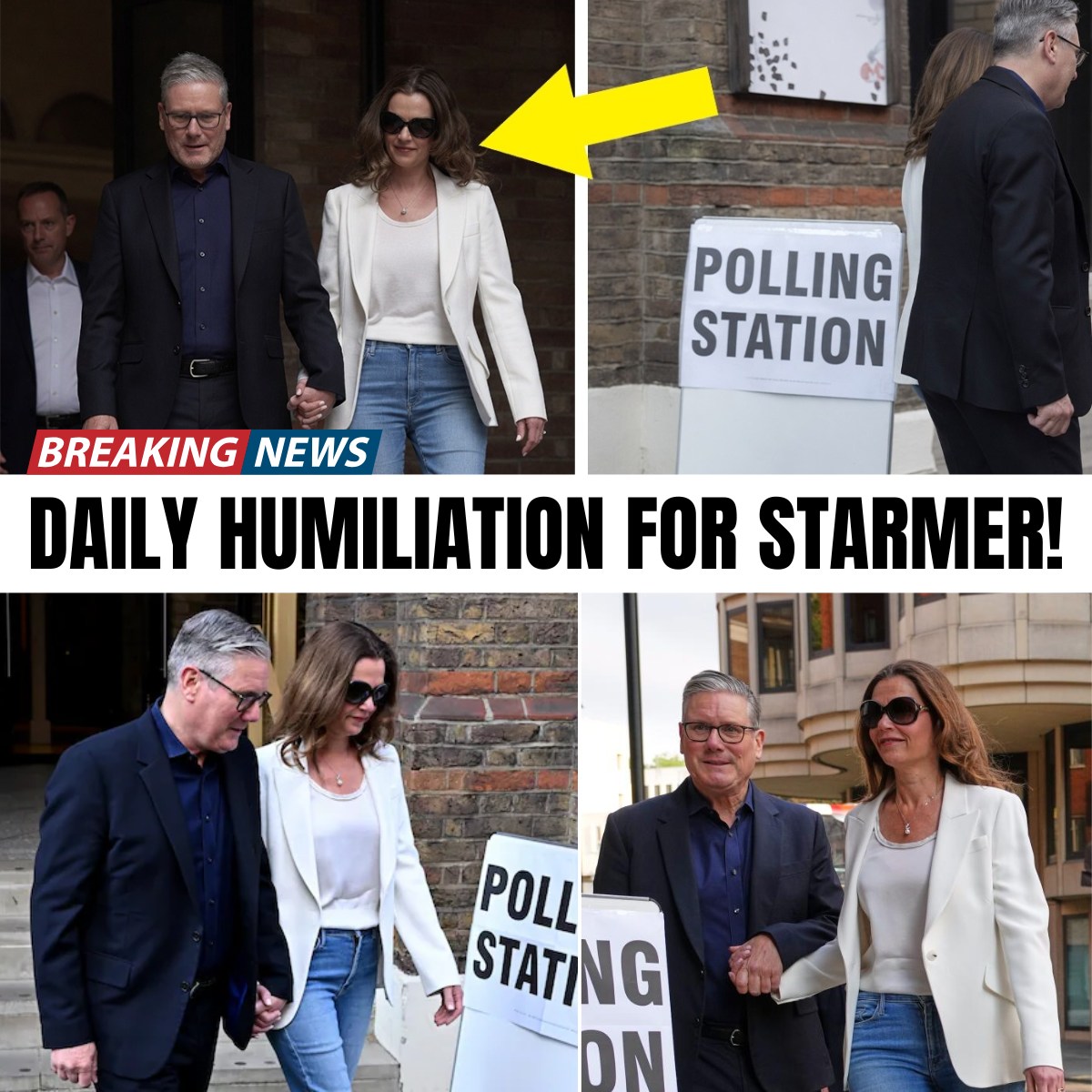
An awkward election day moment involving Keir Starmer is spreading rapidly online after cameras captured his arrival at a polling station under intense media attention
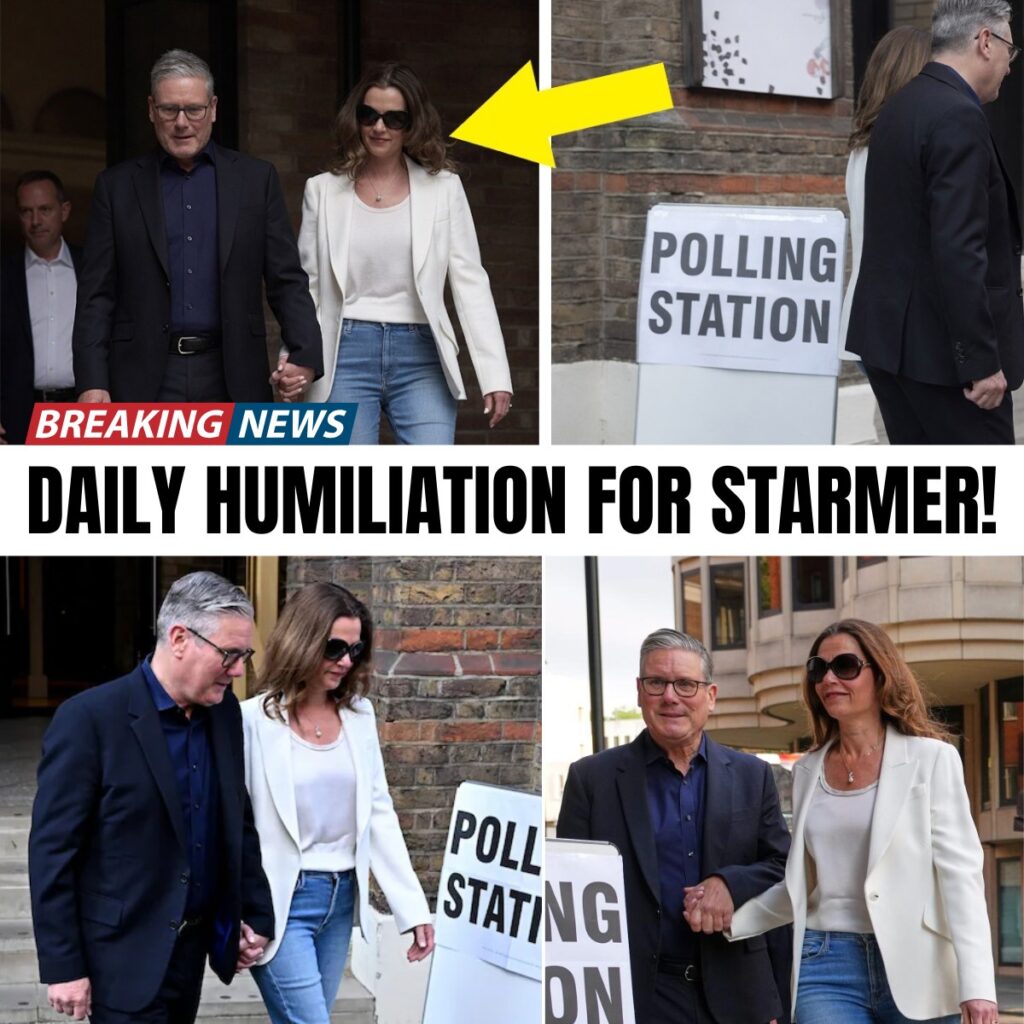
Navigating the Polling Station: Analytical Perspectives on Political Image and Media Pressure
The recent local elections provided a significant backdrop for a high-profile public appearance by Sir Keir Starmer, the leader of the Labour Party. Accompanied by his wife, Starmer arrived at his local polling station to cast his vote, an act traditionally viewed as a routine and symbolic gesture of civic participation. However, this specific encounter quickly transformed into a moment of intense scrutiny, as the presence of a robust media contingent ensured that every movement and interaction was documented under the unforgiving lens of public observation and real-time digital commentary.
As the political leader made his approach, the atmosphere was characterized by a palpable tension, reflecting the high stakes associated with the local election outcomes. Journalists and reporters, seeking clarity on the potential future of the Labour Party’s leadership, utilized the opportunity to pose challenging questions. These inquiries were not merely focused on the day’s voting logistics but aimed directly at the core of Starmer’s political accountability and the broader implications of the election results for his party’s national standing and his own professional future.
One of the most prominent questions directed at the Labour leader concerned his potential resignation in the event of significant electoral losses. Specifically, a reporter inquired whether Starmer would consider stepping down if the Labour Party were to lose thousands of seats across the various local councils. This line of questioning underscores the precarious nature of political leadership, where local performance is often viewed as a definitive referendum on the national leader’s popularity and the effectiveness of their strategic vision for the country.
The interaction was further complicated by the persistent use of the title “Prime Minister” by several reporters during the exchange. While intended to address his aspirations or perhaps to provoke a specific response regarding his readiness for higher office, the repetitive nature of these questions—”How are you feeling, Prime Minister?”—seemed to create a challenging environment for Starmer. His response, or lack thereof, became a focal point for observers who were looking for signs of confidence or, conversely, indications of internal pressure and discomfort.
Analysis of the footage suggests that Starmer’s reaction to these difficult questions was notably guarded. Critics and some observers characterized his behavior as appearing overly reliant on pre-rehearsed messaging or a “script,” noting a perceived lack of spontaneity in his responses to the verbal challenges. This has led to discussions regarding his ability to operate effectively under unscripted media pressure, with some commentators suggesting that the encounter appeared more like a “malfunction” than a standard interaction between a politician and the press.
Beyond the verbal exchange, a significant portion of the public discourse shifted toward the non-verbal cues and social dynamics exhibited during the walk to the polling station. Social media users and independent commentators began to dissect the body language of both Starmer and his wife. The focus on these minor details reflects a growing trend in modern political analysis, where the personal conduct and interpersonal dynamics of a leader are scrutinized as heavily as their official policy platforms or parliamentary speeches.
One specific point of criticism that gained traction online involved the physical positioning of the couple as they walked along the roadside. Some viewers pointed out that Starmer did not place himself on the side closer to the traffic, a gesture traditionally associated with social etiquette and protection. While seemingly minor, this detail was magnified in the digital space, being used by some to question his personal character and his understanding of traditional social norms that resonate with certain segments of the electorate.
The reaction of Starmer’s wife was also a subject of intense speculation. Observers noted what they perceived as a level of discomfort in her demeanor, leading to various interpretations about the internal dynamics of the couple amidst the media frenzy. Some critics even went as far as to baselessly speculate on her political leanings, though such claims remain entirely within the realm of subjective opinion rather than established fact. These observations highlight the intrusive nature of modern political reporting.
The “heat” of the moment was further fueled by the contrast between the carefully managed image typically presented by the Labour Party and the raw, unpolished nature of this specific encounter. In an era where viral moments can spread rapidly across social media platforms, a few seconds of perceived awkwardness can quickly overshadow hours of official campaigning. This event serves as a case study in how public perception can be shaped by micro-interactions that occur outside the boundaries of formal political debates.
The scrutiny faced by Starmer at the polling station reflects a broader skepticism regarding the authenticity of political figures. When a leader is perceived as being “robotic” or unable to answer difficult questions without a script, it can erode trust among voters who are looking for genuine and relatable leadership. The pressure from the media to elicit a definitive reaction regarding his resignation highlights the uncompromising expectations placed upon those who seek to lead the nation’s major political institutions.
From a journalistic perspective, the encounter raises questions about the balance between holding politicians accountable and the potential for media harassment. While the questions regarding resignation are legitimate given the electoral context, the repetitive and aggressive nature of the questioning can sometimes obscure the substantive issues at hand. This creates a spectacle that attracts high levels of engagement online but may not necessarily contribute to a deeper understanding of the political landscape or the party’s actual policy positions.
The conflict inherent in this dialogue lies in the gap between the expected professional poise of a party leader and the human reality of navigating a high-pressure environment. Starmer’s attempt to maintain a steady course toward the polling station while being peppered with questions about his career’s potential demise illustrates the personal toll of high-level politics. The tension between his “strut” down the street and the “malfunctioning” perception held by his critics encapsulates the dual reality often faced by modern political figures.
Furthermore, the role of independent channels and social media in amplifying these moments cannot be ignored. The transcript reveals a clear intent by commentators to frame the event through a specific lens, focusing on perceived weaknesses and social faux pas. This decentralized form of media consumption means that a politician’s image is no longer solely in the hands of major news outlets, but is constantly being reshaped by individual creators and their respective audiences across various digital platforms.
As the local election results continue to be processed and analyzed, the significance of this specific event remains a subject of ongoing debate. While some may view it as a trivial moment of media noise, others see it as a telling indication of Starmer’s leadership style and his ability to withstand the rigors of a national campaign. The questions left unanswered at the polling station—particularly concerning his future should Labour face a setback—will likely continue to haunt the political narrative in the coming days.
The event underscores the fact that for a modern political leader, there is no such thing as a “routine” public appearance. Every step taken and every silence maintained is subject to interpretation and can be weaponized by political opponents or disenchanted voters. The difficulty Starmer faced in responding to the resignation question suggests that the internal strategy for handling electoral setbacks may still be a work in progress, or at least one that is not ready for public consumption.

Ultimately, the encounter at the polling station serves as a reminder of the volatile nature of political image in the digital age. The “breaking” nature of such clips, as mentioned in the accompanying caption, highlights the speed at which a political narrative can shift. Whether these viral moments will have a lasting impact on Starmer’s credibility or the Labour Party’s overall performance is a question that remains open to interpretation as the final votes are tallied and the political dust begins to settle.
The persistence of reporters in asking about resignation highlights a central tension in Starmer’s current tenure: the high expectations for a Labour “landslide” versus the reality of local complexities. If the results do indeed show a loss of thousands of seats, the media’s focus on his initial non-response at the polling station will likely intensify. This creates a narrative of a leader who was either unprepared for the outcome or unwilling to face the consequences of his party’s performance in a transparent manner.
The focus on his wife’s discomfort also points to the increasing “personification” of politics, where the family members of leaders are thrust into the spotlight and their reactions are parsed for hidden meaning. This can be seen as an extension of the desire for “authenticity,” where the public looks for cracks in the professional facade of the politician through the behavior of those closest to them. This added layer of pressure makes even a short walk to a voting booth a high-stakes performance.
In terms of political communication, the incident suggests a potential need for a shift in how the Labour leadership handles spontaneous media encounters. Relying on a perceived “script” can be a defensive mechanism, but it often fails to satisfy a public that values transparency and quick-thinking. As the party moves closer to a general election, the ability of its leader to navigate these “unscripted” moments with grace and clarity will be increasingly vital to maintaining momentum and public trust.
The criticisms regarding “gentlemanly” behavior, while perhaps subjective and rooted in traditionalist views, nonetheless resonate with certain demographics. In a closely contested political environment, even perceived lapses in social etiquette can be utilized to paint a broader picture of a leader’s disconnect from common values. This illustrates the multifaceted nature of political branding, where a leader must appeal to a wide array of social, cultural, and political sensibilities simultaneously.
The “malfunctioning” label used by some critics is a particularly potent metaphor in the digital age, implying a lack of human connection and a reliance on mechanical, pre-programmed responses. For a leader trying to build a movement based on hope and national renewal, such a perception is particularly damaging. Overcoming this “robotic” image remains one of the primary challenges for Starmer as he seeks to broaden his appeal beyond the party’s core base and reach undecided voters.
The reporters’ use of “Prime Minister” is an interesting rhetorical device that places Starmer in the role he seeks, but in a context where he is currently on the defensive. It forces him to inhabit a space of authority while simultaneously being challenged on the very foundations of that authority. This psychological pressure is a hallmark of high-level political journalism, designed to test the resilience and the “stature” of the individual under the spotlight.
As the discussion continues to unfold online, the event highlights the fragmentation of political truth in the modern era. What one person sees as a leader staying focused and ignoring provocations, another sees as a “humiliated” figure unable to stand up to basic scrutiny. This divergence in interpretation is fueled by the polarized nature of the current political climate, where viewers often approach such videos with pre-existing biases that color their perception of the facts presented.
The importance of this event also lies in what it reveals about the current state of the British electorate’s engagement with its leaders. There is a sense of restlessness and a demand for direct answers that is not always met by the traditional structures of political communication. The “heckling” at the polling station is a physical manifestation of this digital restlessness, bringing the intensity of online debate into the physical world in a very direct and confrontational way.
Looking forward, the Labour Party will likely need to address the optics of such encounters if they are to prevent them from becoming a recurring theme in the media. The ability to deflect or answer difficult questions with a sense of authority—rather than appearing to retreat into a “script”—will be a key metric by which Starmer’s leadership is judged. The polling station incident, while brief, provides a window into the significant hurdles that remain in the quest for a convincing and resilient political image.
The issues raised by the media—resignation, electoral loss, and personal conduct—are not going away. They form the core of the ongoing critique against the current Labour leadership. How Starmer chooses to engage with these issues in the wake of the local election results will determine whether this moment is remembered as a minor hiccup or a significant turning point in his public perception. The silence at the polling station may eventually need to be replaced by a more robust and direct form of communication.
The role of “gentlemanly” conduct and its relevance in modern politics is a topic that continues to spark debate. While some dismiss it as an outdated concept, others see it as a fundamental component of leadership and social cohesion. By failing to adhere to these perceived norms, Starmer inadvertently opened a flank for critics to attack his relatability and his understanding of the cultural fabric of the country he seeks to lead, further complicating his public persona.
The media’s role in this interaction also warrants further reflection. By focusing on the “Prime Minister” title and the possibility of resignation, the press is actively participating in the creation of a high-pressure narrative. This is part of the “adversarial” nature of British journalism, which seeks to test the mettle of political leaders. However, when the focus shifts to body language and roadside positioning, the boundary between political reporting and social commentary becomes increasingly blurred.
In conclusion, the encounter at the polling station was far more than a simple act of voting; it was a complex intersection of media strategy, public perception, and political accountability. The questions posed by reporters and the subsequent reactions from the public highlight the intense scrutiny that defines modern leadership. As the Labour Party reflects on the local election outcomes, the lessons learned from this “awkward” moment will undoubtedly inform their future approach to media relations and public engagement.

The issues of resignation and leadership performance remain officially unresolved and continue to be a source of significant debate within the political sphere. Until the final results provide a clearer picture of the Labour Party’s standing, the tension between Starmer’s projected image and the public’s perception will persist. This event serves as a clear indication that in the arena of modern politics, every public moment is an opportunity for either consolidation or critique, with the final verdict often left to the court of public opinion.