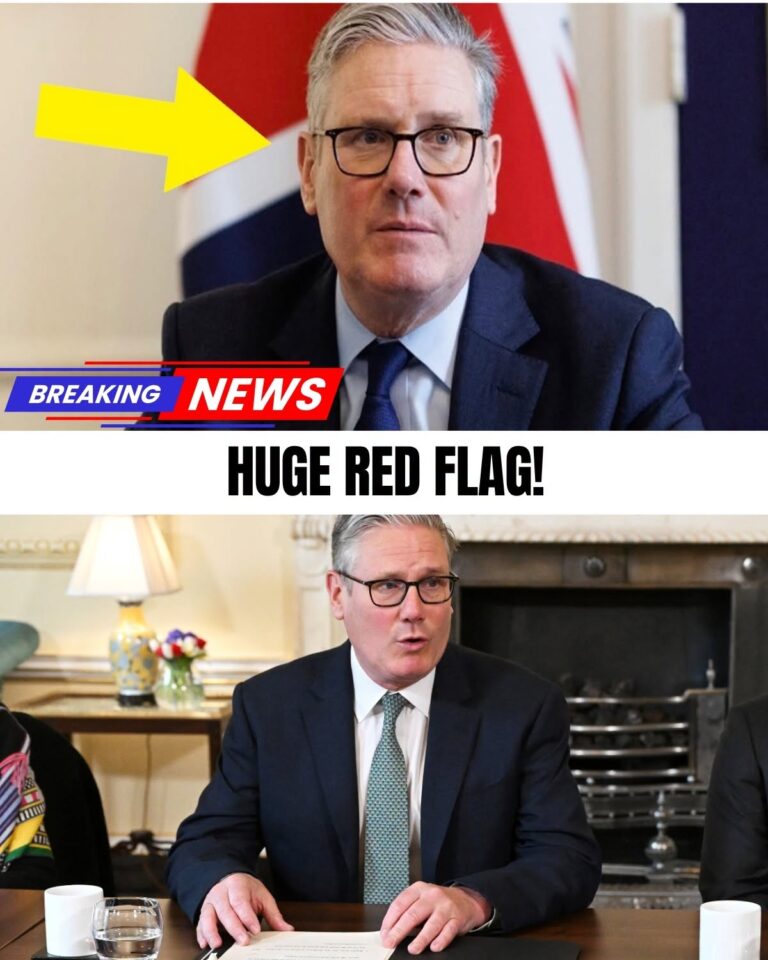
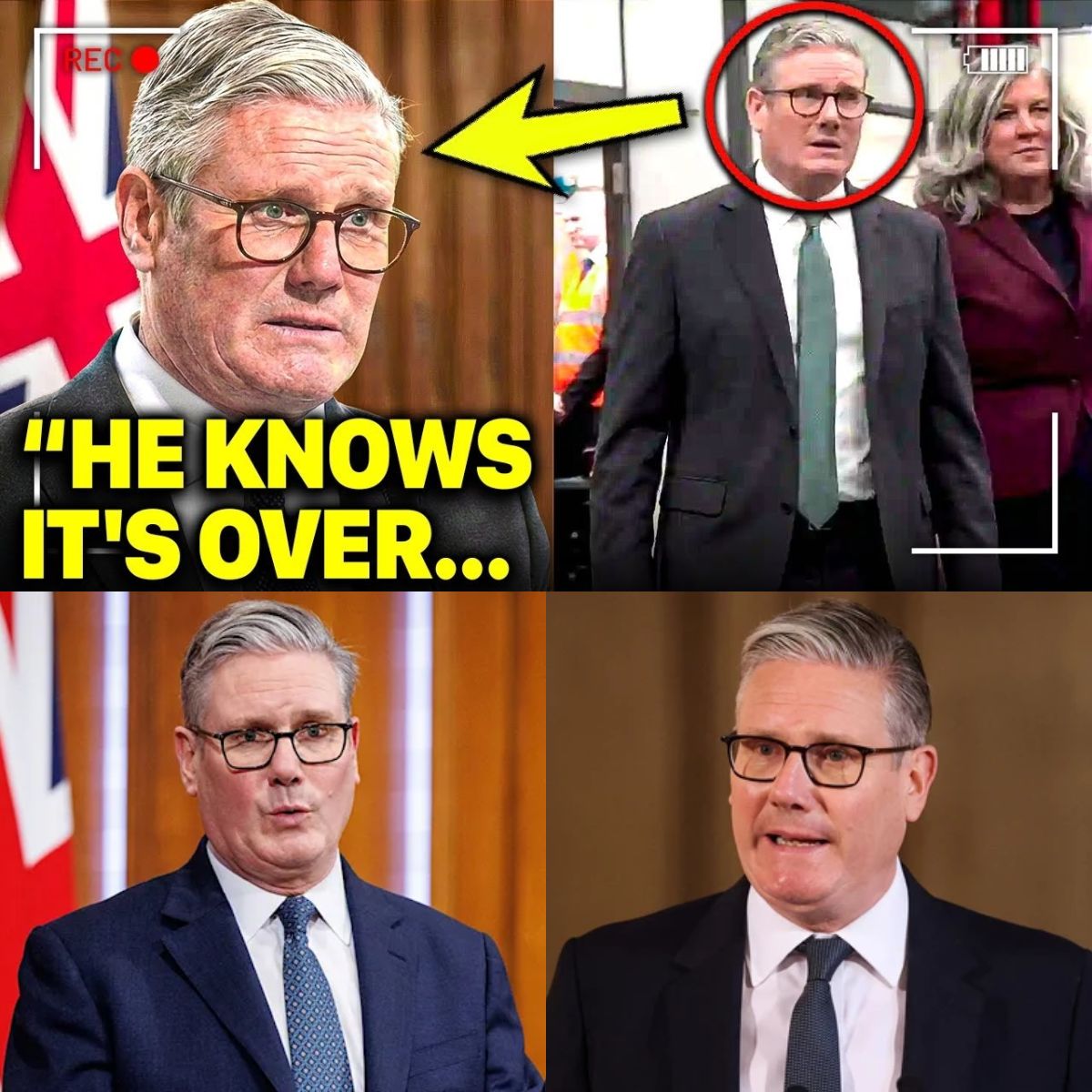
Something about Keir Starmer’s latest live TV appearance is generating unusually intense reactions across Britain
The Narrative Collapse: Analyzing Keir Starmer’s Institutional Crisis Post-Election
The architectural stability of Keir Starmer’s administration is facing its most profound challenge to date following a series of electoral results that have fundamentally altered the British political landscape. What was intended to be a routine defense of government policy has instead evolved into a widespread perception of a “narrative collapse,” as the Prime Minister grapples with the loss of over a thousand council seats across England.

She May Have Gotten Better But Here’s The Truth
During a series of high-pressure televised appearances, Starmer’s rhetoric has come under intense scrutiny from both political analysts and a disillusioned public. The Prime Minister’s insistence that he will “not walk away” to avoid “plunging the country into chaos” has been met with skepticism by those who argue that the country is already enduring a state of systemic disorder characterized by a high cost of living and international instability.
The scale of the electoral defeat is statistically unprecedented for a sitting government in this phase of its tenure. The loss of more than 1,000 local representatives has triggered an internal crisis within the Labour Party, with senior figures like Wes Streeting acknowledging that the government bears a “huge degree of responsibility” for the defeat of “good Labor people.”
The Prime Minister’s performance during these interviews has been described by critics as “robotic” and “insincere.” Observers noted that Starmer appeared to rely on a recycled collection of briefed phrases—referencing “hope for young people” and “unnecessary mistakes”—multiple times within a single exchange, leading to accusations that his response was more a product of crisis management than genuine reflection.
A particularly contentious point has been the Prime Minister’s decision to appoint “blasts from the past” like Gordon Brown and Harriet Harman to strategic roles. Starmer framed these appointments as “future-looking,” yet critics view them as a desperate attempt to shore up a failing administration with figures associated with previous financial and political crises.
The reappointment of Gordon Brown as a special envoy on global finance has been especially polarizing. For many who remember the 2008 financial crisis, Brown’s return to the orbit of Downing Street is seen as an affront to those who suffered personal and financial losses during his time as Chancellor and Prime Minister.
Within the Labour Party, the atmosphere is reportedly one of mounting tension. A growing number of MPs are reportedly discussing the necessity of a leadership challenge or, at the very least, a clear timetable for Starmer’s resignation. The perception that the Prime Minister is “dragging the party down” has moved from private conversation to public discourse.
The electoral map reveals a significant shift toward localist and independent movements, most notably in areas like Great Yarmouth. These results suggest a rejection of the “Westminster engine” in favor of community-led governance, a trend that poses a structural threat to the centralized authority of both major parties.
Starmer’s claim that he must stay to “rebuild” has been countered by arguments that his presence is the primary obstacle to that very process. The personal animosity directed toward the Prime Minister on the doorsteps, as reported by his own colleagues, suggests a deep-seated disconnect between his leadership and the electorate’s priorities.
The discussion regarding “hope” has also become a focal point of the debate. While Starmer speaks of hope residing in young people and social mobility, his critics argue that true hope resides in the “dismantling of government overbearance” and a return to foundational constitutional principles such as common law and the Bill of Rights.
The role of minor parties, including Reform UK and the Greens, continues to complicate the political calculus. While some analysts speak of “splitting the vote,” others argue that the low turnout—consistently under 50% in local contests—is the more significant indicator of a public that has largely tuned out of the traditional political “game.”
Starmer’s mention of “stabilizing the economy” and “not getting drawn into the war in Iran” was intended to project a sense of global competence. However, these claims have been criticized as being out of touch with the immediate, domestic anxieties of families struggling with household bills and a perceived decline in public safety.
The Prime Minister’s body language during these televised “collapses” has been a subject of intense social media commentary. Observers have pointed to moments of visible frustration when confronted with the reality that voters are actively choosing other candidates specifically because of his leadership.
As the government prepares for a series of policy resets in the coming days, the fundamental question remains whether Starmer possesses the institutional credibility to lead such a transition. The “Teflon” quality that once defined his rise appears to be wearing thin as the reality of the local election “horror show” sinks in.
The call to “save England” through local governance and a return to the “Constitution of England” reflects a growing movement that views the current system as fundamentally broken. This movement seeks a “drastic reset” that goes beyond mere policy tweaks or personnel changes at the top of the Labour Party.
The Prime Minister’s insistence that he is “not sugarcoating” the results is often followed by a pivot back to prepared talking points, creating what critics call a “credibility gap.” This gap is where the current political crisis resides, as the public waits to see if any genuine change will follow the rhetoric.
The upcoming week is expected to be one of the most significant in recent political history, with potential challengers for the leadership beginning to emerge. The sense that Starmer is “living on borrowed time” has created an atmosphere of uncertainty that permeates every level of the British government.
Ultimately, the significance of these elections lies not just in the numbers, but in the message they send about the state of the union. Whether it is in Scotland, Wales, or the heartlands of England, the demand for a “change that people are crying out for” has never been louder or more directed at the person in Downing Street.
The imagery of Starmer standing in front of a “captive audience” trying to convince them of his convictions has become a symbol of the current administration’s struggle. Without a radical departure from his current approach, the Prime Minister risks becoming a footnote in a period of intense national realignment.
The debate over the future of the UK’s governance continues, with the “Westminster engine” facing a ground-up challenge that Starmer’s briefed scripts seem unable to address. The reality of the elections has indeed sunk in, but the consequences of that reality are only just beginning to unfold for the Labour Party and the country at large.