
King Charles III, Public Protest, and Constitutional Questions: Examining Viral Claims About Royal Intervention
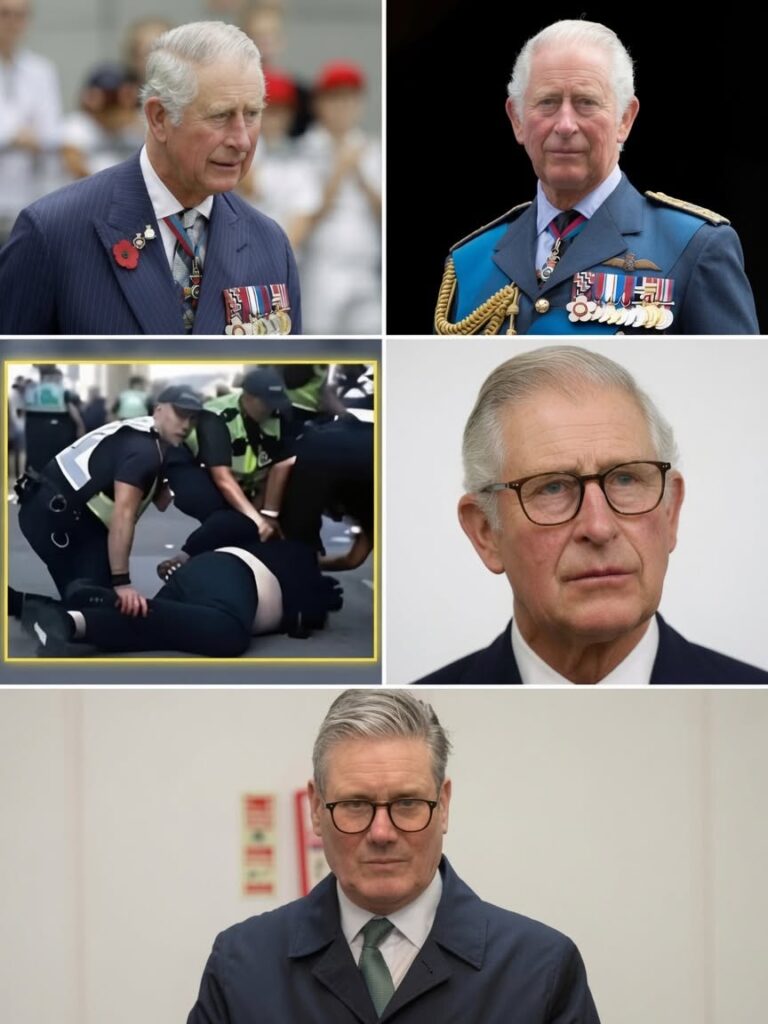
In recent days, dramatic social media posts have circulated claiming that King Charles III broke with centuries of royal convention by issuing a forceful public statement condemning the arrest of hundreds of farmers across the United Kingdom. According to these widely shared narratives, more than 700 farmers and ordinary citizens were detained during a nationwide police operation connected to new agricultural regulations, prompting the monarch to abandon the traditional political neutrality of the Crown. Some versions of the story go even further, suggesting that the King’s alleged intervention triggered fears of an unprecedented constitutional crisis.
BREAKING NEWS
Despite the attention these claims have received online, there is currently no verified public evidence confirming that such events unfolded as described. Neither Buckingham Palace nor UK authorities have publicly confirmed the existence of the alleged statement attributed to King Charles III, nor have official sources verified reports of a coordinated nationwide operation resulting in more than 700 arrests under the circumstances described. As with many rapidly spreading online narratives involving prominent public figures, separating confirmed facts from speculation remains essential. Nevertheless, the discussion surrounding these claims raises broader questions about the relationship between the monarchy, democratic institutions, agricultural policy, civil protest, and public expectations during times of political tension.
The story resonates because farming has become an increasingly sensitive political issue across Europe in recent years. Farmers in several countries including France, Germany, the Netherlands, Belgium, Poland, Spain, and other nations— have organized large demonstrations over environmental regulations, taxation, fuel costs, trade agreements, and economic pressures. Many agricultural producers argue that they face mounting financial challenges while simultaneously being expected to comply with increasingly complex regulatory frameworks. Governments, meanwhile, often contend that reforms are necessary to balance food production with environmental sustainability, climate commitments, public health, and long-term economic planning. The resulting disagreements have occasionally produced large demonstrations, road blockades, and confrontations with law enforcement.
Within the United Kingdom, debates over agricultural policy have also intensified since Brexit. British farmers have experienced significant changes in subsidy programs, export arrangements, labor availability, and environmental requirements. The transition away from the European Union’s Common Agricultural Policy introduced new domestic support schemes designed to reward environmental stewardship rather than simply land ownership. While ministers argue these reforms modernize British agriculture, many farming organizations have expressed concerns about implementation, financial uncertainty, administrative burdens, and the pace of change. These discussions have contributed to a broader conversation about the future of rural Britain and the economic sustainability of farming communities.
Against this backdrop, stories portraying farmers as standing against government authority naturally attract public attention. Rural communities often occupy a symbolic place in national identity, representing food security, local traditions, and stewardship of the countryside. Consequently, reports of police action involving agricultural protesters frequently generate emotional responses, regardless of political affiliation. Supporters of demonstrators may view such enforcement as an excessive restriction on peaceful protest, while others argue that authorities have a responsibility to uphold public order and enforce the law when demonstrations disrupt transportation, damage property, or violate legal requirements. The claim that King Charles III personally intervened adds another powerful dimension to the narrative because the British monarchy traditionally avoids involvement in partisan political disputes. Under the UK’s constitutional monarchy, the Sovereign reigns but does not govern. Political authority rests with Parliament and the elected government, while the monarch performs constitutional, ceremonial, and representative duties. Although the King meets regularly with the Prime Minister and retains the constitutional right to be informed, to encourage, and to warn ministers in private, these discussions are conducted confidentially. Public political interventions by the monarch are exceedingly rare precisely because political neutrality is considered fundamental to preserving the institution’s legitimacy across changing governments and political parties.
Historically, this principle has been carefully maintained through successive reigns. Queen Elizabeth II became internationally respected in part because she consistently avoided entering contemporary political controversies. Her public speeches were generally crafted to emphasize unity, continuity, national resilience, and service rather than political advocacy. King Charles III, before ascending the throne, was well known for speaking publicly on issues such as environmental conservation, architecture, sustainable agriculture, and interfaith dialogue during his time as Prince of Wales. After becoming monarch, however, constitutional expectations required a noticeably more restrained public role.
This transition has attracted considerable academic interest because Charles had spent decades cultivating a reputation as a prince willing to express personal opinions on selected public policy issues. Upon accession, constitutional scholars widely observed that the responsibilities of kingship differ fundamentally from those of an heir apparent. While a prince may advocate for causes within accepted conventions, the reigning monarch must demonstrate impartiality toward elected governments regardless of personal views. Maintaining that balance is essential to the continued functioning of Britain’s constitutional arrangements.
Because of these constitutional traditions, any report suggesting that King Charles publicly condemned government policy would naturally generate intense public interest. If a reigning monarch were perceived as criticizing ministers, supporting protesters, or questioning law enforcement decisions in explicit political terms, constitutional experts would likely examine the implications carefully. Such an event could prompt debate about the boundaries of royal influence, ministerial responsibility, parliamentary sovereignty, and the evolving role of the Crown in twenty-first century Britain. However, discussions of these hypothetical consequences should not be interpreted as confirmation that the alleged statement actually exists.
Understanding the constitutional framework helps explain why extraordinary claims require equally strong evidence. Official royal statements are typically released through Buckingham Palace using established communication channels. Major constitutional developments involving the monarch are generally covered extensively by reputable national and international news organizations, parliamentary correspondents, constitutional scholars, and legal experts. When dramatic claims circulate primarily through social media without corroboration from official institutions or established news reporting, careful verification becomes especially important before drawing conclusions.
The reported figure of more than 700 arrests also warrants careful scrutiny. Large-scale policing operations involving hundreds of detainees would represent a major national event requiring significant logistical coordination among multiple police forces, custody facilities, prosecutors, and courts. Such operations would ordinarily generate extensive documentation, public statements from police services, media coverage, legal commentary, and likely parliamentary discussion. Without corroborating evidence from official or independently verified sources, numerical claims circulating online should be approached cautiously.
This does not mean that disagreements between farmers and governments are imaginary. Across Europe and beyond, agricultural demonstrations have highlighted genuine concerns regarding profitability, food production, environmental regulations, fuel prices, international competition, and changing consumer expectations. Farmers frequently argue that society expects affordable food while simultaneously demanding higher environmental standards, improved animal welfare, reduced emissions, and greater biodiversity protection. Balancing these objectives often proves politically and economically complex.
Goverments face their own difficult choices. Policymakers must consider climate commitments, international trade obligations, fiscal constraints, public health priorities, environmental conservation, rural development, and national food security simultaneously. Measures intended to address one challenge can unintentionally create new burdens elsewhere. For example, stricter environmental standards may increase production costs, while financial support for agriculture may raise questions about public spending priorities. Democratic governments therefore often encounter criticism from multiple directions regardless of the policies they ultimately adopt.
Public protests play an established role within democratic societies. Peaceful assembly and freedom of expression are protected through various legal frameworks, although these rights exist alongside laws regulating public safety, traffic disruption, property damage, and criminal conduct. When demonstrations occur, law enforcement agencies generally seek to balance facilitating lawful protest with maintaining public order. Whether police actions are considered proportionate frequently becomes the subject of political, legal, and judicial review after significant public events.
The monarchy occupies a distinctive position within this constitutional landscape. Although politically neutral, the Crown often serves as a symbol of national continuity during periods of disagreement. Royal visits, public ceremonies, charitable patronage, and speeches frequently emphasize shared values rather than partisan positions. This symbolic role allows the monarchy to represent citizens with diverse political beliefs while avoiding direct involvement in electoral competition or legislative disputes.
Public fascination with stories depicting royal intervention reflects broader expectations that respected national figures might provide moral leadership during periods of uncertainty. Throughout history, citizens have sometimes looked beyond elected politicians toward institutions perceived as stable or enduring. Whether involving monarchs, religious leaders, former statesmen, or other public figures, such expectations often intensify during moments of social tension. Yet constitutional systems generally establish clear boundaries regarding how different institutions should exercise their respective responsibilities.
Digital media has significantly accelerated the spread of dramatic political narratives. Headlines suggesting unprecedented constitutional confrontations, secret interventions, or institutional breakdowns often attract substantial online engagement because they combine recognizable public figures with emotionally charged themes. Algorithms rewarding attention can amplify sensational claims long before independent verification becomes available. Consequently, readers increasingly face the challenge of distinguishing confirmed reporting from speculation, opinion, satire, or misinformation.
Media literacy experts frequently recommend examining whether extraordinary claims are supported by multiple independent sources, official documentation, direct quotations, and transparent evidence. Context also matters. Individual photographs, short video clips, or isolated statements may accurately depict genuine events while simultaneously being presented within misleading narratives. Responsible reporting therefore seeks to distinguish between what has been independently confirmed, what remains disputed, and what cannot presently be verified.
The alleged story involving King Charles III illustrates this broader challenge. Elements of the narrative draw upon real themes including agricultural unrest, public protest, constitutional convention, and public interest in the monarchy-but combine them into a sequence of events that currently lacks publicly verified confirmation. Readers encountering such reports benefit from considering not only whether individual claims appear plausible but also whether credible evidence supports the overall narrative.
Constitutional scholars often note that Britain’s political system has evolved through convention as much as through written law. Many expectations surrounding the monarchy derive from longstanding practices rather than explicit statutory requirements. This flexibility has contributed to the resilience of the UK’s constitutional arrangements over centuries, allowing institutions to adapt while preserving democratic accountability. Because convention plays such a significant role, deviations from established practice naturally receive intense scrutiny from legal experts, historians, politicians, and the public alike.
Even hypothetical discussions about royal neutrality encourage valuable reflection on constitutional principles. They invite consideration of how democratic institutions maintain legitimacy, how governments remain accountable, how peaceful protest functions within the rule of law, and how symbolic national institutions contribute to social cohesion. These questions extend beyond any single viral headline and remain relevant regardless of whether particular online claims ultimately prove accurate.
Ultimately, the available public evidence does not currently substantiate the specific claims that King Charles III issued a politically defiant statement condemning mass arrests of more than 700 farmers or that such an intervention triggered an immediate constitutional crisis. Until credible official documentation or independently verified reporting establishes these events, they should be regarded as unconfirmed claims rather than established fact. At the same time, the broader issues reflected in the discussion-agricultural policy, democratic protest, constitutional convention, and public trust in institutions -remain important subjects worthy of careful, evidence-based public debate. Responsible journalism serves the public best by distinguishing verified information from speculation while providing the context necessary for readers to reach informed conclusions.