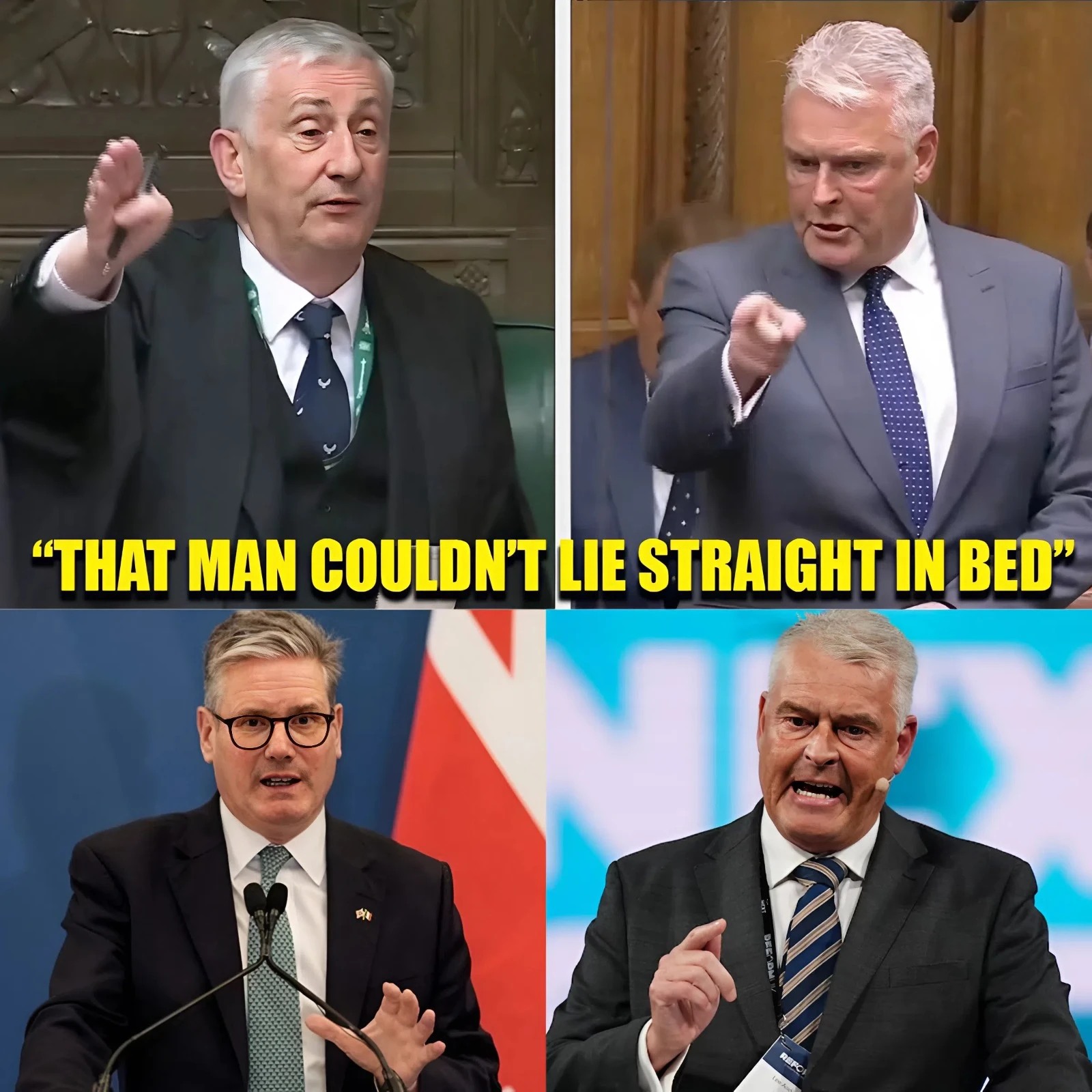
HE REFUSED TO BACK DOWN! WATCH THE EXPLOSIVE MOMENT LEE ANDERSON WAS KICKED
Clash in the Commons — The Moment Defiance, Discipline, and Political Theater Collided Before the Nation
Inside the House of Commons, a charged exchange erupted into one of the most talked about political confrontations in recent memory, capturing attention far beyond the chamber walls that witnessed it unfold.
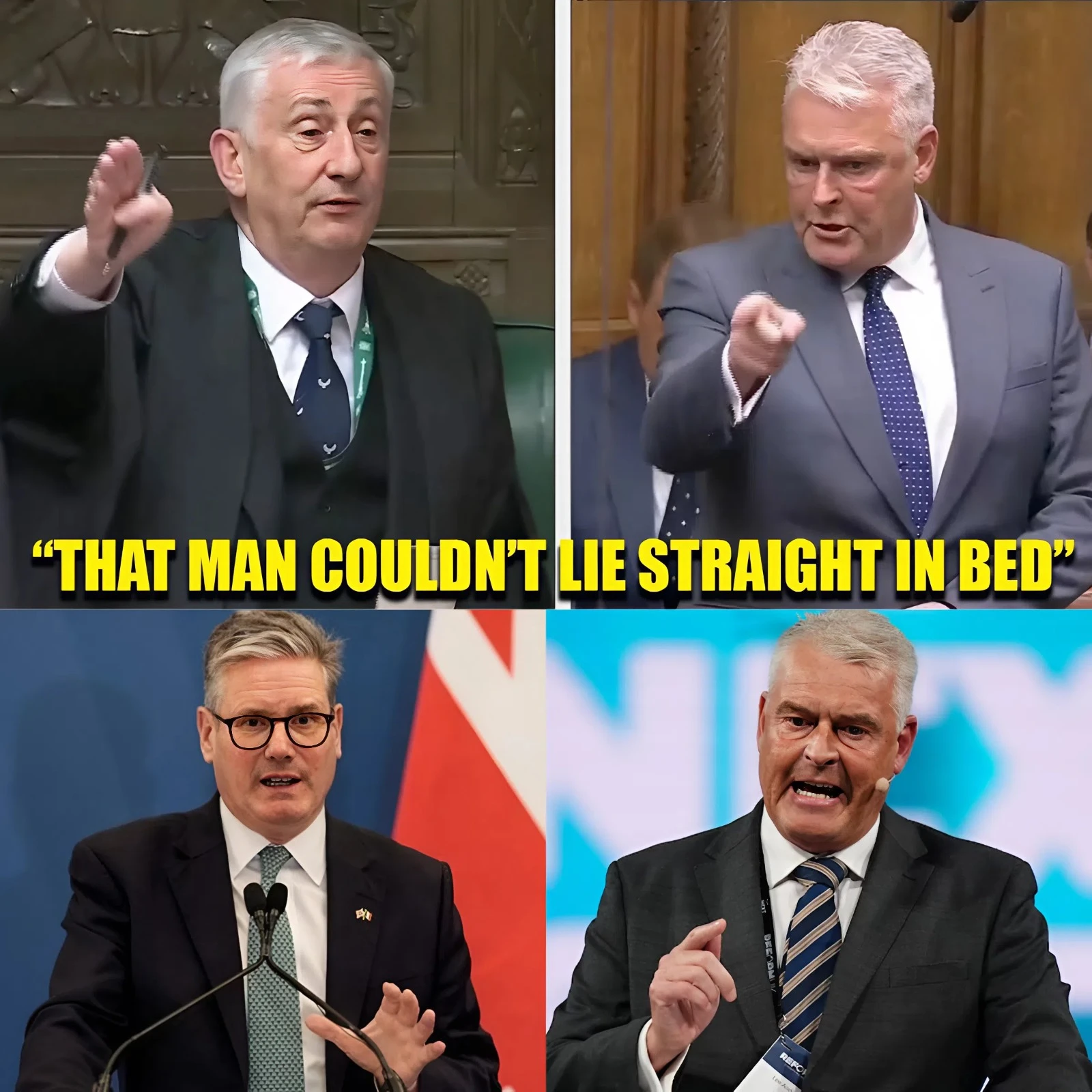
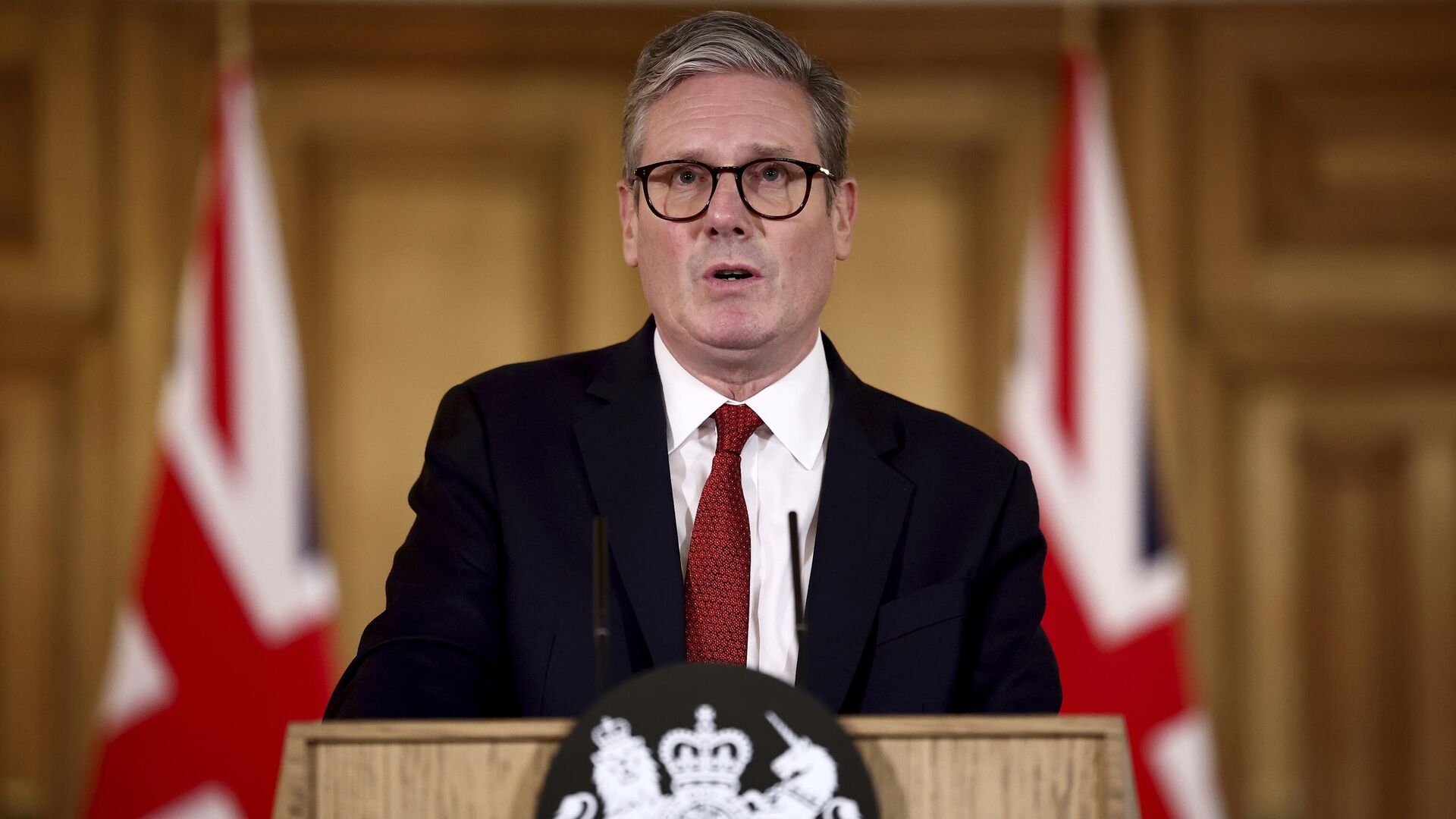
At the center of the storm stood Lee Anderson, whose remarks directed at Keir Starmer triggered immediate intervention from the Speaker and set off a chain reaction of debate and division.
What began as a routine session quickly escalated into a moment that highlighted the fragile balance between free expression, parliamentary rules, and the intense emotions shaping today’s political environment.
Observers described the atmosphere as electric, with voices rising, tensions tightening, and every word carrying weight as it echoed through Westminster and beyond.
The confrontation centered on language deemed unparliamentary, prompting the Speaker to demand its withdrawal, a long standing rule designed to preserve order and respect within legislative debate.
When that request was not immediately followed, the situation escalated further, culminating in disciplinary action that instantly became the focal point of national conversation.
Supporters of Anderson framed the moment as an act of defiance, arguing that it reflected frustration shared by many who feel that political discourse has become detached from public sentiment.
They viewed his refusal as symbolic, a stand against what they perceive as controlled narratives and carefully managed messaging within the political establishment.
Critics, however, emphasized the importance of maintaining standards in parliamentary language, warning that abandoning such rules risks undermining the integrity of debate and institutional credibility.
They argued that strong disagreement must still operate within agreed boundaries to ensure that discussions remain constructive rather than descending into personal attacks.
The clash illustrates a broader tension in modern politics, where the desire for authenticity and bluntness often collides with the need for structure and decorum in formal settings.
This tension is amplified by the visibility of such moments, as clips spread rapidly across digital platforms, transforming a parliamentary dispute into a nationwide spectacle within minutes.
Across the United Kingdom, reactions poured in from all sides, reflecting deep divisions in how citizens interpret both the event and its significance.
Some saw it as evidence of a political system under strain, where frustration is boiling over and traditional norms are increasingly challenged by new expectations of transparency and directness.
Others interpreted it as a reminder of why rules exist, highlighting the need for order in environments where decisions of national importance are debated and determined.
Political analysts noted that moments like this often resonate because they tap into underlying sentiments that extend far beyond the immediate issue being discussed.
They serve as flashpoints, revealing deeper currents of dissatisfaction, loyalty, and identity that shape how individuals engage with politics.
The role of the Speaker also came under scrutiny, with discussions focusing on the responsibility to enforce rules impartially while managing highly charged situations.
Maintaining neutrality in such moments is essential, yet challenging, particularly when actions taken can be interpreted through partisan lenses.

The incident also raises questions about how political figures communicate under pressure, balancing the need to convey conviction with the constraints of institutional frameworks.
In an era where authenticity is highly valued, the boundaries of acceptable expression are continually being tested and redefined.
Media coverage has played a significant role in shaping perceptions, with different outlets emphasizing various aspects of the confrontation to align with their editorial perspectives.
This diversity of framing contributes to a complex information landscape where audiences encounter multiple interpretations of the same event.
Social media has further intensified the impact, allowing individuals to share, comment, and debate in real time, amplifying both support and criticism.
The speed and scale of this engagement highlight the evolving relationship between political institutions and the public they serve.
For policymakers, such moments present both challenges and opportunities, offering insight into public sentiment while also requiring careful navigation to maintain credibility and effectiveness.
The long term implications will depend on how the individuals involved respond in the aftermath and how the broader system adapts to the pressures revealed by the incident.
Calls for reflection and dialogue have emerged, emphasizing the need to address underlying concerns while preserving the principles that support democratic governance.
At its core, the confrontation underscores the importance of trust, not only between leaders and citizens but also within the institutions that facilitate political decision making.
Trust is built through transparency, consistency, and accountability, all of which are tested in moments of high tension and public scrutiny.
As the debate continues, attention will remain focused on whether this incident represents a turning point or simply another chapter in an ongoing evolution of political culture.
The outcome may influence how future exchanges are conducted and how boundaries are interpreted in an increasingly dynamic and demanding environment.
Ultimately, the significance of the moment lies in its ability to spark conversation, challenge assumptions, and encourage deeper engagement with the processes that shape governance.
It serves as a reminder that democracy is not static but continually shaped by the interactions, conflicts, and resolutions that occur within its institutions.
As voices continue to be raised both inside and outside Parliament, the conversation will likely expand, drawing in perspectives from across society and beyond national borders.
In that sense, what happened in the chamber is not confined to a single moment but part of a broader narrative about the future of political discourse.

Whether viewed as defiance, disruption, or necessary enforcement of rules, the incident has captured attention and ensured that questions about leadership, expression, and accountability remain firmly in the spotlight.