IRELAND ON THE EDGE: THE 2% REVOLUTION BEGINS! Is this the end of the Irish government? Ireland has entered DAY 5 of a total nationwide shutdown, and the stakes have just gone nuclear! With 200,000 people marching on Parliament and the military on standby, the nation is holding its breath. From truckers blocking highways to fishermen ready to strangle every port, the working class has issued a final ultimatum: “Get our country back!” While legacy media calls them “thugs,” the viral footage shows a different story of a nation in pain. But here is the real bombshell: The secret math behind the “2% threshold” that could force the government to dissolve TODAY…
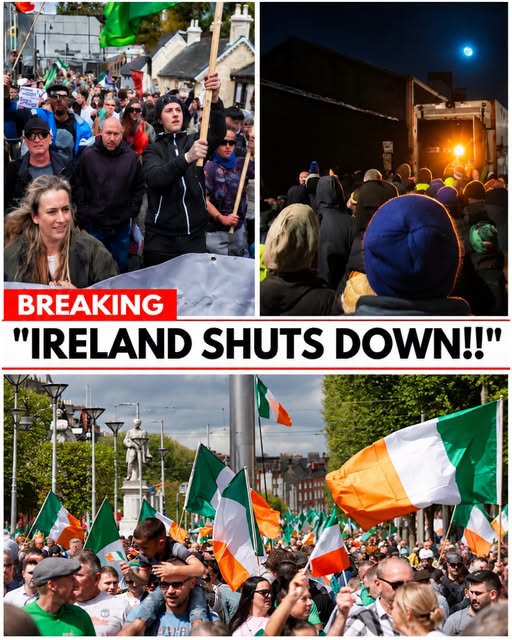
IRELAND ON THE EDGE: THE 2% REVOLUTION BEGINS!
Ireland is teetering on the brink of a historic upheaval.
As the nation enters DAY 5 of a total nationwide shutdown, tension crackles through every city, town, and village.
What started as a protest by a small fraction of the population has grown into a movement that now commands the attention of the entire country, leaving both the government and citizens questioning what comes next.
The stakes have escalated to unprecedented levels, and for many, this could mark a turning point in Ireland’s modern political history.
The 2% Revolution, as it has come to be known, is fueled by deep-seated frustration among the working class.
Truckers have blocked major highways, bringing trade and logistics to a near standstill.
Fishermen, whose livelihoods have long been challenged by economic pressures and government regulations, have vowed to keep ports inoperative, effectively halting imports and exports.
Meanwhile, a swelling crowd of over 200,000 people has marched on the Irish Parliament, demanding immediate action and sweeping changes to policies they believe have ignored the needs of ordinary citizens for decades.
The Irish military is on high alert, with units positioned strategically across the country to ensure order should events escalate further.
Yet, despite the looming presence of armed forces, the protesters remain largely peaceful, motivated not by chaos but by a sense of desperation and a desire to reclaim a voice in their government.
Viral footage circulating online paints a strikingly different picture than that presented by traditional media outlets, which have often dismissed demonstrators as “thugs” or “radicals.”
Instead, the video shows a populace weary from economic stagnation, high taxation, and policies perceived to favor the elite, united in their call for reform.
The movement has grown organically, driven by ordinary citizens who feel unheard.
Farmers, healthcare workers, delivery drivers, and small business owners have all joined the protests.
Each day, the ranks swell, and the pressure on Ireland’s political establishment intensifies.
Social media has amplified their message, with live streams and viral posts showing the sheer scale of participation and the raw emotion of those on the frontlines.
The phrase “Get our country back!”
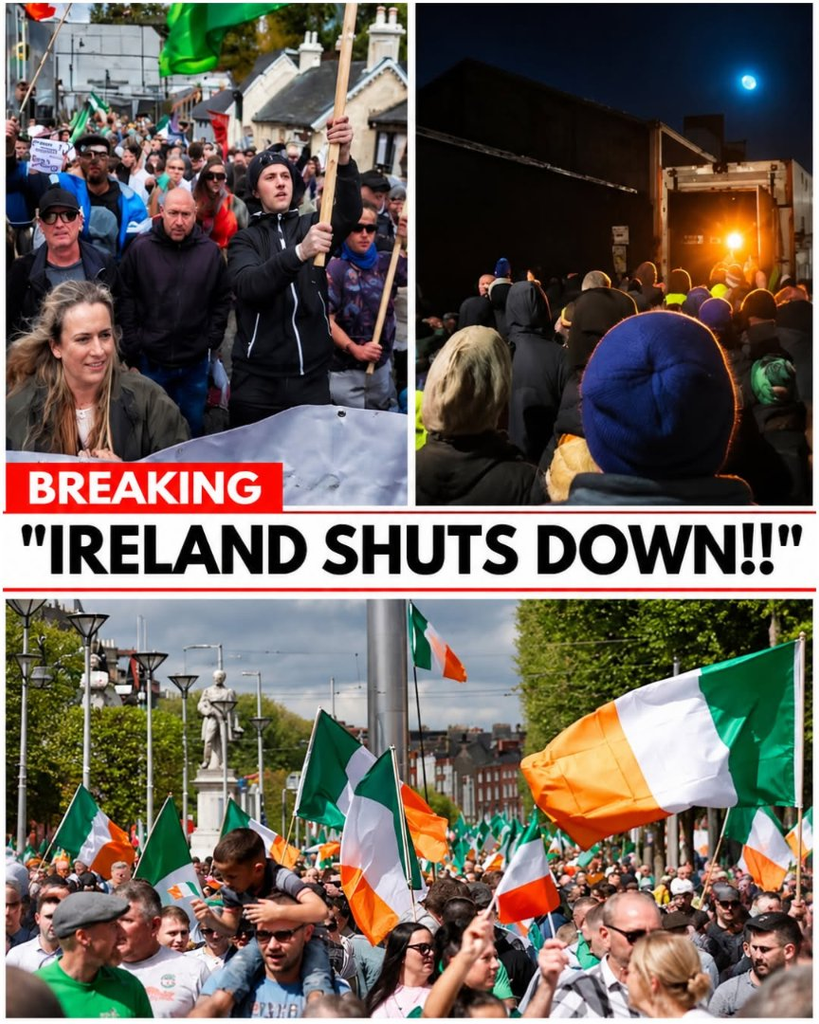
has become a rallying cry, echoing across streets, ports, and online forums, symbolizing a collective demand for accountability, transparency, and action.
This unprecedented convergence of economic frustration, political disillusionment, and social unrest has forced Ireland’s leaders into a corner.
The government, already struggling with internal divisions and waning public confidence, now faces the challenge of negotiating with a movement that refuses to be ignored.
Any misstep could escalate tensions, potentially pushing the nation into a full-scale political crisis.
For many observers, this is not just a protest — it is a test of Ireland’s resilience, governance, and the capacity of its institutions to respond to grassroots movements without resorting to heavy-handed measures.
The symbolism of the 2% Revolution is not lost on participants.
While only a small percentage of the population initially organized the shutdown, the movement’s influence has spread far beyond its origins, demonstrating the power of determination, coordination, and shared purpose.
Citizens who had previously felt powerless have found a voice through collective action, challenging the status quo and demanding that their concerns be taken seriously.
For these individuals, this is not about destruction or disorder — it is about reclaiming dignity, ensuring fairness, and asserting that government exists to serve all citizens, not just a privileged few.
Economic consequences are mounting. The blocked highways have delayed critical supplies, affecting everything from grocery deliveries to medical shipments.
Ports remain partially closed, disrupting trade and straining businesses that rely on international shipping.
Analysts warn that prolonged shutdowns could have long-term impacts on Ireland’s economy, further inflaming public anger and intensifying calls for immediate government reform.
Yet, despite these pressures, protesters remain resolute, seeing the short-term disruptions as a necessary sacrifice to achieve long-term change.
The Irish public is now polarized.
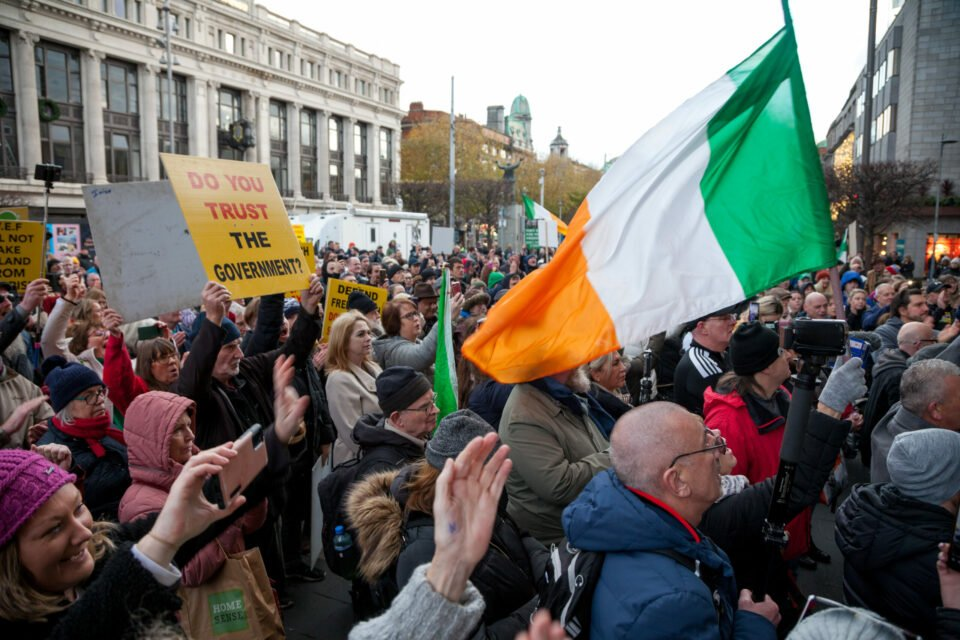
Some citizens express solidarity with the movement, empathizing with their frustrations and supporting their demand for systemic reform.
Others voice concern over the disruptions and the potential for violence, emphasizing the need for dialogue and caution.
Regardless of stance, few can ignore the scale and intensity of the protests.
Ireland, a nation often characterized by political stability, is witnessing an extraordinary moment that will likely be studied for decades to come.
As DAY 5 continues, all eyes remain on Dublin and the Parliament.
Will the government respond with concessions, dialogue, or force? Can the 2% Revolution sustain momentum without descending into chaos?
The outcome remains uncertain, but one fact is clear: Ireland is standing at a crossroads.
Citizens, leaders, and the world alike are watching as the nation grapples with a profound struggle for power, justice, and representation.
In the end, the 2% Revolution is more than a protest — it is a reflection of Ireland’s social and economic realities, a dramatic call for accountability, and a powerful reminder that the voice of the people cannot be ignored indefinitely.
History is unfolding in real time, and Ireland’s fate hangs in the balance, as a nation demands not just to be heard, but to be respected.