Poland’s Border Policy Returns to the Center of European Debate Following New Incident Along the Belarus Frontier
A newly reported incident along the Poland-Belarus border has once again placed one of Europe’s most contentious political issues under renewed public scrutiny. While officials continue to examine the circumstances surrounding the latest developments, the event has already reignited a broader discussion about migration, border security, humanitarian obligations, and national sovereignty. Across Poland and throughout the European Union, the border has become more than a physical frontier. It has evolved into a symbol of competing political priorities, legal responsibilities, and differing visions for Europe’s future. As information continues to emerge, policymakers, security experts, humanitarian organizations, and ordinary citizens are once again debating where the
balance should lie between protecting national borders and protecting vulnerable individuals seeking safety.
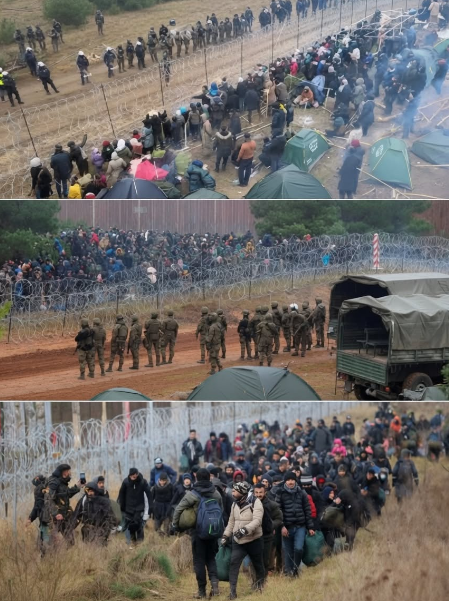
The renewed attention comes at a time when migration remains one of the defining political issues across Europe. Although migration has shaped European politics for decades, recent years have brought additional challenges resulting from conflicts, political instability, economic hardship, and changing migration routes. Poland’s eastern frontier has become one of the most closely watched external borders of the European Union, particularly since tensions with neighboring Belarus escalated. Every reported incident along this border now receives significant media attention because it touches upon broader questions that affect not only Poland but also the entire European bloc.
Authorities have not yet released comprehensive details surrounding every aspect of the reported incident, and some information remains subject to verification. As with many fast-moving border situations, initial reports may evolve as investigations continue and additional evidence becomes available. For that reason, observers have urged caution against drawing definitive conclusions before official findings are completed. Nevertheless, even before every fact has been established, the event has already generated extensive political discussion, illustrating how sensitive and consequential border issues have become within European public debate.
Supporters of Poland’s current border policies argue that the government’s primary responsibility is to protect the country’s territorial integrity and maintain secure external borders. From this perspective, effective border enforcement serves not only Poland’s national interests but also those of the broader European Union, whose member states share responsibility for managing the bloc’s external frontiers. Advocates believe that allowing unauthorized crossings could weaken public confidence in immigration systems, encourage further irregular migration, and create additional challenges for security agencies already operating under considerable pressure.
Many security analysts note that border management involves far more than simply preventing unauthorized entry. Modern border protection requires extensive coordination between military personnel, border guards, intelligence services, police agencies, and international partners. Surveillance technologies, aerial monitoring, electronic sensors, satellite imagery, and intelligence- sharing networks have become increasingly important components of contemporary border security strategies. Poland has invested substantial resources in strengthening these capabilities, arguing that modern threats require equally sophisticated responses.
Officials supporting stronger controls frequently emphasize that migration cannot be viewed solely as a humanitarian issue. They argue that governments must also consider national security, organized crime, human trafficking, document fraud, and the potential exploitation of migration routes by criminal organizations. While the overwhelming majority of migrants are ordinary individuals seeking safety or better opportunities, authorities maintain that effective screening
procedures remain essential for identifying possible security risks and protecting both migrants and host communities alike.
At the same time, humanitarian organizations continue to express concern regarding the treatment of individuals attempting to cross international borders under dangerous conditions. Human rights advocates argue that every asylum seeker deserves access to fair legal procedures consistent with international conventions. Organizations working with displaced populations frequently emphasize that many migrants are escaping armed conflict, political persecution, or severe humanitarian crises. From their perspective, border security measures should always be implemented alongside protections that safeguard fundamental human rights and preserve access to asylum procedures where applicable under international law.
The debate has therefore become one of competing priorities rather than simple disagreement over immigration itself. On one side are those who believe that secure borders form the foundation of national stability and public safety. On the other are those who argue that humanitarian obligations remain equally important, particularly when individuals may be fleeing life-threatening circumstances. Many policymakers acknowledge that these objectives need not be mutually exclusive, although determining the appropriate balance continues to prove politically challenging.
The Poland-Belarus border has attracted international attention repeatedly over recent years due to rising migration pressures and geopolitical tensions. European officials have frequently described the situation as unique because it combines migration management with broader diplomatic and security concerns. Various governments have accused Belarus of facilitating or encouraging migration flows toward the European Union’s eastern frontier, allegations that Belarus has rejected. These wider geopolitical disputes have complicated efforts to address migration through traditional diplomatic channels.
For Poland, the border represents not only a migration route but also an important strategic frontier for both NATO and the European Union. As regional security concerns have intensified following Russia’s invasion of Ukraine, the importance of maintaining secure eastern borders has become even more pronounced. Polish leaders have consistently argued that national defense, border security, and broader European stability are closely interconnected. This perspective has shaped many of the country’s recent investments in border infrastructure and security personnel.
Infrastructure improvements have become a highly visible feature of Poland’s border strategy. Physical barriers, surveillance equipment, patrol roads, and electronic monitoring systems have all been expanded in an effort to reduce unauthorized crossings. Government officials argue that these measures improve operational efficiency while reducing dangerous encounters between migrants
and border personnel. Critics, however, question whether physical barriers alone can effectively address the broader causes driving migration across international borders.
Migration experts often emphasize that people rarely leave their homes without significant motivation. Armed conflict, political repression, economic instability, environmental disasters, food insecurity, and lack of opportunity all contribute to migration flows. Addressing these root causes requires long-term international cooperation involving development assistance, diplomatic engagement, conflict resolution, and economic partnerships. Consequently, many analysts argue that border enforcement represents only one component of a much larger migration management strategy.
Within Poland itself, public opinion regarding migration has evolved over time. Surveys conducted over recent years have demonstrated varying levels of support for stricter border enforcement, particularly during periods of heightened international tension. Many citizens express concern about maintaining public safety, preserving effective immigration procedures, and ensuring that migration remains orderly and legally regulated. Others emphasize Poland’s historical experience with displacement and argue that humanitarian considerations should continue to play an important role in national policy.
Political parties across the Polish spectrum have frequently incorporated migration into broader discussions concerning national identity, European integration, economic priorities, and constitutional responsibilities. Election campaigns have often featured debates regarding border management, asylum procedures, and cooperation with European institutions. As a result, any new border incident rapidly becomes part of a wider political conversation extending far beyond the immediate facts of a particular event.
The European Union likewise faces continuing challenges in developing a migration policy acceptable to all member states. While every member agrees that migration requires coordinated management, significant differences remain regarding burden-sharing, asylum procedures, relocation mechanisms, external border responsibilities, and return policies. Countries situated along the EU’s external borders often argue that they bear disproportionate responsibility for migration management, while inland member states sometimes advocate broader mechanisms for distributing responsibilities across the Union.
The latest developments along the Poland-Belarus border have therefore resonated beyond Warsaw. Policymakers in Brussels, Berlin, Paris, Rome, and numerous other European capitals are carefully monitoring events because decisions taken at one external border frequently influence broader European policy discussions. The situation illustrates how interconnected national immigration policies have become within the framework of European cooperation.
International law provides an important framework for these discussions. The 1951 Refugee Convention, European human rights obligations, and various EU regulations establish legal standards governing asylum procedures and refugee protection. Governments must therefore balance domestic security priorities with international legal commitments. Legal scholars often observe that these frameworks were developed precisely to provide guidance during periods of heightened migration pressure, although interpreting and implementing them remains subject to ongoing legal and political debate.
Border personnel themselves frequently operate under exceptionally demanding circumstances. Officers must enforce immigration laws, conduct security assessments, provide emergency assistance when necessary, and respond rapidly to changing operational conditions. Many encounters occur in remote forested areas, difficult terrain, or adverse weather conditions. These operational realities contribute additional complexity to decisions that are often viewed primarily through political or humanitarian lenses.
Technology continues to play an expanding role in border management across Europe. Advanced surveillance drones, thermal imaging systems, artificial intelligence-assisted monitoring, biometric identification technologies, and integrated communication platforms are increasingly being deployed to improve situational awareness. Supporters argue that these technologies enhance both security and humanitarian response by enabling authorities to identify individuals in distress more rapidly while improving overall border monitoring efficiency.
Humanitarian organizations, meanwhile, continue advocating for expanded access to medical care, legal assistance, emergency shelter, and independent monitoring of border operations. They emphasize that regardless of political disagreements surrounding migration policy, individuals encountering life-threatening situations should receive appropriate humanitarian assistance. Governments generally acknowledge these humanitarian responsibilities while emphasizing that emergency aid should not undermine broader border enforcement objectives.
The media also plays a significant role in shaping public perceptions of border incidents. Images, videos, eyewitness accounts, and official statements often circulate rapidly across traditional and social media platforms. While this enables the public to receive information quickly, it also increases the importance of careful verification before conclusions are reached. Analysts frequently encourage audiences to distinguish between verified reporting, preliminary claims, and political commentary during rapidly developing situations.
Experts further note that migration discussions often become highly emotional because they involve fundamental questions concerning identity, security, compassion, law, and international cooperation. Different communities may prioritize these values differently based on historical experience,
geographic location, political beliefs, or personal circumstances. Consequently, public debates frequently reflect broader philosophical differences regarding the role of governments and the responsibilities of democratic societies.
Economic considerations also influence migration policy discussions. Governments must allocate resources for border enforcement, asylum processing, humanitarian assistance, judicial procedures, and long-term integration where asylum claims are approved. Policymakers therefore face difficult budgetary decisions alongside legal and humanitarian considerations. Supporters of stronger enforcement argue that effective border control ultimately reduces long-term costs by discouraging irregular migration, while others contend that investing in orderly legal migration systems may produce more sustainable outcomes.
The broader geopolitical environment further complicates policymaking. Relations between the European Union and neighboring countries influence migration patterns, border cooperation, diplomatic negotiations, and regional stability. International organizations including the United Nations, the International Organization for Migration, and the European Union continue working with governments to address migration challenges through coordinated approaches combining humanitarian assistance, security cooperation, and long-term development initiatives.
As investigations into the newly reported border incident continue, officials are expected to release additional information clarifying the sequence of events. Such findings may influence future policy discussions, although the broader debates surrounding migration are unlikely to disappear. Regardless of the outcome of any individual investigation, the incident has already demonstrated how quickly developments at Europe’s external borders can reshape national and international political conversations.
Observers suggest that future discussions will likely focus on whether existing policies remain sufficient or require further adjustment. Some policymakers may advocate stronger enforcement measures, expanded border infrastructure, or additional security resources. Others may call for reforms aimed at improving asylum procedures, increasing humanitarian protections, or strengthening cooperation with international organizations. These competing proposals reflect the continuing search for policies capable of addressing complex migration realities while maintaining public confidence.
Ultimately, the renewed attention surrounding Poland’s border highlights one of Europe’s most enduring policy challenges. Governments must simultaneously protect national security, uphold international legal commitments, manage migration effectively, respond compassionately to humanitarian needs, and maintain public trust. Achieving all of these objectives at once remains
extraordinarily difficult, ensuring that border policy will continue to occupy a central place in European political debate for the foreseeable future.
While the specific circumstances surrounding the latest reported incident continue to be examined, its broader significance is already evident. The event has once again reminded Europe that migration remains a multidimensional issue involving security, law, diplomacy, humanitarian responsibility, economics, and politics. As authorities continue their investigations and policymakers evaluate possible responses, the discussions unfolding in Poland are likely to influence wider European debates over the future direction of migration policy, border governance, and regional cooperation in the years ahead.