
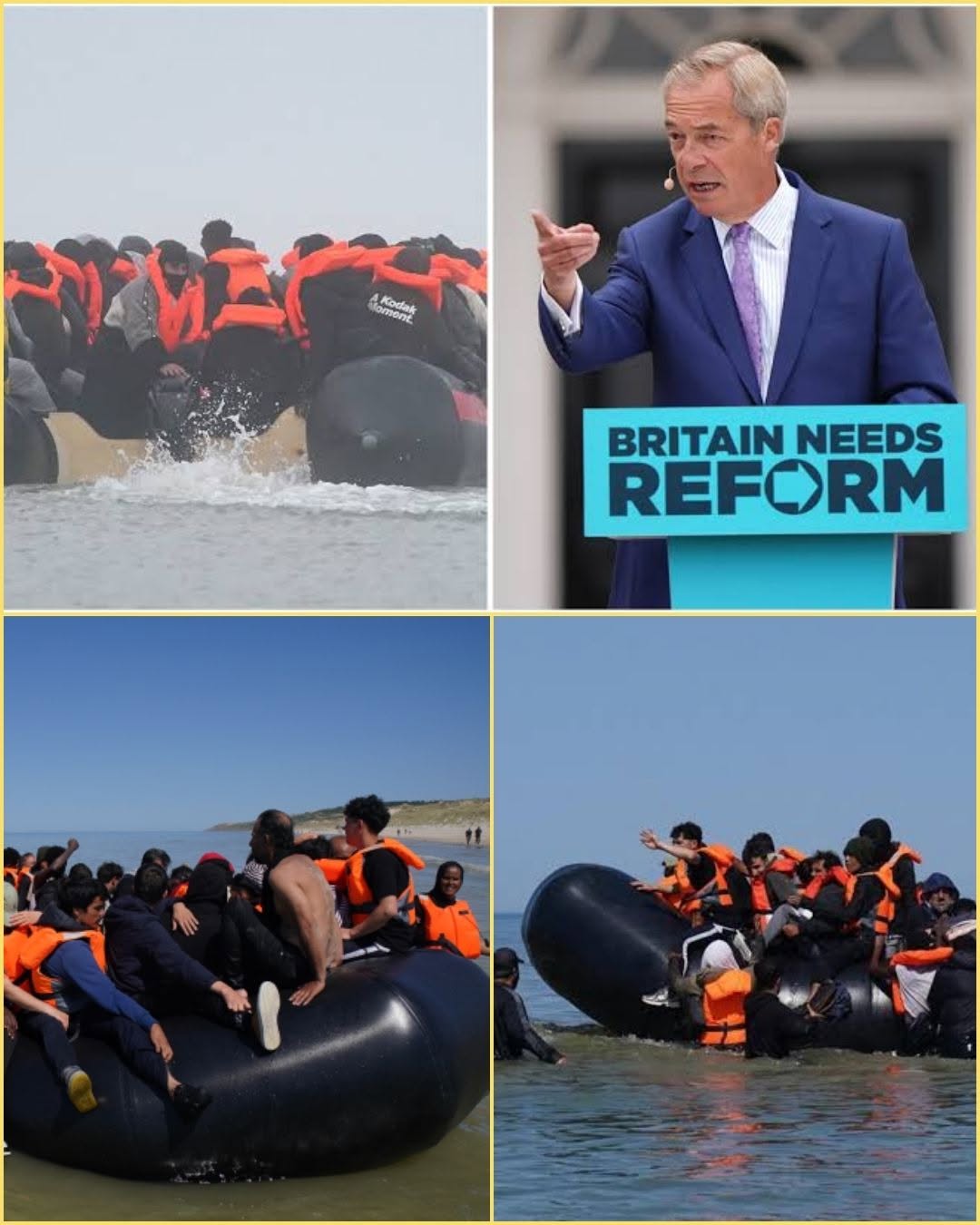
WESTMINSTER IN TOTAL MELTDOWN! Reform UK Drops Nuclear Bomb Over Small Boats Crisis—Check the Comments to See What Everyone Is Saying! Reform UK wants to ditch human rights rules and start mass deportations right away to stop small boats from coming in.
Reform UK’s Immigration Proposals Reignite Debate Over Small Boat Crossings, Human Rights Law, and Mass Deportation Policies

Introduction
Reform UK has once again placed immigration at the center of Britain’s political debate after renewing calls for sweeping changes to asylum policy, human rights legislation, and border enforcement. The party has argued that stronger measures—including changes to the application of human rights laws, expanded deportation powers, and tougher action against irregular migration—are necessary to address the continuing arrival of migrants crossing the English Channel in small boats.
Supporters describe the proposals as a decisive response to what they see as a long-running failure to secure Britain’s borders. Critics, however, argue that some of the suggested measures could face significant legal, humanitarian, and practical challenges while raising questions about the UK’s international obligations.
The proposals have generated intense political discussion, with government ministers, opposition parties, legal experts, and campaign groups offering sharply contrasting views on how Britain should respond to one of its most contentious policy issues.
The Small Boats Issue
Crossings of the English Channel by migrants in small inflatable boats have become one of the defining political issues in the United Kingdom over recent years.
Thousands of people have attempted the dangerous journey from northern France to southern England, often relying on organized criminal smuggling networks. The crossings have resulted in numerous rescue operations and, tragically, multiple fatalities at sea.
Successive governments have pledged to reduce the crossings through a combination of:
- stronger border enforcement;
- international cooperation with France and other European partners;
- legislation targeting people-smuggling networks;
- reforms to the asylum system;
- agreements concerning the return or relocation of some asylum seekers.
Despite these efforts, the issue remains politically divisive and continues to dominate debate over immigration policy.
What Reform UK Is Proposing
Reform UK has argued that current immigration policies are insufficient to deter irregular migration and has proposed a significantly tougher approach.
Among the measures advocated by the party are:
- stricter border enforcement;
- faster removal of individuals found not to have a legal right to remain in the UK;
- expanded deportation powers for certain foreign nationals;
- reforms to asylum procedures to reduce lengthy processing times;
- changes to the role of human rights law in immigration cases.
Party representatives argue that these measures would discourage dangerous Channel crossings and reduce the financial burden on taxpayers.
Human Rights and Immigration
One of the most controversial aspects of Reform UK’s proposals concerns human rights legislation.
The party has argued that current legal frameworks—including the European Convention on Human Rights (ECHR) and the UK’s Human Rights Act—can make it more difficult to remove some individuals who have exhausted their legal avenues to remain in the country.
Supporters of reform argue that:
- lengthy legal appeals can delay removals;
- the current system places significant demands on public resources;
- stronger deportation powers would improve confidence in immigration enforcement.
Critics, however, contend that human rights protections serve an important purpose by ensuring that deportation decisions are made lawfully and fairly, particularly in cases involving risks of persecution, torture, or family life.
Any major changes to these legal frameworks would require significant legislative action and could have implications for the UK’s domestic and international legal commitments.
Can Mass Deportations Be Implemented?
Calls for large-scale deportations have become a recurring feature of political debate.
In practice, implementing such policies would involve several legal and logistical considerations, including:
- determining an individual’s immigration status;
- assessing asylum claims;
- complying with domestic legislation;
- observing international treaty obligations;
- securing agreements with receiving countries;
- arranging transport and administrative procedures.
Legal experts note that removal from the UK generally requires compliance with immigration law and judicial processes. The scale and speed of any deportation policy would therefore depend on legislative changes, available resources, and international cooperation.
Supporters’ Perspective
Supporters of Reform UK’s proposals argue that stronger immigration controls are necessary to restore confidence in the system.
They contend that:
- secure borders are essential for national sovereignty;
- dangerous Channel crossings should be deterred;
- criminal smuggling networks should be disrupted;
- immigration laws should be enforced consistently;
- quicker removals would reduce incentives for irregular migration.
Many also argue that effective enforcement could reduce pressure on accommodation systems, public services, and the asylum backlog.
Critics’ Perspective
Opponents argue that immigration policy should balance border security with legal obligations and humanitarian considerations.
They express concerns that:
- broad deportation policies may affect individuals with legitimate protection claims;
- changes to human rights law could have consequences extending beyond immigration cases;
- international cooperation remains essential to managing migration effectively;
- long-term solutions should also address the causes of irregular migration and the operations of people-smuggling networks.
Human rights organizations have emphasized that asylum seekers are entitled to have their claims assessed under applicable domestic and international law.
The Government’s Position
Successive UK governments have stated that reducing irregular migration remains a priority.
Measures introduced in recent years have included:
- agreements with France to strengthen border patrols;
- increased enforcement against smuggling networks;
- reforms to asylum procedures;
- legislation aimed at reducing irregular arrivals;
- efforts to expand returns agreements with other countries.
Government ministers have argued that these measures are intended to create a more effective and sustainable immigration system while remaining within the framework of UK law.
The Role of International Law
The UK’s immigration system operates within a wider legal framework that includes domestic legislation and international agreements.
These include obligations relating to:
- refugee protection;
- non-refoulement (the principle that individuals should not be returned to places where they face certain serious risks);
- judicial oversight of immigration decisions;
- human rights protections.
Any proposal to alter these arrangements would likely involve parliamentary debate, legal scrutiny, and potentially judicial review.
Public Opinion
Immigration continues to rank among the issues that many voters consider most important.
Opinion surveys consistently show differing priorities among the public.
Some voters favor:
- tighter border controls;
- lower immigration levels;
- faster deportations for those without legal permission to remain.
Others emphasize:
- maintaining humanitarian protections;
- ensuring fair asylum procedures;
- addressing labour shortages through managed legal migration;
- preserving the UK’s international legal commitments.
As a result, immigration remains one of the most politically contested areas of public policy.
Political Debate Continues
The discussion surrounding Reform UK’s proposals reflects broader questions about:
- how to manage irregular migration;
- the future of the UK’s relationship with international human rights law;
- balancing national security with legal protections;
- maintaining public confidence in the immigration system;
- addressing the humanitarian dimensions of migration.
Different political parties continue to advocate contrasting approaches, ensuring that immigration will remain a central issue in British politics.
Conclusion
Reform UK’s renewed proposals on immigration have intensified an already heated national debate over small boat crossings, asylum policy, and the role of human rights law in immigration decisions. Supporters argue that tougher enforcement, faster removals, and legal reforms are necessary to deter irregular migration and strengthen border security. Critics respond that any changes must remain consistent with the rule of law, protect legitimate asylum seekers, and respect the UK’s legal obligations.
Claims circulating on social media that Westminster is in “total meltdown” or that politicians are in “panic” are rhetorical characterizations rather than established facts. While the proposals have undoubtedly generated significant political discussion, they remain policy proposals that would require legislative approval and, in some cases, substantial legal and practical changes before they could be implemented.
As Parliament, policymakers, and the public continue to debate the future of UK immigration policy, the central challenge remains finding an approach that balances effective border management, public confidence, humanitarian responsibilities, and the rule of law.