WHY IS POLAND REFUSING TO FOLLOW THE REST OF EUROPE?
Why Poland Refuses to Follow the Rest of Europe on Migration
Poland has become one of Europe’s most closely watched countries in the migration debate because it has chosen a path that looks very different from the one taken by many Western European states.
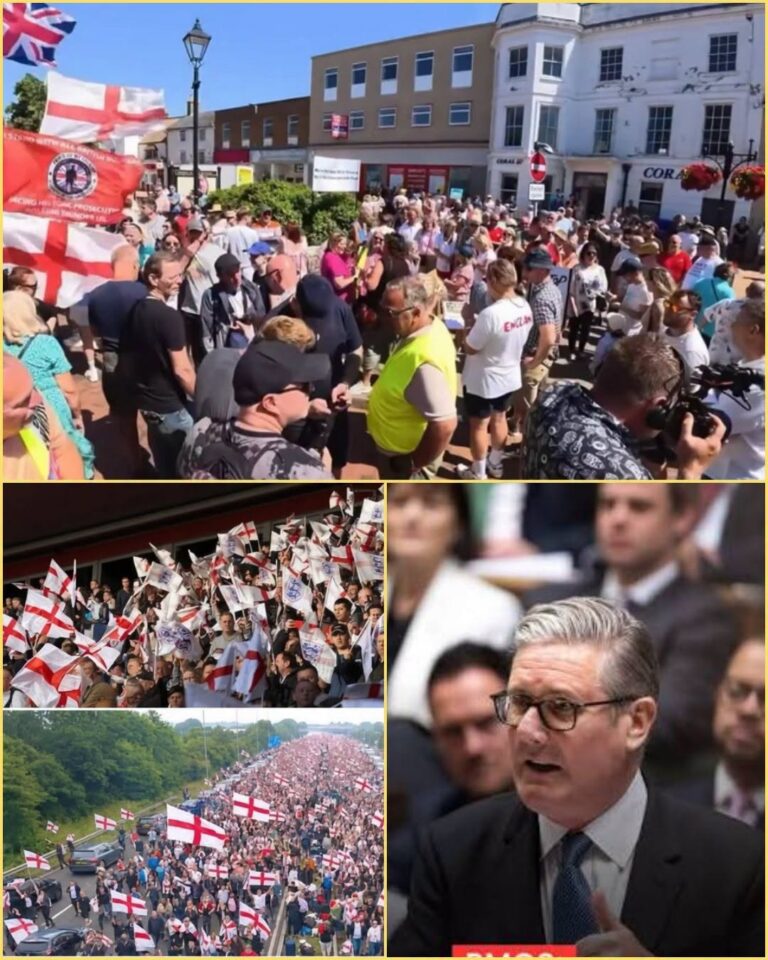
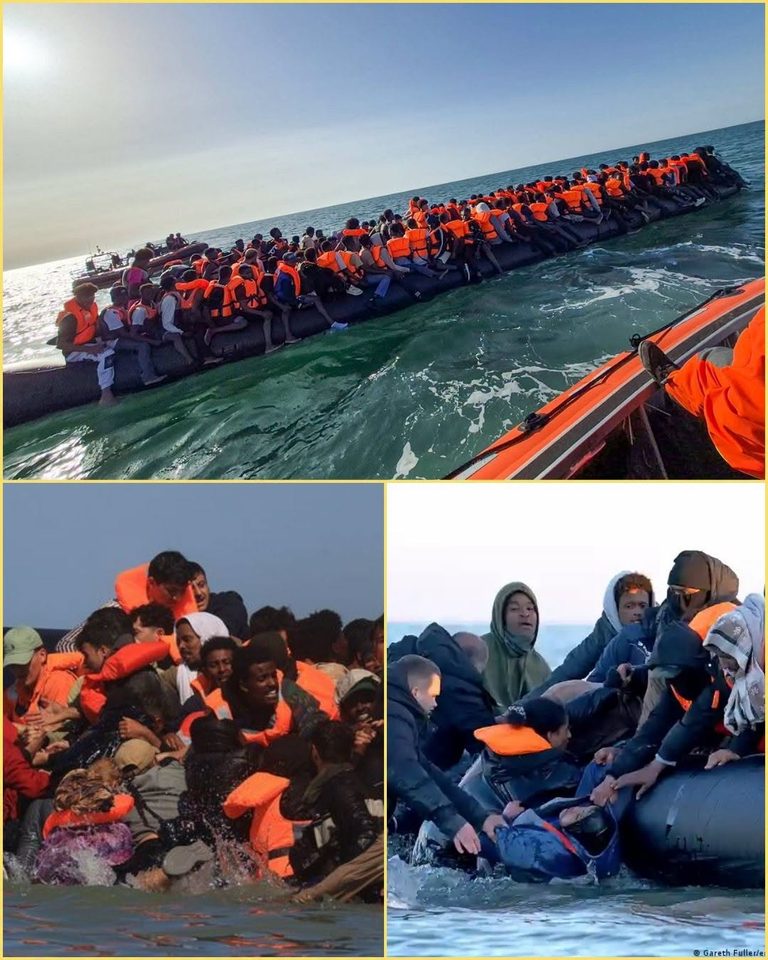
While countries such as Germany, France, Sweden, Italy, and the United Kingdom continue arguing over asylum backlogs, integration pressure, border control, and public safety, Poland’s leaders have presented their model as proof that stricter control can preserve social cohesion. Supporters paint to Poland’s low-crime image, economic growth, strong national identity, and firm border policy. Critics argue that this version of events is too simple, ignores humanitarian concerns, and overlooks the reality that Poland itself has become a major host country for migrants and refugees-especially from Ukraine.
The truth is more complicated than either side usually admits.
Poland has not rejected all migration. It has rejected a particular model of migration: large-scale, irregular, culturally contested migration entering through asylum routes that many Poles believe Western Europe failed to control.
The Historical Reason: Poland Never Had the Same Migration Experience
One reason Poland thinks differently about migration is history.
For much of the post-war period, Poland was not a major destination country for migrants from Africa, the Middle East, or South Asia. Under communism and during the early decades after 1989, Poland was more often a country people left than a country people moved to. Millions of Poles worked abroad, especially after joining the European Union.
That means Poland did not develop the same kind of post-colonial migration relationship seen in Britain, France, the Netherlands, Belgium, or Portugal. Western Europe’s migration systems were shaped by empire, guest-worker programmes, colonial ties, labour shortages, family reunification, and asylum movements across several decades.
Poland’s political memory is different. Its national identity was shaped by occupation, partitions, resistance, Catholic tradition, Soviet domination, and the struggle to preserve language and sovereignty.
So when Western European leaders speak about multiculturalism as a historical reality, many Polish politicians and voters hear something else: a model they did not choose and do not want imposed on them.
The Security Reason: Belarus Changed Everything
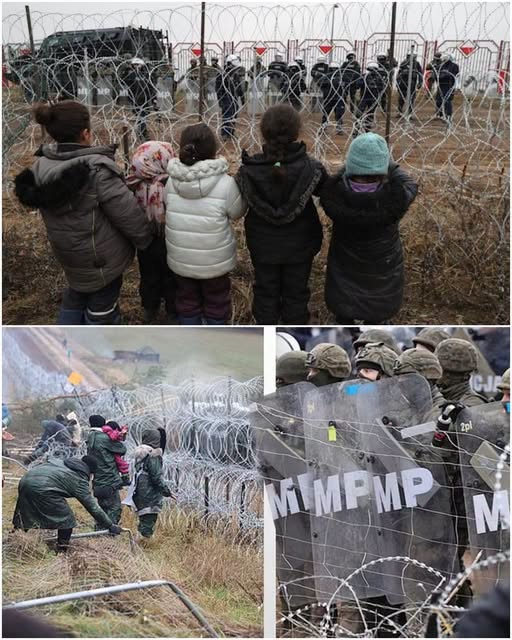
Poland’s migration debate cannot be understood without the Belarus border crisis.
Since 2021, Poland and the EU have accused Belarus, backed by Russia, of pushing migrants toward the Polish frontier as a form of “hybrid warfare.” Polish officials argue that this is not ordinary migration but a hostile operation using vulnerable people as political pressure against the EU.
That is why Poland has built barriers, deployed security forces, expanded surveillance, and restricted access to asylum applications at the Belarus border. The European Union Agency for Asylum notes that Poland extended restrictions on the right to submit applications for international protection at the Polish-Belarusian border, a measure in place since March 2025.
The Associated Press has also reported that Poland’s border with Belarus has become heavily fortified, with drones, barriers, and thousands of soldiers and guards involved in border protection, while Poland frames the situation as part of a broader security challenge linked to Belarus and Russia.
For Poland’s leaders, this is the central point: if a hostile state can move people toward the border and force Poland to process every arrival under ordinary rules, then migration becomes a weapon. Supporters of Poland’s policy say the country is not rejecting refugees because of who they are; it is refusing to let Belarus and Russia exploit asylum law as a geopolitical tool.
Critics respond that even if Belarus is acting cynically, the people at the border may still include genuine asylum seekers. They argue that being manipulated by a hostile state does not erase a person’s right to ask for protection.
That is the moral and legal clash at the heart of Poland’s position.
The Political Reason: Polish Voters Reward Toughness
Poland’s political class has learned that a tough migration line is popular.
Both conservative and centrist governments have moved toward stricter policies. Even when political parties disagree on many domestic issues, migration from Belarus, irregular crossings, and EU relocation schemes have often produced a broad national consensus: Poland should control who enters and should not be forced to accept migration quotas designed elsewhere.
This is why Poland has often resisted EU-level pressure for shared asylum responsibility. To many Poles, “solidarity” means defending Europe’s eastern border and hosting Ukrainians fleeing war, not accepting redistribution formulas from Brussels.
Poland’s government has also presented tougher visa and work-permit controls as proof that it has “regained control” over immigration. The Interior Ministry said Poland issued 16,000 work visas to foreign nationals in the first quarter of 2026, eight times fewer than in the same period of 2022, while also reporting fewer student visas, fewer work permits, and more successful deportations.
That message is politically powerful because it sounds like order after years of European disorder.
The Ukrainian Exception
Critics of Poland’s anti-migration image often point out something important: Poland has accepted huge numbers of Ukrainians.
The European Union Agency for Asylum’s 2026 Poland overview states that approximately 1.5 million Ukrainian nationals were living in Poland under temporary protection and related arrangements.
That fact complicates the claim that Poland is simply “anti-migrant.” Poland has hosted one of the largest Ukrainian refugee populations in Europe. Polish families, cities, schools, employers, churches, charities, and local governments absorbed large numbers of people after Russia’s full-scale invasion of Ukraine.
But many Poles see Ukrainian migration differently from irregular migration through Belarus or from asylum routes associated with the Middle East and Africa. Ukrainians are neighbours. Many share cultural, historical, geographic, and religious proximity with Poland. Many entered legally, joined the labour market, and were seen as victims of a war Poland itself views as an existential security threat.
This does not mean all Ukrainians integrated easily or that there were no tensions. But politically, the Ukrainian case reinforced Poland’s preferred distinction: refugees from a neighbouring war through an organised legal route are one thing: irregular migration encouraged by Belarus is another.
The Crime and Social Cohesion Argument
Supporters of Poland’s model often point to safety and social cohesion. They argue that Poland has avoided some of the integration problems seen elsewhere in Europe because it did not allow large parallel communities to develop through uncontrolled migration.
This argument resonates especially when people compare Poland with countries facing gang violence, asylum-hotel protests, extremist attacks, or integration failures. Reports from Sweden, for example, have described serious concerns about gang recruitment of children and grenade violence, although those problems have multiple causes and cannot be reduced simply to migration.
But the crime argument must be handled carefully. Poland has lower crime rates than many countries in some categories, but it is too simplistic to say migration automatically causes crime or that low migration automatically guarantees safety Crime depends on policing, poverty, age structure, urban conditions, education, labour markets, integration, organised crime networks, and many other factors.
There are also reports inside Poland of rising crimes committed by foreigners, though such figures require careful interpretation because the foreign population has also grown. A raw increase in crimes committed by foreigners does not automatically prove a higher crime rate unless compared with population size, age, sex, offence type, and reporting patterns.
The honest conclusion is this: Poland’s supporters can argue that social cohesion has been easier to maintain under a more selective migration model. But they should not turn that into a simplistic claim that migration equals crime.
The Economic Argument
Poland’s economy has grown strongly over recent decades, and supporters of its model argue that the country has achieved growth without adopting Western Europe’s high-migration approach.
But that argument also needs nuance. Poland has used foreign labour, especially from Ukraine and other neighbouring ar regional countries. It has not built its economy in isolation. OECD migration analysis tracks Poland as part of Europe’s broader labour-migration system, not as a country with no migration at all.
The difference is not migration versus no migration. The difference is controlled, economically useful, culturally closer, legally structured migration versus large-scale irregular or asylum-driven migration.
That distinction is central to Poland’s model.
Poland’s leaders want to choose migrants based on national interest, labour need, security checks, and cultural fit. They reject the idea that migration policy should be driven mainly by humanitarian pressure, EU quotas, or irregular arrivals at
the border.
The EU Conflict
Poland’s stance creates tension with the European Union.
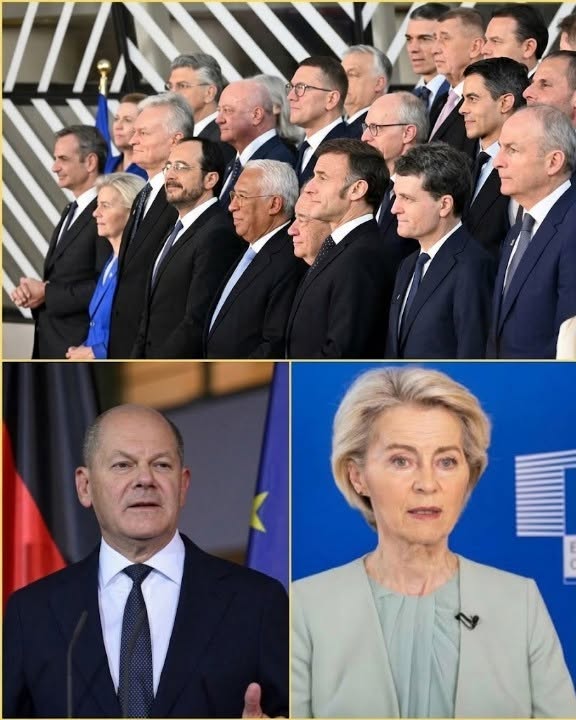
The EU wants a common migration system because border states, destination states, and transit states face different pressures. Under the EU’s migration pact, countries are expected to share responsibility in different ways, including relocation, financial contributions, or operational support. AP has reported that the EU has moved toward faster processing for some asylum claims and broader reforms designed to manage migration more collectively.
Poland’s response is often: we already show solidarity by defending the eastern border and supporting Ukraine.
That argument has force in Poland. Many voters believe Brussels lectures Poland on migration while failing to appreciate the country’s security burden next to Belarus, Russia’s ally, and Ukraine, the battlefield of Europe’s largest war in decades.
Critics in Brussels and human-rights groups see it differently. They argue that European solidarity cannot mean every country chooses only the obligations it likes. They war that if Poland can restrict asylum access at one border, other countries may copy the model and weaken refugee protection across the continent.
The Humanitarian Criticism
The strongest criticism of Poland’s model is humanitarian.
Rights groups and journalists have documented harsh conditions around the Belarus border, especially in forest areas where migrants may become trapped between Belarusian and Polish forces. The New Yorker reported on migrants attempting to cross through the Białowieża Forest, describing danger, cold, violence, trauma, and the risks faced by humanitarian volunteers trying to help.
Critics argue that Poland’s border policy may protect territory but can also leave vulnerable people exposed to serious harm. They say asylum law exists precisely because governments cannot simply reject people as a group. Each person’s daim should be assessed individually, especially if they may face persecution, torture, or death if returned.
Poland’s supporters answer that the humanitarian crisis was engineered by Belarus and Russia, and that accepting the pressure would reward hostile tactics. Critics answer that hostile tactics do not eliminate human rights.
This is the deepest contradiction in the debate: Poland may be right that migration is being weaponised, while critics may also be right that some people at the border still need protection.
Why Poland’s Model Appeals to Others
Poland’s model appeals to voters elsewhere in Europe because it seems to offer certainty.
No mass asylum-hotel system.
No large irregular migration routes tolerated.
No broad multicultural experiment imposed from above.
No apology for defending the border.
No confusion over national identity.
That image is powerful, especially in countries where citizens feel governments lost control. Many Europeans overestimate the share of migrants who are undocumented, but polling has shown widespread concern about illegal migration and strong support in several countries for reducing migration.
Poland benefits from being seen as the country that said no.
But the model is easier to admire from a distance than to copy exactly. Poland’s geography, history, demography, Ukrainian experience, relationship with Belarus, and political culture are specific. Western countries with long-established migrant communities cannot simply become Poland overnight.
What Makes Poland Different
Poland’s refusal to change course is driven by five forces.
First, nasional memory. Poland’s identity is built around sovereignty, survival, and resistance to outside pressure. Second, security fear. The Belarus border has made migration feel like a weapon, not only a humanitarian issue. Third, political incentive. Polish voters have rewarded tough positions and punished parties seen as weak on migration. Fourth, selective migration. Poland has accepted large numbers of Ukrainians while resisting irregular arrivals from other
routes.
Fifth, distrust of Western Europe’s model. Many Poles see Western Europe as a warning, not an example.
Together, these forces explain why Poland’s leaders do not feel embarrassed by their stance. They feel vindicated.
The Oversimplification Problem
The pro-Poland narrative often becomes too neat.
It says Poland is safe because it refused migration.
It says Western Europe is unsafe because it accepted migration.
It says national cohesion is preserved simply by saying no.
Reality is more complicated.
Poland has migrants. Poland has refugees. Poland has foreign workers. Poland has integration challenges in schools and local services. The European Commission has highlighted new research and policy changes in Poland aimed at supporting the integration of migrant children in education.
So the real story is not that Poland has no migration. The real story is that Poland wants migration under strict national control and rejects the idea that irregular entry should become a path to settlement.
That distinction matters.
The Critics’ Oversimplification
Critics also oversimplify.
They sometimes portray Poland as merely xenophobic or anti-refugee. That ignores the scale of Polish support for Ukrainians and the real security challenge posed by Belarus.
It also ignores the democratic reality that many Poles simply do not want to import the social conflicts they believe Wester Europe created for itself.
A serious critique of Poland should focus on proportionality, asylum access, pushback allegations, humanitarian safeguards, and legal obligations- not caricature the country as heartless.
Conclusion
Poland refuses to follow much of Western Europe because it believes Western Europe made a historic mistake: allowing migration systems to grow beyond public consent, border control, and cultural confidence.
Supporters see Poland as a model of sovereignty, social cohesion, and national clarity.
Critics see a country weakening asylum rights, hardening public attitudes, and risking humanitarian harm at its borders.
Both sides are responding to real facts. Poland has legitimate security concerns, especially at the Belarus border. It has also taken in huge numbers of Ukrainians. But its restrictive approach raises serious questions about asylum access, individual rights, and how democratic states should treat vulnerable people caught in geopolitical conflict.
The real lesson is not that every country should copy Poland exactly.
The real lesson is that migration policy cannot survive without public trust.
Poland has built its model around control first, solidarity second.
Western Europe often tried solidarity first and then struggled to restore control.
That is the divide shaping Europe’s future—and it is why Poland’s refusal to change course has become one of the continent’s most important political stories.