Woman tells ‘greedy’ RNLI that charity begins at home – the replies are brutal
A woman who accused the RNLI of becoming “greedy” and predicted the “death of a charity” has received a blistering response after targeting its rescue work in the English Channel.
Debi Evans, who uses the X handle @DebiEvansMatron, claimed the lifesaving charity had turned a “huge majority” of the British public against it.
Charity & Philanthropy
She wrote to @RNLI:
“I believe I’m witnessing the ‘death of a charity’ coz ya know what?
“Charity begins at HOME …. You got greedy”
Her prediction appears particularly badly timed. The RNLI has reported a “significant” increase in donations after the organisation and its volunteers were targeted over rescues involving people crossing the Channel.
The backlash has included abuse, protests and threats directed at crew members. Security has been increased at some RNLI facilities while volunteers have been given advice about protecting themselves.
Boats & Watercraft
None of that has changed the charity’s position: if somebody is in danger at sea, its crews will attempt to save them.
RNLI responds to Channel criticism
The RNLI operates independently of the Government and relies overwhelmingly on charitable donations.
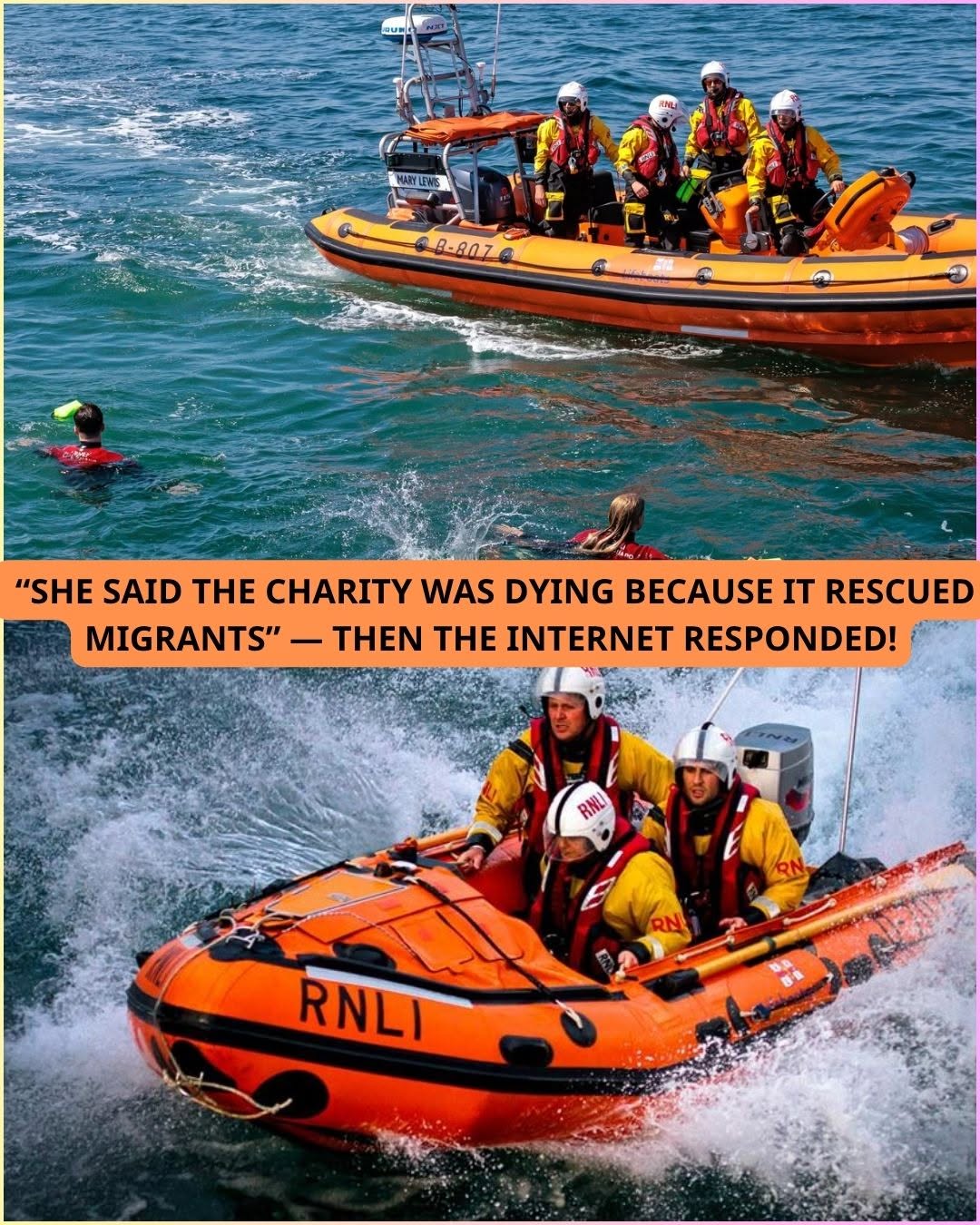
Its lifeboats are recognised search-and-rescue assets which are dispatched by HM Coastguard. The volunteer crews do not decide immigration policy, determine anybody’s legal status or choose which people are considered worthy of rescue.
According to the RNLI’s published figures, its crews launched 109 times in response to small boats during 2025.
Those incidents represented 1.2 per cent of all RNLI lifeboat launches during the year.
The charity says its volunteers rescued 2,353 people during those operations, equivalent to 5.7 per cent of the 41,472 people recorded crossing the Channel in small boats in 2025. Most people were assisted by Border Force or other agencies.
Charity & Philanthropy
The figures put the argument into perspective. Almost 99 per cent of RNLI launches had nothing to do with Channel migration.
Crews continued responding to emergencies involving sailors, swimmers, fishing vessels and people in difficulty around Britain and Ireland’s coastline.
Direct replies pour in
@dontforgetchaos wrote:
“You’re a retired nurse. Out of interest, did you choose who to treat based on the colour of their skin?”
@dave43law replied:
“Actually it has united the majority of the country behind them and donations are flooding in to show the racists that they are the cheap minority.”
Charity & Philanthropy
The same account added:
“Oh and for education purposes only 1.2% of RNLI launchings are in respect of migrants.”
@BertDalziel wrote:
“This week, I shall mostly be shouting at people who organise voluntarily to rescue drowning people at sea.”
@GappyTales asked:
“How can it be that there are people who think our voluntary emergency service workers should leave their fellow humans to drown.”
@OxfordLad11 wrote:
“I missed the part of the nursing code where compassion stops at the border and you only help people whose circumstances you approve of.”
@Bbmorg offered a shorter response:
“She doesn’t speak for me.”
Another user decided the argument had given them a reason to increase their support for the charity.
Charity & Philanthropy
@IanKippen wrote:
“I’ve increased my donation. Nice one.”
‘What should they do?’
Evans continued defending her position after another account asked what the RNLI was supposed to have done beyond saving people in danger.
Boats & Watercraft
@Stuart79127363 wrote:
“What have RNLi supposed to have done? Apart from save lives.”
Evans replied from @DebiEvansMatron:
“Imported thousands of criminals that’s what”
The claim treats everybody rescued from a small boat as a criminal and suggests the RNLI is responsible for bringing people to Britain.
In reality, crews respond when they are dispatched by HM Coastguard. Their purpose at the scene is to prevent deaths rather than make decisions about asylum or immigration enforcement.
@CBellNorfolk then asked:
“What should they do? Shoot them?”
Evans answered:
“Drop them back off in France”
Search-and-rescue crews cannot simply tow or transport rescued people wherever individual donors would prefer. Their actions are directed by the relevant rescue authorities and governed by the circumstances at sea.
‘Without judgement or preference’
The row comes amid a broader campaign directed at the RNLI following its involvement in Channel rescues.
Boats & Watercraft
Far-right activists have accused the organisation of operating a “taxi service” for migrants and encouraged supporters to stop donating. Protests have taken place near facilities associated with the charity, while personal information about some crew members has reportedly been circulated online.
The RNLI has rejected false claims that it secretly houses people seeking asylum. Its leadership has also made clear that intimidation will not persuade its volunteers to abandon anybody whose life is at risk.
RNLI volunteer @charlotteikonen wrote:
“For more than 200 years, the #RNLI has saved lives at sea without judgement or preference. That hasn’t changed, and it won’t.”
The charity was established in 1824 and has since saved more than 146,000 lives.
Charity & Philanthropy
Its current work extends far beyond lifeboat launches. The organisation operates lifeguard services, teaches water safety and provides specialist training and equipment to volunteer crews.
People are entitled to disagree with Britain’s immigration system and the policies pursued by the Government. That political argument is separate from the immediate responsibility to save somebody whose boat is sinking.
The response to Evans also suggests that attempts to punish the RNLI may produce the opposite result. Rather than witnessing the “death of a charity”, its critics have helped persuade some people to donate more.