Poland’s Border Once Again Becomes the Focus of Europe as Reported Migrant Crossing Attempt Renews Debate Over Security, Humanitarian Obligations, and the Future of EU Migration Policy
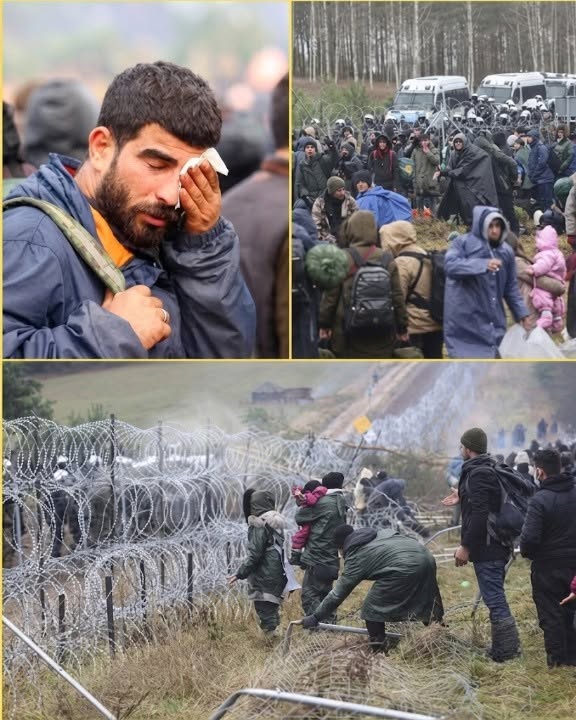
Poland’s eastern border has once again become the center of international attention following reports that a group of migrants attempting to enter the country was prevented from crossing by Polish border authorities. The incident, widely discussed across social media and European political circles, has reignited one of the continent’s most contentious debates: how to balance national border security with humanitarian responsibilities toward people seeking protection. While the exact details surrounding individual crossing attempts often continue to develop as authorities release additional information, the latest reports have already intensified discussions over migration policy, border enforcement, international law, and the future direction of European immigration strategy. For supporters of Poland’s current approach, the incident demonstrates that stronger border controls are working as intended. Critics, however, argue that every case involving migrants deserves careful legal assessment and humanitarian consideration rather than becoming part of a broader political narrative.
The reported incident comes after several years in which Poland has dramatically expanded security along sections of its eastern frontier. The border, particularly the stretch adjoining Belarus, has become one of Europe’s most heavily monitored external frontiers following the migration crisis that intensified in 2021. Polish authorities have repeatedly argued that organized efforts to direct migrants toward the border have created extraordinary security challenges requiring exceptional defensive measures. In response, the government invested heavily in physical barriers, surveillance systems, thermal cameras, motion sensors, drones, and additional Border Guard personnel. Officials maintain that these measures are designed to prevent irregular crossings while protecting both Poland’s sovereignty and the integrity of the European Union’s external border.
According to public statements issued during previous border incidents, Polish officials have consistently argued that irregular migration across the Belarusian frontier differs significantly from traditional asylum applications submitted through official ports of entry. Authorities have claimed that many attempted crossings involve organized smuggling networks or coordinated efforts intended to pressure European governments politically. These claims have shaped Poland’s broader security strategy, leading successive governments to emphasize deterrence, rapid response, and increased cooperation between border guards, police, and the military. Officials argue that allowing uncontrolled crossings would encourage further attempts while strengthening criminal organizations that profit from human smuggling.
Supporters of Poland’s border policy frequently point to statistics showing thousands of attempted irregular crossings detected each year. They argue that the effectiveness of border enforcement should not be measured solely by the number of successful entries but also by the number of attempts prevented. From their perspective, each intercepted crossing demonstrates that investments in physical infrastructure, surveillance technology, and personnel are producing tangible results. They contend that effective deterrence ultimately discourages dangerous migration routes while reducing opportunities for organized trafficking networks to exploit vulnerable people seeking entry into Europe.
The latest reports have nevertheless prompted renewed discussion about the distinction between irregular migration and asylum. Under international law, individuals generally have the right to seek asylum if they fear persecution in their country of origin. However, governments also retain the authority to control their borders, verify identities, and determine whether applicants meet the legal criteria for international protection. These parallel principles frequently collide in practice, particularly when migrants attempt to enter countries outside designated border checkpoints. Immigration lawyers note that each case depends upon its own facts, including nationality, individual circumstances, available evidence, and the legal procedures established by domestic and international law.
For many observers, the situation illustrates the extraordinary complexity of modern migration. People arriving at Europe’s borders come from a wide variety of countries, cultures, and backgrounds. Some may be fleeing armed conflict or political persecution, while others are motivated primarily by economic hardship, family reunification, or broader aspirations for improved living conditions. Governments therefore face the difficult task of distinguishing between those eligible for international protection and those who do not meet the legal requirements under asylum law. This assessment requires interviews, documentation, intelligence cooperation, and often lengthy administrative procedures.
Poland has argued that maintaining firm border controls serves not only its own national interests but also those of the broader European Union. As one of the EU’s external frontier states, Poland plays a significant role in managing entry into the Schengen area. Officials frequently emphasize that effective border management contributes to the security of multiple European countries, making migration policy an issue extending well beyond national politics. This perspective has received support from several European governments that have likewise sought stronger external border protection while continuing to debate reforms to the EU’s common asylum system.
Humanitarian organizations, however, have repeatedly urged governments to ensure that border enforcement measures remain consistent with international legal obligations. Aid groups stress that migrants intercepted at borders may include families with children, individuals requiring medical care, and people genuinely fleeing violence or persecution. They argue that governments should ensure access to fair asylum procedures, appropriate humanitarian assistance, and individualized legal assessment. Human rights advocates caution that migration policy should distinguish carefully between criminal smuggling organizations and the migrants themselves, whose personal circumstances may differ significantly.
The political debate surrounding migration has become increasingly influential across Europe over the past decade. Elections in numerous countries have featured immigration among the most prominent campaign issues, reflecting public concern over border management, integration, public services, labor markets, and national identity. Political parties advocating stronger border controls have gained support in several member states, while others continue emphasizing humanitarian obligations and international cooperation. Poland’s approach has therefore attracted attention not only because of events at its own border but also because it reflects wider debates occurring across the European continent.
Security analysts note that irregular migration frequently intersects with broader geopolitical considerations. Previous tensions involving the Belarus-Poland border have led European officials to accuse Belarus of facilitating migration flows as part of a wider political strategy—an allegation Belarus has denied. Regardless of differing interpretations, such disputes have highlighted how migration can become intertwined with diplomatic relations, regional security, and international politics. Governments increasingly view border management not solely as an immigration issue but also as part of broader national security planning.
Public opinion within Poland has remained diverse. Many citizens strongly support robust border enforcement, arguing that governments possess both the legal authority and the democratic responsibility to regulate entry into national territory. They believe secure borders help maintain public confidence in lawful immigration while discouraging dangerous irregular migration routes. Others support firm border controls but emphasize that humanitarian protections should remain available for those genuinely entitled to international protection. This range of opinion reflects the broader challenge facing democratic societies as they seek to balance competing legal, moral, and security considerations.
Economists have also entered the debate, observing that migration policy influences labor markets, demographic trends, housing demand, public finances, and long-term economic development. While irregular migration raises specific legal concerns, many European countries simultaneously face aging populations and workforce shortages in sectors including healthcare, construction, agriculture, manufacturing, and technology. Policymakers therefore continue debating how to combine effective border management with sustainable legal migration pathways capable of supporting future economic growth.
Another significant aspect concerns the role of organized criminal smuggling networks. European law enforcement agencies have repeatedly warned that human trafficking organizations exploit vulnerable migrants by charging substantial sums for dangerous journeys across multiple countries. These networks often expose migrants to severe risks, including unsafe transportation, exploitation, violence, and abandonment. Governments argue that reducing irregular migration opportunities weakens the business model of such criminal organizations, while humanitarian organizations stress that expanding safe and lawful migration channels may likewise reduce reliance on smugglers.
Social media has played an increasingly important role in shaping public understanding of border incidents. Short video clips, photographs, and headlines frequently circulate long before official investigations establish the full sequence of events. As a result, commentators from across the political spectrum often interpret the same incident in dramatically different ways. Immigration specialists therefore encourage careful attention to verified information released by official authorities and credible news organizations rather than relying solely on viral posts or emotionally charged commentary.
The latest reports have also renewed discussion regarding future European migration policy. The European Union continues working toward reforms intended to improve asylum procedures, strengthen external border management, enhance cooperation among member states, and combat organized smuggling. Achieving consensus, however, remains challenging because member states often differ in their geographic circumstances, political priorities, and public attitudes toward migration. Countries located along major migration routes frequently advocate different solutions than those experiencing lower levels of irregular arrivals.
Whatever the political perspectives involved, the latest reported border incident demonstrates that migration will likely remain one of Europe’s defining policy challenges for years to come. Governments must balance sovereign control of national borders with obligations arising under domestic and international law. They must respond to public concerns regarding security while ensuring fair treatment for individuals seeking protection. They must combat criminal trafficking organizations without losing sight of the human stories often driving migration itself.
As additional information emerges regarding the reported attempted crossing, the broader debate surrounding Europe’s borders is unlikely to diminish. Instead, incidents such as these continue serving as reminders that migration is not a single issue but rather a complex intersection of security, humanitarian responsibility, international law, economics, diplomacy, and domestic politics. The outcome of these ongoing discussions will shape not only Poland’s future border policy but also the direction of migration management across the European continent for many years ahead.