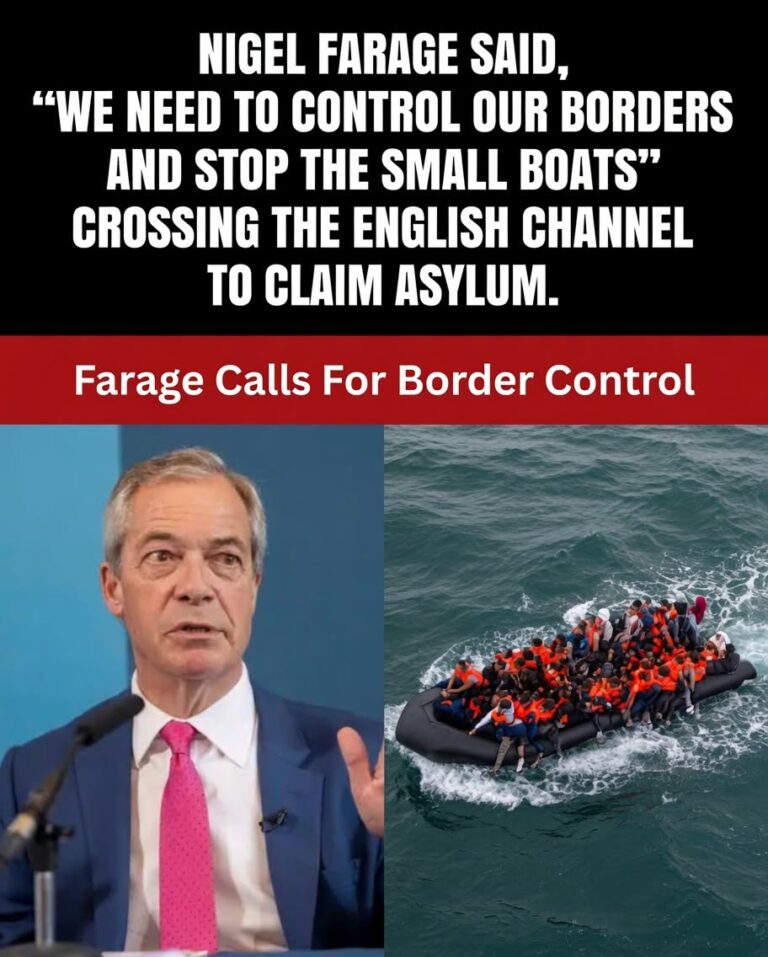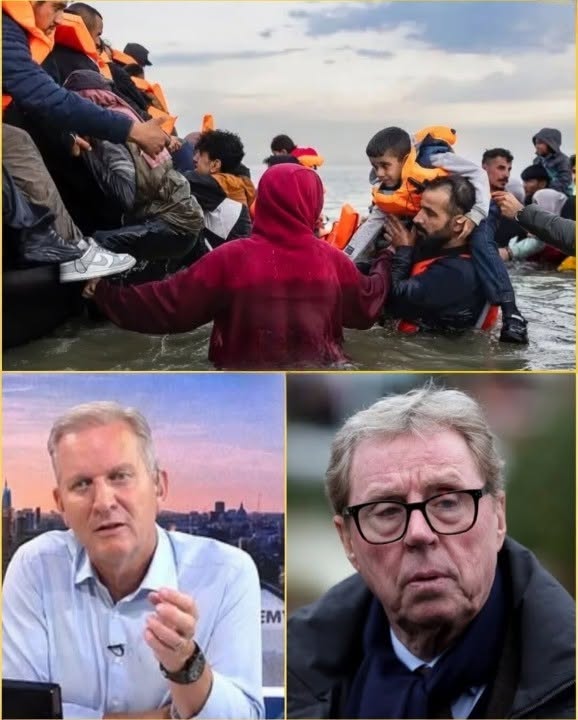
Fourteen Migrants Killed in Coast Guard Collision — But Viral Claims Incorrectly Link the Tragedy to Britain
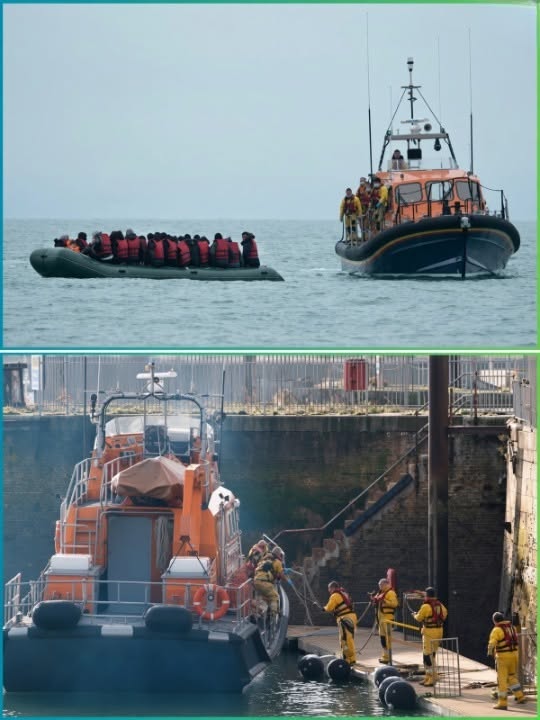
A deeply disturbing story circulating online claims that 14 migrants drowned after their small boat collided with a coast guard vessel during a high-speed chase involving the UK Coastguard. The images and wording immediately evoke the increasingly dangerous migration crisis surrounding Britain and the English Channel. But the available evidence points somewhere else entirely. A fatal collision involving 14 migrant deaths did occur in 2026 — in fact, there were two major incidents with strikingly similar details — but neither happened in British waters. One took place near the Greek island of Chios in February, while another occurred off Turkey’s Mediterranean coast in March. The distinction is critical, not only for understanding what happened, but also for answering the much harder question raised by the tragedy: could these deaths have been prevented?
The Viral Claim Sounds Plausible — But the Location Is Wrong
The circulating post states that 14 migrants died after a small boat collided with a coast guard vessel during a high-speed chase involving the “UK Coast Guard.” Given the intense public focus on migrant crossings of the English Channel, the claim may immediately sound believable. Britain has experienced repeated maritime emergencies involving overcrowded dinghies, and HM Coastguard has been involved in hundreds of rescue operations. Yet searches of credible reporting do not substantiate a recent British incident matching the description in the viral post.
Instead, the wording closely resembles two separate Mediterranean tragedies from earlier in 2026.
On February 3, a migrant speedboat collided with a Greek Coast Guard patrol vessel near the island of Chios. Initial reports put the death toll at 14, although it later rose to 15 when another victim died in hospital. Twenty-five migrants were rescued, including children, while two Greek coast guard officers were also injured.
Just over a month later, on March 9, another migrant boat collided with a Turkish Coast Guard vessel near Demre in Antalya province. Fourteen migrants were confirmed dead. Turkish authorities said the boat had been travelling at high speed, ignored warnings to stop and changed direction toward a patrol vessel before the collision.
Neither incident involved the United Kingdom.
Two Similar Tragedies May Have Been Blended Into One Viral Story
The existence of two remarkably similar incidents helps explain how misinformation can develop.
The first involved Greece.
The second involved Turkey.
Both involved migrant boats.
Both involved coast guard vessels.
Both involved reports of pursuit or attempts to intercept the migrant vessel.
Both resulted in approximately 14 deaths.
Both generated dramatic nighttime rescue scenes.
And both occurred amid wider political arguments over migration into Europe.
It would therefore be relatively easy for photographs, statistics or descriptions from one or both incidents to be detached from their original context and repackaged as an English Channel story.
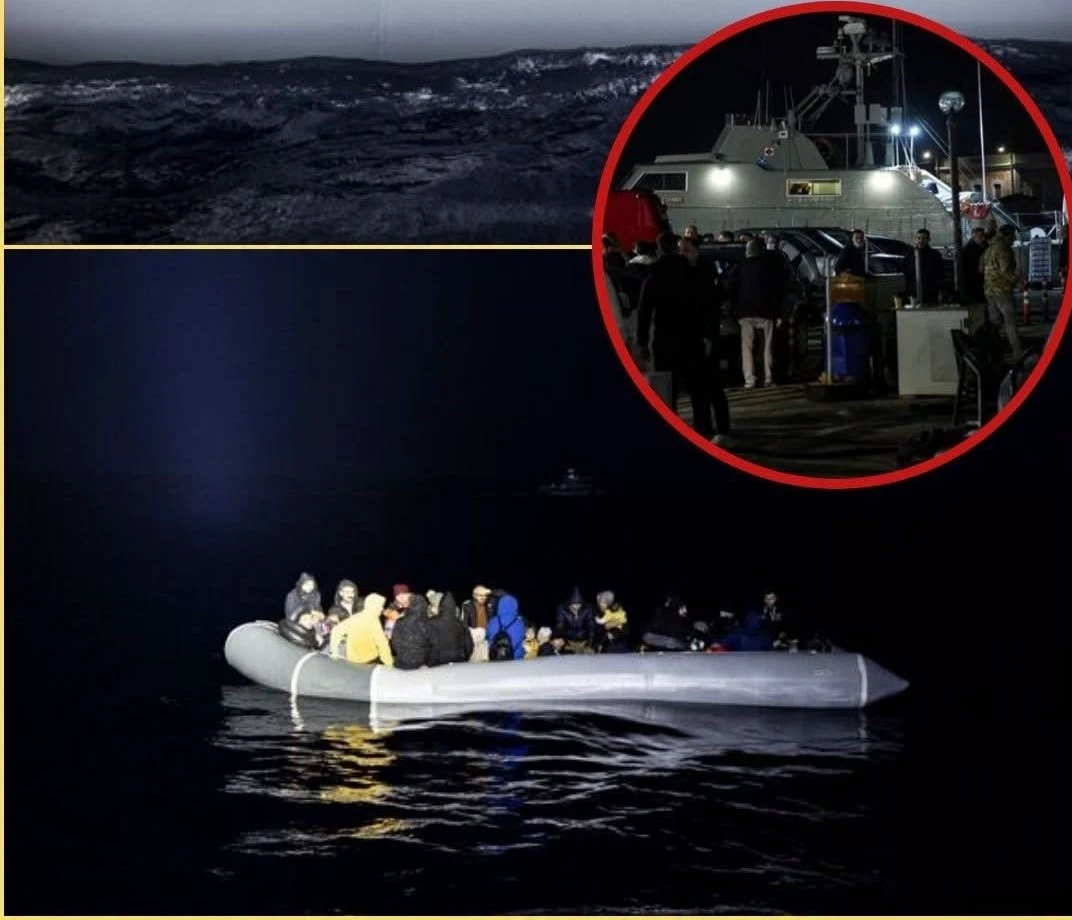
That possibility is especially important because the images accompanying viral posts frequently do not contain enough visible information to establish geography. A dark sea, an inflatable migrant boat and a patrol vessel could appear to depict the Channel, the Aegean or the Mediterranean to someone unfamiliar with the original source.
What Happened Near Chios?
The February incident occurred in the eastern Aegean Sea near Chios, a Greek island only a short distance from the Turkish coast.
According to the Greek Coast Guard’s original account, officers detected an inflatable speedboat travelling toward Chios without navigation lights. Authorities said the boat did not respond to visual and audible instructions to stop. The coast guard alleged that the migrant vessel then changed direction and struck the patrol vessel on its starboard side. The impact caused the migrant boat to capsize and sink.
Initial reports confirmed 14 deaths, but the toll subsequently increased to 15 after an injured woman died in hospital. Twenty-five migrants were rescued, among them 11 children.
It was a horrific incident.
But almost immediately, important questions emerged about how the collision had occurred.
Survivors Gave a Different Version
The official account was not universally accepted.
Survivors reportedly disputed parts of the Greek Coast Guard’s version of events. According to later reporting, some survivors said the patrol boat had conducted dangerous manoeuvres and denied that their vessel deliberately turned toward the coast guard boat.
Investigators therefore faced conflicting testimony.
Greek authorities said the migrant boat had effectively caused the collision.
Survivors suggested that the patrol vessel itself may have struck or overwhelmed their boat.
The disagreement is important because it directly affects responsibility.
If a smuggling boat deliberately rammed or suddenly turned into a patrol vessel while fleeing, responsibility could primarily lie with whoever was operating the migrant craft.
If the patrol vessel conducted an unnecessarily dangerous interception manoeuvre around an overloaded inflatable boat, questions about coast guard conduct would become far more serious.
Investigators have therefore been examining physical evidence and testimony rather than relying solely on the first account provided after the disaster.
One Critical Piece of Evidence Was Missing
Perhaps the most controversial detail to emerge after the Chios tragedy was that the camera installed on the Greek Coast Guard vessel was apparently not recording when the collision occurred.
Officials confirmed that the patrol vessel had a camera, but that it had not been activated at the time.
That immediately complicated the investigation.
Video could potentially have answered several fundamental questions:
Was the migrant boat ordered to stop?
How close was the patrol vessel when the interception began?
Which vessel changed direction?
How fast were the boats travelling?
Did the migrant vessel strike the coast guard boat, or did the coast guard vessel cross into its path?
Without a recording, investigators have had to rely more heavily on witness testimony, vessel damage, forensic evidence and reconstruction of the boats’ movements.
Investigators Ordered the Migrant Boat Raised
The importance of physical evidence became even clearer when investigators later ordered that the sunken migrant boat be recovered from the seabed.
The Chios prosecutor overseeing the investigation approved the recovery so that the vessel could be examined.
Lawyers representing a Moroccan survivor accused of operating the migrant boat disputed the official coast guard narrative and requested further investigation.
Greek reporting said approximately 39 people may have been aboard the small inflatable craft. The passengers were primarily Afghan nationals.
Health officials reported that many victims suffered severe trauma to the head and upper body rather than simply drowning.
That detail potentially matters when reconstructing the force and angle of the collision.
The Human Consequences Extended Beyond the Death Toll
Statistics such as “14 dead” or “15 dead” can obscure what happened to those who survived.
Among the survivors were children who were injured and separated from their parents.
Doctors treating victims reported broken bones, abdominal trauma and serious head injuries. Several patients were initially in critical condition.
Two pregnant women suffered miscarriages following the collision, according to medical reporting.
These details underline the extraordinary vulnerability of passengers in migrant boats.
An overcrowded inflatable craft offers almost no structural protection in a collision.
Even a relatively modest impact can throw passengers into the water or cause devastating injuries.
Then Another Collision Happened in Turkey
The second tragedy occurred on March 9 near Antalya on Turkey’s Mediterranean coast.
According to an official statement from the Turkish Coast Guard, an unmanned aerial vehicle detected a fast-moving inflatable boat carrying irregular migrants shortly after 2 a.m.
Two coast guard boats were dispatched.
Authorities said the migrant vessel continued moving despite visual and audible warnings.
At approximately 5:09 a.m., the Turkish Coast Guard said, the migrant vessel suddenly changed course toward patrol boat TCSG-9 and collided with it.
Passengers were thrown into the sea.
Fourteen People Were Found Dead
Turkish authorities reported that six migrants and one suspected smuggler were rescued alive from the water.
Fourteen bodies were recovered.
Another 15 migrants who had reached land after the incident were later apprehended near Beymelek beach.
Authorities also detained several suspected organisers and announced a judicial investigation.
Associated Press reporting similarly described the victims as Afghan migrants and said search-and-rescue operations continued after the collision.
The Turkish incident therefore closely matches the viral claim’s most striking number: 14 deaths.
But again, this happened off Turkey.
Not Britain.
Why Linking the Incident to the UK Changes the Story
Changing the location is not a minor error.
It fundamentally changes the political meaning of the event.
A collision involving the UK Coastguard in the English Channel would raise questions about British maritime tactics, Home Office migration policy, cooperation with France and the conduct of British rescue authorities.
A collision involving the Turkish Coast Guard raises different legal, operational and diplomatic questions.
The Greek case involves yet another legal framework, including EU migration policy and longstanding criticism surrounding alleged pushbacks in the Aegean.
Blurring these incidents together produces an inaccurate impression that British authorities were directly involved in deaths for which there is currently no credible evidence connecting them.
Britain Has Experienced Its Own Fatal Channel Disasters
None of this means the English Channel is safe.
Far from it.
Britain and France have faced repeated tragedies involving migrants attempting the crossing in overloaded small boats.
The most notorious occurred in November 2021, when at least 27 people died after a migrant boat capsized.
A major British inquiry released findings in February 2026 and concluded that the loss of life had been avoidable.
The Cranston Inquiry identified systemic failures, missed opportunities and inadequate resources in the maritime search-and-rescue response.
Only two people survived the disaster.
That incident remains profoundly relevant to today’s border debate — but it was not a collision between migrants and the UK Coastguard.
The Cranston Findings Show Why Prevention Matters
The inquiry into the 2021 Channel disaster offers an important lesson for every migrant-boat tragedy.
Authorities cannot treat search and rescue as secondary to immigration enforcement.
Once lives are in immediate danger at sea, rescue becomes the overriding concern.
Migrants may have entered the water unlawfully.
Smugglers may have organised the voyage.
Passengers may have ignored warnings.
Governments may reasonably seek to deter dangerous crossings.
But none of those facts reduces the obligation to preserve life where possible.
The inquiry concluded that opportunities to save more people had been missed during the 2021 disaster.
That finding continues to shape questions about how governments should manage migrant vessels.
Could the Greek and Turkish Collisions Have Been Prevented?
This is the hardest question.
There is no simple answer because prevention can occur at several stages.
The first possibility is preventing dangerous departures.
The second is detecting boats before they become overloaded or enter hazardous waters.
The third is intercepting them without creating an additional collision risk.
The fourth is providing rapid rescue once an emergency begins.
The fifth is disrupting the smuggling organisations that place people aboard dangerous craft.
Failure at any one of these stages can contribute to disaster.
The Boats Themselves Are Often Fundamentally Unsafe
Migrant-smuggling operations frequently use vessels that would never be considered suitable for ordinary passenger transport.
Overcrowding is common.
Life jackets may be inadequate or absent.
Passengers often have little maritime experience.
Navigation equipment may be minimal.
Boats can travel at night without appropriate lights.
Engines may fail.
Inflatable hulls can lose stability rapidly.
Once dozens of people panic or shift suddenly to one side of a vessel, the risk of capsizing increases dramatically.
In a collision with a solid patrol boat, the imbalance is even more severe.
Smugglers Have Powerful Incentives to Take Risks
Smuggling organisations operate outside ordinary safety regulations.
Their financial incentive is to move as many passengers as possible at the lowest possible cost while avoiding interception.
That can encourage overcrowding and aggressive evasion of authorities.
Drivers may be told to ignore coast guard instructions.
Some may accelerate or undertake dangerous turns when patrol boats approach.
Others may abandon vessels or passengers.
Governments therefore argue that disrupting smuggling networks is essential to preventing maritime deaths.
The Turkish authorities’ decision to arrest suspected organisers following the March collision reflects this approach.
But Enforcement Can Also Create New Risks
There is another side to the problem.
Even when authorities are legally entitled to intercept a boat, the method of interception matters enormously.
A pursuit involving an overloaded inflatable vessel is inherently dangerous.
Passengers may not be wearing life jackets.
The vessel may have poor steering.
The driver may panic.
Darkness can make relative speeds and distances difficult to judge.
Waves can suddenly alter the boats’ trajectories.
A patrol vessel approaching too aggressively can potentially create wake, instability or collision danger.
That is why coast guard procedures must balance enforcement with the foreseeable vulnerability of the vessel being intercepted.
Pursuit at Sea Is Not the Same as a Car Chase
Language such as “high-speed chase” can create an image of police pursuing a fleeing vehicle on a road.
Maritime operations are substantially different.
There are no lanes.
There are no brakes in the conventional sense.
Vessels continue moving even after power is reduced.
Wind and current affect direction.
Visibility may be poor.
An inflatable boat carrying dozens of passengers behaves very differently from a military or coast guard vessel.
A pursuit that might appear manageable to trained officers aboard a patrol craft can be extraordinarily dangerous for passengers sitting low inside a rubber boat.
Rules of Engagement Matter
One way governments could reduce future deaths is through highly specific interception protocols.
Authorities can determine safe minimum distances for approaching overcrowded craft.
Officers can receive specialised training in intercepting inflatable vessels.
Nighttime interceptions can employ powerful lighting and thermal imaging.
Helicopters, drones and larger vessels can maintain surveillance while safer interception methods are prepared.
Commanders can establish circumstances in which pursuit should be abandoned temporarily if continuing would create an immediate risk of capsizing or collision.
The aim should be to stop dangerous migration without creating a more dangerous situation than the one authorities are trying to prevent.
Cameras Should Be Standard and Operational
The missing video in the Chios incident illustrates another obvious reform.
Whenever possible, coast guard interception vessels should record encounters from beginning to end.
Cameras protect migrants.
They also protect officers.
If a smuggler deliberately rams a patrol vessel, video can establish what happened.
If officers operate recklessly, video can expose that too.
Recorded evidence reduces dependence on conflicting testimony and can strengthen public confidence in investigations.
A camera installed but not switched on contributes little.
Independent Investigation Is Essential After Fatal Incidents
Any fatal collision involving state authorities should be examined independently.
That principle protects everyone involved.
Families deserve to know how relatives died.
Officers deserve protection from unsupported accusations.
Governments need accurate information in order to improve operational procedures.
Public confidence requires more than an internal explanation produced by the organisation whose vessel was involved.
In the Chios case, multiple investigations were initiated, and Greece’s Ombudsman called for a full and impartial inquiry.
That level of scrutiny is appropriate when so many people die.
Responsibility May Be Shared
Public debate often demands a single villain.
Reality may be more complicated.
Smugglers may have created the dangerous situation by loading people onto an unsuitable boat.
The vessel’s operator may have made reckless decisions.
Passengers may have been unable to understand instructions.
Coast guard officers may have faced only seconds to react.
Authorities may have followed procedures that were themselves inadequate.
Policy decisions made far from the scene may have encouraged more aggressive interception tactics.
Multiple failures can coexist.
An investigation should therefore ask not only “Who caused the impact?” but also “What chain of decisions created the conditions in which the collision became possible?”
The Human Smuggling Business Must Remain Central to the Discussion
Migration tragedies are sometimes discussed almost entirely through the actions of governments.
That can overlook the enormous role played by criminal smuggling networks.
These organisations profit from desperation.
They charge people substantial sums for journeys in boats that would be unacceptable in regulated passenger transport.
Some migrants are told misleading information about the risks.
Others may believe a coast guard rescue will automatically bring them to their intended destination.
Smuggling networks adapt quickly to new government enforcement methods.
When one route becomes difficult, another opens.
This makes purely maritime enforcement an incomplete solution.
Governments Face a Genuine Dilemma
If authorities do nothing, dangerous smuggling operations can expand.
If patrol boats intercept every vessel aggressively, collisions and capsizing can occur.
If governments automatically transport everyone rescued at sea to the country they hoped to reach, policymakers fear this could create an incentive for additional crossings.
If governments refuse rescue assistance, people can die.
There is no entirely risk-free policy.
That is why migration management must combine deterrence, legal pathways, international cooperation and maritime safety rather than relying on a single approach.
The English Channel Illustrates the Same Dilemma
Britain faces this problem acutely.
The Channel is one of the busiest shipping routes in the world.
Small migrant dinghies travel among commercial vessels under unpredictable weather conditions.
Cold water can quickly cause hypothermia.
Overcrowded boats sit dangerously low.
The distance between northern France and southern England looks small on a map but can become extremely hazardous at sea.
The tragedy of November 2021 demonstrated how rapidly a manageable crossing can become catastrophic.
Border Enforcement and Rescue Cannot Be Treated as Opposites
Political debates often frame two competing priorities.
One side demands tougher borders.
Another emphasises humanitarian rescue.
In practice, a functioning maritime border policy requires both.
A state has the right to control entry into its territory.
It also has obligations relating to safety of life at sea.
The existence of immigration enforcement does not cancel rescue obligations.
Similarly, rescue obligations do not automatically eliminate a state’s authority to enforce immigration law after people have been brought safely ashore.
These are separate stages of the process.
Why Migrants Continue Taking the Risk
Understanding prevention also requires understanding why people board dangerous boats.
There is no single answer.
Some are fleeing war.
Some are escaping persecution.
Some hope for employment or higher living standards.
Some are joining family.
Some have been displaced for years.
Others may have already travelled through several safe countries and specifically want to reach a preferred destination.
Some receive misleading promises from smugglers.
Different motives can exist within the same boat.
Reducing all passengers to either “refugees” or “illegal migrants” often obscures that complexity.
The Legal Status of Passengers Is Determined After Arrival
An important point frequently lost in political arguments is that simply looking at a boat cannot reveal each passenger’s legal status.
Some may ultimately qualify for refugee protection.
Others may not.
Some may already have protection elsewhere.
Others may be subject to removal.
Those questions require individual assessment under applicable law.
Whatever the eventual legal outcome, however, nobody’s immigration status makes drowning an acceptable enforcement outcome.
Governments Have Tried to Reduce Departures
European countries have increasingly focused on preventing migrant vessels from leaving origin or transit countries.
That approach can involve funding foreign coast guards, intelligence sharing, surveillance, agreements with neighbouring governments and efforts to arrest smugglers before boats launch.
Supporters argue that stopping departures is safer than intercepting overloaded vessels at sea.
Critics warn that cooperation with some transit states can expose migrants to abuse or deny access to asylum procedures.
Both concerns need to be weighed against the reality that maritime journeys can become fatal within minutes.
Search-and-Rescue Capacity Remains Critical
Even the most effective border system will never prevent every boat from entering the water.
That means search-and-rescue capacity remains essential.
Authorities need enough vessels, helicopters, drones and trained personnel to respond quickly.
Communication systems must be capable of identifying distress calls.
Responsibility between neighbouring states must be clearly understood.
The Cranston Inquiry’s findings concerning the 2021 Channel disaster demonstrate how gaps in coordination and resources can translate directly into lost lives.
Distress Calls Must Be Taken Seriously
One of the most dangerous assumptions in migration operations is that people aboard small boats are exaggerating danger simply because they expect rescue.
Even if some calls are strategically motivated, responders cannot safely presume that a heavily loaded inflatable vessel is stable.
Conditions can deteriorate suddenly.
An engine failure, puncture, collision or panic can produce mass casualties in seconds.
Search-and-rescue procedures therefore need mechanisms to assess danger without dismissing repeated calls for assistance.
Technology Can Help — But It Cannot Replace Judgment
Modern coast guards increasingly use drones, radar, thermal cameras and satellite monitoring.
Turkey’s March incident began when an unmanned aerial vehicle detected the migrant vessel.
Technology can provide earlier warning and allow patrols to position themselves before a situation becomes dangerous.
But technology does not eliminate difficult operational judgments.
A drone can locate a boat.
It cannot by itself determine the safest moment or method for interception.
That still depends on trained officers, clear procedures and situational awareness.
Safer Legal Routes Are Part of the Debate
Humanitarian organisations frequently argue that people resort to smugglers because safe legal alternatives are too limited.
If individuals with credible protection claims could apply through controlled routes, fewer might attempt maritime crossings.
Governments counter that significantly expanding such routes could create enormous demand and would not necessarily eliminate unauthorised migration.
The dispute is real.
But targeted legal routes — particularly for vulnerable refugees and family reunification — may reduce the number of people who feel their only option is an illegal sea crossing.
Returns Policy Also Affects Smuggling Incentives
Governments focusing on deterrence argue that if people who have no right to remain are rarely returned, smugglers can market the journey as a rational gamble.
Even if the voyage is intercepted, passengers may believe they will ultimately remain in Europe.
Efficient asylum decisions and lawful returns can therefore form part of a prevention strategy.
But speed must not come at the expense of proper assessment.
Returning someone to persecution or danger would create another serious failure.
The challenge is building a system that is both credible and lawful.
Public Anger Is Understandable After Preventable Deaths
Whenever migrants die at sea, political reactions arrive quickly.
Some blame government weakness for allowing smuggling networks to flourish.
Others blame excessive enforcement for creating dangerous confrontations.
Some blame migrants for choosing to make the journey.
Others argue that desperate people should not bear responsibility for systems giving them few safe alternatives.
These reactions reflect genuine ideological differences.
But assigning blame before investigators establish basic facts can make reform harder.
The Word “Drowned” May Even Oversimplify the Chios Case
The viral claim says 14 migrants drowned.
That description may fit some maritime tragedies.
But reporting on the Chios collision indicated that many victims suffered severe head and upper-body trauma.
This suggests the collision itself, not simply subsequent immersion in water, played a major role in some deaths.
That distinction matters for prevention.
If people primarily drowned after a boat capsized, improved flotation and faster rescue might have saved more lives.
If people suffered fatal collision injuries, safer interception distances and manoeuvring procedures become even more important.
The Images Must Also Be Treated Carefully
The accompanying collage shows migrants aboard inflatable vessels and a patrol craft at night.
But photographs do not independently prove the caption attached to them.
Without establishing the original source, date and location of each image, readers should not assume they depict the same event.
One photo could be from a rescue operation.
Another could be from a different country.
A third could be years old.
This practice — assembling authentic photographs into a misleading collage — has become increasingly common online because it creates an appearance of documentary evidence without actually verifying the narrative.
Why the UK Label Is So Powerful
Attaching the phrase “UK Coast Guard” immediately moves the story into one of Britain’s most politically sensitive debates.
Small boats have become symbols of wider arguments about sovereignty, asylum, immigration and government competence.
A fatal collision involving British authorities would therefore generate enormous attention.
It could influence political campaigns.
It could intensify demands for policy change.
It could damage trust in maritime authorities.
That is exactly why factual accuracy is so important.
A tragedy that happened in Turkey should not be used as evidence against British officers.
A tragedy in Greece should not be rewritten as an English Channel event.
Correcting the Location Does Not Minimise the Deaths
Fact-checking can sometimes be misunderstood as an attempt to dismiss a tragedy.
That would be wrong here.
Fourteen people dying off Turkey is not less tragic because it did not happen in Britain.
Fifteen people dying off Chios are not less important because the story does not support a particular UK political argument.
Accuracy respects victims.
Their deaths should be remembered in the place and circumstances where they actually occurred.
Turning them into characters in a false political narrative does the opposite.
Accountability Must Follow Evidence
If investigations conclude that a smuggler deliberately caused a collision, responsibility should be pursued.
If officers failed to follow safety procedures, that should be addressed.
If equipment was not functioning or cameras were unnecessarily disabled, procedures should change.
If a government’s strategy systematically produces dangerous pursuits, policymakers should reconsider it.
Accountability is strongest when it is based on evidence rather than assumptions.
That principle protects both migrants and coast guard personnel.
Officers Also Face Extraordinary Risks
It is important to recognise that coast guard officers operate in dangerous circumstances.
They encounter overloaded boats at night.
They may not know whether the person steering is experienced, panicking or deliberately attempting to escape.
Smugglers can behave unpredictably.
Officers may have seconds to prevent a vessel from reaching shore while simultaneously trying to avoid causing injury.
Two Greek coast guard officers were injured during the Chios collision.
A fair investigation therefore should not begin from the assumption that officers are automatically guilty.
Nor should it assume automatically that their first account must be correct.
Migrants Are Often the Least Powerful People in the Chain
The people aboard these boats usually have little influence over operational decisions.
They do not determine coast guard strategy.
They rarely control smuggling organisations.
Many do not steer the vessel.
Some may not even know exactly where they are.
Children have no meaningful responsibility for the journey at all.
When disasters happen, passengers frequently bear the greatest consequences despite having the least control over the situation.
That reality should remain central to policy discussions.
Preventing Another Tragedy Requires More Than One Policy
There is no single intervention capable of eliminating migrant deaths at sea.
A serious prevention strategy would require several measures operating together:
Stronger action against smuggling networks.
Earlier detection of dangerous departures.
Safer interception procedures.
Mandatory operational recording during encounters.
Better coordination between neighbouring coast guards.
Adequate search-and-rescue capacity.
Faster asylum decisions.
Lawful returns where claims fail.
Targeted safe legal pathways for people with legitimate protection needs.
Transparent independent investigation when operations end in fatalities.
None of these policies alone is sufficient.
Together, they can reduce risk.
Britain Should Learn From Mediterranean Incidents Anyway
Although the viral claim incorrectly places the tragedy in British waters, Britain can still learn from what happened in Greece and Turkey.
The central operational lesson is obvious.
Intercepting a vulnerable migrant vessel can itself become dangerous.
British and French authorities therefore need procedures designed to minimise the risk of collision during small-boat operations.
Every encounter should be documented where possible.
Search-and-rescue coordination must remain robust.
Lessons from fatal incidents elsewhere should be incorporated before a similar disaster occurs in the Channel.
The Mediterranean and Channel Crises Are Connected Politically
Migration routes differ geographically, but governments across Europe face many of the same pressures.
How can irregular arrival be reduced?
How should asylum be processed?
What obligations exist during maritime rescue?
How aggressively should border agencies intercept boats?
How can criminal smugglers be dismantled?
What happens when neighbouring countries disagree over responsibility?
These questions connect Greece, Turkey, Italy, France and Britain even when individual incidents do not.
Europe Is Moving Toward Tougher Migration Policies
Across the continent, governments have moved toward stronger border enforcement and faster returns.
Public frustration over irregular migration has increased.
Mainstream parties have adopted positions that would once have been associated primarily with the political right.
At the same time, humanitarian organisations continue to warn that deterrence policies can drive migrants toward increasingly dangerous routes.
The tension between those objectives is likely to define European migration politics for years.
Deaths at Sea Should Not Become Political Props
There is a tendency after every migrant tragedy for competing political camps to use the dead as evidence for conclusions they already held.
One side says the deaths prove borders are too weak.
Another says the deaths prove borders are too strong.
Reality may support elements of both arguments.
Weak enforcement can allow smugglers to operate openly.
Unsafe enforcement can create additional danger.
Poor rescue systems can turn accidents into mass fatalities.
Lack of legal migration routes can increase reliance on smugglers.
Ineffective returns can strengthen the smuggling business model.
A responsible analysis must be capable of recognising several causes at once.
What Is Currently Established
Based on available credible reporting, the central facts can be separated clearly from the viral claim.
A collision near Chios, Greece, on February 3, 2026 killed 15 migrants after the initial death toll was reported as 14. Twenty-five people were rescued. The circumstances remain disputed, and investigators examined conflicting accounts from the coast guard and survivors.
A separate collision near Antalya, Turkey, on March 9, 2026 killed 14 migrants after a migrant boat collided with a Turkish Coast Guard vessel during an attempted interception. Turkish authorities said the vessel ignored warnings and changed course toward the patrol boat.
There is no comparable credible evidence establishing that 14 migrants recently died in a collision with the UK Coastguard during a high-speed chase.
That part of the circulating claim appears to be incorrect or conflated with Mediterranean events.
Could the Tragedy Have Been Prevented?
Possibly.
But no responsible investigation should pretend the answer is simple.
Preventing the vessel from leaving may have prevented the deaths.
Stopping smugglers earlier may have prevented them.
A different interception method may have prevented them.
Better equipment may have helped.
Recording the operation would at least have clarified responsibility.
Faster rescue may have saved some victims.
And broader migration policies might have reduced the incentives driving people toward smugglers in the first place.
The lesson is not that maritime enforcement should disappear.
Nor is it that borders should simply be opened.
The lesson is that border enforcement involving fragile, overcrowded boats must be designed around the reality that a mistake measured in seconds can kill dozens of people.
The Larger Question Europe Still Has Not Solved
Governments want secure borders.
Citizens expect immigration laws to mean something.
Coast guards are expected to prevent unauthorised entry.
International obligations require protection of life at sea.
People will continue attempting dangerous journeys as long as conflict, poverty, persecution and economic opportunity push and pull them across borders.
Smugglers will continue exploiting that demand wherever profit remains possible.
Those pressures collide — sometimes literally — on the water.
The deaths off Chios and Antalya demonstrate what can happen when migration policy becomes a physical confrontation between vulnerable small boats and powerful enforcement vessels.
They should therefore be investigated thoroughly, remembered accurately and used to improve maritime procedures.
But they should not be falsely relocated to Britain.
The facts are tragic enough without adding a fictional geography.
The most defensible conclusion is therefore clear: the widely shared claim of 14 migrants dying after colliding with the UK Coastguard is not supported by current credible evidence. Similar fatal collisions did occur in Greece and Turkey in 2026, and those incidents deserve serious scrutiny. The urgent question is not how to turn them into another viral border-security headline, but how governments can enforce borders without allowing interception itself to become another source of preventable death.